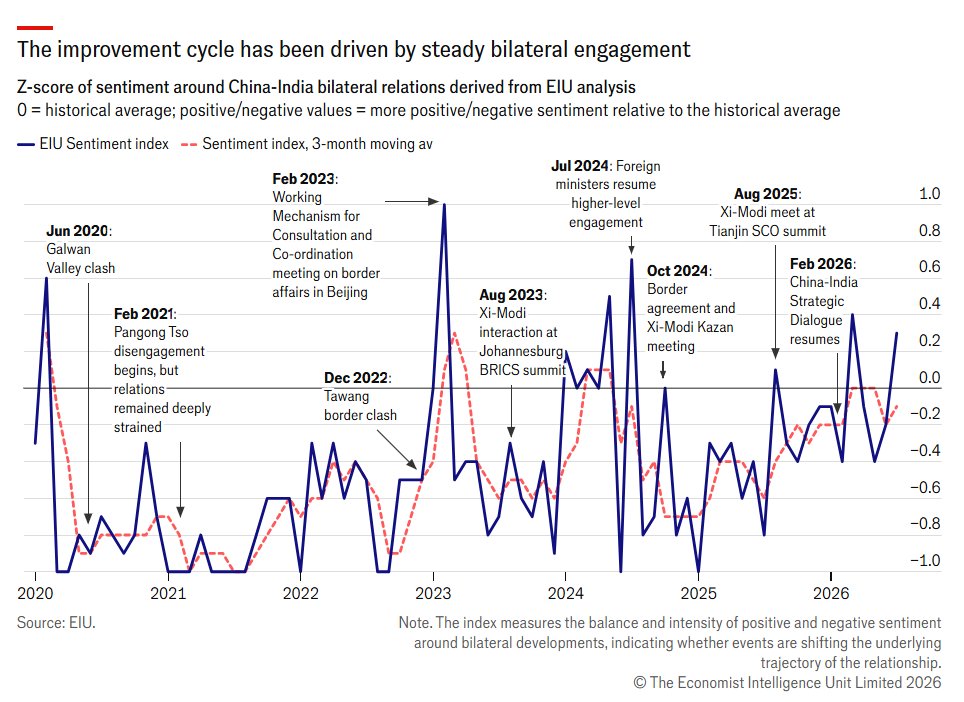
Relations between China and India are gradually improving, supported by sustained diplomatic engagement and practical co-operation. The meeting between President Xi Jinping and Prime Minister Narendra Modi at the September 2026 BRICS summit reinforced this positive trajectory, with both leaders signalling a willingness to strengthen economic ties and multilateral co-operation.
EIU’s China–India Bilateral Relations Index shows a steady recovery in relations since the deterioration following the 2020 Galwan border clashes. Recent progress includes the resumption of direct flights, easing of selected investment restrictions and renewed high-level dialogue.

However, improving diplomatic relations do not signal an end to strategic competition. Unresolved border disputes, regional rivalries and economic security concerns continue to limit co-operation. Although EIU expects relations to improve gradually, a fundamental reset remains unlikely.
The risk of military confrontation remains low, but the potential consequences are severe. Any escalation could disrupt critical supply chains, trade and investment, reinforcing the importance of monitoring geopolitical developments and preparing for potential operational risks.
Tracking geopolitical relationships with EIU GeoSync
The accompanying chart and analysis were developed using data from EIU’s GeoSync, a structured geopolitical dataset that measures the state and direction of bilateral relationships between G20 countries. Updated monthly, with historical data extending back to 2020, GeoSync helps organisations identify shifts in international relationships, monitor emerging geopolitical risks and incorporate geopolitical intelligence into their analysis and decision-making.