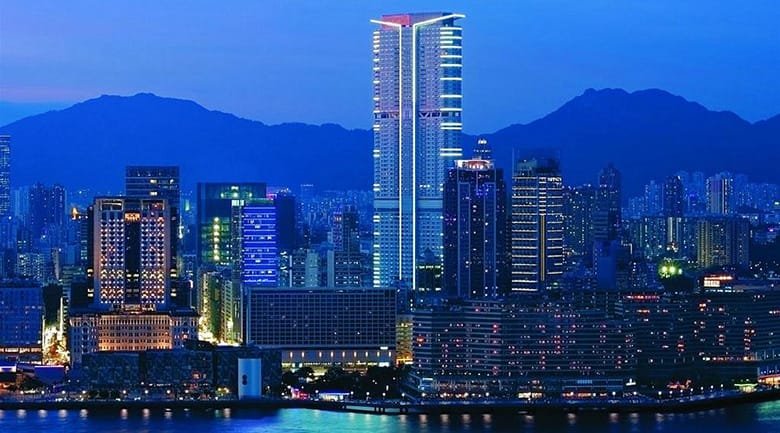

The Hyatt Regency is again hosting prospective buyers (Image: Hyatt)
UOL Group has walked away from what would have been Hong Kong’s biggest hotel purchase this year with the Singapore-listed developer having walked away from discussions to buy the Hyatt Regency Hong Kong Tsim Sha Tsui from New World Development and the Abu Dhabi Investment Authority, according to market sources who spoke with MIngtiandi.
The HK$3 billion ($382 million) deal, which was said to be in due diligence in late September, stalled out last month, according to the sources, with brokers said to be showing the 381-key property in Tsim Sha Tsui to alternative buyers.
“As a quality asset in a prime location, the Hyatt Regency is drawing significantly more interest than the Sheraton and Four Points in Tung Chung,” said Dan Voellm, CEO and founder of Hong Kong-based hotel consultancy AP Hospitality Advisors. “Investors understand value and long-term potential. Investors with cash at hand and a five-year-plus horizon should still find this opportunity attractive. Ultimately, it is a proxy bet on the Chinese economy.”
The aborted transaction leaves UOL, which owns a portfolio of 26 hospitality properties through its Pan Pacific Hotel Group unit, without a presence in Hong Kong. UOL and New World had not responded to Mingtiandi’s requests for comment by the time of publication. ADIA declined to comment.
Piecemeal Exit
Had it been consummated, the deal for the Hyatt Regency would have surpassed last month’s HK$2.7 billion sale by receivers of the Sheraton Hong Kong Tung Chung Hotel and the Four Points by Sheraton near the airport as Hong Kong’s biggest hotel deal of the year.

New World chairman Henry Cheng (Image: New World Development)
At HK$3 billion, the failed talks valued the 22-storey hotel at 18 Hanoi Road at roughly HK$7.9 million per key, or nearly three times the HK$2.21 million per key in the airport hotel transaction.
New World and ADIA have spent more than three years trying to sell the Hyatt Regency as part of a portfolio of three hotels, with ADIA said to have held out for a HK$20 billion package sale, according to market sources.
The Hyatt Regency opened in 2009 inside a mixed-use tower that also houses the K11 Art Mall and The Masterpiece luxury residences, a two-minute walk from East Tsim Sha Tsui MTR station.
ADIA acquired its 50 percent stake in Hyatt Regency June 2015, as part of a joint venture with New World and Chow Tai Fook Enterprises — the Cheng family’s investment vehicle — that also took matching stakes in the Grand Hyatt Hong Kong and the Renaissance Hong Kong Harbour View Hotel.
That deal valued the three-hotel portfolio at HK$18.5 billion and the Hyatt Regency alone at HK$3.39 billion. Chow Tai Fook Enterprises sold out to New World later that year.
Had the Hyatt Regency sold at HK$3 billion, ADIA would have incurred around a 13 percent loss on the property over its 11 years of ownership, according to Voellm.
Balance Sheet Repair
The attempt to sell the Hyatt Regency is part of New World’s ongoing effort to shore up liquidity as the developer works down HK$126.3 billion in net debt, after net debt swelled HK$6.2 billion and gearing climbed to 68.3 percent from 58.1 percent in its latest fiscal year up to the end of June.
A debt swap organised by New World to defer some of its liabilities came in below target last mont, with investors tendering $189.3 million of securities by the final 20 October deadline against a $600 million cap.
In late September, New World agreed to pay HK$2.3 billion ($293 million) to surrender the 11 Skies commercial project to Airport Authority Hong Kong, shedding decades of financial commitments. The company had sought relief from HK$1.8 billion in annual guaranteed rent, with UBS previously estimating cumulative payments at $9 billion, Bloomberg reported in May.
New World has announced disposals of Ningbo and Hangzhou commercial assets for more than RMB 1.7 billion ($253 million). Its proposed Shanghai commercial REIT, backed by the Hong Kong New World Tower complex on Huaihai Road, is expected to generate RMB 3.2 billion in net proceeds after the developer subscribes for 20 percent of the trust’s units.
The group reported a HK$26.8 billion loss for the last fiscal year, including HK$14.7 billion in non-cash impairments from the airport exit. Recurring net profit, which excludes impairments and provisions, improved to HK$2.2 billion from a HK$1.2 billion loss a year earlier.