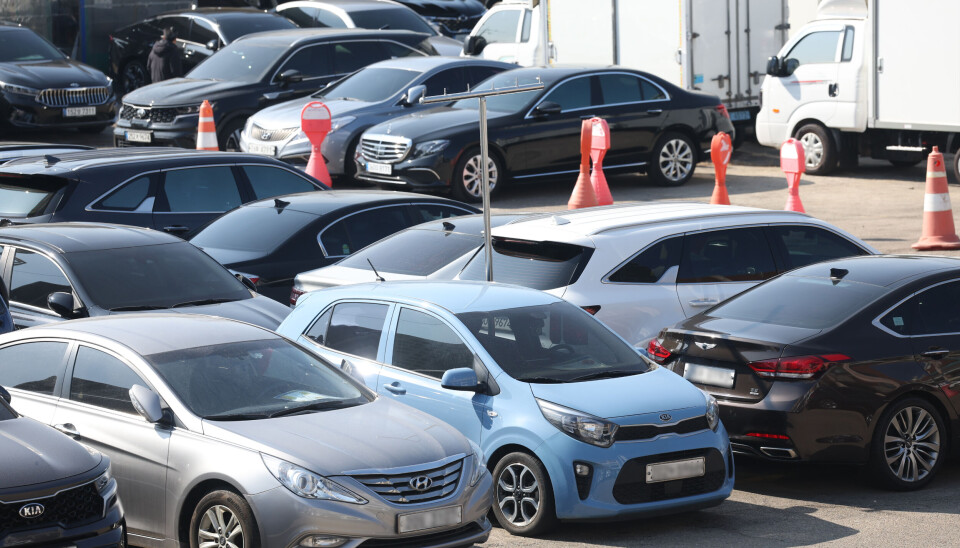
Hyundai and its international rivals in Korea are using detailed battery and service records to win consumer trust and drive sales of their preowned vehicles.
Automakers are extending their rivalry beyond new vehicles into the used car market, as growing demand for secondhand EVs is giving manufacturers an edge in sales through their access to vehicle data.
Hyundai Motor plans to use its trove of vehicle operation and maintenance data to provide more detailed histories for cars sold through its certified preowned program, the automaker said on Monday.
The expanded disclosures will cover accident and service records as well as EV battery health, voltage and temperature differences among battery cells and cumulative charging and discharging data.
“No one knows our vehicles better than we do as their manufacturer, and we intend to provide buyers with accurate, detailed information,” a Hyundai Motor representative said.
Used cars have long presented challenges in the marketplace because sellers usually know much more about their products than buyers, a situation academics call “asymmetric information.” In 1970, economist George Akerlof developed the concept “market for lemons” based on the issue, explaining how this asymmetry allows inferior products to drive out higher-quality ones.
This information challenge also extends to used EVs. Although a mechanic can relatively easily identify engine defects in conventional vehicles, determining the precise health of an EV battery remains a challenge even for trained professionals.
Battery performance can vary widely even among vehicles of the same age and mileage, depending on driving habits and charging practices. That is why automakers are turning to battery diagnostics to give buyers a clearer picture of a used electric vehicle’s condition.
Used passenger car transactions fell 7.2 percent to 472,774 in the third quarter this year, compared to 509,558 in the first quarter of 2024, according to market tracker Carisyou data.
Used EVs accounted for 4.26 percent of sales in the third quarter, nearly triple their 1.44 percent share in early 2024, as transactions rose from 7,348 to 20,135. Hybrids rose from 4.48 percent to 7.29 percent, and sales climbed from 22,804 to 34,444.
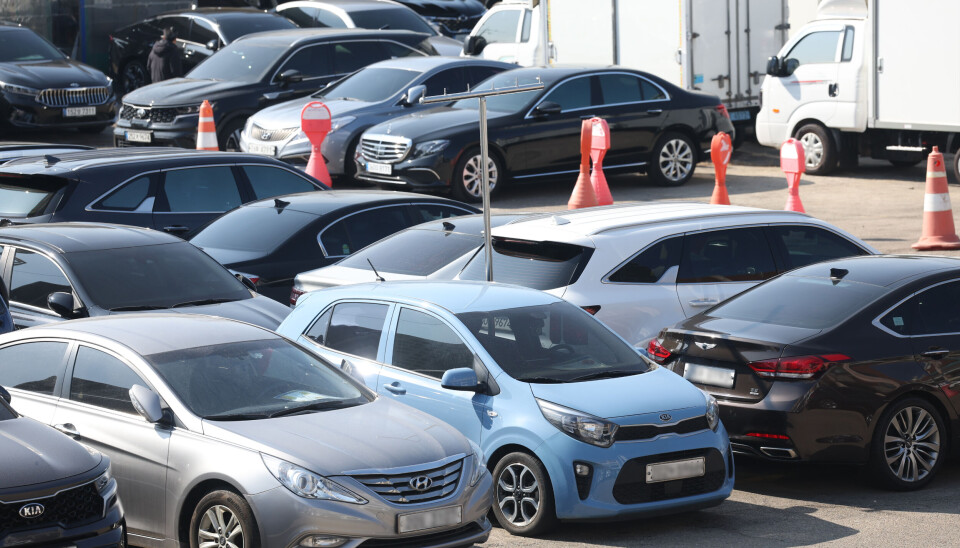
By contrast, gasoline, diesel and liquefied petroleum gas vehicles saw their combined share of used car sales fall by more than 5 percentage points, from 93.98 to 88.3 percent, over the same period. Transactions fell from 478,874 to 417,477 vehicles.
Hyundai Motor, Kia, BMW and Mercedes-Benz all operate certified preowned car businesses in Korea and are stepping up their efforts as the used car market evolves. Their advantage lies in their firsthand knowledge of the vehicles they manufacture and the maintenance records accumulated through their aftersales service networks.
Manufacturers are also narrowing the gap between new and used cars by allowing financing services to secondhand vehicle buyers and extending warranty coverage.
For automakers, the used car business is about more than another sale. It is a strategy to keep customers in the fold, earn revenue by reselling vehicles bought from existing owners and bring those buyers back when they are ready to purchase a new car.
“Visual inspections alone cannot reliably determine the health of an EV’s battery, but automakers have an advantage because they hold detailed service histories and battery data,” said Kim Pil-soo, a professor in the Division of Automotive Engineering at Daelim University.
“Korea’s used car market records about 2.4 million to 2.5 million transactions annually, roughly 1.3 to 1.4 times new car sales. Compared to the United States and other major developed markets, there is still substantial room for growth.”
BY KO SUK-HYUN [lee.soojung1@joongang.co.kr]