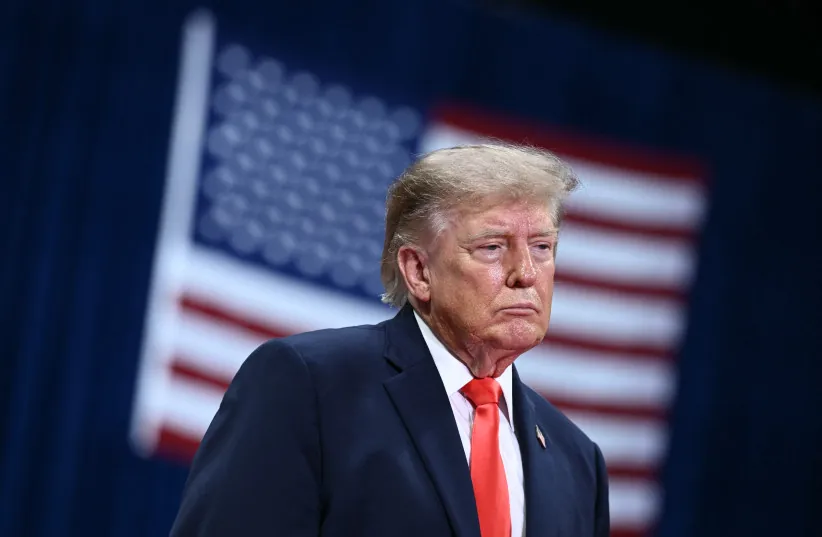
US President Donald Trump “hasn’t made a decision” on whether to strike Iran, the country’s Secretary of State Marco Rubio told reporters on Saturday at the G20 summit in Atlanta, Georgia.
“I think the president’s observation is that the United States remains the most highly capable military power on Earth; we can achieve military objectives if we seek to,” said Rubio. “He hasn’t made a decision. I have no announcement in that regard with you today, nor do we take any of it lightly.”
The US secretary of state made the comment while responding to a report’s question about how confident the Trump administration was that potential strikes against Iran would be brief.
Rubio emphasized that Trump “prefers” to solve the Iran issue “diplomatically,” saying that he would have otherwise attacked the regime “weeks ago, months ago.”
“I think what the president expresses to you is incredible confidence that if we needed to do something militarily, we would have the ability to do it and we have everything we need to be successful, but we would prefer to do it peacefully,” Rubio told the reporter.
Rubio: CENTCOM protecting ‘lifeblood’ of regional economies
An additional question was posed as to how the US planned to assist its allies in the region over the Iranian threat, with Rubio responding that “we’re doing it now.”
“It’s not our oil and natural gas that’s flowing through the Strait of Hormuz; it’s theirs,” Rubio said, noting that US Central Command (CENTCOM) was “there now protecting” what he described as “the lifeblood of their economies.”
“Virtually every day, every other day, we shoot down a drone or a missile that’s aimed at a ship… from those countries,” he noted. “The United States also has an extensive presence in air defense, and we provide that.”
He added that regional US allies are using American military equipment to defend themselves, “along with their own capacities.”
Rubio further noted that the US “fully” recognizes the threat posed by Iran in the event Trump decides to strike, telling the reporter that the “fact that you even have to ask that question is a reminder of the nature of the regime we are dealing with in Tehran that’s been waging war, not just against the United States, but against its neighbors in the region since 1979.”
“The Iranian regime is basically arguing that ‘unless we get what we want, not only will we blow up ships, but we will destroy the energy infrastructure of our neighbors and the entire region.’ Just think about that. Because I think we skip over that like that’s some sort of normal behavior. That’s not normal behavior,” he stated.
Iran would threaten to kill hundreds of thousands with nuclear weapon, Rubio says
Rubio turned to the issue of an Iranian nuclear weapon, stressing the threat the regime would pose if it acquired one.
“Imagine if Iran had weapons of mass destruction of any kind, be they chemical, biological, or nuclear, or all three. What would they threaten their neighbors with then?” he said. “They wouldn’t be threatening to blow up pipelines; they’d be threatening to kill tens, if not hundreds, of thousands of people. That’s who we’re dealing with.”
Turning to Iran-backed terror proxies and militias across the Middle East, Rubio told reporters that the constant attacks across the region should serve as “a reminder” of the Iranian threat.
“The next time a Houthi strike reaches into Saudi territory, it’s a reminder: the Houthis would not have the weaponry they have now were it not for Iranian support,” he said. “The next time Iranian-backed militias in Iraq either threaten the nation-state of Iraq or their neighbors, it’s a reminder that Iran has been a destabilizing force against their neighbors and Iraq all these years.”
“The next time an Iranian missile strikes a target in Bahrain, or in Kuwait, or anywhere else in the region, it’s a reminder of the threat that these people pose,” he continued. “The next time Hezbollah fires a bunch of rockets and invites aggression coming back in their direction… it’s a reminder that Hezbollah would not exist, much less have the capabilities that it has now to threaten its neighbors and launch rockets and missiles, were it not for Iranian support.”