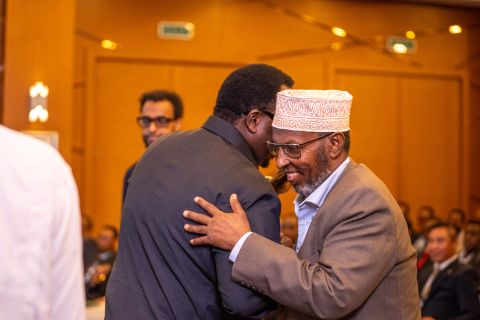
In an interview with Business Insider Africa, Ahmed Mohamed Yusuf, chairman of Hormuud Telecom, reflected on his journey from being the son of a camel herder to helping build one of Somalia’s most prominent telecommunications businesses, and why he believes the country’s next economic breakthrough will come from expanding access to digital technology.
For good reason, few business leaders have experienced Somalia’s transformation as closely as the telecom executive.
He grew up in rural Somalia, where news travelled through conversations with relatives, traders and travellers passing between communities.
His father was a camel herder, and he began his career as a travelling salesman, learning how people conducted business.
When civil war broke out, the future telecom entrepreneur was forced to leave Somalia. On returning, he found a country where communications infrastructure had been destroyed, yet entrepreneurs continued to trade and support their communities.
Those experiences helped shape Hormuud Telecom, established in 2002 when Somalia had been without an effective central government for more than a decade.
Today, Hormuud serves about four million customers and has more than 18,000 Somali shareholders, many of whom supported the business when international investment was difficult to attract.
The company has since helped land two submarine cables, deployed fibre-optic infrastructure across Somalia and introduced mobile services ranging from basic GSM to 5G.
“My years knocking on doors as a salesman had taught me that a difficult market can still be a very good market if you understand where the demand lies. Somalis needed reliable communications, and we believed we could build a successful business meeting that demand,” Yusuf told Business Insider Africa.
Building a telecom business amid Somalia’s civil war
When Hormuud was founded, Somalia’s telecommunications and electricity infrastructure had suffered extensive damage from years of conflict. However, demand for communication remained strong, with some communities relying on two-way radios to stay connected.
Turning that demand into a business required negotiations with international equipment suppliers, complicated transport arrangements and investment in alternative energy sources.
“I remember negotiating equipment contracts in the boardrooms of international telecommunications companies, many of whose executives knew little about Somalia, apart from what they’d seen on the news,” the Hormuud chairman recalled.
“Once we secured the equipment, we faced the challenge of getting it to remote communities, sometimes using trucks and aircraft. We also were early investors in solar power where electricity was unreliable.”
Over the following two decades, the company expanded its network, supported submarine cable connections and invested in fibre-optic infrastructure across Somalia.
How free mobile money transformed everyday business
In 2011, Hormuud launched EVC Plus when Somalia’s banking system was still recovering from the civil war. Moving cash between cities was costly and risky, creating difficulties for traders and families.
The telecom operator responded by making mobile-money transfers free, prioritising widespread adoption over transaction fees.
“Making EVC Plus free was a deliberate commercial decision. We believed there was greater value in building a service that millions of Somalis would use every day than in charging for each transfer,” he explained.
“But we also knew that free transfers alone wouldn’t be enough. People needed somewhere to spend their money. So, we worked directly with local merchants, showing them how to accept mobile payments.”
Consequently, the strategy encouraged merchants to adopt digital payments, making the service increasingly useful for everyday transactions.
By 2018, the World Bank estimated that mobile-money transactions across Somalia’s providers reached $2.7 billion monthly, while the businessman noted that more than 90% of Somali households now use mobile money.
Between 2019 and 2024, Hormuud’s EVC Plus platform also facilitated more than $914 million in humanitarian transfers to 3.5 million beneficiaries.
Rethinking financial inclusion in Africa
Somalia’s mobile-money adoption has created a financial system in which millions regularly make digital payments despite limited access to conventional banking.
The telecom executive believes this provides an opportunity to connect existing transaction histories with formal financial services, particularly credit and savings.
“Somalia has achieved something that banks around the world have spent decades working towards. Millions of people now use financial services every day, even though relatively few have conventional bank accounts,” he said.
“Millions of Somalis are already financially active, with years of transactions behind them. We have an opportunity to connect that experience with the strengths of conventional banking, giving people access to savings, credit and other services as their needs grow.”
Meanwhile, Salaam Somali Bank, Hormuud’s sister institution, is working with the Danish Refugee Council to connect traditional community savings groups with formal banking services.
The $19 smartphone financing opportunity
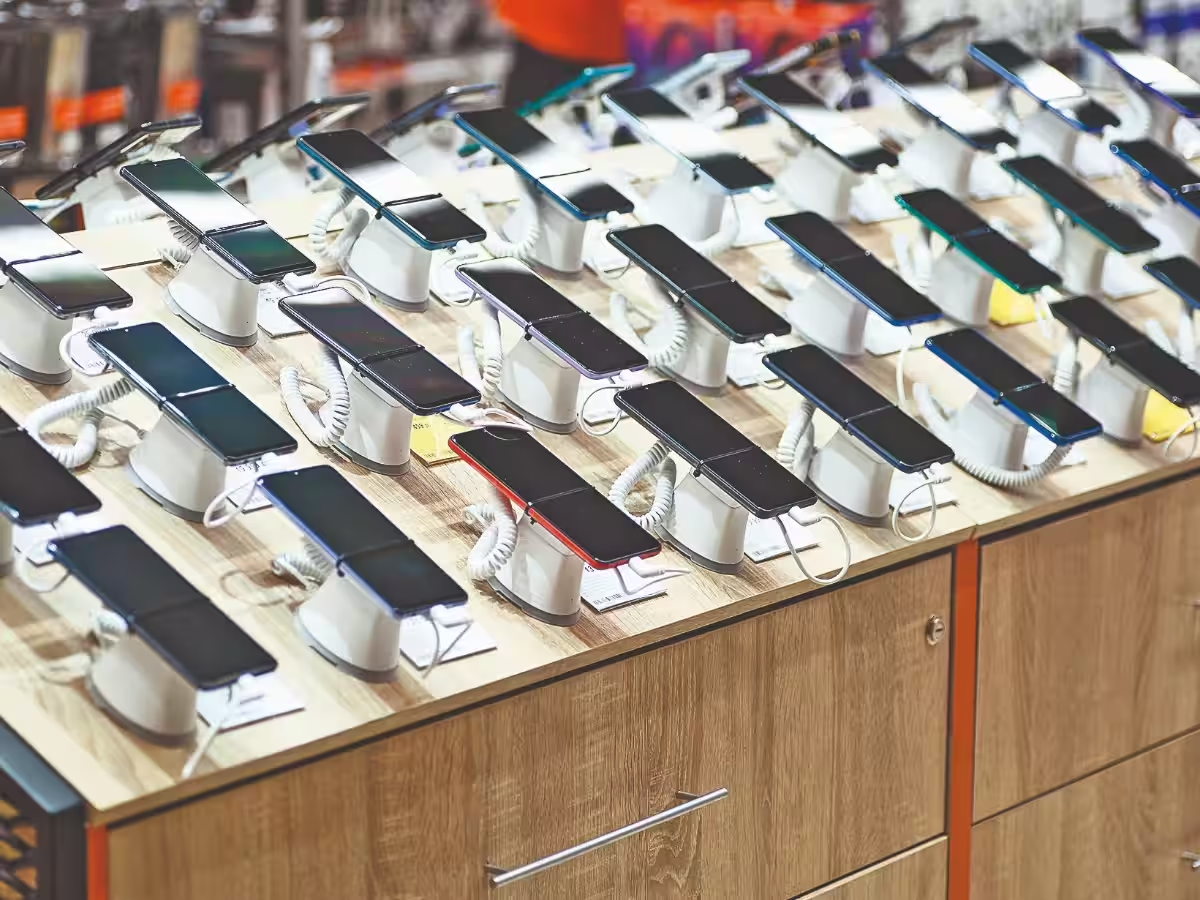
Despite expanding mobile coverage, smartphone affordability remains a major barrier to internet access in Somalia, where more than 70% of the population has 4G coverage, but nearly half of Hormuud’s customers still use basic feature phones.
A smartphone typically costs between $238 and $317, compared with an estimated average monthly household income of $264.
To address the challenge, the company partnered with Get-Phone Limited to provide interest-free smartphone financing, with deposits starting at $19.
The programme has financed more than 8,000 smartphones, with almost 90% of customers purchasing their first smartphone and nearly two-thirds aged under 35.
“We’ve spent decades building the infrastructure to bring Somalia online, but if people cannot afford the devices to use it, we’re leaving much of that investment’s economic potential unrealised,” the chairman said.
“I increasingly believe we should treat smartphone access as a public good. In a country like Somalia, where mobile technology is already central to everyday life, the benefits of getting more people online extend far beyond the individual.”
Challenging traditional credit assessments
Beyond smartphone affordability, Hormuud’s financing programme is testing alternative approaches to assessing borrowers.
In August, Get-Phone began financing customers with lower credit scores, with early results indicating that their repayment performance is comparable to that of higher-scoring customers.
“The agreements are still relatively young, so we need to understand these results more fully before drawing firm conclusions, but it does raise an interesting question: how many people might be reliable borrowers without ever having had the opportunity to demonstrate it?” the Somali entrepreneur said.
Get-Phone considers mobile-money transactions and SIM-card history when assessing applicants, while customers can repay daily, weekly or monthly to accommodate irregular incomes.
The programme considers customers in default only after 30 days without payment.
“There’s good business sense in giving people room to recover from a setback. Someone might finance a smartphone with us for twelve months, but we hope they’ll remain a Hormuud customer for the next twenty years,” he explained.
Get-Phone is also expanding into 15 additional branches across four Somali states.
Investing in Somalia’s digital future
Beyond mobile services, Hormuud is investing in data centres, 5G and renewable energy infrastructure to support Somalia’s growing digital economy.
The company operates 11 data centres with a combined capacity of 10 megawatts, while nearly 90% of its telecommunications masts run on solar power.
Additionally, some data centres obtain up to 95% of their daytime electricity from solar energy.
“As banking, healthcare and other industries become more dependent on cloud computing and data, I want Somali businesses to have access to that infrastructure here at home, so they can develop their own services and compete in larger markets,” the telecom executive said.
The company is also working with the United Nations Development Programme on initiatives designed to support more than 2,000 young Somalis and 360 small businesses through training, mentorship and employment opportunities.
For the Hormuud chairman, these investments form part of a broader ambition to help Somalia move beyond connectivity towards greater economic productivity.
“I want to see Somali farmers selling into regional markets, manufacturers expanding production and more young people building successful careers without having to leave their country,” he said.
“Imagine what those businesses could achieve with more reliable infrastructure and better access to investment.”
After more than two decades of building telecommunications infrastructure, Yusuf believes the company’s future impact may be measured by the businesses its networks help create.
“Over the past 25 years, Hormuud has helped countless Somali businesses grow. Some of our greatest achievements over the next 25 years may belong to businesses that don’t even exist yet.”