Back in 2020, on the eve of the Israeli elections, Prime Minister Benjamin Netanyahu visited the White House and met President Donald Trump.
While Netanyahu stayed at Blair House, the presidential guesthouse, his main political rival, Benny Gantz of the Blue and White party, was staying across the street at the Jefferson Hotel.
Even though Gantz wasn’t making an official visit like Netanyahu, he was invited to meet with Trump in the Oval Office, an invitation he gladly accepted.
The separate meetings occurred while Trump was preparing to unveil his peace plan, the so-called ‘Deal of the Century’, and he wanted it to be endorsed across the Israeli political spectrum, backed by any future coalition. Gantz ended up forming a unity government with Netanyahu in April that year. This time, looks like Trump is after the same thing.
Although the US President did not invite Netanyahu’s main rival in these elections, Gadi Eisenkot, leader of the Yashar Party, for a photo op under the portrait of George Washington, senior American officials have reportedly intimated they would prefer Israel have a broad-government after the vote.
Ambassador Mike Huckabee did meet met with Eisenkot, unannounced at the time, but later exposed and and downplayed by the US Embassy in Jerusalem.
Just this Sunday, billionaire investor and Trump supporter Bill Ackman publicly called for a unity Israeli government. Reportedly, he is one of many figures in Trump’s orbit advocating such a government.
Such a government, which would exclude hard-right extremists like current ministers Itamar Ben-Gvior and Bezalel Smotrich, ticks all the boxes for the administration. It paves the way for several foreign policy moves and diplomatic maneuvers.
US envoys Steve Witkoff and Jared Kushner are reportedly frustrated with the pace of the Gaza plan, US Ambassador to Turkey Tom Barrack disagrees with Israel’s Syria strategy, and people around Secretary of State Marco Rubio want to strengthen the Lebanese government and are also frustrated over Israeli settler violence against Palestinians in the West Bank.
These issues aren’t stalled only because of Israel, but they would move faster without the hawkish and uncompromising position of right-wing factions in the government.
In September 2025, those factions were flirting with the idea of annexing the West Bank. When Trump was asked about this by reporters, he said “I will not allow Israel to annex the West Bank.” Smotrich later said that he was convinced Trump would reverse himself. He and Ben-Gvir also defied the President again in October 2025, when both voted against Trump’s Gaza deal.
And of course the holy grail for Trump – normalization with Saudi Arabia and the expansion of the Abraham Accords. Israeli officials know the Saudis will not normalize relations without some sort of a pathway to a Palestinian state. Smotrich, known for his opposition to any kind of compromise on this issue, said that the Saudis could “keep riding camels” if a Palestinian state was a precondition, offending Riyadh, angering Washington and embarrassing Netanyahu.
From Trump’s perspective, a unity government or a broad coalition can reach consensus on these issues and would have a mandate from the vast majority of the Israeli electorate to move forward with strategic moves with less obstacles and political opposition.
And it’s not only Trump, Netanyahu is interested in that too. In a June press conference he said that he would seek a “broad national government” after the elections. He did not say a right-wing government as he spoke about the importance of a national consensus to face Israel’s future challenges.
Netanyahu’s own ambassador to Washington, Yechiel Leiter, publicly said the premier prefers a national unity government. He also said Ben-Gvir won’t get a second term as national security minister.
For Netanyahu, it is also an opportunity to try and change Israel’s image on the international stage, after three years of war that damaged it and caused Israel’s traditional allies to publicly distance themselves, ing among Israel’s traditional allies in the west and among, not only in Europe but also, crucially, in Washington among Democrats and some Republicans.
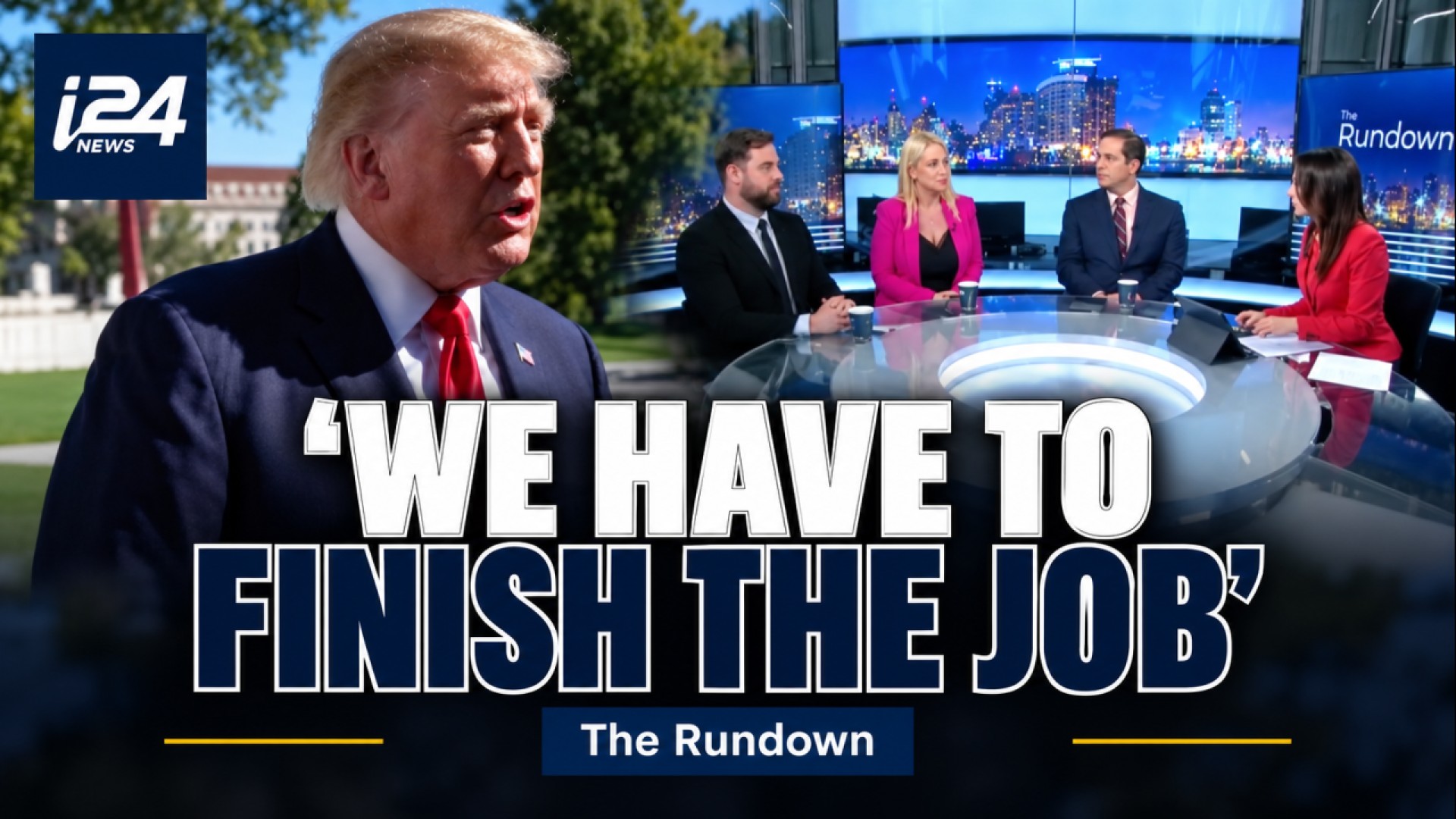
Fortunately for Netanyahu, the public at home also supports such a government. Recent polling found that 50 % of Israelis prefer a broad unity government. Only 23% support a right-wing ultra-orthodox coalition such as the one he has now.
There is of course another scenario that is much less preferable for both Netanyahu and Trump after this election – another election cycle. Netanyahu would be leading a transitional government that lacks a mandate from the public, and the government’s political powers would be limited.
So yes, Trump endorsed Netanyahu because he knows him, probably also admires his strongman personality, and believes he can work only with him to “continue the job” or achieve strategic goals that would lead to the more stable middle east that benefits the American interest in the region. But he also wants a coalition that can let that happen, as quickly as possible, before he leave the White House in January 2029.