The United States has long debated how to manage its relationship with China, balancing security concerns and economic interests. That dynamic has evolved considerably under US President Donald Trump, who has cultivated a seemingly close personal relationship with Chinese President Xi Jinping.
With November’s midterm elections set to deliver a verdict on the Trump administration, what could the results mean for US-China relations?
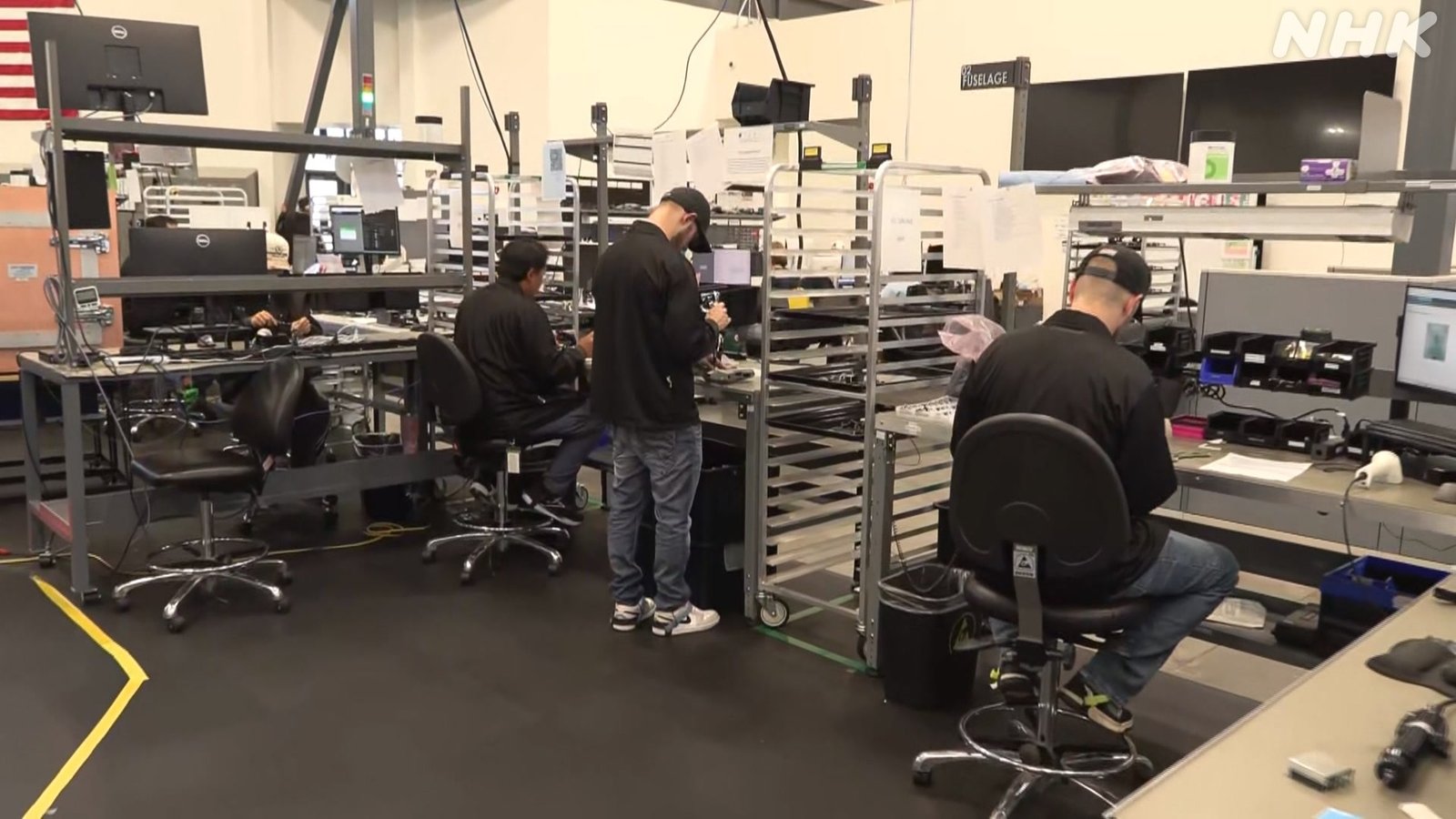
Defense technology firm Red Cat is based in the western US state of Utah. The company makes drones for the US and allied nations’ militaries. The firm mainly produces two types of drones — one for search-and-rescue missions and another for attacks. Its products can fly autonomously and recognize targets, even without using GPS signals.
Over the last decade, the US has increasingly designated foreign-made drones as a national security threat, implementing many restrictions and regulations — particularly on those from China.

As a result, Red Cat has overhauled its supply chain. By 2024, it stopped using Chinese-made parts in its core systems. Chief Operating Officer Chris Ericson says overreliance on Chinese goods had weakened the company while risking loss of intellectual property as well as its supply chain. He adds that using components from China could result in leaks of information back to the country.
Ericson says the US and its allies cannot build up manufacturing bases if they continue to rely on China.

“How will we protect ourselves in the future? Building up our own industries, manufacturing, supply chains, making sure that in case things change or if things change in the future, that we’re still able to sustain ourselves.”
US-China relations
Trump has called for boosting such domestic production as a key pillar of his economic policy, which included imposing massive tariffs on Chinese goods in the earliest days of his second term.
But despite viewing China as one of the US’s biggest competitors, Trump has spent much of the past year deepening a unique personal relationship with President Xi. They have met twice so far this year, and are expected to meet again in Shenzhen in November.
Trump said at their summit in September, “From the time of my first election in 2016, President Xi and I have forged a friendship — a truly great friendship, actually — built on mutual respect and the vital interests of our people.”

US-Taiwan relations
The leaders’ growing closeness is prompting concerns for some.
The Formosan Association for Public Affairs, or FAPA, is made up of people with roots in Taiwan. For more than four decades, FAPA has sought both public and political support for Taiwan.

The US has long walked a delicate line of maintaining relations with China while tacitly supporting Taiwan. But FAPA is concerned that Trump’s growing closeness with Xi, as well as his transactional style of politics, could threaten that balance. FAPA Executive Director Chiao-Yun Anny Hsiao says they are worried Trump will use Taiwan as a bargaining chip in negotiations with Xi.

Ahead of the midterms, FAPA members visited congressional offices of both parties to call for continued US support for Taiwan’s security.
Hsiao says, “The importance of our work right now is to continue to inform policymakers that make real decisions on legislation that will impact US-Taiwan relations right here in Congress.”
Congressional lawmakers could soon have much more influence on US-China relations. If the Republicans lose legislative control to the Democrats in the midterms, Trump could have much less freedom to unilaterally implement American policy on China — no matter how close his relationship with its president.
Ebizuka Megumi
NHK World
Correspondent