
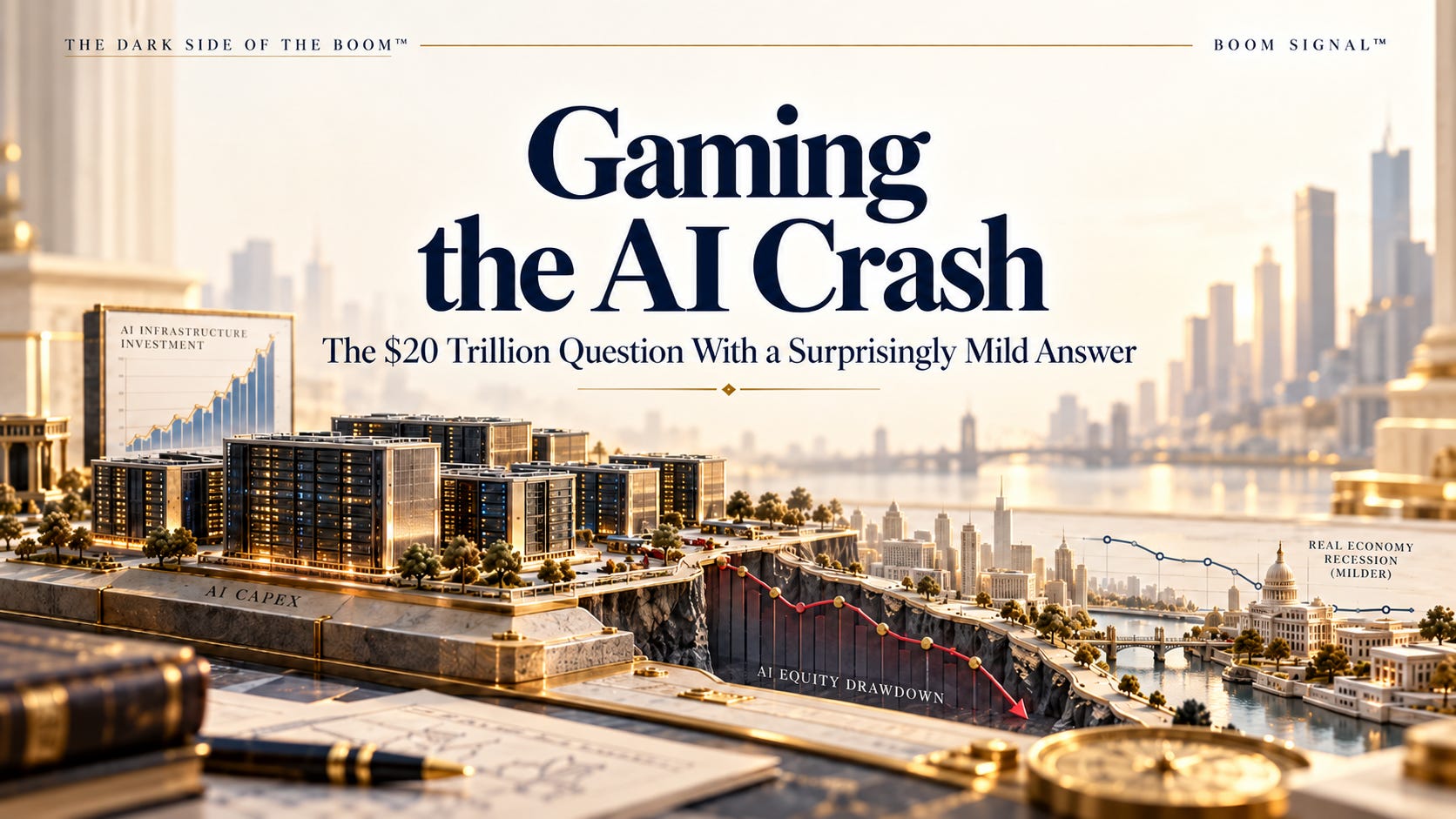
The extraordinary thing about the AI investment boom is that the market has become so accustomed to enormous numbers that another trillion dollars of prospective spending barely raises an eyebrow. Data centres are being financed on a scale that would have impressed the architects of America’s great infrastructure expansions, while equity investors continue debating whether the next generation of computing power will deliver enough productivity to justify the extraordinary sums being committed.
Dario Perkins at TS Lombard has approached the problem from a more uncomfortable direction.
• TS Lombard has put numbers around an uncomfortable scenario for the AI boom, and the potential financial damage is considerably larger than the economic recession it envisages.
• The growing dependence on recycled capital, vendor financing and future revenue commitments raises questions about how resilient the investment cycle would be if spending merely stopped accelerating.
• The distinction between losses in financial markets and damage to the real economy is central to Dario Perkins’ argument, with important implications for credit, consumption and monetary policy.
• The most intriguing part of the analysis may be what happens after the crash, when lower interest rates could revive parts of the economy that have been left behind by the AI boom.

