Virginia Tech and Xidian University Hastily scrap joint undergraduate program U.S. Defense Department audit order in August this year cited as a factor Many elite universities, including Harvard and MIT China immediately protests, saying “academic exchanges are being politicized”

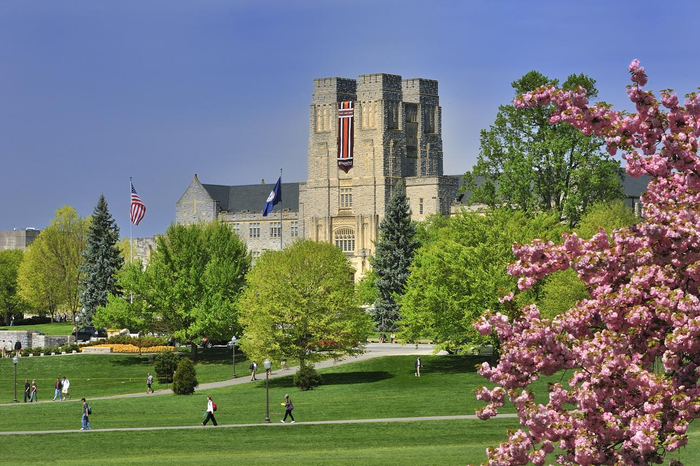
The Hong Kong-based South China Morning Post (SCMP) reported on the 22nd that major U.S. universities are successively ending or scaling back academic cooperation with China. According to the report, Virginia Tech recently decided to end in the first half of next year an undergraduate program it had jointly run with China’s Xidian University.
The move brings an early end to a cooperation program between the two universities that was originally scheduled to run until 2029. Virginia Tech Deputy Spokesperson Margaret Ashburn told SCMP, “The joint program with our Chinese counterparts will officially end at the close of this academic year.”
SCMP reported that 30 major U.S. universities have already ended at least 80 academic partnerships they had been conducting with Chinese universities or research institutions. The move followed an instruction from the U.S. Department of Defense last August for the universities to conduct internal audits of their overseas research partnerships.
The aim was to have them check whether they were cooperating with Chinese universities and research institutions that were effectively blacklisted. Fudan University and other major civilian universities in China are also on the list. Under the U.S. Department of Defense’s guidelines, universities that fail to do so will no longer be eligible for federal research funding.
The list of the 30 U.S. universities has not been made public, but according to local reports, it includes many prestigious institutions such as Harvard University, Massachusetts Institute of Technology (MIT), and Cornell University.
The Chinese government has repeatedly protested these measures by the U.S. government. Liu Chang, a spokesperson for the Chinese Embassy in the United States, criticized the U.S., saying, “It is applying the concept of national security far too broadly and politicizing academic exchanges.” He added, “Scientific research requires openness, and restricting normal academic exchanges will also harm U.S. researchers and research institutions.”
Song Kwang-seop, Beijing correspondent