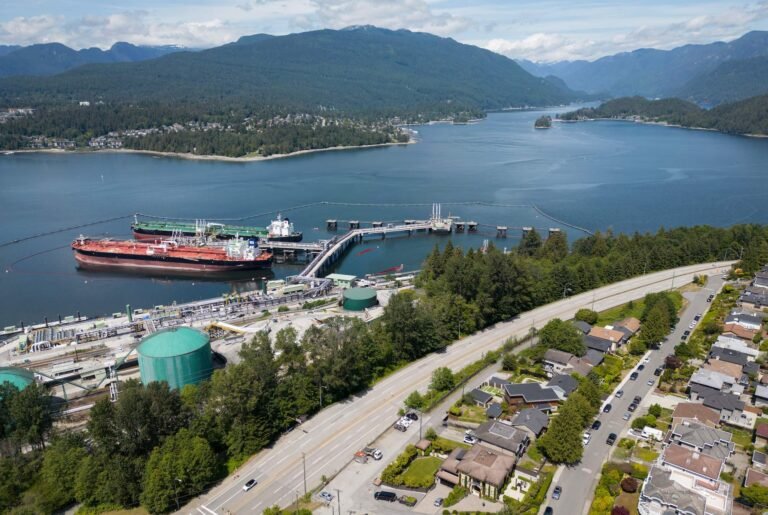
CALGARY — LNG Canada’s partners have green-lit a $33-billion expansion that will double production at the joint venture’s northwestern British Columbia plant, capping months of increasingly bullish signals for the liquefied natural gas megaproject.
Phase two of the development was one of the first five projects referred to the federal Major Projects Office a little over a year ago, as Ottawa sought to accelerate large investments and more than double Canadian LNG production while diversifying energy exports beyond the United States.
“The speed of this project shows that now, when Canadians want something built, we get it built,” Prime Minister Mark Carney said at a news conference in Vancouver on Tuesday. “Twelve months from referral to final investment decision is the pace that this pivotal moment in Canada’s history demands.”
Related Articles
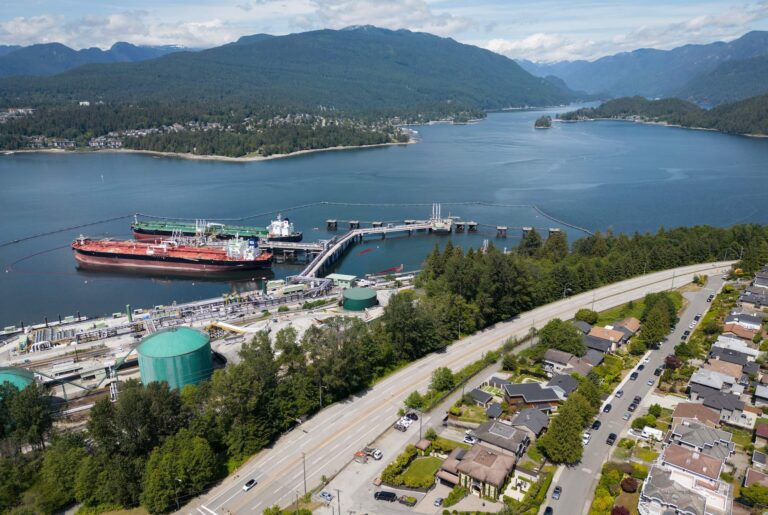
Expanding the Kitimat, B.C., facility’s capacity from 14 million to 28 million tonnes per year will require a near-doubling of the capacity of the Coastal GasLink pipeline that supplies it from wells in northeastern B.C. On Tuesday, the pipeline’s operator and co-owner TC Energy confirmed it will proceed with the expansion early next year.
Construction is expected to begin immediately on LNG Canada phase two and could create an estimated 4,000 jobs at peak construction in Kitimat alone, Carney said Tuesday. The project is operated by Shell, which holds a 40 per cent stake, alongside Malaysia’s Petronas with 25 per cent, Mitsubishi Corp. and PetroChina with 15 per cent each, and Korea Gas Corp. with five per cent.
Some analysts believe the project could qualify for Ottawa’s new so-called “Productivity Mega Deduction,” a tax break for major capital investments, including pipelines, that Carney touted during the recent Canada Investment Summit in Toronto.
Parts of LNG Canada’s expansion could benefit as well. Under changes announced earlier this month, qualifying LNG liquefaction equipment can be written off immediately, while Ottawa also dropped a proposed emissions-intensity requirement for LNG facilities to receive the tax benefit.
Even before Tuesday’s announcement, there were mounting signs that the partners were closing in on a decision to move forward with the second-phase investment.
Shell’s $22-billion April acquisition of ARC Resources, one of Canada’s largest natural gas producers, was viewed by analysts as a strategic move to support the global major’s ambitions to expand LNG Canada.
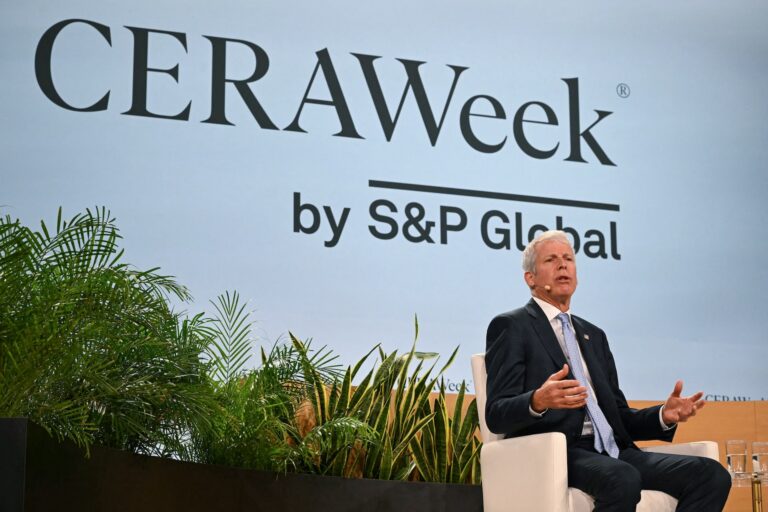
At the time, Shell CEO Wael Sawan said the company had growing confidence in the federal government’s approach. “When it comes to enabling LNG Canada phase two, this has been a significant leap forward in terms of their conviction around LNG projects,” he said, adding that it had “raised the likelihood of a potential opportunity moving forward.”
The month prior, LNG Canada had settled a commercial agreement with TC Energy to advance expansion of the Coastal GasLink pipeline to more than four billion cubic feet per day.
LNG Canada was designed from the outset as a 28-million-tonne-per-year export facility—and secured environmental permits for that capacity early on—although its partners initially green-lit only two of the four planned liquefaction processing units, the so-called “trains,” in 2018.
Shell is betting on growing Asian demand for liquefied natural gas over the next two decades, particularly from emerging markets in South and Southeast Asia—with those regions alone projected to account for about 40 per cent of global imports by 2050.
Since LNG Canada began shipping cargoes in June 2025, its exports have been concentrated in established East Asian markets, led by South Korea, followed by Japan, China and Taiwan, according to tanker data compiled by RBC Capital Markets.
The expansion is expected to begin commercial operation in the early 2030s, according to Shell.