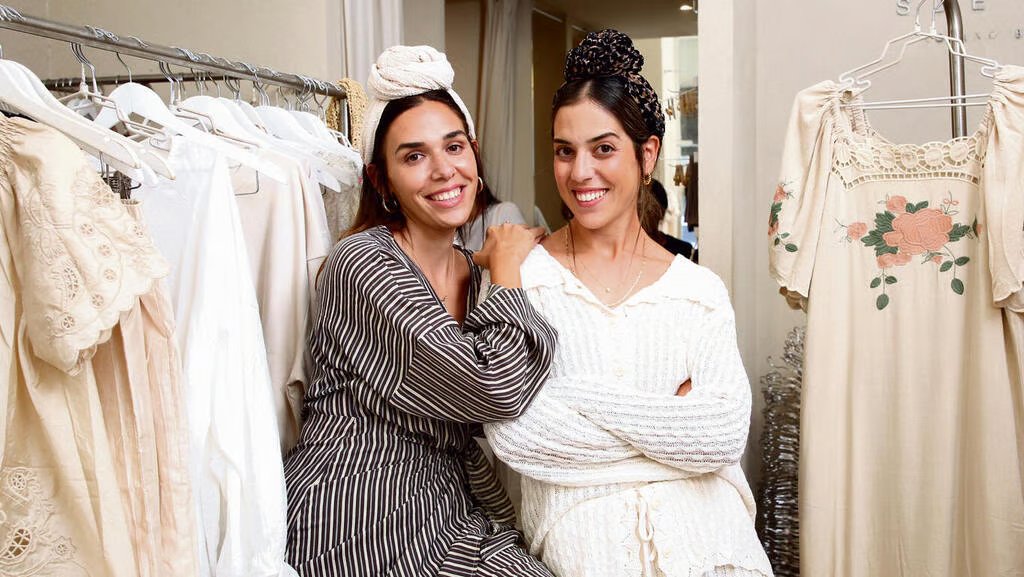
It began with a single skirt that Ariela Avitan sewed for herself in ninth grade at the religious girls high school in Kfar Pines. Her friend Adi Cohen, who was sitting beside her, loved it and asked where she had bought it. Neither could have imagined what would follow.
They moved on to a home sewing machine, bought fabrics at Bezalel Market and began producing clothes — a skirt here, a blouse there — organizing makeshift sales at their school as the business started to grow. When the home machine could no longer keep up with demand, they sent their sketches to sewing workshops in the West Bank, and later connected with a Chinese manufacturer after finding a label on a dress in a store in south Tel Aviv.
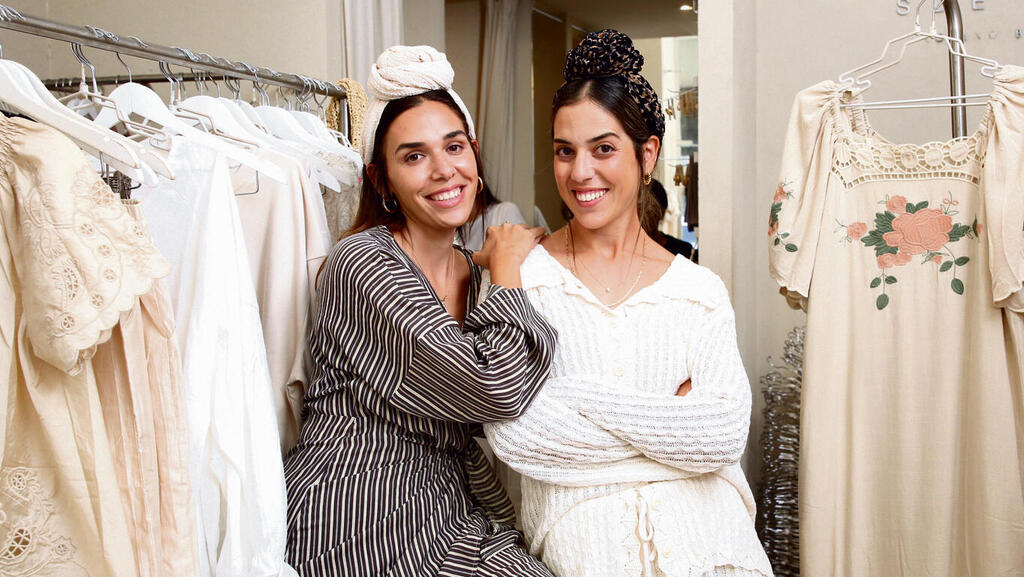
Ariela Avitan and Adi Cohen began sewing clothes and selling them in high school
(Photo: Ryan Preuss)
Wiesel and Terminal X are known for identifying small companies with growth potential, with annual sales of around 20 million shekels, such as Itay Brands, Sisters and Strongful, and helping them grow by leveraging Fox’s strengths, with the goal of reaching 100 million shekels in sales and even an IPO.
“We don’t like the word ‘exit,’ because it sounds like the end of a process, and for us this is only the beginning,” the two told Mamon in an interview.
Adi Cohen, 38, married and a mother of five from Pardes Hanna, and Ariela Avitan, 38, married and a mother of three from Nir Galim, are religious women who cover their hair. They built Sde Bar step by step, eventually bringing their husbands into the business as well.
The acquisition of control in Sde Bar by Wiesel through Terminal X of the Fox Group has put a new category on the map: “modest fashion,” giving it a stamp of legitimacy as no longer merely a niche, but a market with significant growth potential, especially against the backdrop of what is seen as a strengthening of religious observance in Israel.
“Since October 7, we feel that even among the general public there is a greater desire to dress less revealingly,” Adi said.

Harel Wiesel: Negotiations took nearly a year
(Photo: Dana Kopel)
Another sign that major retailers have recognized growing demand for modest fashion: the Shirat Hayam chain, which also caters to religious women, has entered shopping malls for the first time, opening at Ofer Grand Mall in Petah Tikva with plans to expand to additional malls.
How did the connection with the Fox Group come about?
“Contrary to what people think, we approached them ourselves,” Ariela said. “It had been our dream since we were 20 to reach the Fox Group. In our eyes, they are the best. They buy controlling stakes in companies, leave the founders as shareholders and as the people leading the brand, and help it grow.
“The business had grown to the point where we were no longer dealing only with fashion, but with customs, containers, the supply chain and inventory. Instead of thinking about the next collection, we found ourselves busy with operations. We felt we needed a strategic partner, with us bringing our knowledge of the audience and them bringing the experience and expertise in logistics, shipping systems, brand building, information systems and everything else needed for the next leap.
“Our problem was not bringing in customers, but keeping up with demand. The clothes sold quickly and it was hard to produce enough. The audience grew with us and also developed around us: families grew, girls became teenagers, and more women were looking for clothes that were not revealing.
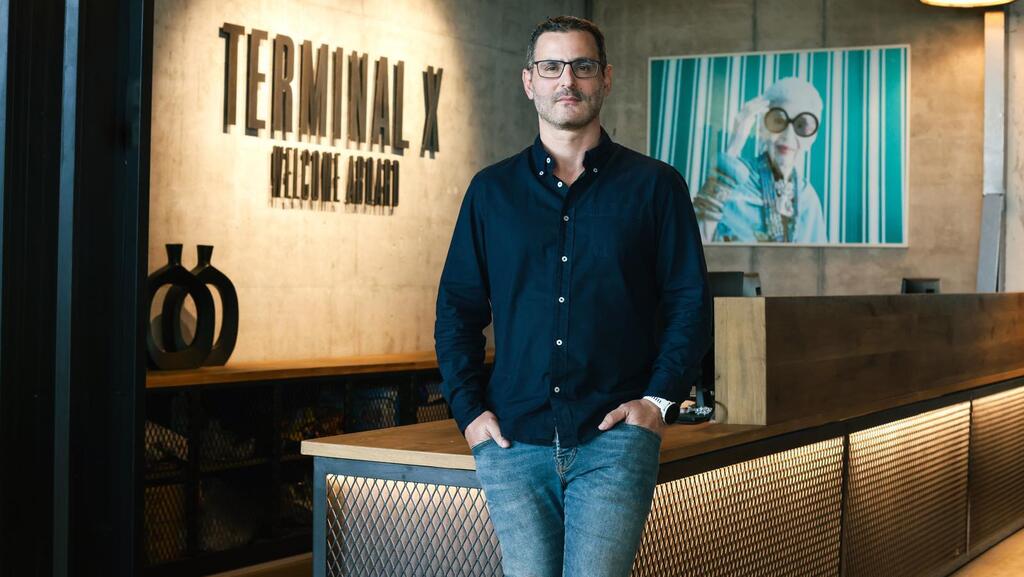
Nir Horvitz, CEO and partner at Terminal X
(Photo: Dima Taliansky)
“My husband Alon has a good friend from the army, Omer Ben Shach,” she said, referring to the son of businessman Modi Ben Shach, “who is connected to the business world. Omer is a friend of Tomer Czapnik, Wiesel’s son-in-law, who serves as CEO of Retailors, Fox’s sports company, and he connected us with Nir Horvitz, CEO and partner at Terminal X.
“We said: We’ll try. What’s the worst that can happen? They’ll say no. We prepared a page with data and numbers, no presentation or promotional videos, and sent it to them. They got back to us and said they wanted to meet. It was a nice meeting, and we came out fairly skeptical. The next day, we got a call saying they were interested. We were over the moon.
“The negotiations lasted a year. We wanted to be sure our DNA would be preserved. We met with Wiesel and spoke with owners of companies they had acquired, to understand what it looks like from the inside and to make sure this was the right step.”
It all began at the religious girls school, called an ulpana in Hebrew.
“Our entertainment outside the dormitory was going to Bezalel Market in Tel Aviv, buying fabrics and sewing, or buying clothes and modifying them,” Ariela said. “On Shabbat at the ulpana, everyone gathered in a huge auditorium. We wore our clothes, and every entrance into the room felt like a fashion show.
“That was our best advertising: everyone wanted the clothes. We would swap and lend them to one another.
“In 10th grade, we went to a weeklong camp with girls from all over the country. It was an opportunity to expose our business to wider circles and hold a serious sale. That was our first sale. We bought cheap accessories at Bezalel Market, upgraded them and put them in pretty boxes. We also bought pearl necklaces, removed a few beads and changed them slightly.
“We dressed nicely, wore them and took a long walk through the dining hall so everyone would see the look. The girls asked whether they could buy the necklace I was wearing. That’s how, without really meaning to, we understood the power of branding and marketing.”
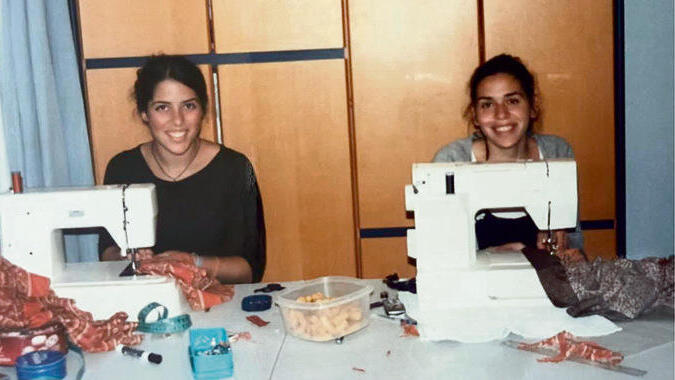
Ariela and Adi at the start of their fashion journey
(Photo: Private album)
In 2006, they finished school and began national service. Ariela served in Kfar Pines and Adi in Gush Etzion.
At the time, harem pants worn under skirts were fashionable in the religious community. They sewed them and sold them at national service seminars.
Ariela had already married. Her husband was 21 and in the middle of his army training, serving as a combat soldier in an elite unit and barely making it home. “We lived in Shvut Rachel, near Shiloh, and my husband was in the army all the time,” she said.
Meanwhile, Adi married Elyashiv from Beit El, a musician with a wedding band called Ruach Tzfonit, who also works at Sde Bar. “I had a hard time in the West Bank, and I moved to Nir Galim,” Ariela said. “Between apartments, we spent a month with my husband’s parents. Adi called and said: ‘Maybe we should turn the sales into something more official, a real business?’
“I thought to myself, what do I have to lose? My husband was hardly home anyway. The fashion chains had nothing for the religious sector. You would walk into a store, see something you liked, but it wouldn’t work in terms of length or openings.
“To wear it, you had to add fabric, sew it, sometimes even buy two skirts and connect them to make one longer. We wore a basic shirt under everything to deal with necklines and sleeves. It was accepted, but not necessarily attractive.
“We started asking: Why do you need a basic shirt under every garment? Why not make a complete garment that works from the outset? That’s how we began refining what is called modest fashion.
“We started producing five dress designs in small quantities and sewed everything ourselves at home. Facebook was just beginning then. We did not grow up with the internet the way people do today; it was new. We said we had to market ourselves well, otherwise how would people find us?
“We organized a photo shoot with help from the family and a cousin who modeled. We did a full fashion production, something that was not common at the time for the religious public. We uploaded the photos to Facebook and tagged our friends.
“Because of the ulpana, we had friends all over the country, and they passed it on. Meanwhile Adi got married and lived in central Jerusalem, and sales were held at her home and at mine in Nir Galim. We were stunned by how many people came.
“To expand the variety, we combined our designs with special items we bought at Bezalel Market and modified.”
As demand continued to grow, they realized they needed to rethink things again.
“We understood that we couldn’t sew everything ourselves, so we moved production to Palestinian sewing workshops in the territories,” Adi said. “We would arrange to meet the workshop owners at junctions, explain what we wanted, and they would bring the finished goods there.”
Weren’t you afraid?
Ariela: “We weren’t afraid because those were areas we knew. Adi lived in Beit El at the time, and I had previously lived in the Shiloh area. We were 21, and in hindsight it was not exactly an ordinary sight.
“One time, a workshop disappeared on us right before peak holiday sales. No one answered. My husband’s father had an Arab friend, a car importer in the same village as the workshop. We asked for help. He went to check, and then we got a call: ‘Everything is fine, I’m on my way.’”
The sales were highly successful, and the two decided they needed to open a studio. They found a place on Jaffa Street in Jerusalem.
“We did not plan to open a store, but we said that if we already had a central location, maybe we could sell a few dresses and cover the rent. That’s how the first store was born. Very quickly, it became clear that a store has to be filled with clothes all year round, not only before holidays. It became a daily business that required continuous production, and we realized we needed to look for alternative manufacturers.
“In July 2014, when Operation Protective Edge began, we stopped sewing in the West Bank. We also wanted to lower the prices of the dresses, which were high — 400 shekels to 600 shekels on average. Fabric costs in Israel were expensive, so we decided to go to China.”
How do two young women who had never dealt with a factory and had never been to China find a Chinese manufacturer?
Ariela: “When we don’t know something, we research and learn until we find the answer.
“We spent a lot of time in south Tel Aviv and saw dresses made from fabrics similar to ours at significantly lower prices. We checked the labels and saw they were made in China, along with the name of the Israeli importer.
“We decided simply to go to him. We knocked on the door and asked: ‘How do you make these clothes? Maybe you can help us?’ He said he had a sewing workshop in China and suggested we come and produce our clothes there. We met him several times, felt he was a good person, and then decided to take the plunge and go to China.
“That was 13 years ago. Adi was pregnant and we went anyway. We arrived in Guangzhou and were overwhelmed by the smells, the markets and all kinds of foods we didn’t know. Adi was vomiting all the time. When we got on the plane back to Israel, we said: ‘We’re never going back there. What is this horror?’ But when the clothes arrived in Israel and everything sold at an amazing pace, it was clear we would have to go again.”
“We used to travel to China about four times a year and eventually got used to it. Meanwhile, we kept growing. We produced reports, analyzed data from the stores and website, learned and refined the business.
“We opened a store in Givat Shmuel, and in 2019 opened our flagship store in Jerusalem. It was near the light rail and had very heavy customer traffic. At the same time, every store opening seemed to come with a birth in the background. We say every child brought their own blessing, and the business grew. We reached five stores and a website that performed very well.”
Even though I wouldn’t ask a man this question, and even though it may be seen as sexist, how did you manage family life with small children while running a business that sometimes required urgent trips to China?
Adi: “People ask us all the time, and we have a joking answer: ‘The house isn’t that clean, the food isn’t that tasty.’ But really, there is a lot of help. The family is close, and the husbands are very involved. I don’t see five children only as a difficulty. It is something I wanted and chose. I admit I have a lot of help — my mother and my husband, who picks them up from their activities.”
Ariela: “My oldest is 15 and already helps. My second daughter helps too. Life in a moshav makes things much easier. There are rides, neighbors help one another pick up the children, and the parents and spouses also take part.
“Before COVID, we flew to China four times a year, for about two weeks each time. It was very hard. I remember crying because I left a three-month-old nursing baby at home. While working, we pumped milk so we could preserve breastfeeding when we returned. We set an alarm every four hours, including at night. We pumped in taxis, markets and factories.”
Then COVID came, and they found a blessing in the website.
“We had a website and sales were not hurt, and above all everyone learned to work remotely,” Ariela said. “We discovered not only that it was possible to manufacture remotely, but that sometimes it was more precise and better. Now we travel once a year, mainly for development.”
Shortly after they opened another store in Kfar Etzion, October 7 came and their husbands were called up for reserve duty.
“Alon fought in Be’eri and saw all the horrors,” Ariela said. “In our moshav, Nir Galim, there was a severe sense of emergency: sirens, children at home and instructions to stay inside. We live on the perimeter road, and I saw a convoy of men in uniform heading out for reserve duty. It felt as if almost only women were left.
“At the entrance to the moshav, the gates were closed and armed guards were posted. On the fourth day of the war, we understood that we had to meet and think about how to run the business. One came from the north and one from the south. On the way, we saw empty roads, vehicles near military bases and guards. It was an unimaginable sight. We reached the office and worked, because in the end we have responsibility toward our employees and the business.
“We used tools from COVID and built a way to operate. Then, on the way home, alerts started across the north, and we thought the war in Lebanon was beginning. We were shaking with fear. We spoke to each other the entire way. When I arrived, my parents were watching the children, and I needed half an hour just to cry and calm down.”
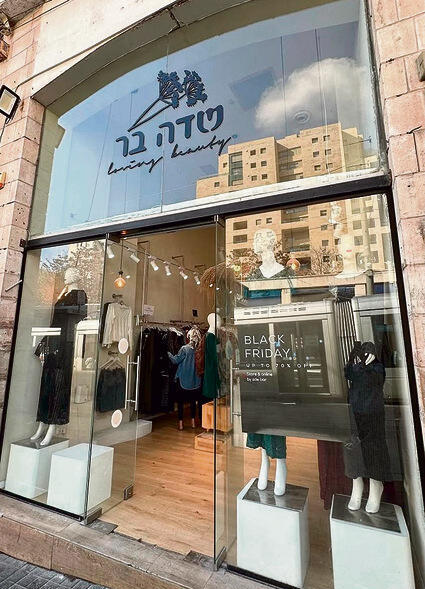
Sde Bar branch in Jerusalem
(Photo: Publicity)
Adi and Ariela wondered who would want to buy a dress in days like those. But, as during COVID, they were again surprised for the better.
“Once again, we understood the power of clothing,” Adi said. “Our offices are in Neve Ilan, and the warehouses had inventory for the website. Evacuees were staying in a hotel near the offices, and women kept coming to us. It was a kind of healing. They said this was their comfort: to come, receive a new garment, feel like a woman again and feel normal for a moment.
“Some had arrived without belongings and without clothes. War widows came too. The religious public, in our feeling, paid a very painful price in the war, and there were many fallen soldiers. Many of the young widows are our customers. Relationships and friendships were created. They came, talked, found comfort in clothing and processed together what they were going through. They were almost therapeutic sessions. In Jerusalem, evacuees from both the north and south came too.
“At the same time, we saw sales growth, both online and in stores, and began to understand that a crisis does not necessarily mean everything stops. Our contact in China didn’t understand. When we increased production, she asked: ‘Aren’t you at war? Who is going to buy all these clothes? Where we come from, during war people buy food.’”
Who is your audience, and how has it changed over the years?
Ariela: “In a certain sense, the audience is us — what we want, what our friends and family want. It is a process of clarification and refinement for us as well. We are religious, from the religious-Zionist community. But that definition has broadened a lot. Once, you could identify a religious woman by a certain dress length or a certain style of head covering.
“Today there is a broad spectrum: from strict adherence to all rules of modesty to a woman who wears pants and even does not cover her hair, and still defines herself as religious. Our innovation is to offer variety and solutions for this audience, which is large and diverse.”
Adi: “I define myself as religious. My husband prays three times a day, and my family is very religious, and yet I wear pants. The definition has broadened over the years, so we try to produce every garment in two lengths, so that a customer can find the same dress in a length that works for her in terms of modesty.
“Clothing and modesty are very personal. Every woman wants to feel beautiful, and every woman has her own definitions. There are also many content creators for the religious public, which keeps growing. Families are getting larger, girls are becoming teenagers, and more women are looking for clothes that are not revealing.”
The religious public, broadly speaking, does not spend a great deal of money on clothes. These are large families with high expenses.
Ariela: “We grew from the religious-Zionist public. It is a working public, with many academics and people in good jobs, and in our view it is financially stable. Our audience has many opportunities to dress up: Shabbat, holidays, synagogue, weddings and events. There is a need for clothes all the time.
“On Rosh Hashanah, for example, there is holiday eve and holiday morning, then another evening and another morning. Those are four different looks. A wedding does not end with one evening either. There are engagements, mikveh and seven blessings, sometimes an event every night for a week. There is family, friends and bridesmaids, and everyone has opportunities to dress up.
“There is no shortage of events, thank God. In Facebook videos of weddings in the religious-Zionist community, you can see a lot of Sde Bar clothes. Adi’s husband, who performs at weddings, reports back to us how many ‘Sde Bar girls’ he sees.”
Now, after the sale to Wiesel, what is your vision for five years from now?
Adi: “We see eight to 10 beautiful stores. We want to enter shopping malls and later expand abroad.
“In the past, we worked with someone who sold for us in Europe and the United States, and it worked extremely well, not only with Jewish women. There is a more conservative style in the world, but today everyone is on social media, sees fashion, and we want to adapt it to their lifestyle.
“I have a friend from Switzerland who says: ‘I don’t understand why you aren’t there. I see women on the street who aren’t Jewish at all, and their style is completely Sde Bar.’ Even on international websites such as ASOS, we see modest fashion categories. It is not only about religion. We walk around Europe and see women in Paris and elsewhere who are not dressed revealingly.
“It is true that the classic ultra-Orthodox audience is not exactly our audience, but we definitely have a modern ultra-Orthodox customer base. We have done collaborations and capsule collections with an ultra-Orthodox blogger from Bnei Brak who dresses in a very trendy way, and they were very successful.
“In the end, everyone wants to feel beautiful. You just have to tailor the garment precisely to each woman.”