EDITOR’S NOTE: Watch the CNN documentary, “MAGA Ever After?” premiering tonight at 8 p.m. ET/PT on “The Whole Story with Anderson Cooper.”
The backlash President Trump has received from his base over going to war with Iran is unprecedented in the 10-year history of the MAGA movement.
This, along with the economy, inflation, his administration’s handling of the Epstein files, and Trump’s closeness to tech billionaires like Mark Zuckerberg and support for their building of massive AI data centers, is testing the loyalty of the president’s base.
I’ve spent much of the last decade covering the MAGA movement and most of the last year traveling the country for the documentary, “MAGA Ever After?” which premieres tonight at 8 p.m. ET on CNN.
In the doc we meet some former Trump faithful who have broken with the president in his second term, along with those who remain as loyal to him as ever. We also ask what’s next for the Republican Party as it comes to terms with the prospect of a post-Trump future.
After speaking to hundreds of Republicans over the last few months, here are five of my takeaways:
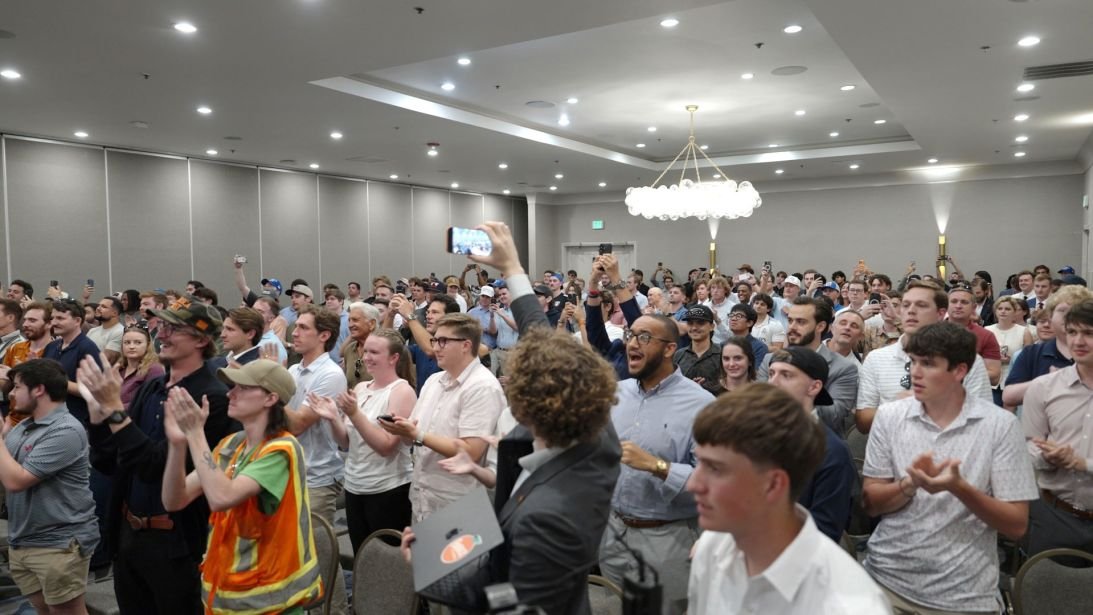
Four weeks into the war, I went to the Conservative Political Action Conference (CPAC) in Dallas. Like just about everything in Republican politics, the annual gathering of the conservative faithful has transformed over the last decade into MAGA’s image. The event has become a multi-day rally of the Trump base.
It was notable then, among the dozens of people I spoke to, how vocal many were in their criticism of Trump.
I met Trump supporters over 40 who said they’d come to accept the belief that despite the president’s years-long “no new wars” pledge, bombing Iran was needed. The threat from Tehran was imminent, they believed.
“Unfortunately, I think it’s necessary,” one woman said. “He’s the only president that had the backbone to take it on.”
But for the younger male conservatives at CPAC, Iran was Trump’s ultimate betrayal.

“I’m not happy. I’m not happy at all,” said a 22-year-old CPAC attendee who had voted for Trump. “President Trump ran on no new wars, and I feel like we’ve been co-opted into a war that shouldn’t be ours. It should be Israel’s.”
Trump has broken campaign promises before. So why was his decision to go to war with Iran the final straw for so many young men?
Young men are not a monolith. But many of those young men who support Trump live in an information environment — not permanently moored to conventional orthodoxy of a single party — dominated by podcasters and opinion-shapers ranging from Joe Rogan and Piers Morgan to more right-wing voices like Tucker Carlson and Nick Fuentes.
Young conservative men took the “no new wars” mantra most seriously because they are among the people most likely to be sent to fight. There’s a genuine sense among them that the US should be doing more to help Americans than to fight wars. They’re also increasingly focused on America’s relationship with Israel.
While older Republicans — more likely to watch Fox News than younger ones — are told the war is a good thing because Israel is America’s ally, the Rogans and Tuckers of the world disagree. And they are not afraid to make that known.
On the far-right end of the spectrum, a drumbeat of antisemitism animates much of this debate.
Many of the young men who voted for Trump over the last three presidential elections were first-time voters who turned 18 over the last decade. They were sold on Trump by the likes of Rogan and conservative activist Charlie Kirk.
But like Rogan, who was a supporter of Sen. Bernie Sanders in 2016 before moving rightward to Trump, these men’s future votes are up for grabs as they process the betrayal they feel.
“That sort of pisses me off,” Delsia Bare told me. “When you’re from Appalachia, you’ve always been backward and poor.”
Bare was reacting to Trump’s recent comment that communities that oppose the building of artificial intelligence data centers want to be “backward and poor.”
Delsia, 54, was sitting with her mother, Ida, 82, at home on their family farm in Mason County, Kentucky. Mason is deep red; Trump won 71% of the vote in the county in 2024, and Delsia and Ida have voted for him three times.
The mother and daughter made headlines around the world for turning down a reported $26 million from a big-tech company seeking to build a gigantic data center on their and their neighbors’ farmland.

It’s a fight that is happening across the country as Silicon Valley rushes to build capacity for the data-hungry AI systems increasingly playing dominant roles in our lives.
Trump, who was elected twice in part by tapping into the grievances of regular Americans, seems out of step with his base on this issue.
Steve Bannon, dean of the MAGA movement, expressed the frustration most succinctly in an interview with JD Vance last week when he demanded the vice president take action against his big-tech “oligarch sponsors.”
From freeways to power plants to prisons, the not-in-my-backyard phenomena is not new. But for Delsia and Ida, their fight against the proposed datacenter in their backyard has come to represent more than another public works project.
They see it as a fight against the 0.1%, the tech billionaires who stood behind Trump at his second inauguration and now regularly meet with him in the Oval Office.
And in their God-fearing, Bible Belt home it has also come to represent something spiritual: a fight against a new form of intelligence so unpredictable that even the people who are building it don’t know what it might do next.

“That’s anti-human, that’s what AI is,” Delsia said. “It doesn’t have any morals and it can’t be held to God’s standards.”
A mom and daughter up against a multibillion-dollar tech company? This sounds like David and Goliath, I suggested.
“But I’ll remind you,” Delsia responded, “it only took one stone to bring down a Philistine. One itty bitty little stone in the right place can bring down any giant that there is on this planet.”
Sadly for Vice President JD Vance, of the couple of hundred of members of the MAGA base I spoke with over the last six months, and the dozens I asked directly about potential Republican presidential candidates in 2028, none mentioned him with any great enthusiasm.

The name I heard most frequently was Marco Rubio — who wears several hats, including running the State Department as well as being the national security advisor. There seems to be a sense that the former senator from Florida has his head down and gets the work done.
The lack of enthusiasm for Vance seems due to his association with the Iran war.
When I’ve asked why Rubio, whose is at the heart of U.S. foreign policy, doesn’t seem tarnished as harshly by the war, the response is usually a shrug.
Amid Trump’s low poll numbers and all the challenges facing him and the Republican Party going into the midterms, it’s easy to forget that there are still millions of Americans who remain extremely loyal to the president.
Take Joe Black, a Trump supporter from Grand Junction, Colorado, who I first met three years ago at a Trump rally in Nevada.
Joe told me ahead of the 2024 election that he wanted Trump back in the White House to bring down gas prices and to end foreign wars.
When I visited Joe a few weeks ago, he acknowledged that the cost of gas was tough, but he was convinced that the president was right to go to war with Iran.

“Nobody likes war,” Black told me. “But anybody who knows this Iranian regime, like for the last 47 years they’ve just been bad guys going around bullying, blowing people up.”
Even those critical of Trump in some areas, like AI, support him in others. Delsia and Ida in Kentucky also agreed that Trump made the right call in Iran.
“The United States was good-hearted,” Ida said of American foreign policy in the Middle East. “We’ve taken care of all these nations.” But “time after time they still chant, ‘Death to America. Death to America!’”
“Well,” she said, “it’s time we put a stop to death to America.”
In 2024, many Trump supporters pointed to the state of former President Joe Biden’s economy and wars in Ukraine and Gaza as evidence of an America in decline and a world in disarray.
They now confront gas prices that are higher than they were two years ago, inflation that is higher than it was when Biden left office, and a new war in Iran.
But supporters like Joe Black say whatever is happening under Trump is better than the alternative.
“Just use your imagination for a second and imagine the world that we’d be living in right now if Kamala Harris got in,” Black said. “Just think of what kind of a hellhole world this would be right now.”
Barack Obama may have left the White House almost a decade ago, but I have heard his name on the campaign trail with increasing frequency in recent months.
Asked about Trump’s war with Iran, Joe Black quickly pivoted: “Obama was the king of killing people with drones,” he said.

The more difficult it gets to compare Trump’s America favorably to Biden’s, the more likely it is I will hear the name Obama.
Trump loyalists say it’s Obama who didn’t love America — not the president who recently suggested he’d allow Los Angeles and San Diego be bombed by an adversary.
Trump loyalists say it’s Obama who was pulling a fast one on the American people — not the president who is making billions of dollars in crypto.
Obama whataboutisms rarely survive serious scrutiny. But the feelings and the memories, real or imagined, his name invokes for many in the MAGA base feel very real. His election, to them, is America’s true original sin.