Motorola Razr Fold
Our verdict
The Razr Fold ticks most boxes when it comes to foldables, which is impressive considering its “low” asking price.
From $2,799 RRP
What we love
- Great battery life
- Sturdy and water resistant
- Smooth day-to-day performance
What could be improved
- Photos are often let down by over processing
- High-performance gaming can struggle at times
The essentials
Our 256GB model was generally great, but could struggle during frantic moments in demanding games. The 512GB model has more RAM, so should perform better.
Excellent. A big 6,000mAh battery gives comfortable all-day battery life. And the 80W charging support means you can go from empty to full in around an hour.
Great from cover to inner!
The camera hardware is close to top notch, but colours and lighting can turn cartoonish once Moto’s post-processing gets through with them.
Motorola has entered the book-style foldable market with a splash. The Razr Fold feels more like a third- or fourth-generation product than a first attempt, echoing the polish of more-established players like Samsung, Google, and OPPO.
It does offer plenty of reasons to consider it alongside the big names – build quality, battery, and specs to name a few. But the main selling point will be its comparative affordability.
Of course, like all foldables, it also has an eye-watering price tag, starting at $2,799 for the 256GB model with 12GB of RAM and increasing to $2,899 for the 512GB version with 16GB of RAM. But in a market where we’re starting to see high-end foldables top $3,000, the Razr Fold is notably cheaper than some of the competition.
Yet it isn’t without its downsides and, as with most foldables, you’ll need to decide which strengths and weaknesses will be deal makers or breakers for you.
Design and displays
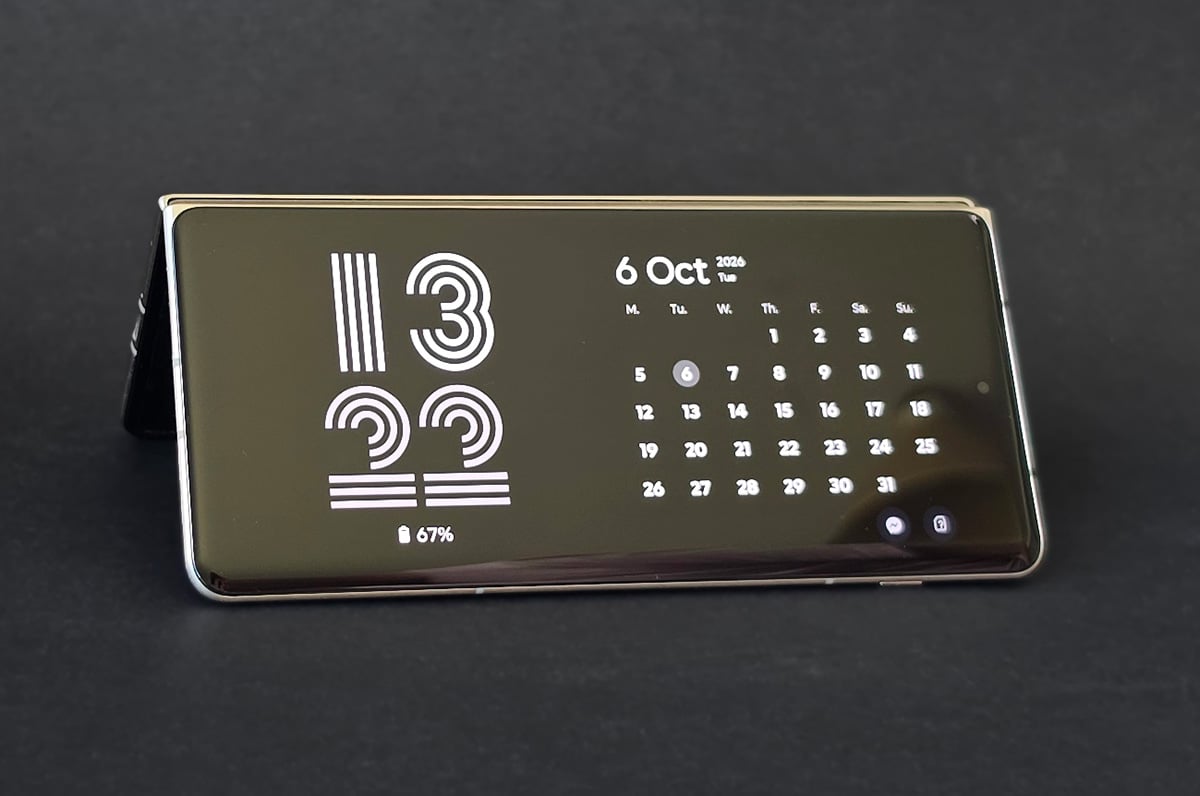
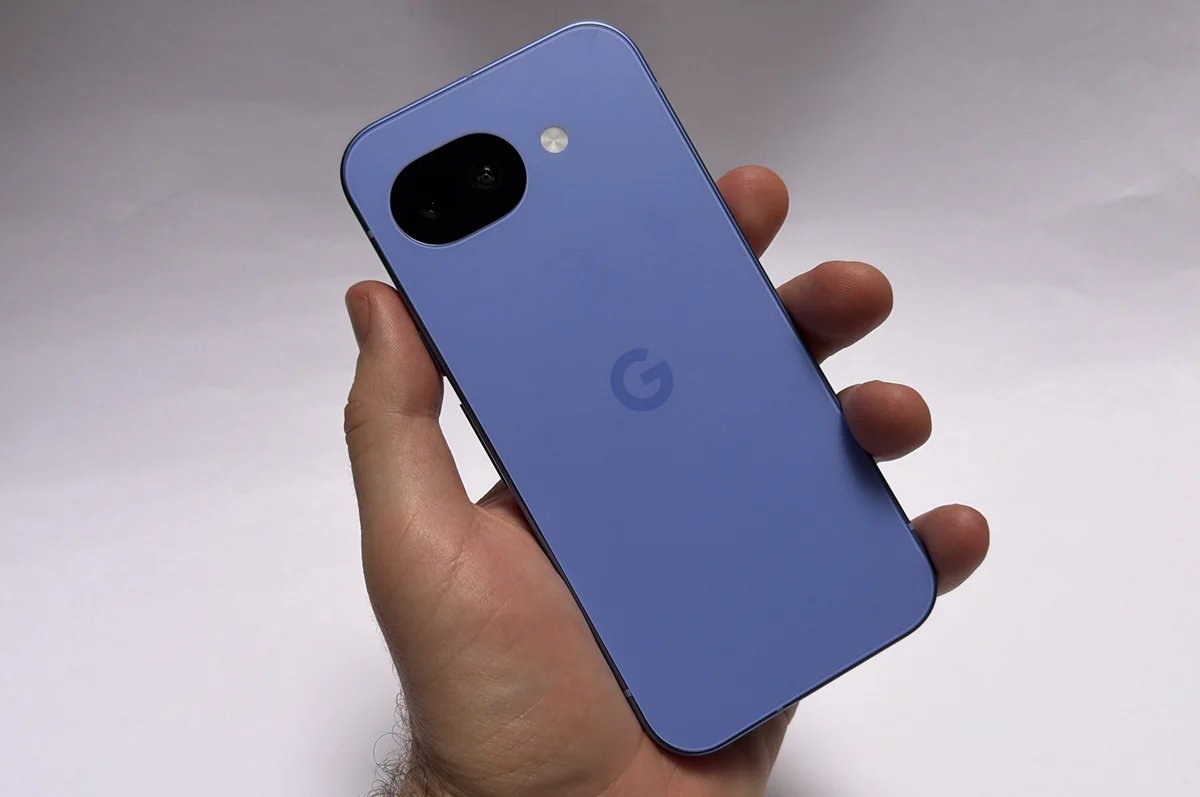
The physical design feels sturdy and comfortable in the hand, aided by a soft-touch material on the rear panel helping with grip. With a closed profile of 9.9mm and weight of 243g, it’s thicker and heavier than some other foldables – the OPPO Find N6 is just 8.9mm and 225g and the Samsung Galaxy Z Fold 8 Ultra is the same 8.9mm, but only 215g.
The difference is noticeable, but the soft touch backing of the Razr Fold makes up for a lot of awkwardness when it comes to one-handed use and the slightly rounded edges make it easier to open for those of us lacking substantial fingernails.
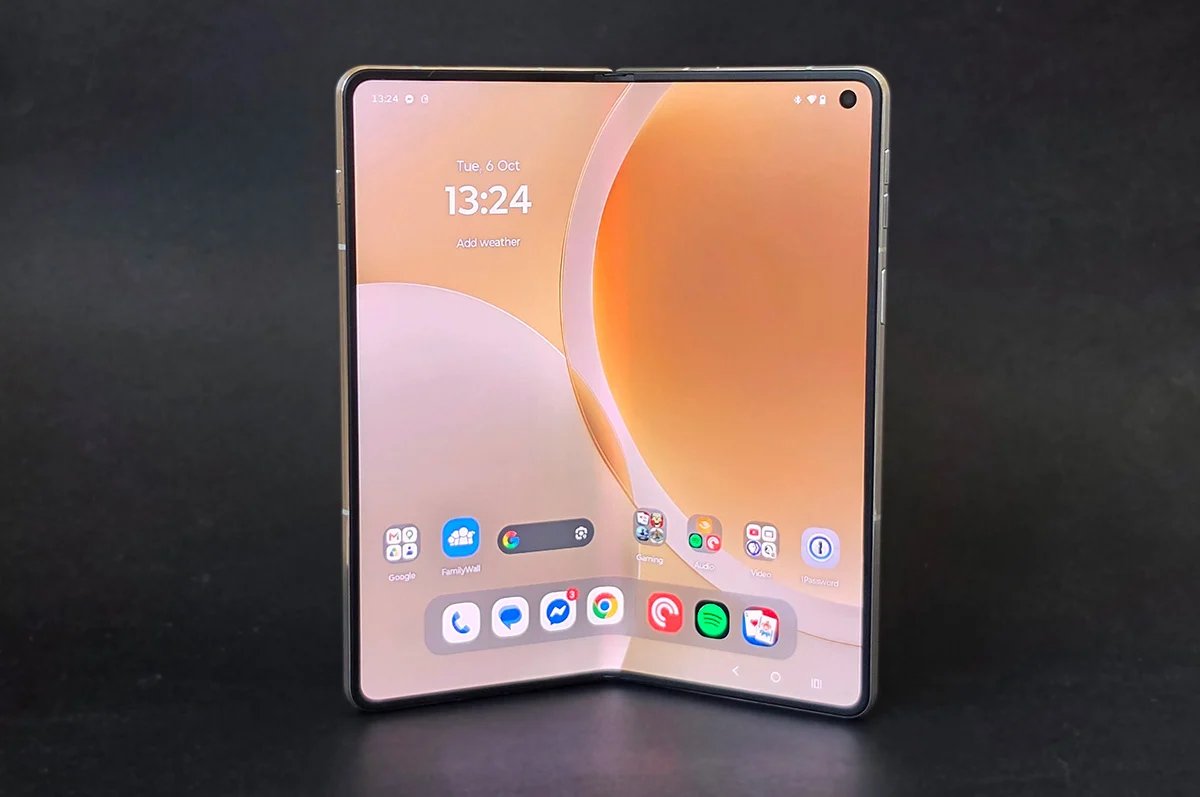
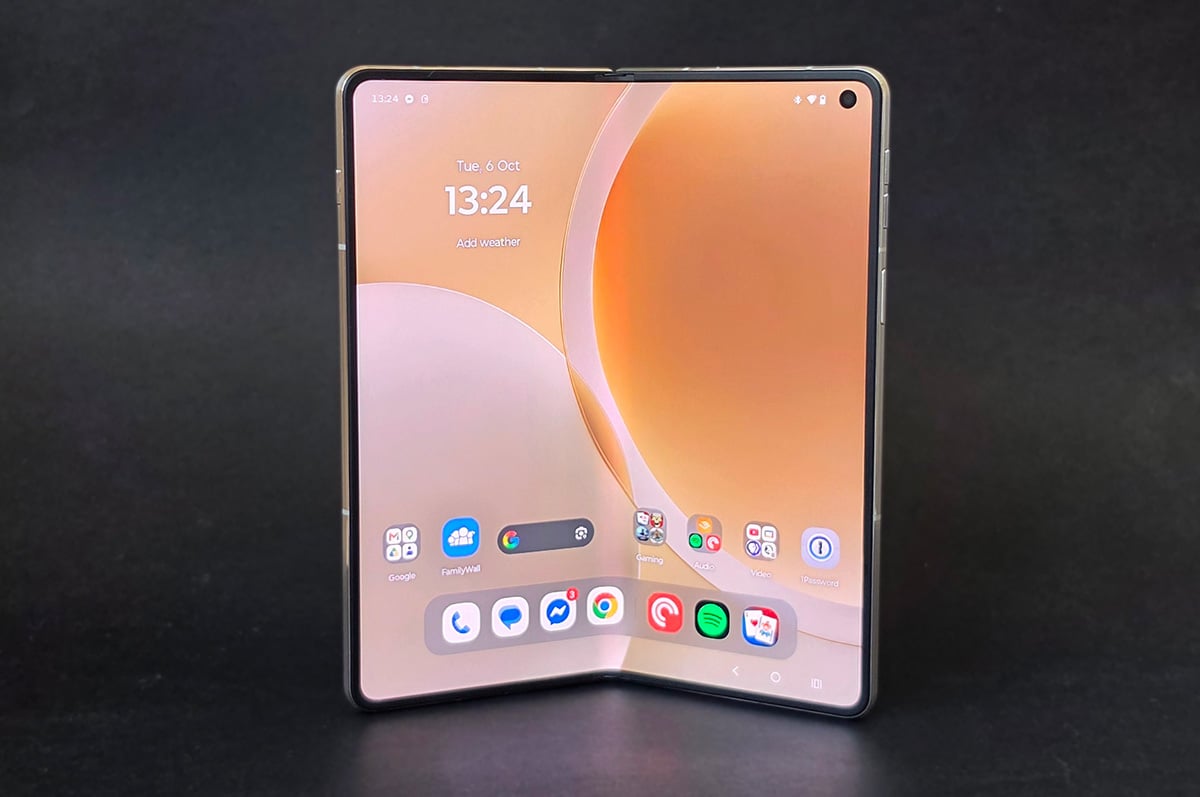
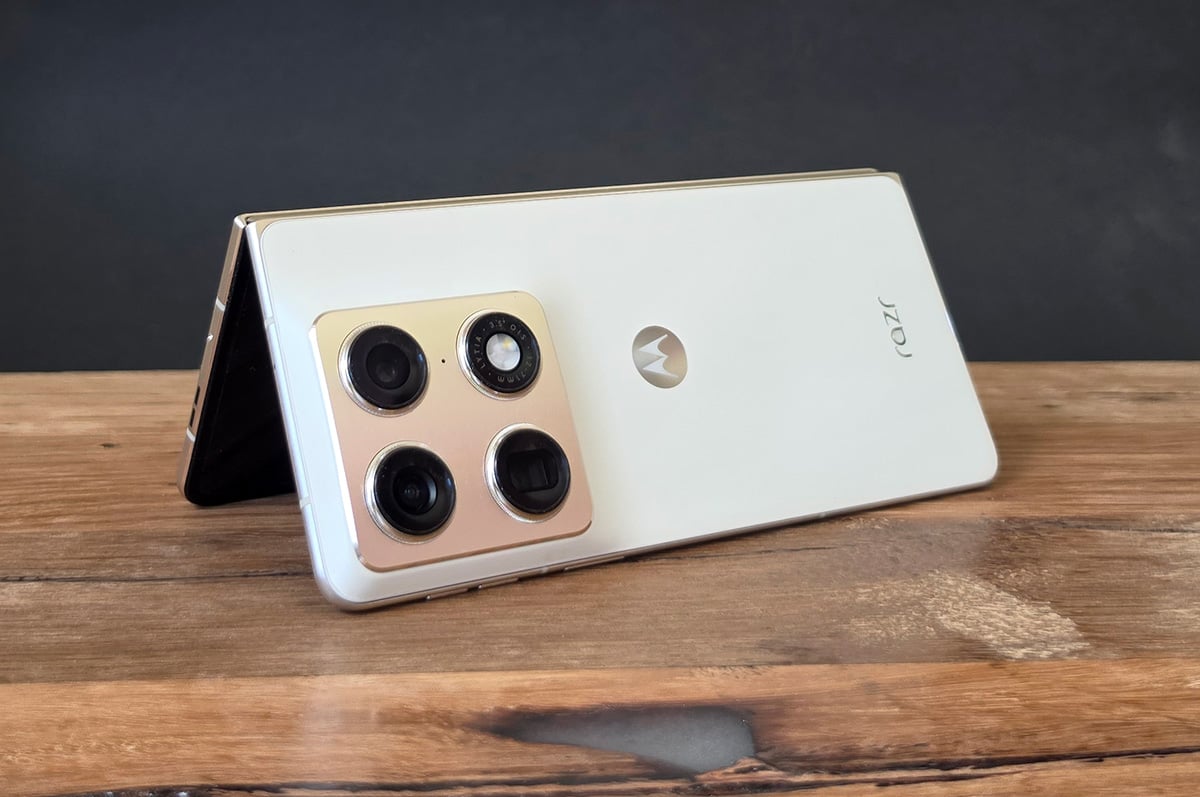
The hinge mechanism feels solid and will comfortably keep the phone in Laptop mode, as well as what I like to think of as “tent” configuration. While off-centre, the camera bump is wide and flat enough that it doesn’t wobble on a flat surface. My only real grip is the location of the “AI button”. When closed, it sits right alongside the volume controls, making it easy to accidentally trigger an AI prompt.
On paper, it’s also pretty durable. The external display is Corning Gorilla Glass Ceramic 3, which should help it hold up to scratches and drops alike. That said, I did manage to scratch our review model just by carrying it around in a pocket and the only culprit I can think of would be my glasses, which have a plastic frame.
The IP46, IP48, and IP49 ratings are a mixed bag, but are better than some foldables out there. That first number – the 4 – means protection against ingress of particles and debris of 1mm and larger. Given most dust, dirt and sand falls well below the 1mm mark, this isn’t a great achievement, particularly given how important it is to keep that hinge mechanism free of detritus.
The second numbers – the 6, 8, and 9 �� are for water protection and are a more welcome sight. Technical definitions aside, these are the same water resistance ratings you’ll find in your standard modern slab phone, which is great to see in a foldable.
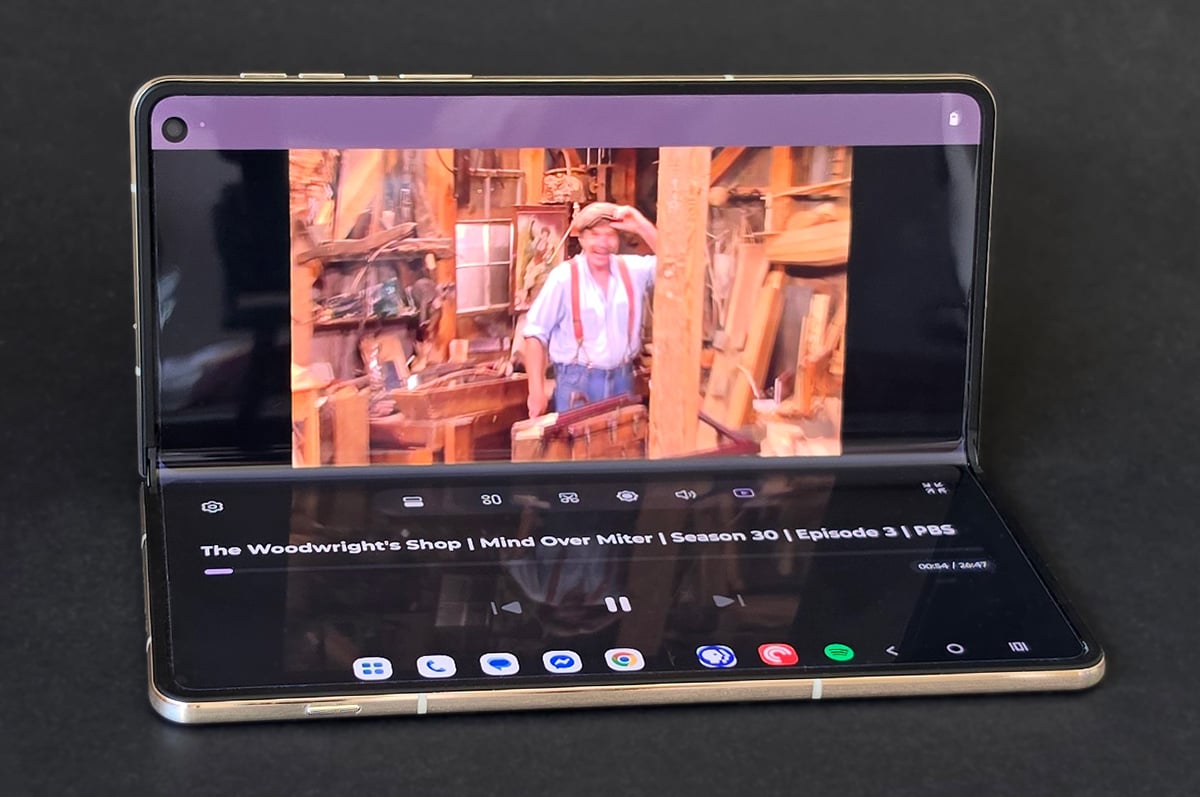
The displays are the tall, thin-ish ratio we’ve come to expect from most foldables, as opposed to the squat “passport” form factor we’ve recently seen from the Samsung Galaxy Z Fold 8, Apple iPhone Duo, and Xiaomi 18 Fold.
The external and internal displays end up being almost identical in terms of resolution and pixel density. The cover display has a 6.56 inch, 2520 x 1080 pOLED panel, giving it about 417 pixels per inch. The internal one, also pOLED, measures 8.1 inches and its 2484 x 2232 resolution gives it about 412 pixels per inch.
The cover display has an impressive peak brightness of 6,200 nits, which is more than bright enough to use in direct sunlight. The internal display is just about as bright at 6,000 nits. They’re both much brighter than you’ll find on almost any smartphone and if you’re a heavy outdoor user, this might actually be a main selling point to consider.
Other specs and jargon aside, both screens are fast, smooth, vibrant, bright, crisp, clear, and just about anything else you’d want.
Battery and performance
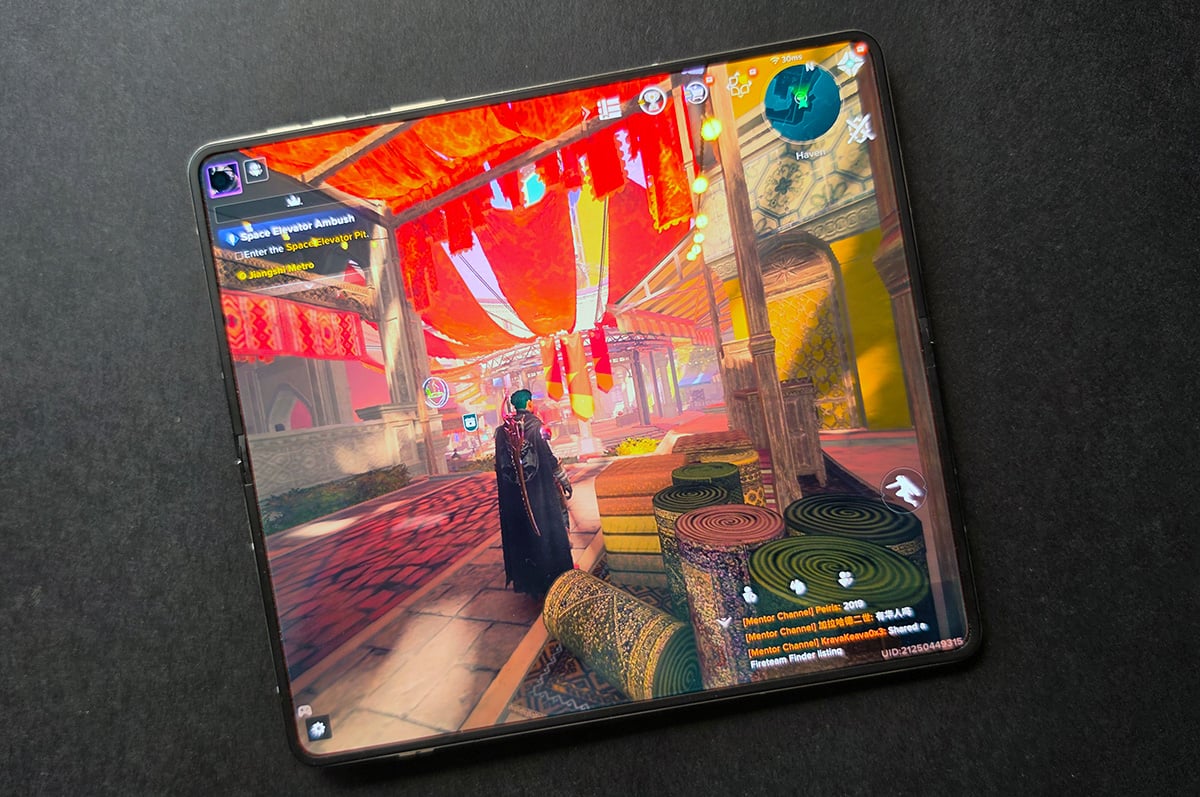
The Moto Razr Fold is a pretty standard performer for a foldable phone – good hardware, but not top-tier. Running the show is a Snapdragon 8 Gen 5 chipset, which is a good bit of kit, but shy of the more powerful Snapdragon 8 Elite Gen 5 you’ll find in many premium slab smartphones and, notably, on the Samsung Galaxy Z Fold 8 Ultra.
Available with either 256GB or 512GB of storage, the 256GB version comes running 12GB of RAM. This is a tolerable level of grunt, but Google’s latest premium foldable has 16GB, which is more in line with traditional slab premium phones in the current market.
To pull equal with the competition, you’ll need to splash out an extra $100 for the 512GB Razr Fold, which does come with that 16GB of RAM. This should translate to a smoother experience when running multiple apps in split-screen mode, more-demanding apps, and some gaming.
Speaking of gaming, the Razr Fold is still running Android 16, despite Android 17 launching back in June. This is a particular sticking point for foldables because Android 17 added native support for using the bottom half of the inner screen as a gamepad for titles with gamepad support. Instead, you’re still better off using the outer screen for many games for now (e.g. shooters and racing games) because the taller, narrower aspect ratio of the inner display cuts off a lot of your peripheral vision.
I’ll also throw in a quick shoutout for the speakers, which isn’t something I usually do. They’re not particularly impressive when the phone is lying flat or in a laptop configuration, but flip it into tent mode and it’s than any phone speakers I’ve heard in a long while. It won’t replace a Bluetooth speaker in terms of quality, but for ease of use I ended up just using the phone pretty often.
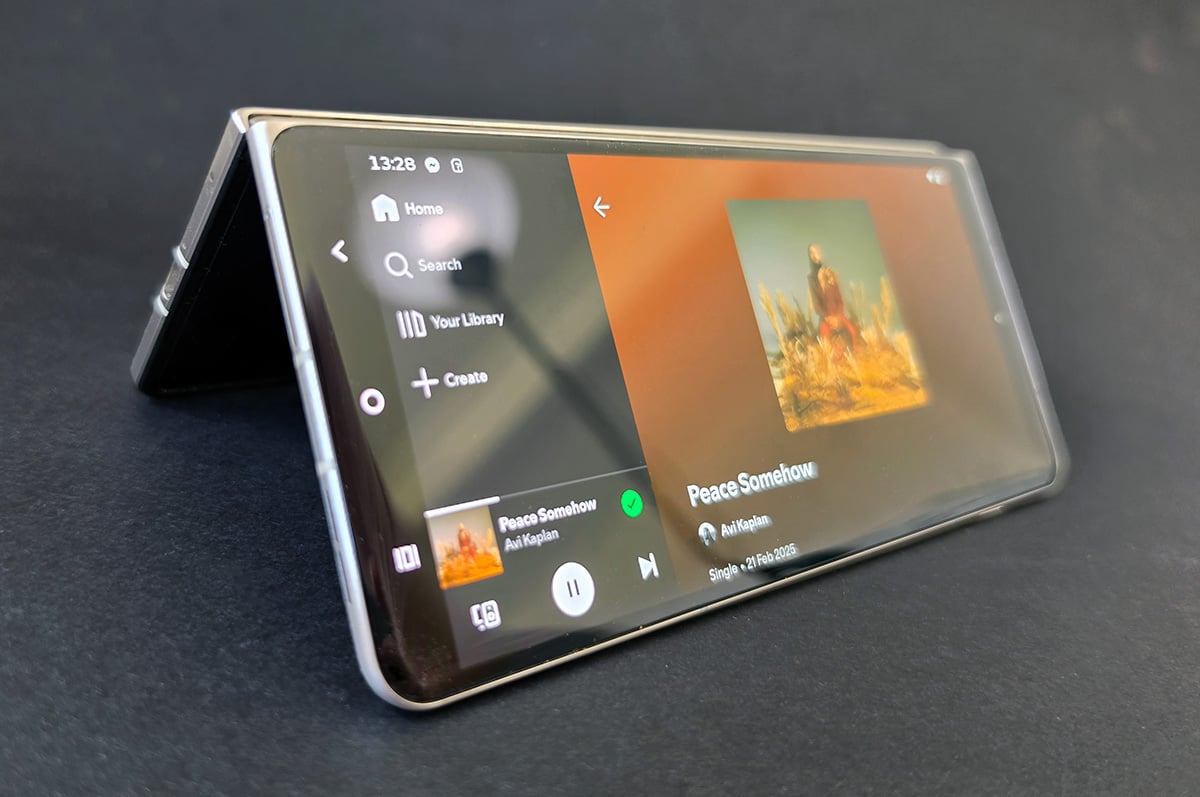
The 6000mAh battery is a strong point in Motorola’s favour. We found we got nine to ten hours of screen time per charge from the Razr Fold, including a good dose of unfolded gaming and video playback. Unless you really push it on the gaming front for a few hours each day, you’ll easily make it to bed time with a safe amount of charge, no matter what you throw at it.
This great battery experience isn’t unique to Motorola, but you still generally won’t find quite the same type of capacity from big-name brands like Samsung or Google. For example, the new Samsung Galaxy Z Fold 8 Ultra has just 5,000mAh, while the Google Pixel 11 Pro Fold has 4,800mAh.
Why the discrepancy? Smaller manufacturers like Motorola can take bigger risks by going with the newer silicon-carbon battery technology. It allows for more capacity in a smaller space, but doesn’t have the decades of safety data behind it that standard lithium batteries do. The Honor Magic V6 and OPPO Find N6 are two other foldables with silicon-carbon batteries that can effortlessly hold an all-day charge, similar to the Moto Razr Fold.
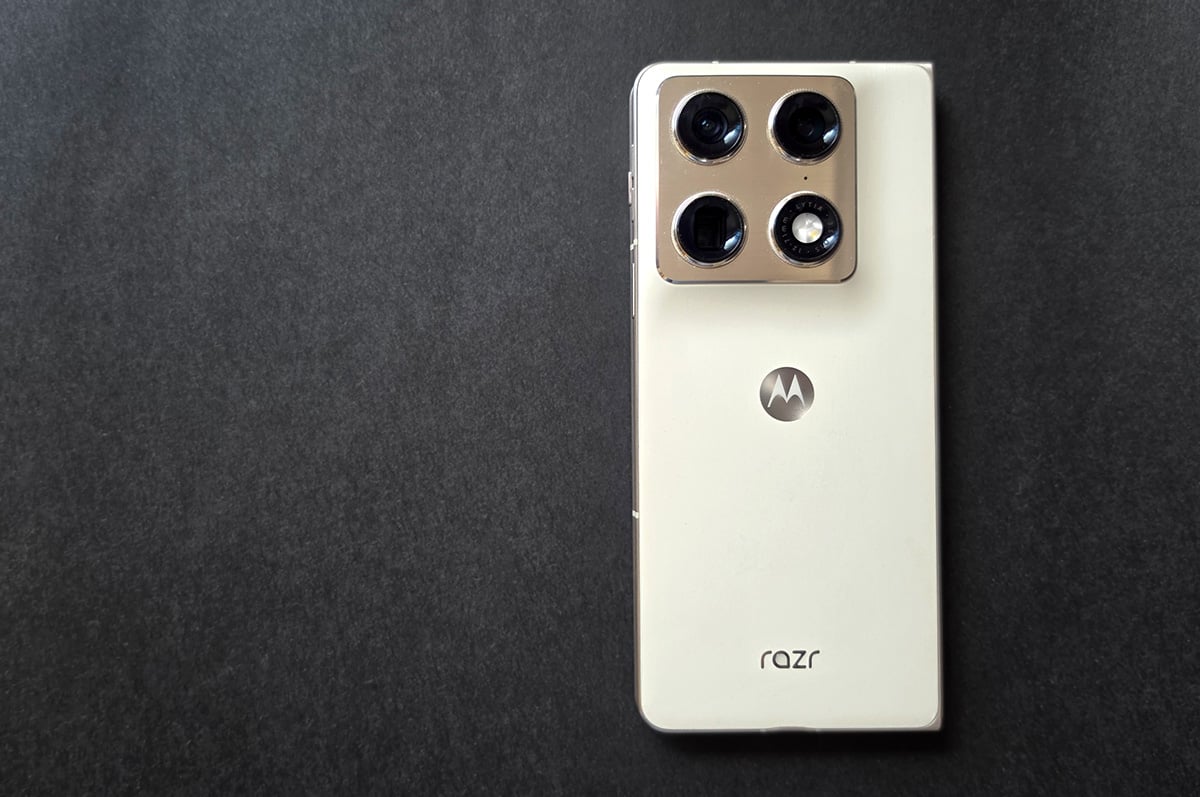
On top of its great capacity, the Razr Fold has some very fast charging, as long as you have a compatible charger (if not, it’ll charge at whatever slower speed your charger and cable can dish out). At 80W, it can charge from 0% to full in about an hour. In comparison, the Galaxy Z fold 8 Ultra has 45W and the Pixel 11 Pro Fold has just 30W.
The Razr Fold also has support for wireless charging up to 50W, which is double what Google and Samsung included in their latest foldable flagships.
Cameras
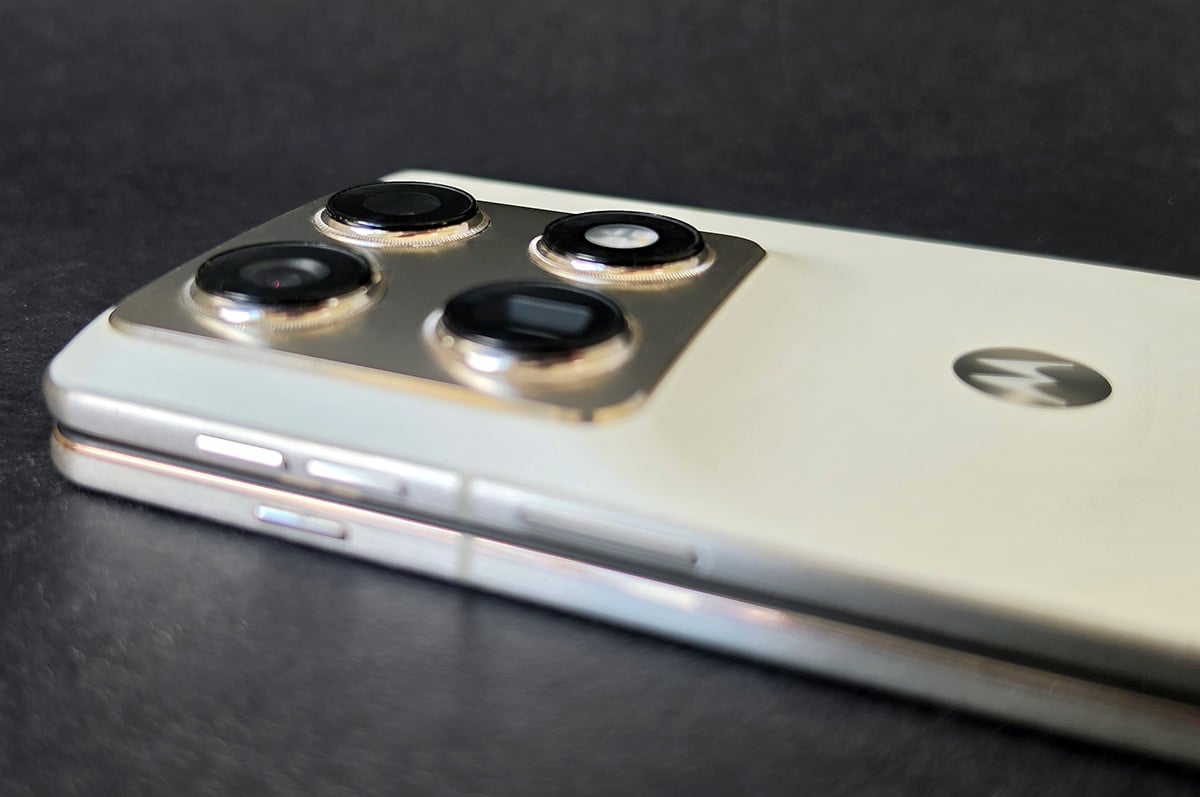
The cameras are one of Motorola’s main marketing points. It’s also an area where foldable phones have so far lagged behind standard slab designs, so closing this gap would be a great reason to pick the Razr Fold over the competition.
But while the Razr Fold is certainly capable of good photography, it’s a bit of a mixed bag.
The main rear camera combines the 50MP Sony Lytia 828 sensor with optical image stablisation. The secondary ultra-wide lens is also 50MP. And, unlike some foldables, the phone gets the full three-lens treatment, with its 50MP periscope telephoto lens for close-up shots.
Once you start taking photos, you’ll need to learn some mental adjustments if you want to know how they’ll look on other devices. Intriguingly, the Razr Fold’s photos on the Razr Fold’s own screens almost all look cartoonishly over-saturated. But once you transfer or send them to another device, they’re more realistic than most other phones on the market right now.
Motorola Razr Fold camera samples
For a sense of what the camera on the Samsung Galaxy Z Fold 8 Ultra can do fresh out of the box, check out the image gallery below. Click or tap on any photo to see a larger version.
This doesn’t appear to be caused by the screens themselves. While they’re very vibrant, photos from other sources don’t look nearly as over-saturated. So, if knowing exactly how your images will look to other people is important to you, it’ll take a bit of experimentation to get a feel for what the photos you take will look like once you share them with the world. But you can at least rest assured they’ll be some of the best pics you can take on a foldable in the current market.
In particular, poorly-lit indoor shots and overcast days are a refreshing return to a time where phone manufacturers were willing to admit shadows exist. This means you get some variation in lighting across your images, instead of smoothing it all out into something that looks AI generated.
At night, it’s a different story. Photos are impressively clear, if you can hold the camera still enough. But this isn’t always easy, as night mode can take up to four or five seconds on a reasonably dark street. On top of that, the exaggerated night-mode tweaks mean all your night mode shots end up looking pretty similar and obviously modified.
The selfie cameras offer a very different experience to the rear ones – while the hardware is still decent, the over-processing ruins good chunk of photos. Take the below image, for example. It’s a well-lit day with good lighting conditions. Before I snapped the pic, the in-frame image looked great. But once the post-processing took over, I somehow acquired a halo and frosted hair tips, just like my mum wouldn’t let me get back in 2002. It looks like I’ve been lazily photoshopped into someone else’s picture.

It also removed most of my stubble, giving me a goatee, despite no beauty filter being active. And it’s not just people that get an overzealous makeover. That tree behind me looked fine before the processing. After, the selective exposure tweaks left it sparkling like an 80s dream sequence. And it probably goes without saying the grass in that park isn’t cartoonishly green.
The internal selfie cam is even worse. But, frankly, if you’re taking selfies with your phone unfolded, you deserve what you get.
The Moto Pen Ultra – why is this here?
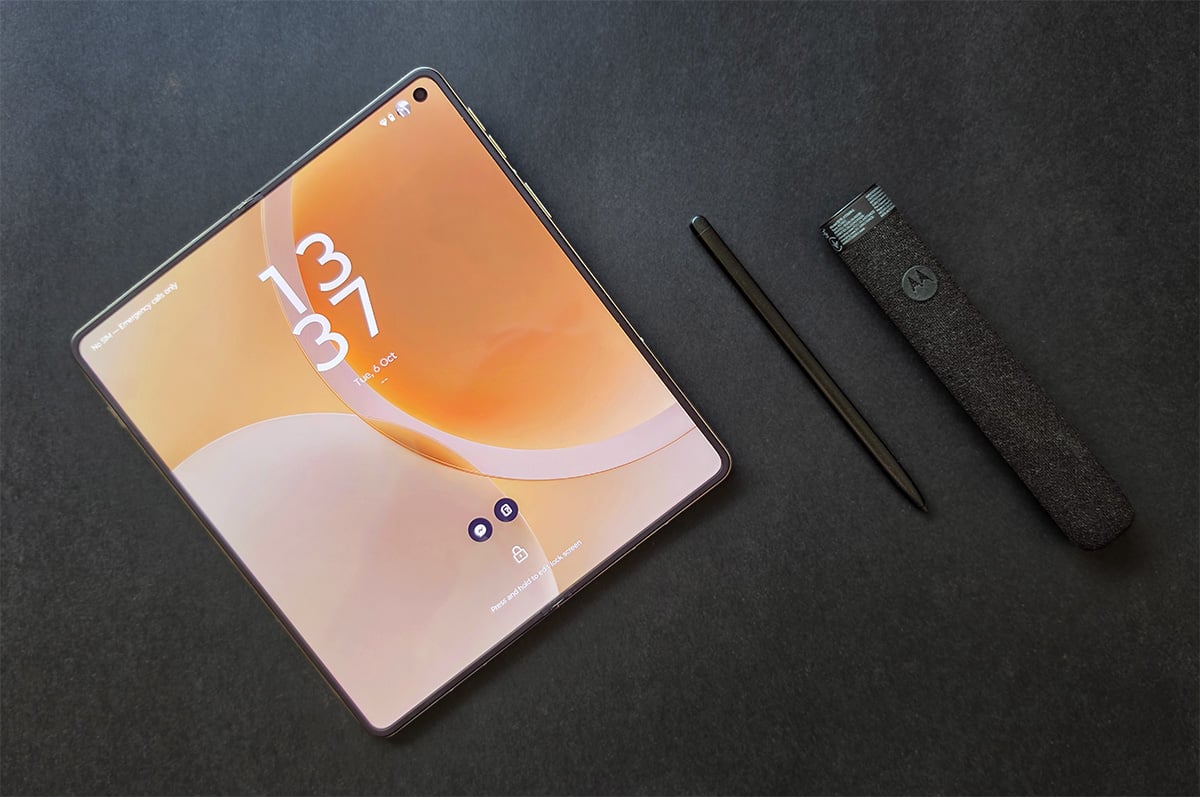
For now, Motorola is including its Pen Ultra stylus with the Razr Fold, which feels like an ill-considered snub towards Samsung’s foldables. You see, where the single-screen Samsung Galaxy S26 Ultra comes with the much-touted S-Pen, Samsung’s foldables lack support for its popular and proprietary stylus.
Motorola might be hoping stylus users will be tempted to switch camps – particularly when you consider just how expensive the phones already are. But I see a couple of problems with that.
First, the S-Pen is included in the Galaxy S26 Ultra – it inserts neatly into the bottom of the phone, so it’s always on hand when you want it. The Moto Pen Ultra has a separate carry case that doubles as a charger. While it’s a good case, you still need to keep both the stylus and your phone on you at all times if you want unfettered access.
Second, the customer base for foldable phones is already small. Within that group, stylus users will be a minority. A the end of the day, there can’t be much demand for this freebie.
The Pen Ultra is around $140 when bought separately, meaning Moto could plausibly have dropped the price of the Razr Fold a bit by leaving it out. Surely a smaller price tag would have wider appeal than a free stylus (that needs to be carted around separately).
But, if you do find yourself attracted to a free stylus – even if it means a more expensive phone – the Pen Ultra is a capable alternative to the S-Pen or any other competitors. The case keeps the pen charged when not in use and the default notation app can detect even my scribbled handwriting without fail.
It’s a great stylus – the question is whether enough people would prefer it to a cheaper price tag, especially given it doesn’t slot neatly into the phone itself.
Motorola Razr Fold – Final Thoughts
While Motorola’s main marketing centres around the cameras, the Razr Fold’s biggest appeal should come from its value for money. A starting price of $2,799 is, believe it or not, downright affordable for a flagship foldable handset, particularly one as capable as the Razr Fold. The only two comparable big names are the Pixel 11 Pro Fold (from $2,799) and basic Samsung Galaxy Z Fold 8 (from $2,699).
By comparison, the Honor Magic V6 starts at $2,999, the Samsung Galaxy Z Fold 8 Ultra is from $2,999, the OPPO Find N6 is $3,299, and the iPhone Duo will start at $3,499 in Australia, once it’s available.
But the Razr Fold could be even cheaper. By ditching the Pen Ultra and dropping the price, even by $50 or $100, Moto might start to carve a name for itself in the foldable space. It would even be a familiar story for Moto to tell: good phone, few compromises, lower cost.
As it is – aside from the selfie cameras and lack of Android 17 for gaming – it’s still a solid foldable for the price and, if you’re already in the market for such a handset, it’s well worth considering.
As for whether this will be the foldable to tempt fence sitters to make the leap, the Razr Fold isn’t doing anything new. And while it’s cheaper than most of its competition, it’s still a good $600 (and up) more expensive than a traditional flagship phone, which would have the extra benefits of better performance and cameras, to boot.
Hot tip: Make WhistleOut a preferred source in Google
Did you like this article? Good! Why not make us a preferred source in Google? Click below, tick the box, and WhistleOut stories will show up more often when you search for related content.
Alex Angove-Plumb

Read full bio