
Quick overview
- Marvell Technology, Okta, Salesforce, and Snowflake are set to report quarterly results, with a focus on forward guidance and demand trends rather than just headline earnings.
- Investors are particularly interested in how these companies can translate revenue growth into sustainable cash flow and improved margins.
- Key risks include potential slowdowns in customer spending and the impact of weaker forecasts on stock valuations, despite strong earnings.
- Overall, the guidance provided by these companies will be crucial in determining market reactions and future growth expectations.
Marvell Technology (MRVL), Okta (OKTA), Salesforce (CRM) and Snowflake (SNOW) report quarterly results this week, with investors looking beyond headline earnings to assess forward guidance, demand trends, margins and the ability to turn growth into sustainable cash flow.
Investors are preparing for another important week of technology earnings, with Marvell Technology, Okta, Salesforce and Snowflake scheduled to report after the market close (AMC). While earnings and revenue figures will determine whether companies beat or miss expectations, forward guidance is likely to have a greater influence on share-price reactions.
Earnings Calendar This Week: Guidance Matters More Than Headline Earnings
With valuations and expectations remaining elevated across parts of the technology sector, even strong quarterly results may not be enough if management teams deliver weaker forecasts or signal slower customer spending. Investors will be looking for evidence that revenue growth can translate into stronger margins, cash generation and sustainable returns.
Tuesday – Marvell Technology (MRVL)
- Expected EPS: $1.10
- Market capitalisation: Approximately $126.45 billion
- Reporting: After market close
Marvell Technology enters its Q3 FY2027 earnings announcement with investors focused on demand for its data-centre networking, custom silicon and connectivity products. Investors will be looking for continued growth in data-centre-related revenue, particularly as cloud providers expand their infrastructure and invest in custom chips.
Guidance will be critical in determining whether demand remains strong enough to support the company’s growth expectations into the next financial year. Management commentary on custom AI accelerators, networking products and customer spending could influence sentiment across the semiconductor sector. Margins and operating expenses will also matter, as investors assess whether higher revenue is translating into improved profitability.
Key risk: Expectations for infrastructure-related growth may already be reflected in the valuation. Any indication of slower orders, delayed projects or weaker forward demand could trigger selling even if quarterly earnings beat estimates.
Okta (OKTA)
- Expected EPS: $0.93
- Market capitalisation: Approximately $36.27 billion
- Reporting: After market close
Okta’s results will provide an important indication of demand for identity and access-management software as businesses continue to prioritise cybersecurity and digital authentication. Investors will focus on subscription revenue growth, remaining performance obligations and customer retention.
Net new customer additions and expansion within existing accounts will help demonstrate whether Okta can maintain momentum in a competitive software market. Management’s outlook for billings and future revenue will be particularly important in assessing the strength of enterprise demand. Profitability and free cash flow will remain central, with investors expecting disciplined spending alongside continued growth.
Key risk: A slowdown in subscription growth or weaker forward billings could raise questions about the company’s ability to sustain its valuation, particularly if corporate technology budgets remain under pressure.
Salesforce (CRM)
- Expected EPS: $3.45
- Market capitalisation: Approximately $163.13 billion
- Reporting: After market close
Salesforce will face scrutiny over enterprise software spending, customer demand and its ability to maintain growth while improving profitability. Investors will monitor subscription and support revenue, remaining performance obligations and new contract activity for evidence of stable enterprise demand.
Guidance will be especially important, with management expected to provide insight into customer spending patterns and the outlook for the coming quarters. Margins, operating efficiency and free cash flow will remain key measures of whether Salesforce can sustain profitability without sacrificing growth. Investors will also assess whether new technology products are generating meaningful commercial demand rather than simply increasing development and infrastructure costs.
Key risk: Strong earnings may not be sufficient if revenue guidance disappoints or customer spending weakens. The market will want evidence of measurable returns from product investment.
Snowflake (SNOW)
- Expected EPS: $0.60
- Market capitalisation: Approximately $97.48 billion
- Reporting: After market close
Snowflake’s quarterly results will be closely watched for signs that enterprise data-platform spending is recovering and that customers are increasing consumption. Product revenue growth and consumption trends will be among the most important indicators, as they provide insight into actual customer usage. Remaining performance obligations and customer commitments will help investors assess the visibility of future revenue.
Management’s guidance will be crucial in determining whether demand is accelerating or whether customers remain selective with technology budgets. Investors will also examine gross margins, operating expenses and free cash flow to determine whether growth is becoming more profitable.
Key risk: Snowflake’s valuation leaves limited room for weaker guidance. Any slowdown in consumption or signs that customers are controlling spending could put pressure on the shares, even if the company reports an earnings beat.
Conclusion: Forward Guidance Will Set the Tone
Marvell, Okta, Salesforce and Snowflake represent different parts of the technology sector, but all four face the same challenge: convincing investors that current growth can be sustained without sacrificing profitability.
The semiconductor industry remains exposed to infrastructure spending expectations, while software companies must demonstrate that enterprise customers are still willing to increase technology budgets. Investors are also becoming more selective about valuations, margins and cash generation.
Consequently, headline earnings beats may produce only limited upside if management teams offer disappointing forecasts. Strong guidance, improving margins and evidence of durable demand could support share prices, but weaker outlooks may expose stocks to further corrections. This week, what companies say about the next quarter could matter considerably more than what they earned in the last one.
Forex Signals Update
Gold Capped by the 20 SMA
Gold prices experienced a volatile trading week, ultimately finishing significantly lower after an initially strong rally lost momentum. The precious metal climbed above $4,300 early in the week but later reversed sharply, ending nearly $100 below its recent highs as investors reassessed the outlook for interest rates and global risk sentiment.
The decline was largely driven by a stronger U.S. dollar, rising Treasury yields, and reduced demand for defensive assets following positive geopolitical developments in the Middle East. Despite the weakness, gold remains above the critical $4,000 support zone, which continues to define the longer-term bullish trend but it is under attack.
MAs Hold as Support for USD/JPY
Foreign exchange markets saw sharp swings. Early in the week, U.S. yield differentials and Japanese capital outflows pushed the dollar above ¥150, but disappointing U.S. jobs data triggered profit-taking, causing the USD/JPY to slide by four yen from its peak. However, the new BOJ governor the JPY has weakened and USD/JPY soared to 154 and we decided to close our buy signal for more than 80 pips as the pair found support at the 20 daily SMA (gray) and has rebounded more than 200 pips off that MA but reversed after the 25 bps rate cut from the FED. The price climbed to $164 but reversed after the BOJ meeting and fell 7 cents, breaking below the 100 daily SMA (red) as well, which has been acting as support before.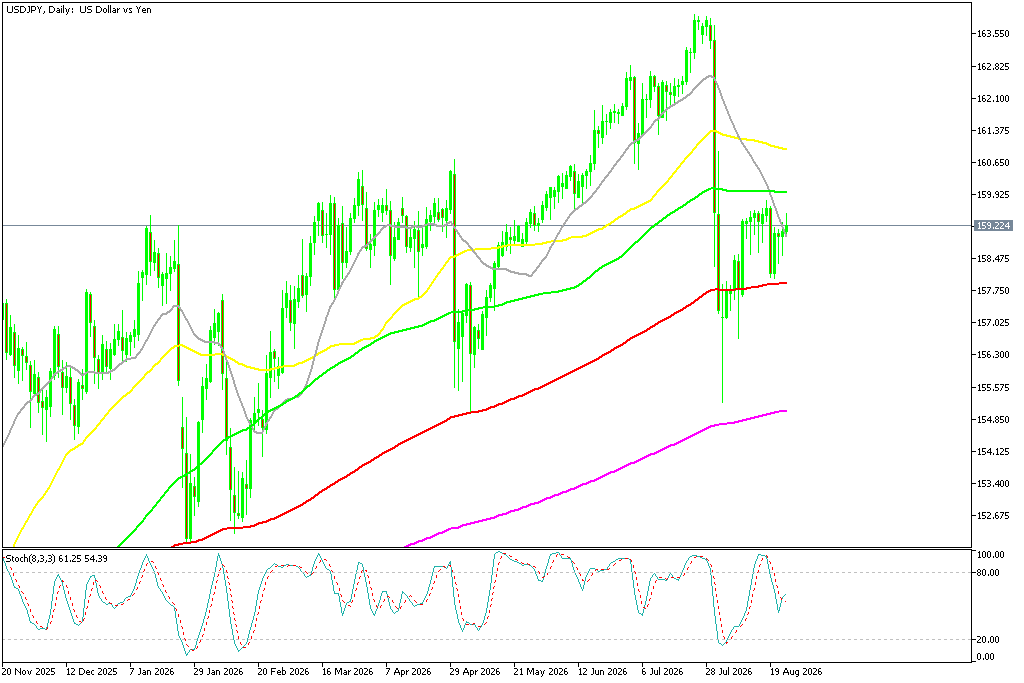
USD/JPY – Daily Chart
Cryptocurrency Update
Bitcoin Faces the 100 SMA as Resistance
Cryptocurrencies remained highly active over the summer. Bitcoin (BTC) climbed to fresh highs of $123,000 and $124,000 in July and August, supported by institutional inflows and technical strength. However, remarks from Treasury Secretary Scott Bessent ruling out U.S. increases to BTC reserves triggered a steep pullback, sending the coin down to $80K before finding support at the 100 weekly SMA (green) which might turn into resistance at 90K now, after the rebound.
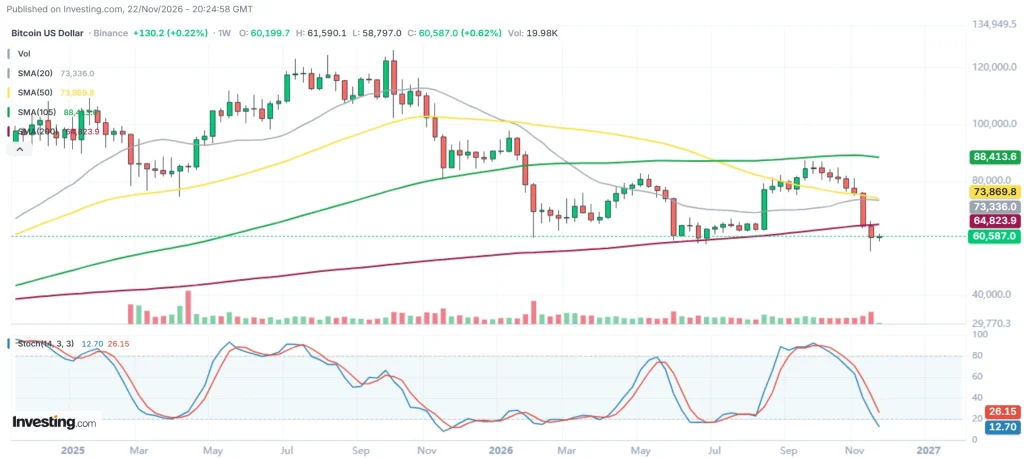
BTC/USD – Daily Chart
Ethereum Returns Above $2,000
Ethereum (ETH) has been similarly strong, surging toward $4,800, its highest since 2021 and near its all-time peak of $4,860. Despite a dip last week, ETH found support at the 20-day SMA, with retail enthusiasm and renewed institutional participation driving fresh upside momentum. Last week we saw a dive below $2,000 but buyers returned and pushed the price above $2K again.
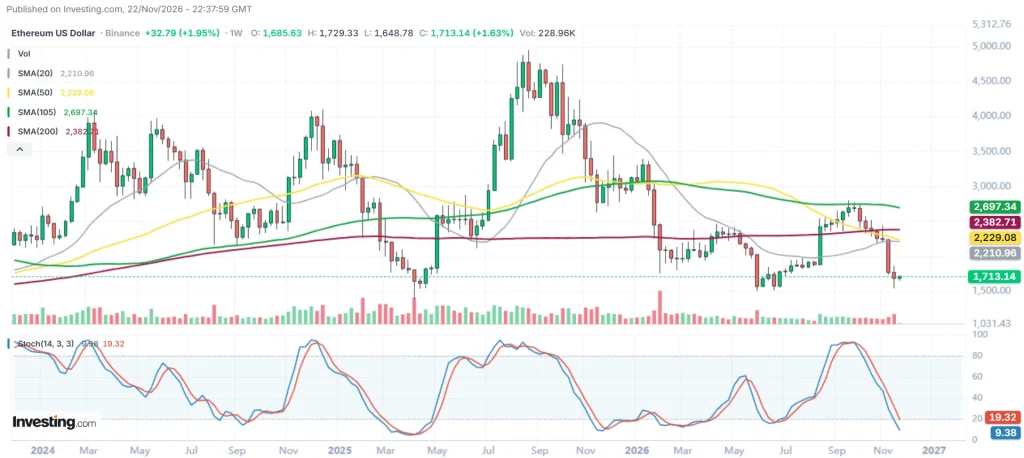
ETH/USD – Weekly Chart

Skerdian Meta
Lead Analyst
Skerdian Meta Lead Analyst.
Skerdian is a professional Forex trader and a market analyst. He has been actively engaged in market analysis for the past 11 years. Before becoming our head analyst, Skerdian served as a trader and market analyst in Saxo Bank’s local branch, Aksioner. Skerdian specialized in experimenting with developing models and hands-on trading. Skerdian has a masters degree in finance and investment.