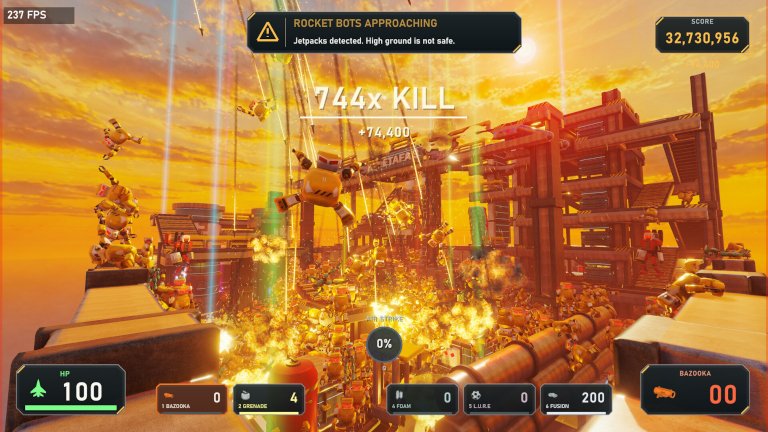
There’s at least one thing a derelict robot factory and a ruined fairy-tale kingdom have in common: both offer plenty of opportunity for wild destruction. In PETAFAB: Bot Invasion, that means letting lasers, missiles, and mines chew through swarms of machines and the scenery around them. Meanwhile, Cinderia builds its mayhem around combinations of playables, weapons, abilities, and upgrades that turn crowded rooms into death chamber to try out next builds.
Staying mobile matters in both title, especially when admiring your butchery gives the surviving enemies time to catch up. Whether you’re leaving explosive surprises for pursuing robots or assembling a vicious spell combination, both games understand the allure of turning a hostile crowd into a pulp.
PETAFAB: Bot Invasion, Sebastian Aaltonen
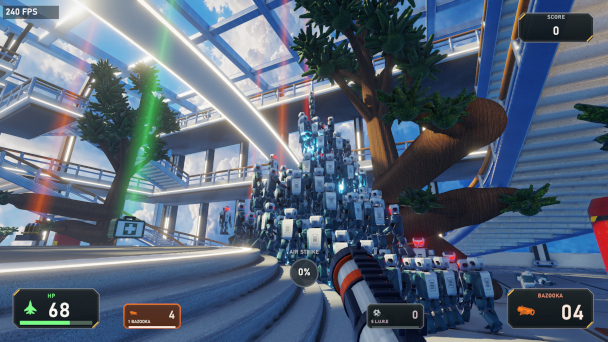
PETAFAB: Bot Invasion’s premise of a derelict robot factory isn’t essential. Here, large swarms of enemy machines and gigantic bosses decent on you, which you’ll need to eliminate, of course. But the most interesting thing here is the incredible amount of amount of on-screen spectacle.
Yes, Sebastian Aaltonen’s custom engine is the main attraction, delivering some solid physics modeling and an emphasis on a high frame rate, even on modest hardware. Given the current catastrophe with RAM prices, I can’t help but feel that this is the route more developers should be taking.
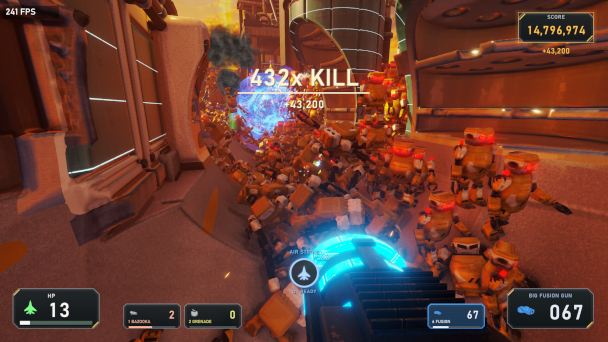
Yes, the refresh rates are the star of the show. Aaltonen reports 90 fps at native resolution on Steam Deck OLED and 240 frames per second at native 4K if you’re lucky enough to own a RTX 4080. I only own an unassuming LCD Deck and a 3070, but I can confirm that PETAFAB’s framerate are unwaveringly fluid. With what looked like dozens of enemies making a beeline for my position and multiple explosions creating craters in the arena, I didn’t see a single hiccup. Best of all, the higher frame rates make tracking targets and reading the action that much easier.
The technology also has an interesting pedigree. Built on Aaltonen’s NoGraphicsAPI, the engine combines distance-field ray tracing and mesh shaders alongside an updated version of the fluid and matter simulation found in 2018’s Claybook. Undoubtedly, one of the showcase elements is the destruction. Shooting the robots is only part of the spectacle when their surroundings can be demolished as well. At the end of each run, each arena will become absolutely leveled, like the battlefield in Worms games.
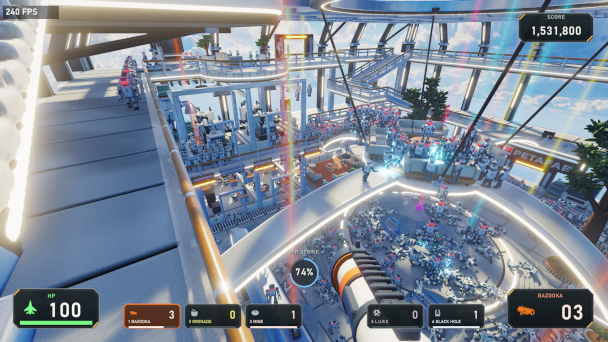
Thankfully, PETAFAB shares Team 17’s appreciation of destructive excess, with lasers, missiles, and mines all providing different ways to turn the factory into scrap. With bots making a beeline for your position, the appeal of leaving an explosive surprise probably doesn’t need explaining, but overkill is mischievously fun, especially when the blast takes a chunk out of the surrounding scenery.
Their relentless pursuit means success involves controlling crowds and keeping an escape route open. Of course, that can be difficult when you’re trying to admire your destructive handiwork or trying to see just how huge the crown of enemies after you really is. There’s even level creation suite for building your own destructible arenas, setting up enemy waves, and sharing the results through Steam Workshop. While there’s some fun with creation, wanton devastation is clearly the draw.
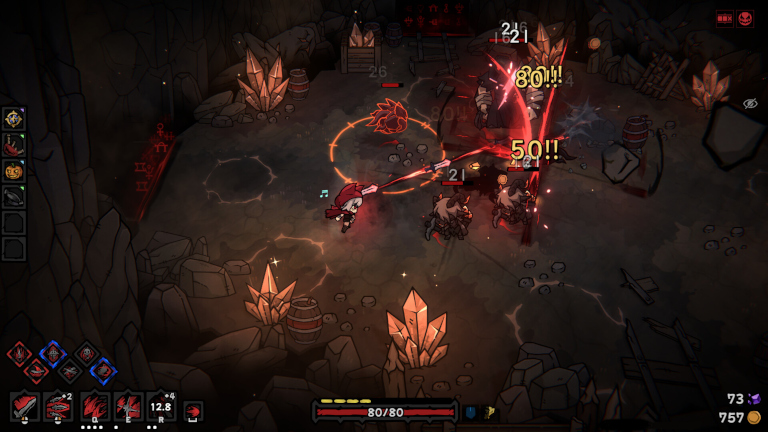
Cinderia, MyACG Studio
Cinderia opens with a king defeating a witch, only for an infant to appear in the aftermath. He raises the girl as his own daughter, which like a traditional fairy tale about found family. Unfortunately, on the night of a grand ball, she stabs him and unleashes the destruction that leaves his kingdom in ashes. So much for living happily ever after. That nasty turn sets the stage for MyACG Studio’s action roguelite, where hand-drawn scenery and cute heroines give this monster-filled world the look of a grim storybook.
A comparison with Hades is probably inevitable once you start dashing around rooms, defeating enemies, and choosing which reward to pursue next. Basic attacks give you something dependable to fall back on while additional abilities really broaden your options, injecting some creativity into combat. But no matter how you build your heroine, expect to get lost in the rhythm of darting in, unleashing a combo, and getting back to safety.
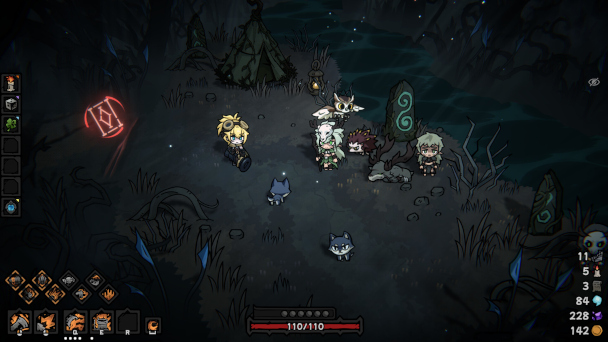
Bosses demand a little more restraint, of course. Expectedly, you’ll have to read their patterns and be prudent about jumping in to dish out some damage. Much like Dead Cells and a multitude of other action-driven roguelikes, a smart build is beneficial. But its no match for knowing when to stop pressing your luck. Like most of it’s contemporaries, there’s much less room for error when you confronting Cinderia’s principal foes.
Currently in Steam Early Access, Cinderia includes four playable heroines who are able to harness the abilities from 130 relics and pieces of gear, which each characters having their own collection of core skills. Pleasingly, switching playables is just the starting point for experimentation, as your acquire passive bonuses, spellcards for active abilities, and new equipment. Rue, the default arrives with a fierce melee combo, knives and can build on these foundations with autonomous shadow clones, bolts of lightning after dashes, and a combo dash-and-slash maneuver.
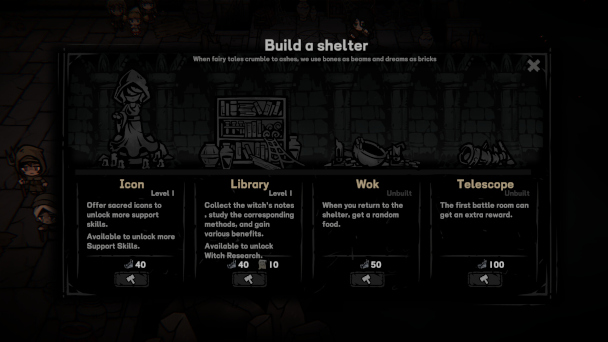
Rivet, the first unlockable, offers up ranged abilities with her humongous cannon. Beyond slams and sweeping strikes, she can launch explosive mortars, release shrapnel bombs, and even wield a flamethrower. Pleasingly, each characters give you plenty to tinker with, especially when an upgrade changes your attacks rather than just increasing your damage output. The fun comes from combining those tools with the right passives and equipment. Turrets can leave traps behind when destroyed, while cooldown reductions let you deploy replacements more frequently.
Expectedly, there’s a catch to collecting all that power. Corruption builds as you accumulate certain upgrades, causing curses that add penalties to your build. This inject just a bit of hesitation to the otherwise irresistible urge to grab new bonuses. Between runs, rescued survivors and gathered resources help expand your roster and unlock permanent improvements. Even when a boss brings things to a disheartening end, there’s usually some kind of dividend to take into the next run.
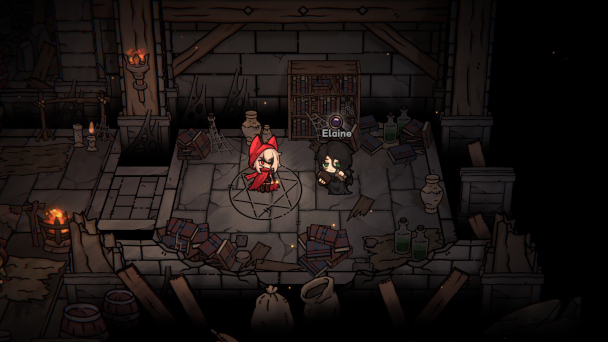
The game’s Early Access plans call for a narrative overhaul, additional characters, and a true ending, for the 1.0 release. At present, there’s also a two-player co-op public beta available through a separate Steam branch, although that remains an experimental addition. For now, the most convincing enticement is the sheer amount of experimentation thanks to weapons, abilities, and their various synergies. Saving the kingdom is a respectable goal, but finding another way to empty a room is a solid way to keep you coming back.