Getty Images
The Briefing:
- U.S. District Judge Christopher Cooper in Washington, D.C., issued a 67-page ruling blocking Trump’s August executive orders on birthright citizenship — making him the second federal judge to halt the measure.
- Maryland’s Judge Deborah Boardman had already blocked the same orders on September 2; to enforce them, the administration now must win reversals in two separate appellate circuits simultaneously.
- The Supreme Court struck down Trump’s original birthright citizenship order in June in Trump v. Barbara; every court that has examined the follow-up August orders has reached the same constitutional conclusion.
A federal judge in Washington, D.C., issued a 67-page memorandum opinion Wednesday, November 25, blocking enforcement of President Donald Trump’s August executive orders restricting birthright citizenship — the second time a federal court has halted the same measure, and a development that leaves the White House with an increasingly narrow legal path forward.
The Orders That Reignited the Battle
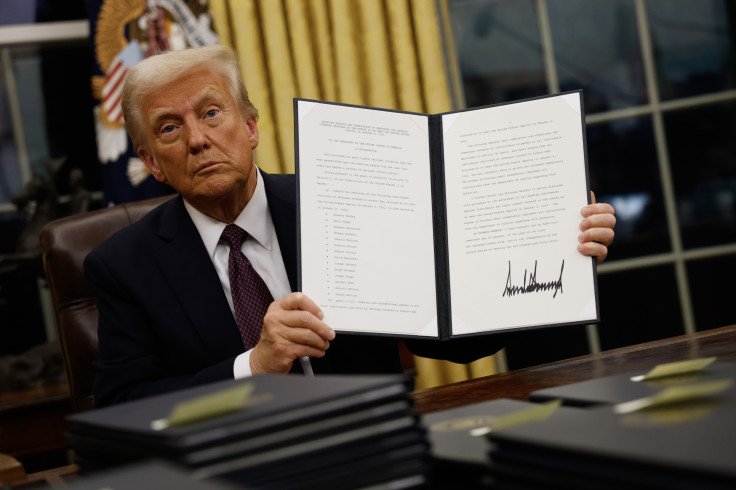
After the Supreme Court’s landmark ruling in Trump v. Barbara struck down his original birthright citizenship executive order in June, Trump chose escalation over retreat. On August 6, he signed two executive orders aimed at narrowing birthright citizenship through a more targeted approach: rather than a sweeping prohibition, the new orders identified specific categories of children who would be excluded from automatic citizenship — including those born to individuals connected to foreign embassies — and separately targeted so-called “birth tourism,” defined as traveling to the United States for the express purpose of giving birth on American soil.
The legal theory was more surgical. The results have been the same.
What Judge Cooper Ruled — and Why It Carries Weight
U.S. District Judge Christopher Cooper, an Obama appointee, certified a class of affected children and issued a classwide injunction barring federal agencies from applying the August orders against them. His ruling draws its legal foundation directly from the Supreme Court’s June decision, holding that “the merits in this case are clear-cut” — the executive branch simply lacks the authority to create new carve-outs in the 14th Amendment’s Citizenship Clause.
“The Citizenship Clause promises citizenship to practically all children born in the United States,” Cooper wrote, reinforcing that the constitutional text does not bend to executive redefinition. He further broadened the injunction’s reach, prohibiting federal authorities from “taking any other actions to deny or infringe on the citizenship of class members” — a prohibition that forecloses administrative workarounds, not just direct enforcement. On the question of public interest, Cooper left nothing to interpretation: having federal agencies follow the Constitution, he wrote, is never contrary to the public good.
The 67-page opinion carries significant weight beyond the immediate case. Its length and constitutional depth will shape how the matter is argued as it moves through the appellate chain.
Maryland Had Already Said No
Cooper’s ruling does not stand alone. U.S. District Judge Deborah Boardman, a Biden appointee based in Maryland, moved first — issuing a similar injunction on September 2, less than a month after Trump signed the August orders. In her ruling, Boardman was equally direct: “The Supreme Court has spoken: Children in the certified class are ‘citizens at birth.'”
Together, the two rulings now operate in tandem. For the administration to enforce the August orders, it would need to win reversals in both the U.S. Court of Appeals for the D.C. Circuit and the Fourth Circuit — which covers Maryland — a daunting two-front appellate battle that significantly narrows any viable path forward.
The Constitutional Wall Courts Keep Finding
The 14th Amendment’s Citizenship Clause, ratified in 1868 in the aftermath of the Civil War, grants citizenship to all persons born on U.S. soil and subject to its jurisdiction. Federal courts have read this language as foreclosing executive redefinition since Trump’s very first attempt to restrict birthright citizenship.
The Supreme Court affirmed that reading on June 30, 2026, in a 6-3 decision written by Chief Justice John Roberts in Trump v. Barbara. Justices Sotomayor, Kagan, Barrett, and Jackson joined the constitutional holding; Justice Kavanaugh concurred in the judgment but on statutory grounds rather than the Constitution. Justices Thomas, Alito, and Gorsuch dissented. Trump called the ruling “a very unfortunate decision” and signaled he would continue pushing for restrictions through other means.
What the White House Said — and What Comes Next
The White House denounced Wednesday’s ruling as an example of judicial activism. The administration has not yet announced whether it will appeal Cooper’s injunction, seek to consolidate the two pending cases for a faster appellate track, or pursue a different legal theory altogether.
What is clear is that the terrain has grown considerably more difficult with each defeat. The August orders have not taken effect anywhere in the country, and Wednesday’s ruling ensures that remains the case. Any path to enforcement now runs through two separate appellate courts and, ultimately, back to a Supreme Court that has already ruled against the administration’s foundational position once — in a decision joined, in outcome if not reasoning, by two of Trump’s own appointees.
© {{Year}} Latin Times. All rights reserved. Do not reproduce without permission.