Quick overview
- Oracle Corporation’s shares closed at $107.43, rebounding 3.42% after a mid-week sell-off that hit a 52-week low.
- The company faces challenges from high debt and capital expenditures amid a broader tech sell-off influenced by inflation and credit concerns.
- Despite skepticism, Oracle reported a 120% year-over-year increase in cloud infrastructure revenue, reaching $7.4 billion.
- The upcoming fiscal second-quarter earnings report will be crucial in determining if Oracle’s cloud profitability can keep pace with rising costs.
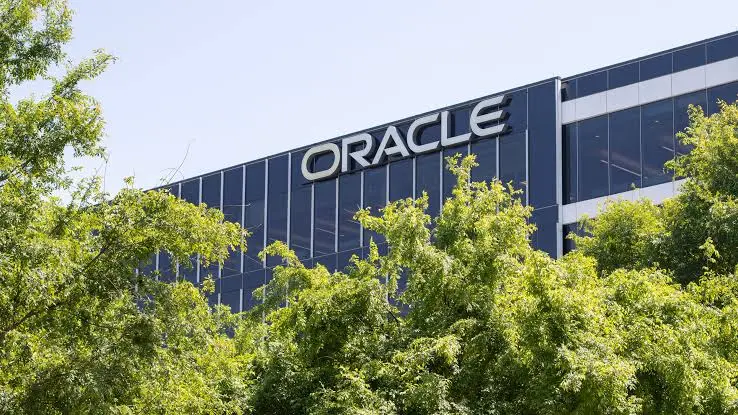
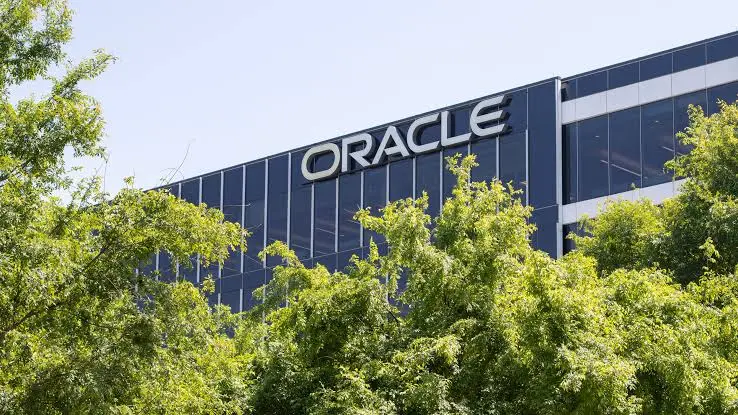
Shares of enterprise software and cloud giant Oracle Corporation (NYSE: ORCL) closed Friday’s shortened post-Thanksgiving trading session at $107.43, rebounding 3.42% ($3.55) to recover from a brutal mid-week sell-off that briefly pushed the stock to a new 52-week low.

Oracle remains caught in a fierce tug-of-war between explosive AI cloud demand and growing Wall Street anxiety over debt, capital expenditures, and an industry-wide AI valuation reset. , Oracle was swept up in a broader tech sell-off driven by hotter-than-expected core inflation data, renewed tariff proposals, and spreading credit jitters across the AI infrastructure sector.
Sharp Mid-Week Drop: On Wednesday, November 25, ORCL tumbled over 5% to close at $103.88 after touching an intraday 52-week low of $99.34—a steep drop from its 52-week high of $250.25 and leaving the stock down roughly 42% year-to-date.
Record Debt-Insurance Costs: Concurrently, the cost of insuring Oracle’s debt surged to a record high, with five-year credit default swaps hitting 360 basis points.
Strong Fundamentals vs. Funding Fears
The market’s skepticism contrasts sharply with Oracle’s operational momentum. In its most recent financial report (Q1 FY2027), Oracle delivered triple-digit expansion in its cloud infrastructure unit, fueled by massive AI training and inferencing demand:
Cloud & Revenue Surge: Cloud infrastructure revenue jumped 120% year-over-year to $7.4 billion, driving total quarterly revenue up 30% to $19.3 billion. Massive Backlog: Remaining performance obligations (RPO) climbed to $664 billion, underscored by major AI data center commitments—including its high-profile contract with OpenAI, which Oracle confirmed on November 20 is fully funded following a $20 billion combined equity and debt raise.
However, fixed-income investors and equity analysts remain focused on the heavy capital outlays required to build out that capacity. With capital expenditures surging and negative free cash flow weighing on its balance sheet, Oracle’s upcoming fiscal second-quarter earnings report—expected in early December—will serve as a critical test of whether its cloud profitability can outpace its rising cost of capital.

Olumide Adesina
Financial Market Writer
Olumide Adesina is a French-born Nigerian financial writer. He tracks the financial markets with over 20 years of working experience in investment trading