
“We will find a way to overcome China through China.”
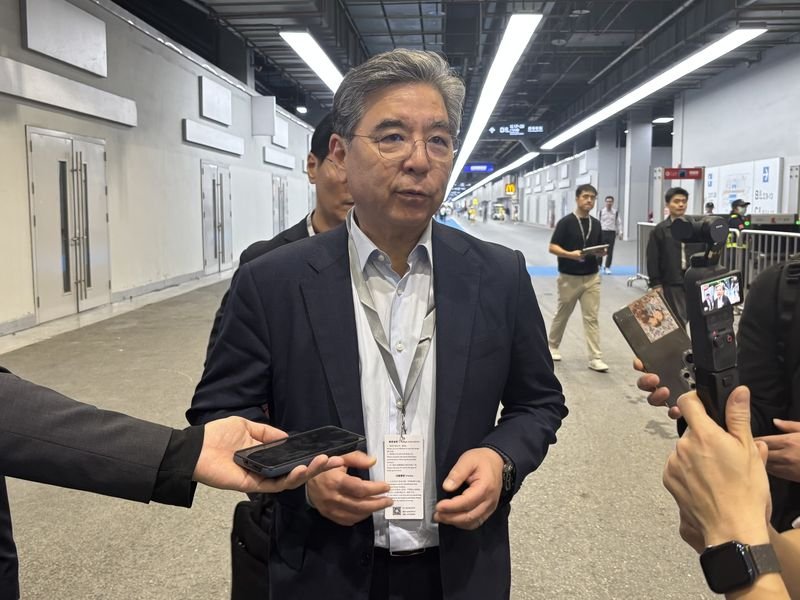
Jaehoon Chang, Vice Chairman of Hyundai Motor Group, said this after meticulously touring the 2026 Guangzhou Motor Show held at the China Import and Export Fair Complex in Haizhu District, Guangzhou City, Guangdong Province, China, on Nov. 27. This is interpreted as an expression of the company’s determination to resolve the challenges by reconsidering cost competitiveness and enhancing product value through highly advanced technology, addressing not only the Chinese domestic market but also the global market currently being encroached upon by China’s push-out style exports.
After touring the exhibition hall on this day, Vice Chairman Chang said, “We see the cost difference (between Hyundai Motor Group and China) as being about 30%,” and added, “I think we must catch up within three years at the most.” The intention is to find ways to reduce costs as much as possible while maintaining competitiveness in areas where the company judges itself to be ahead, such as brand value and sales and service networks.
He then expressed confidence, stating, “After touring the exhibition hall today, I thought we could do it.” It was reported that Vice Chairman Chang meticulously toured almost everywhere in the venue until right before his departure time on November 27. The Guangzhou Motor Show features about 1,100 cars exhibited in a venue covering approximately 240,000 square meters. This amounts to three to four times the size of the Seoul Mobility Show venue held at KINTEX.
To secure cost competitiveness, Vice Chairman Chang said, “We are inspecting everything with the resolution that we cannot win unless we change everything from specifications to standards.” He then added, “We are sorry to the customers who are waiting, but with our plan, we can sufficiently achieve it,” and “We will soon create an opportunity to specify and explain this.”
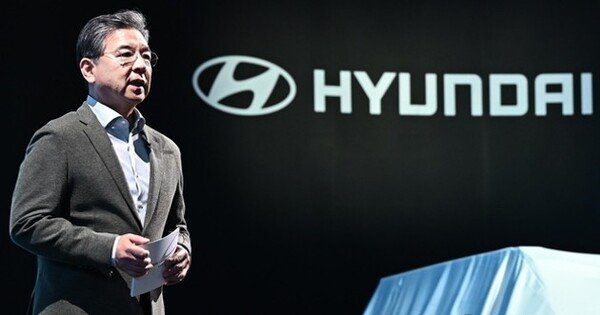
On this day, Hyundai Motor Company unveiled its concept car for targeting the Chinese market, the ‘Mercury Concept’, at the promotional booth prepared at the motor show. Hyundai Motor Company plans to complete this concept car as a compact electric sports utility vehicle (SUV) named ‘IONIQ M’ and begin local sales during the first half of next year.
Yongil In, Vice President and Head of the China Brand Sales Group at Hyundai Motor Company, explained, “It means we will make safe, agile, and light driving possible with a solid body structure by borrowing the image of Mercury, which is small in size but revolves quickly and endures harsh environments.”
Including this, Hyundai Motor Company is establishing a plan to aim for the recapture of market share in the Chinese market by launching a total of six types of ‘IONIQ’ vehicles locally in China within three years, such as local electric vehicles and extended-range electric vehicles (EREV) spearheaded by the Venus (Mercury) Concept and the Earth Concept. In the long term, the company plans to launch a total of 24 vehicle models, including successor models such as internal combustion engines, into the Chinese market by 2030.
Regarding China’s rapid growth in the hydrogen business sector, Vice Chairman Chang also added, “South Korea is not falling behind, as it enacted laws related to the hydrogen economy for the first time in the world and has steadily proceeded with building an ecosystem,” and “Since the consistency of policy and investment determines success or failure, we will continuously communicate with the government.” Hyundai Motor Group has been operating a production facility in Guangzhou, China, since 2023 that can produce up to 6,500 automotive hydrogen fuel cell systems annually.