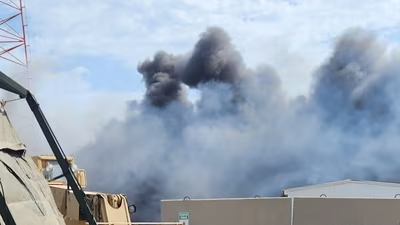
Alleged Russian-directed sabotage across Europe is becoming more frequent and could lead to a mass-casualty incident, according to a new report by the International Institute for Strategic Studies (IISS).

The think tank warned that Moscow-linked operations are increasingly targeting critical infrastructure, including railway lines, airports and energy networks, as Russia seeks to weaken European support for Ukraine.
The report, released Thursday, November 26, found that the use of explosives and arson in suspected Russian sabotage operations had roughly doubled over the past year. It also warned that a major attack could trigger demands for retaliation and create divisions among European governments.
Germany and Poland have recorded the highest number of reported incidents, with more than half of the cases documented between October 2025 and September 2026 occurring in the two countries. Both play important roles in supporting Ukraine through their industrial and transportation networks.
Poland and Germany face growing sabotage concerns
According to the IISS report, Poland recorded 29 Moscow-linked incidents during the 12-month period. One of the most serious cases occurred in November 2025, when an explosive damaged a railway line connecting Warsaw to the Ukrainian border.
Although the incident caused no casualties, Polish Prime Minister Donald Tusk later suggested that the explosion was intended to destroy a train.
Also Read: Trump pushes for Ukraine peace deal as Kushner says Putin has shown ‘restraint’ on nuclear weapons
The report highlighted how these operations could disrupt military assistance to Ukraine while also creating fear among ordinary citizens.
“Attacks have focused on sectors critical to the Ukrainian war effort, while attacks on public infrastructure and high-profile locations also appear to be intended to undermine public confidence and support for Ukraine,” the report stated.
The IISS also warned that Russian intelligence services have become increasingly effective at recruiting people to carry out sabotage. Some suspected operations have involved more sophisticated methods, including improvised explosive devices fitted with timers and detonators.
Despite arrests, expulsions of Russian intelligence officers and the closure of some consulates, the report found little evidence that these measures have discouraged further operations.
“There is no clear evidence that these measures have made sabotage a less attractive instrument of Kremlin policy,” it noted.
Kushner praises Putin’s restraint as report warns of European threat
The report emerged shortly after US President Donald Trump’s special envoy for Russia-Ukraine negotiations, Jared Kushner, praised Vladimir Putin for avoiding nuclear weapons during the conflict.
“He’s agreed not to use nuclear weapons, which obviously is a big thing,” Kushner told Mathias Döpfner, CEO of Axel Springer, in a podcast released Wednesday.
Also Read: Trump, NATO chief Rutte call on Russia to avoid steps that widen Ukraine war after Florida talks
However, the IISS report focused on what it described as Russia’s unconventional warfare in Europe, warning that sabotage could pose an immediate security threat.
Kushner also criticized European leaders over their approach to the war, claiming their statements and actions had made Putin believe they were not ready for peace.
“He does not see that (the Europeans) are ready for peace. He thinks they want the strategic defeat of Russia,” Kushner said.
He also praised Ukraine’s military, describing its “courage and bravery and capability” as one of the greatest stories seen in many decades. However, he criticized Ukrainian President Volodymyr Zelensky for allegedly attacking Trump and argued that he should engage with the US president more respectfully.