New Brunswick’s top court has a new chief justice, the first woman to hold the role.
Prime Minister Mark Carney announced the appointment Thursday of Justice Tracey DeWare to lead the Court of Appeal.
DeWare has served as chief justice of the Court of King’s Bench since 2019 and was the first woman to hold that position.
Kerri Froc, a law professor at the University of New Brunswick, said DeWare is well regarded.
“It is groundbreaking that not only do we have a female premier but a female chief justice,” Froc said in an email to CBC News. “Representation matters, and this is a proud moment for New Brunswick.”
The appointment fills a vacancy created when Justice Marc Richard left the chief justice role in August to become chief judicial officer of the National Judicial Institute. Richard held the role since 2018.
Justice Kathleen Quigg served as interim chief justice.

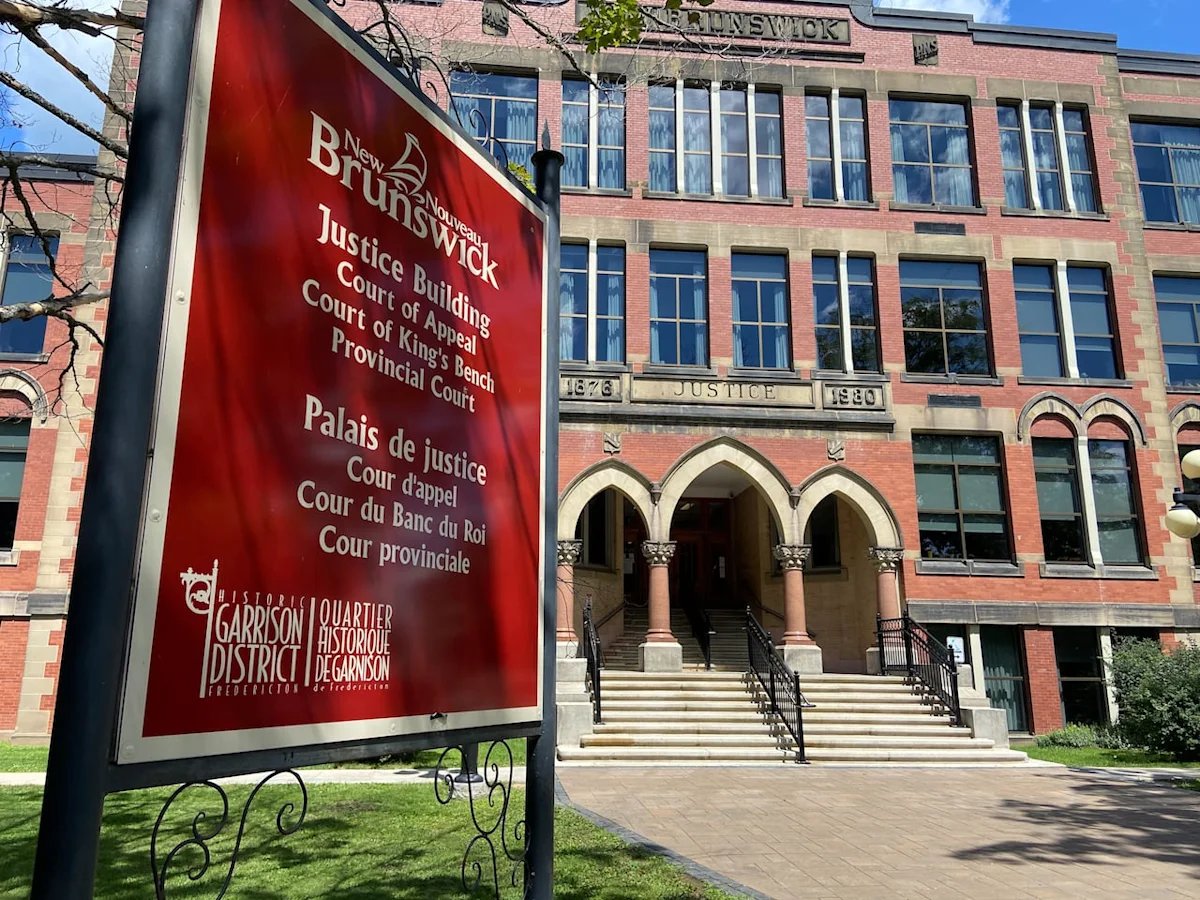
The Court of Appeal hears cases at the courthouse in Fredericton. (Aidan Cox/CBC)
The Court of Appeal, which sits in Fredericton, has a chief justice and five other judges. It hears appeals of lower court rulings, making decisions that can set a precedent for how legal issues and cases are dealt with in the future.
The chief justice role is responsible for leadership and administration of the court. Appointments to the Court of Appeal are made by the Governor General based on the recommendation of the prime minister.
The chief justice also acts as administrator of the province in the absence of the lieutenant-governor. The person in this role is consulted by government before any decision is taken that might significantly affect the administration of justice in the province.
Ruled on high-profile cases
DeWare has ruled on major New Brunswick cases, including whether the appointment of a unilingual lieutenant-governor violated language rights. Her ruling that it was a violation was later upheld by the Supreme Court of Canada.
DeWare also issued a 2021 ruling in a case challenging New Brunswick’s abortion access policy.
She also oversaw significant class action cases, such as one involving historic mistreatment of patients at the province’s psychiatric hospital that resulted in a $17 million settlement.
Judge since 2012
A biography from the Prime Minister’s Office released Thursday says DeWare has served as a judge since 2012, when she was appointed as a family court judge in Campbellton.
DeWare graduated from the University of New Brunswick law school in 1994. She was a partner at the law firm Stewart McKelvey, where her practice focused on insurance, personal injury and medical malpractice.
In a profile on the Canadian Bar Association website, DeWare described feeling an adrenalin rush when appearing in court as a lawyer arguing cases on her own.
“I must admit from the time I began appearing in court, I would watch the judges conduct matters and think to myself — someday I really want to be sitting on that bench,” the profile says.
When she was appointed chief justice of the Court of King’s Bench, called Queen’s Bench during Queen Elizabeth’s reign, DeWare described hoping to see more technology adopted in the court system.
That included moving toward electronic filing of documents in a system that today is still largely dependent on paper records.
“It’s nonsensical that we wouldn’t do that,” she said at the time.
She also wanted to encourage allowing people to testify or appear in court via videoconference, something that became more routine after the COVID pandemic.
DeWare said in 2019 that she was open to cameras in courtrooms, which the Court of Appeal had allowed for a small number of high-profile cases.
“The courts are open,” DeWare said at the time. “They’re open to the public. That’s a cornerstone of our justice system, and cameras in the courtroom could really demystify our system and be a wonderful educational tool.”