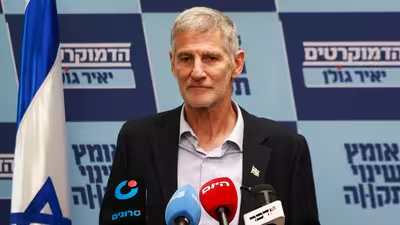
The left-wing Democrats party said it was halting discussions on a potential coalition with Yashar, Gadi Eisenkot’s party, as he works to secure support for forming a new government.
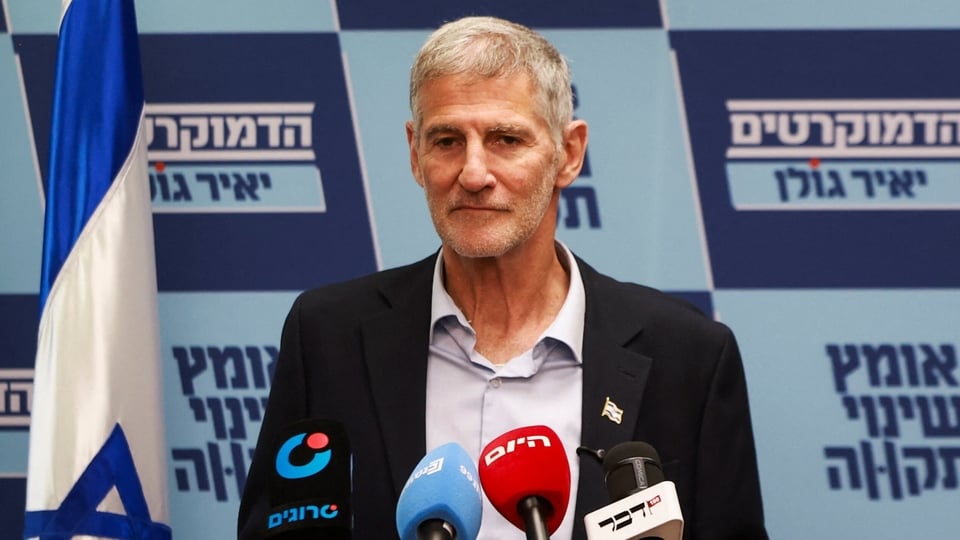
“Against the backdrop of progress in negotiations to form a unity government with Netanyahu… and a parallel deadlock in negotiations to form a change government, the Democrats party announces that it is suspending talks with the Yashar party,” the Democrats posted on X on Tuesday evening.
Likud mocked the divisions within the opposition alliance, responding to the Democrats’ withdrawal from coalition negotiations with the remark, “They’re falling apart” on its Telegram channel.
Democrats urged inclusion of Arab parties
The party, headed by former Israeli army major general Yair Golan, has been urging Eisenkot to include two Arab-majority political lists in a governing coalition.
The two groups secured a record number of seats in the election, and their participation could help the bloc remove Benjamin Netanyahu from power.
Also read | Israel defence minister accuses Iran of developing chemical weapons, raises possibility of preemptive strike
Liberman opposes coalition backed by Arab parties
However, Avigdor Liberman’s right-wing Israel Beiteinu party, another member of the anti-Netanyahu alliance, has repeatedly ruled out supporting a government that relies on Arab parties.
Eisenkot and Liberman held talks on Tuesday evening, after which Yashar announced in a statement that the two had “agreed to sign a coalition agreement.”
Yashar and Likud remain deadlocked
The Yashar party leader was given the mandate to form a new government on November 8, with 28 days to complete the task and the possibility of securing an additional 14 days.
Last month’s election failed to give either Eisenkot or outgoing Prime Minister Benjamin Netanyahu the majority needed to form a government.
Yashar and Netanyahu’s Likud party have met for three rounds of coalition negotiations in recent days, though the discussions have so far failed to yield any tangible progress.
Possible coalition options as deadline approaches
Eisenkot has until December 6 to secure the backing needed to form a government, although he can request a 14-day extension.
His bloc currently holds 48 seats, well below the 61 needed for a parliamentary majority, while disagreements over which parties to include have further complicated coalition-building efforts.
Also read | 25 people held hostage at Colombia supermarket, Cartagena airport briefly suspends landings
Among the possible arrangements being considered are an alliance with ultra-Orthodox factions, securing backing from Arab parties or reaching a power-sharing deal with Likud.
(With AFP inputs)