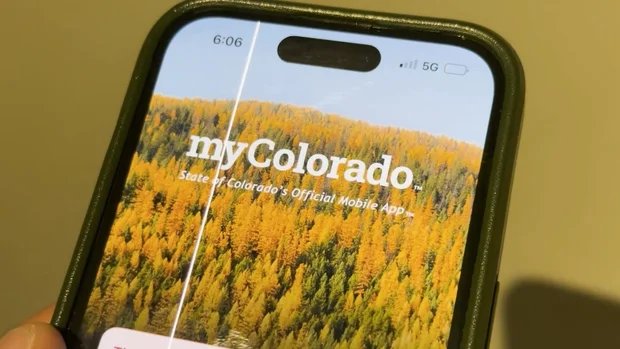
Personal information belonging to as many as 150,000 people may have been compromised in a cybersecurity breach that has kept the state’s myColorado mobile app offline for nearly a week.
In a statement, the Governor’s Office of Information Technology (OIT) said it is “working quickly to assess the impact to individuals’ data” and added that “anyone whose data is impacted will be specifically notified.”
The app, which stores digital driver’s licenses, vehicle registrations and insurance cards, was shut down the night of Nov. 18 after state officials detected the breach. However, the state did not notify the public of the incident until Monday night.
State officials have not yet answered specific questions about what information hackers accessed, whose accounts were targeted or when the app will return to service. OIT representatives said only that systems were taken offline immediately as a precaution while investigators work to determine the cause and scope of the attack.
CBS 
Cybersecurity expert Dr. David Utzke said the state’s limited disclosure leaves residents in a tough position.
“It really looks more like just cybercriminals who found a vulnerability and decided to exploit it for the data, because there’s been no report of a ransom,” Utzke said.
While it remains unclear how the breach happened or whether it could have been prevented, the outage follows months of scrutiny over Colorado’s digital security infrastructure. Over the past year, a state audit of OIT identified dozens of necessary changes to protect resident data from attackers. One lawmaker described the state’s defenses as “a cybersecurity system held together with baling wire and duct tape.”
Following those audit reports, OIT laid off 16% of its workforce while announcing plans to create nearly 100 new positions and redirect cost savings toward upgrading decades-old technology.
The myColorado outage also comes amid a broader wave of recent tech disruptions, updates and service delays globally.
“There’s been multiple different types of cyber events. That doesn’t make them cyberattacks,” Utzke said. “However, it shows and demonstrates our reliance on digital frameworks.”
OIT officials said they will contact affected users directly once their investigation determines what data, if any, was stolen.
Steve Beaty, a computer science professor at Metropolitan State University of Denver, said the potential exposure of driver’s license numbers is particularly concerning because the information could be used for identity theft or fraudulent financial activity.
“The driver’s license number is a concern; people can use that for applying for credit cards, these sorts of things,” Beaty said.
Beaty said he spoke with state employees involved in the app’s initial launch and believed the team had taken steps to protect users’ information.
“I think they’ve done a pretty good job of protecting the data, though clearly not a perfect job,” he said.
Utzke and Beaty recommend residents take immediate steps to protect their finances.
Beaty says users should monitor their financial accounts, enable multifactor authentication and use unique passwords for online accounts.
“People should be … freezing their credit, monitoring their bank systems, setting up alerts on their bank accounts,” Utzke said. “That has saved me so many times.”
Utzke also advises myColorado users to update passwords on any accounts that share credentials with the state platform.
With Thanksgiving travel ramping up, he said the outage also highlights the importance of having physical identification as a backup.
“Another thing this points out, too, is we need to have a backup,” Beaty said. “And that backup here is the physical driver’s license and passport, if you have that.”
The state is urging Coloradans to carry a physical driver’s license or state-issued identification card for identity verification while the app remains unavailable.
According to the state, mobile driver’s licenses may still be accessible through other digital wallets, including Apple, Google, and Samsung. Residents can also access state services through individual agency websites and online portals.
The state says it will directly notify individuals whose information was affected once the investigation is complete.
Officials are encouraging users to visit https://mycolorado.gov/ for updates and additional information.