Currency now shapes what international customers see and pay, how money moves across borders and how much margin survives to settlement. Businesses that still leave it on autopilot are paying for that choice in ways that rarely show up on a statement.
For a long time, foreign exchange lived in the back office. A business sold abroad, its bank converted the proceeds at the day’s rate, and any surprise surfaced in the month-end figures. That arrangement held up while international sales were a sideline. It looks a lot shakier now.
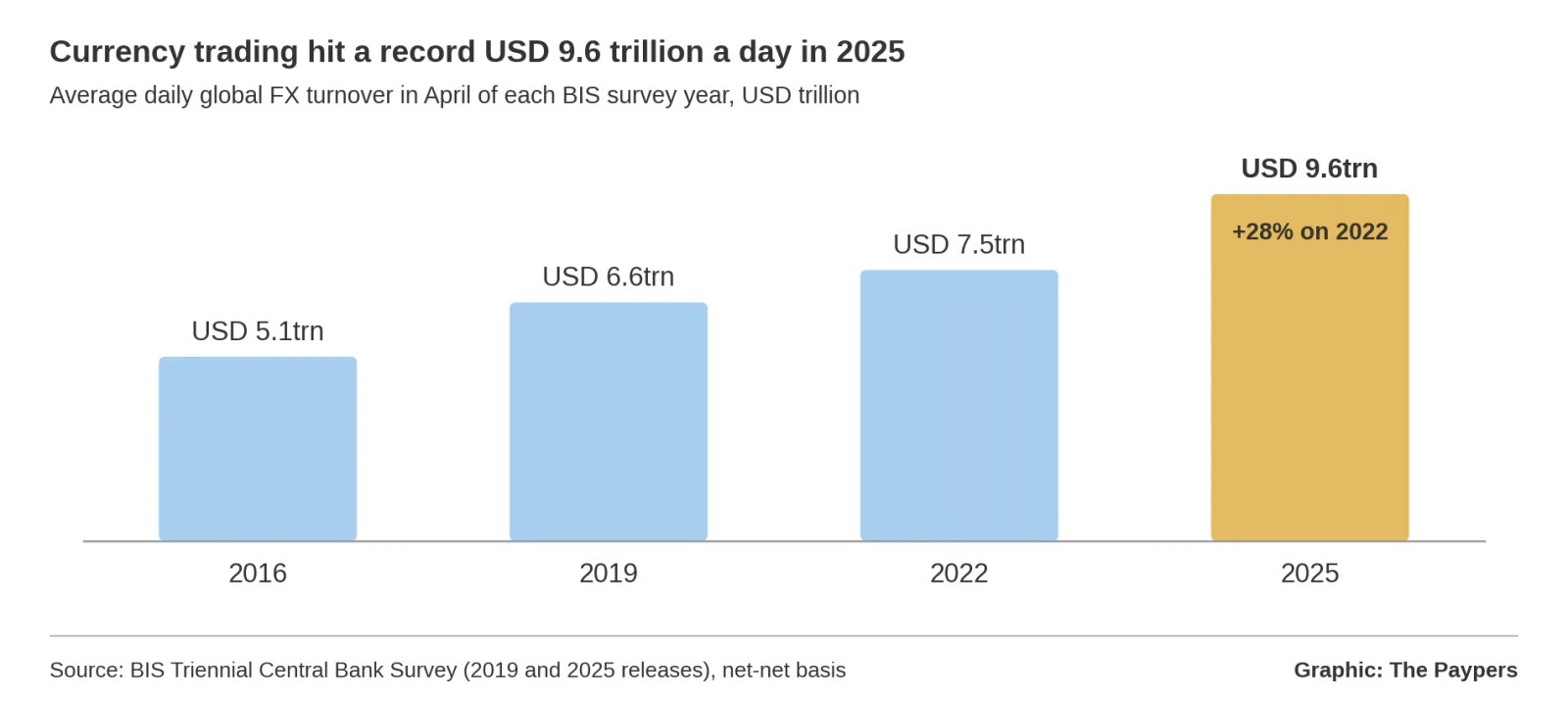
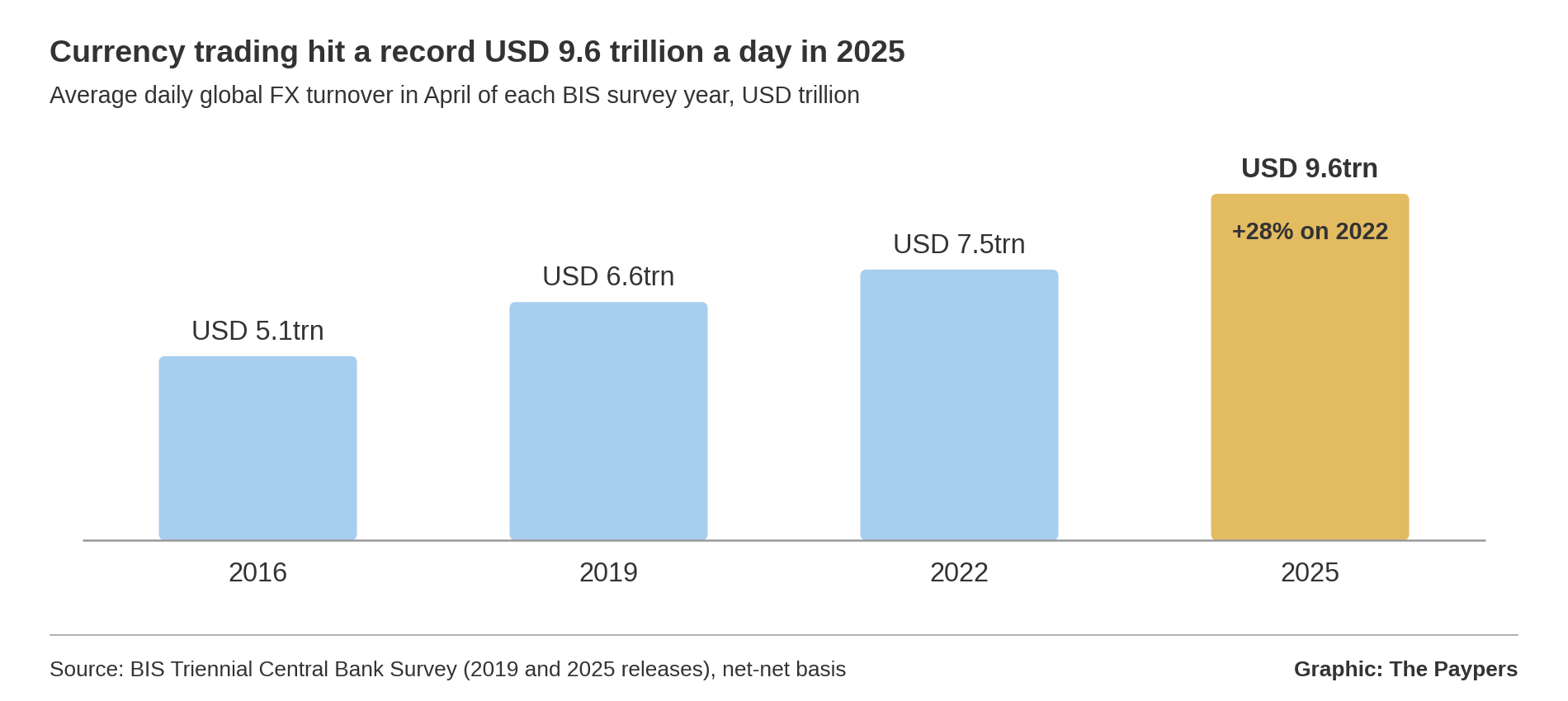
Global currency trading reached a record USD 9.6 trillion a day in April 2025, up 28% from USD 7.5 trillion three years earlier, according to the Bank for International Settlements. The survey caught the market in a nervous month, just after the tariff announcements of early April, and turnover in outright forwards, the contracts used to lock in future exchange rates, jumped 60%.
Commerce has become increasingly international. Merchants sell across dozens of markets, while travel firms collect payments in one currency and pay suppliers in others. Yet many businesses still treat currency conversion as an automatic step, only realising how much a weaker dollar has cost them when the figures appear in the management accounts.
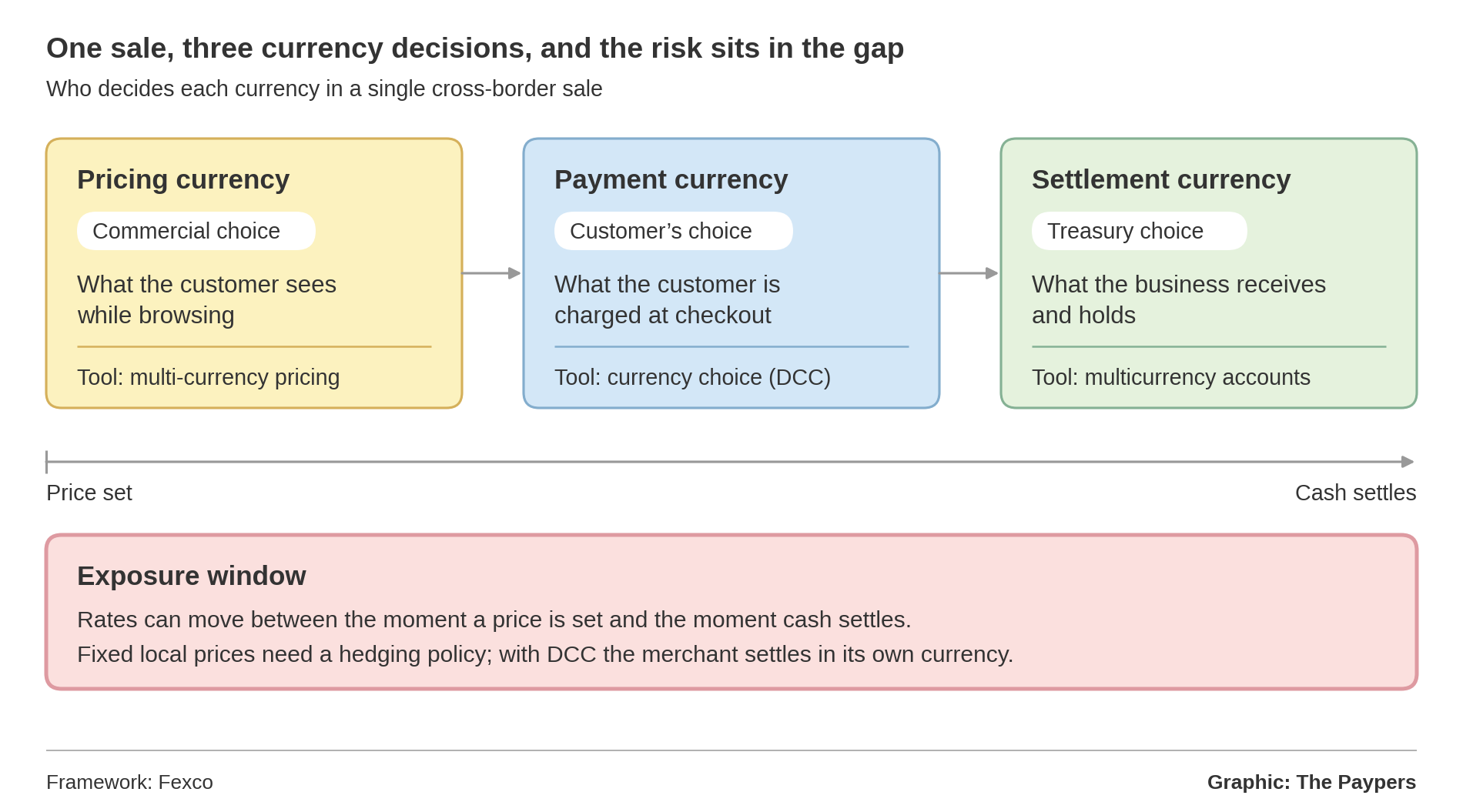
Currency sits inside three decisions that used to be made in separate rooms: what the customer sees and pays, how money is collected, held and converted, and how value is protected between the moment a price is set and the moment cash settles. Each one shapes the other two, and how they fit together is one of the threads running through The Paypers’ Global Ecommerce Report, out in December.
What changed for businesses selling abroad
Several things shifted at once. Volatility no longer behaves like an occasional storm: diverging interest rates, tariffs, and geopolitical shocks can turn a profitable order into a loss between booking and settlement. Expansion also happens earlier. A direct-to-consumer brand can sell into a long list of countries without a local entity, carrying currency exposure in every one of them, managed or not.
Customers have moved too, and the big platforms, online travel agencies (OTAs) among them, have reset their expectations. Alan Graham, Managing Director of Fexco DCC, part of global fintech and business-services company Fexco, says: ‘Marketplaces, OTAs, and the largest ecommerce brands have made local-currency prices the norm. Customers will increasingly expect every merchant, including smaller hotels and independent retailers, to offer the same.’
Behind each sale, the plumbing has grown more complex, with acquirers, marketplaces, payment methods, and payout currencies adding a conversion point at every turn. Many mid-sized firms still keep track in a spreadsheet, which copes with a handful of currency pairs and buckles under thousands of transactions across dozens.
So, currency has climbed the agenda, from the payments team to the CFO and, increasingly, the board. The trigger is usually a question nobody in the room can answer with a number.
The hidden FX cost between sale and settlement
Ask a finance team what currency costs them and many will point to something visible: the spread on a trade, the fee on a transfer. The larger cost rarely shows up on any invoice. It is the rate moving between the day a price is agreed, or a payment arrives, and the day the related bill is paid.
Take a company that receives USD 10,000 today and owes a European supplier in three months. If the dollar slips 4% against the euro in between, around USD 400 of margin is gone. No one charged a fee, and nothing odd appears on the bank statement.
The remedies are not exotic. Holding balances in the currencies a business both earns and spends means it no longer has to convert every receipt the moment it lands, and forward contracts can lock in rates on payments it already knows are coming. Paying suppliers locally, in their own currency, also strips out intermediary costs and delays.
None of this makes the risk disappear. It decides when the business takes it, and at what rate.
Pricing like a local: multi-currency pricing and DCC
Currency is also a sales question. Localisation, which the Global Ecommerce Report treats as the foundation of cross-border success, starts with the price on the page. Take a mid-sized UK retailer selling into Europe with prices only in pounds. A shopper in Lyon sees GBP 85, has to work out the euro price herself and has no firm figure until the statement arrives. If eurozone sales lag, the retailer cannot tell whether demand is weak or the price simply feels uncertain.
As Alan Graham of Fexco explains: ‘Presenting a familiar currency removes the mental arithmetic of translating a foreign price and guessing their bank’s rate.’
Merchants have two main tools. Multi-currency pricing (MCP) shows and charges prices in the customer’s currency from the first product page and leaves the merchant to manage the exposure. Dynamic currency conversion (DCC) lets a foreign cardholder choose, at the moment of payment, to pay in their home currency at a rate shown upfront. The practical difference is who picks the currency and who holds the exposure: with MCP the merchant sets the currency and carries the risk, while with DCC the cardholder chooses at checkout and the merchant is settled in its own currency. Fexco sees them working best together: MCP cannot always tell which currency a shopper prefers, so running DCC alongside it means no cardholder finishes checkout without a transparent currency choice. In a Qualtrics survey of 1,000 consumers in seven countries, commissioned by Fexco, 85% said DCC provides clarity, convenience and transparency, and 79% said they were more likely to return to a brand that offered it.
Sequence matters as much as the tools. According to Fexco, a shopper who browses in sterling and finds a euro option only at the final payment screen has already lost much of the benefit of price certainty. Charging in sterling after showing a euro price is worse still, because the statement then matches nothing the shopper saw.
Every cross-currency card payment involves a conversion, priced either by the merchant’s provider, with DCC, or by the shopper’s card issuer. Regulators want that cost to be visible: the EU’s new Payment Services Regulation (PSR), provisionally agreed in November 2025, will require currency conversion charges to be shown before a payment starts. Fexco supports that direction. In Alan Graham’s words: ‘The objective should not be to steer the customer towards a particular currency, but to make the options clear and let them make an informed decision.’
Who carries the currency risk with local pricing?
Alan Graham points out: ‘Certainty for the customer means someone else holds the risk.’ A retailer holding fixed euro prices is exposed to a weaker euro until the money converts back to pounds, so its price list needs a hedging policy behind it. With DCC, the merchant is settled in its own currency and holds no open position. For many merchants, Fexco says, currency conversion is a source of incremental revenue as well as a customer-experience tool.
That is why the currency decisions inside a single sale have to be designed together. Alan Graham explains: ‘Pricing currency is a commercial choice, payment currency is the customer’s choice, and settlement currency is a treasury choice. They are often set by different teams or providers, and when they are not aligned, the result is inconsistent prices, unexpected conversions and exposure nobody owns.’
Travel: where hidden FX costs pile up
Travel shows all of this at full volume. Revenue and costs arrive in different currencies, often months apart: airlines sell in the departure market’s currency, while hotels pay staff and suppliers in the destination’s. Early bookings give rates time to move, and a cancellation may be refunded at a different rate.
The currency on screen also decides where people book. A traveller will often compare the same room on a hotel’s own site and on an OTA. When the OTA shows a clear price in the guest’s home currency and the hotel’s site shows only euros or sterling, Fexco says, the OTA looks simpler and safer even when its rate is the same or higher. The hotel then pays commission on a guest it could have won directly, and a presentation choice becomes a distribution cost.
‘This is the hardest cost to see,’ says Fexco’s Alan Graham, ‘because it shows up as a guest who never booked direct rather than a line on a statement.’
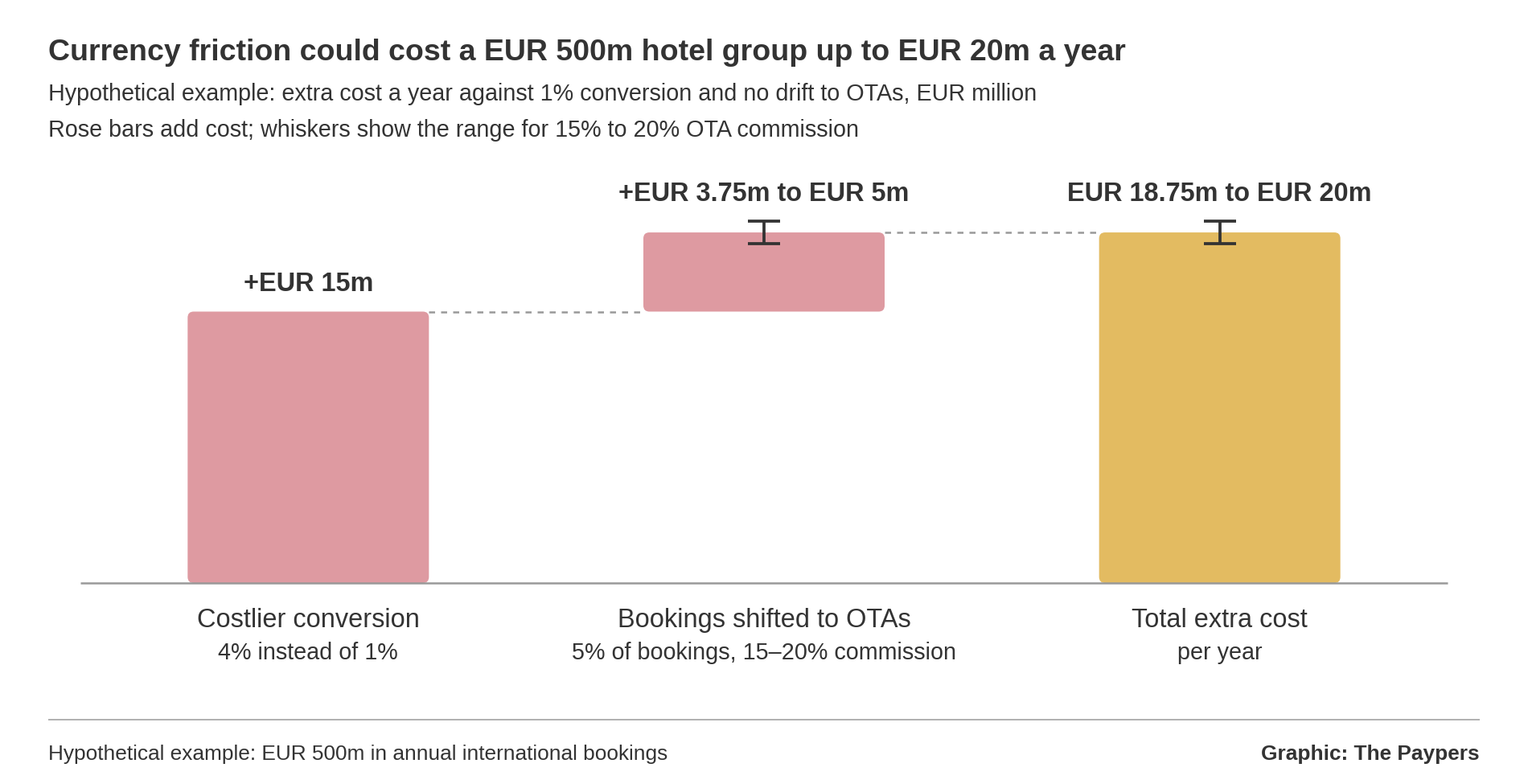
Small percentages compound at scale. For a hypothetical hotel group taking EUR 500 million a year in international bookings, the gap between a 1% and a 4% conversion cost, plus a modest drift of bookings to OTAs, comes to as much as EUR 20 million a year. The conversion-cost gap alone accounts for EUR 15 million of that.
Air Europa shows the commercial upside of getting it right. Working with Fexco, the airline introduced multi-currency pricing across its website and app, and more recently has added eDCC (dynamic currency conversion for online payments) alongside it. According to Fexco, this hybrid model has doubled the airline’s FX coverage, creating an additional revenue stream while giving passengers more flexibility in how they pay. Ongoing testing also shows that presenting passengers with their preferred local currency can lift uptake further without removing their choice.
The supply side has its own traps. A virtual card funded in dollars months ahead may not cover a hotel’s local-currency invoice if rates move, leaving a declined or partial payment at check-in. Fixing each supplier’s payment currency in advance and locking rates on large known payments keeps the money set aside at booking good for the bill. The Global Ecommerce Report’s travel section picks up from here, with refund volatility, supplier payouts, and what real-time FX and instant refunds could change.
Aligning the three rooms: pricing, payment, and settlement currencies
The treasury desk and the checkout page tell one story. A business with a hedging policy can fix its prices and bid with confidence; one that lets customers pay in their own currency gives them one less reason to walk away. Both replace a default with a decision.
Getting there starts with mapping the currency of each sale and each cost, per transaction, then matching tools to the risk worth keeping, from local pricing and multicurrency accounts to forwards and automated hedging, all available from banks and specialist providers.
The next shift is from fixed settings to decisions made in real time, at the checkout and in treasury alike, and it runs through the Global Ecommerce Report and its chapter on orchestration.
Picture the shopper in Lyon again. This time she sees a price in euros, pays in euros and finds the same figure on her statement, while the retailer has already decided who holds the currency risk.
Foreign exchange is no longer something businesses can leave to the back office. For businesses selling across borders, decisions about currency need to be part of the payment strategy from the outset.
Coming in December: The Paypers Global Ecommerce Report 2027
The Global Ecommerce Report 2027 offers a complete overview of key trends and strategies to help businesses worldwide succeed.
Topics include:
- Breaking down ecommerce verticals: why payment strategy differs by sector, starting with travel and hospitality, from advance bookings to AI-driven dynamic pricing.
- Localisation and optimisation: which local payment methods to add first, local acquiring and BIN strategies, BNPL, soft declines and B2B reconciliation.
- Turning orchestration into performance: AI-powered smart routing and retry logic that recovers revenue from soft declines.
Stay tuned for the report, which will be published in the Reports section in December 2026.
About Oana Ifrim

Oana Ifrim is Lead Editor and Writer at The Paypers. After more than a decade at The Paypers, Oana has built a pretty good sense of what’s happening across banking and fintech, with a strong network of industry insiders across payments, digital innovation, regulation, fraud, and financial crime. She mixes content strategy, trend spotting, a (slightly obsessive) love of research, expert conversations, and a big dose of curiosity to turn complex industry shifts into engaging stories and thought leadership that bring a little life to the industry’s biggest conversations.
More recently, she has been deeply dedicated to The Banking View, an exclusive series bringing direct perspectives from banking leaders on how they’re navigating payments modernisation, fraud and financial crime, regulation, and innovation.
When Oana is out of office, you’ll probably find her singing, reading, cooking with her family, getting happily lost in detective and mystery shows, or exploring every forest she can find with her husband and daughter.
If you’d like to exchange ideas, explore content opportunities, or there’s an industry topic you’d love to dig into, reach out to her at: oana@thepaypers.com or on LinkedIn.
With insights from Alan Graham (Fexco DCC)

Alan Graham is Managing Director of Fexco DCC, a role he has held since 2017. Founded in 1981, Fexco is a privately owned, Ireland-headquartered financial technology and business services group and one of the world’s longest-established fintech organisations. The company employs more than 3,600 people and operates across 60 countries. Its Payments & FX division processes more than USD 50 billion in transactions annually, spanning payment orchestration, currency conversion technology, retail FX, and international payments.