Stock markets surged as Jensen Huang returned to Nvidia, but the rally stalled at a familiar barrier and Fed rate hike bets idled. Is this the post-election bounce all over again?
- Nvidia shares jumped about 32% as Jensen Huang returned as CEO, lifting the broader market
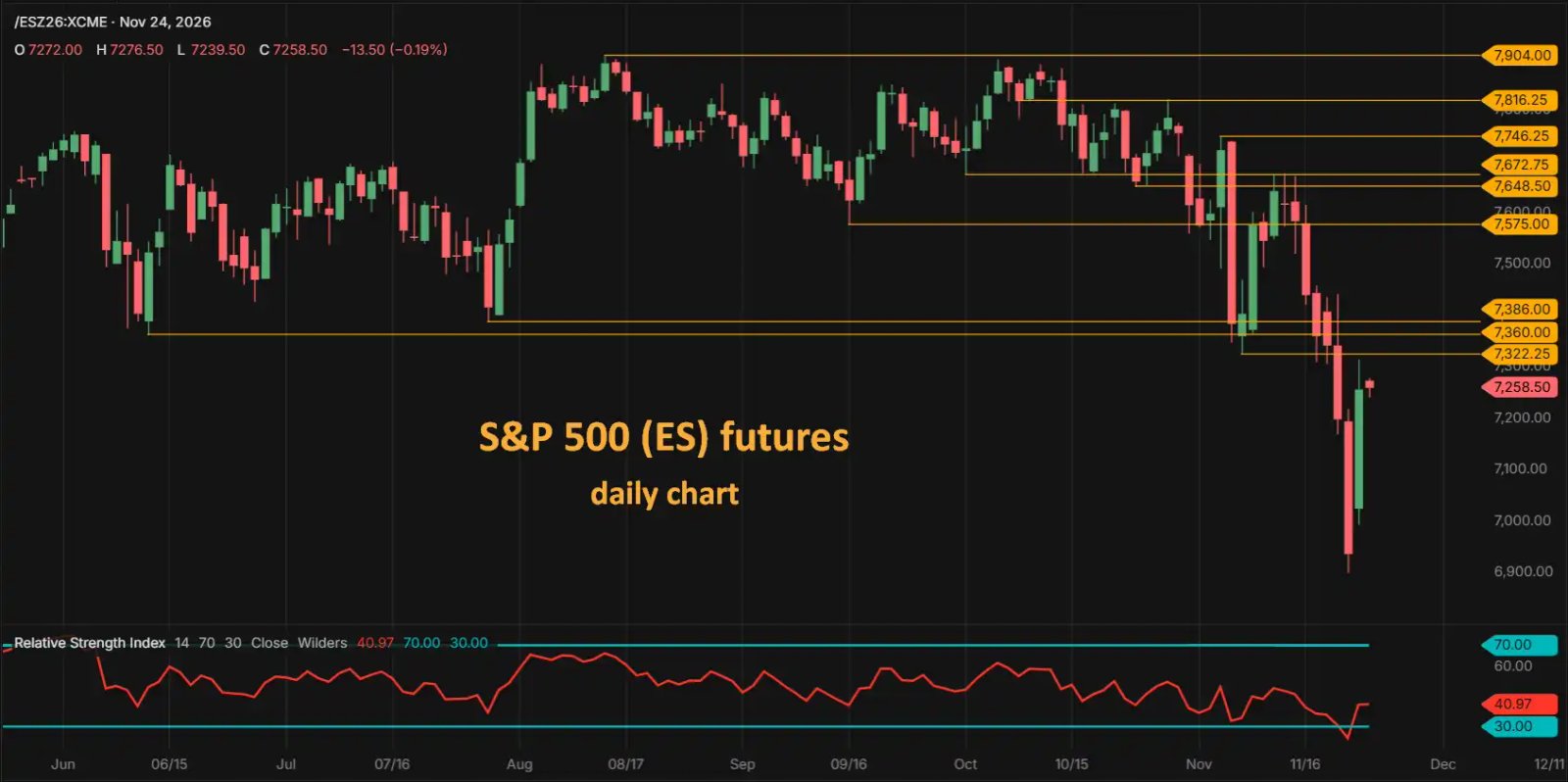
- The S&P 500 and Nasdaq 100 stalled at the underside of ranges they broke last week
- Fed rate hike bets for 2027 did not rebuild as US business activity slowed in November
Jensen Huang is back as CEO of Nvidia, and stock markets roared higher. Nvidia shares surged about 32%. Fellow AI chipmakers rallied too, with Micron up about 19% and AMD over 6%. Tesla gained 12%, Alphabet almost 7%, Amazon over 4%, Microsoft nearly 3%, and Apple close to 2.5%.
The gains extended well beyond AI. An equal-weighted view of the S&P 500 showed a broad sea of green, with only energy, some healthcare names, and consumer defensives lagging. European stocks rose too. Gold, silver, and Bitcoin climbed, as did the US dollar, suggesting liquidity is pouring back into US markets after a violent shakeout. Treasury yields were little changed.
Crude oil fell almost 5%, along with gasoline, heating oil, and natural gas. That move appears tied to President Trump, who suggested the US may resume attacks on Iran next year. That implies no strikes before year-end, buying markets about a month of quiet on that front. Oil now looks to be extending lower after breaking and retesting a key range.
Where have we seen this movie before?
Markets have seemingly removed a big reason for last week’s turmoil, and the moves are dramatic. It is tempting to conclude that the AI flywheel is spinning again. Price action tells a more cautious story. The S&P 500 is testing the underside of the range it broke last week and pointedly failing to get back inside. The tech-heavy Nasdaq 100 likewise jumped but is stalling right where it broke down.
This looks familiar. The selloff in stocks began in early October, ahead of the Nvidia scandal and even the US midterm elections. When the vote passed, markets rallied as a major source of uncertainty cleared. The next day, they went right back to selling. That violent rebound left the pattern of lower highs and lower lows intact, and the selloff resumed with abandon.
The reasons behind the decline likely remain in place. Earnings season was a disappointment relative to lofty expectations. Analysts polled by FactSet expected S&P 500 earnings to grow 29% year-on-year in the third quarter, and results came in near 31%. With valuations at records, that narrow beat was not good enough. Huang’s return may simply clear another piece of event risk before the old default reasserts itself.
Why are Fed rate hike bets stuck?
Tellingly, the rebound in stocks did not revive Fed rate hike bets. A 25-basis-point (bps) increase in December remains locked in, and another is fully priced by March. What happens beyond that is up in the air. Markets were pricing two hikes before last week’s rout and have not rebuilt that hawkish conviction. That suggests worries about the economy have not faded.
Purchasing managers index (PMI) data from S&P Global helps explain why. The US composite gauge slipped to a four-month low in November. Services activity fell short of forecasts and slowed from October, while manufacturing matched expectations but edged lower. Australia, near the front of the global supply chain, posted its worst contraction since 2021.

Inflation expectations continue to fall with crude oil, pointing to a cost-push supply shock with little demand-pull pressure from a hot economy. That keeps the focus on the US consumer. In third-quarter gross domestic product (GDP) data, costlier imports fully erased the contribution from consumer spending, leaving AI data center investment to drive growth.
If the old default returns after this relief rally, stocks may resume their slide, and bonds may continue to find support as growth concerns linger. The US dollar may hold its ground against the euro, British pound, and Canadian dollar, all of which broke lower, while the Australian dollar may stay stuck between risk appetite and broad US dollar strength.
Ilya Spivak, tastylive Head of Global Macro, has over 15 years of experience in trading strategy. He specializes in identifying thematic moves in currencies, commodities, interest rates and equities. He hosts Macro Money and co-hosts Overtime, Monday-Thursday. @Ilyaspivak
For live daily programming, market news and commentary, visit tastylive.com or @tastyliveshow on YouTube
Trade with a better broker, open a tastytrade account today. tastylive, Inc. and tastytrade, Inc. are separate but affiliated companies.