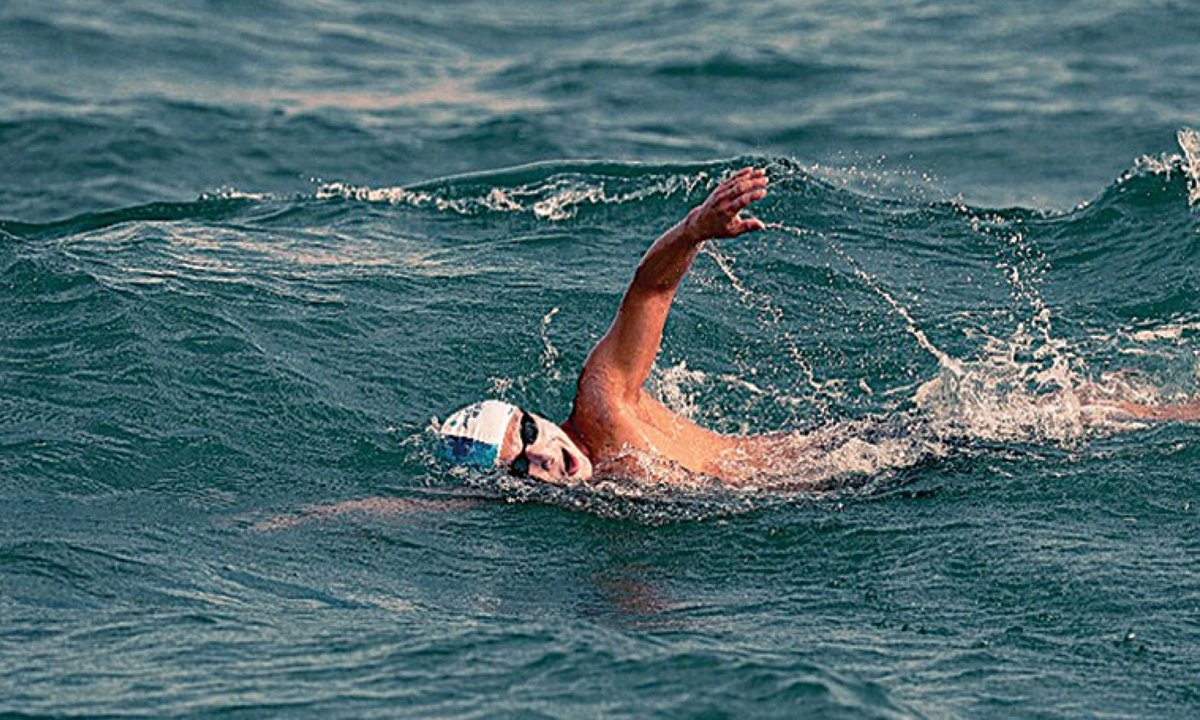
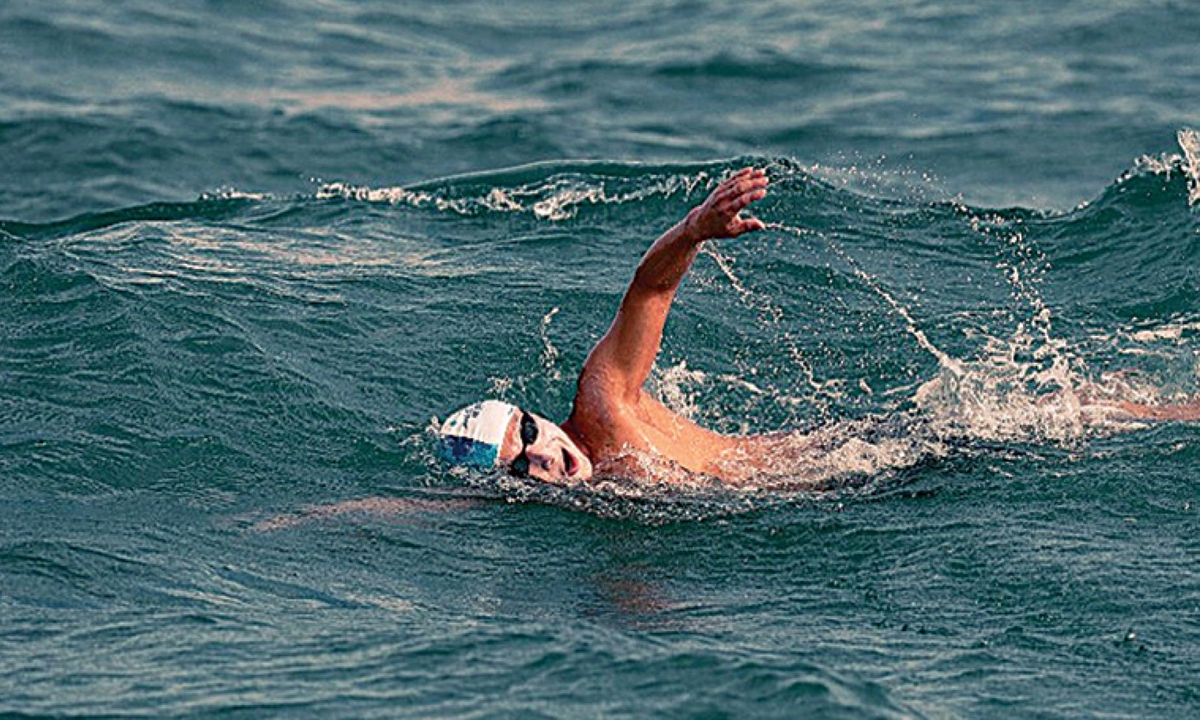
Former Hong Kong Olympic swimmer and actor Alex Fong Lik-sun, 46, swam 35 kilometers from Hong Kong to Macao on Saturday in 8 hours, 37 minutes and 24 seconds, setting a new Guinness World Record for the fastest swimmer crossing the two cities, Hong Kong media reported. He is the third swimmer to complete the route, after successful crossings in 2005 and 2014.Fong shaved 1 hour, 43 minutes and 6 seconds off the previous record. Photo: Screenshot from website
Former Hong Kong Olympic swimmer and actor Alex Fong Lik-sun, 46, swam 35 kilometers from Hong Kong to Macao on Saturday in 8 hours, 37 minutes and 24 seconds, setting a new Guinness World Record for the fastest swimmer crossing the two cities, Hong Kong media reported. He is the third swimmer to complete the route, after successful crossings in 2005 and 2014.Fong shaved 1 hour, 43 minutes and 6 seconds off the previous record.
Fong entered the water at 8:53 am from Peaked Hill on Lantau Island in Hong Kong and reached Hac Sa Beach in Macao at 5:30 pm, about 20 minutes ahead of schedule, Malaysia’s Oriental Daily. Under the challenge rules, he was not allowed to board an escort boat or hold on to objects to rest or wear a wetsuit or use flotation aids.
The swim was far from smooth. Fong hit large waves within the first kilometer. About four hours in, the water temperature suddenly dropped by around 3 C, causing headaches, shivering and temporary loss of sensation in his feet, Malaysia’s United Daily reported. Fong said he feared losing consciousness due to hypothermia.
“Completing a 35-kilometer crossing is not just about covering the distance. Swimmers have to stay in open water for hours while dealing with changing currents, waves, water temperatures and navigation conditions,” Wang Yu, a Beijing-based open-water swimming expert, told the Global Times on Sunday. “Unlike pool swimming, open-water swimmers have no fixed lanes or clear visual references. Cross-currents can push them off course, increasing the distance they actually swim and the energy they expend.”
Fong’s swim also tested his endurance and ability to manage his energy over several hours. Wang said that maintaining a steady pace and replenishing energy during such a long crossing were essential to sustaining performance.
“A swimmer who starts too fast or fails to replenish energy adequately may experience a sharp decline in strength in the later stages,” he said.
Fong faced another challenge around four hours into the swim, when the water temperature reportedly dropped by about 3 C, according to United Daily.
Wang said the sudden change in water temperature could have made the crossing even more demanding. “After several hours in the water, a swimmer has already expended considerable energy. A sudden drop in water temperature can accelerate heat loss and affect the body’s ability to maintain its core temperature. Shivering and numbness are warning signs that should not be ignored,” Wang noted.
Fong’s achievement surpassed the previous records set by two swimmers who had completed the route. The first was Zhang Jian, then a professor at Beijing Sport University and a leading Chinese long-distance open-water swimmer, reported Oriental Daily. On September 22, 2005, Zhang, then 41, set off while a No. 1 tropical cyclone warning was in effect, completing the approximately 35-kilometer crossing in 10 hours and 43 minutes.
The second swimmer to complete the route was Simon Holliday, a Hong-Kong based British long-distance swimmer. On May 24, 2014, Holliday, then 35, crossed in 10 hours, 20 minutes and 30 seconds, breaking Zhng’s record. The swim also raised funds for marine conservation and sought to boost public awareness of ocean protection.