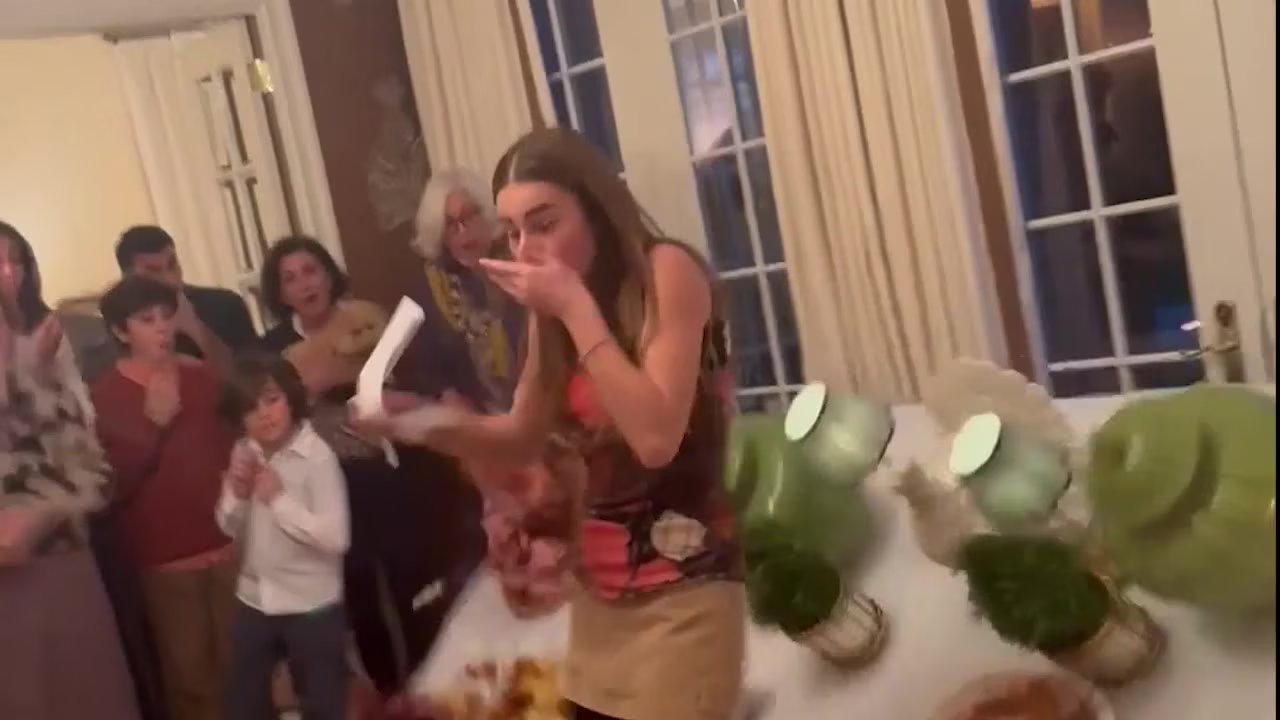
WHEELING, W.Va. — On some Appalachian Thanksgiving tables, turkey is served with spiced rice, toasted pine nuts, stuffed grape leaves, and kibbee, reflecting a Lebanese culinary heritage that has helped shape West Virginia for generations.
Though Appalachia is often portrayed as culturally homogeneous, its cities have long welcomed people from many backgrounds. Lebanese immigrants notably brought their traditions to the region, and their foods became part of the local culinary heritage.
Lebanese-American communities have flourished throughout the United States, but their historical presence in Appalachia is less widely recognized. In West Virginia, Lebanese families established businesses, churches, and homes in communities across the state, particularly during the industrial expansion of the late 19th and early 20th centuries.
Wheeling was among the state’s most diverse industrial cities, attracting immigrants from Europe and the Middle East to its factories, mills, and commercial districts. Lebanese families became part of that growing population, preserving their cooking traditions through family gatherings, neighborhood businesses, church dinners, and festivals.
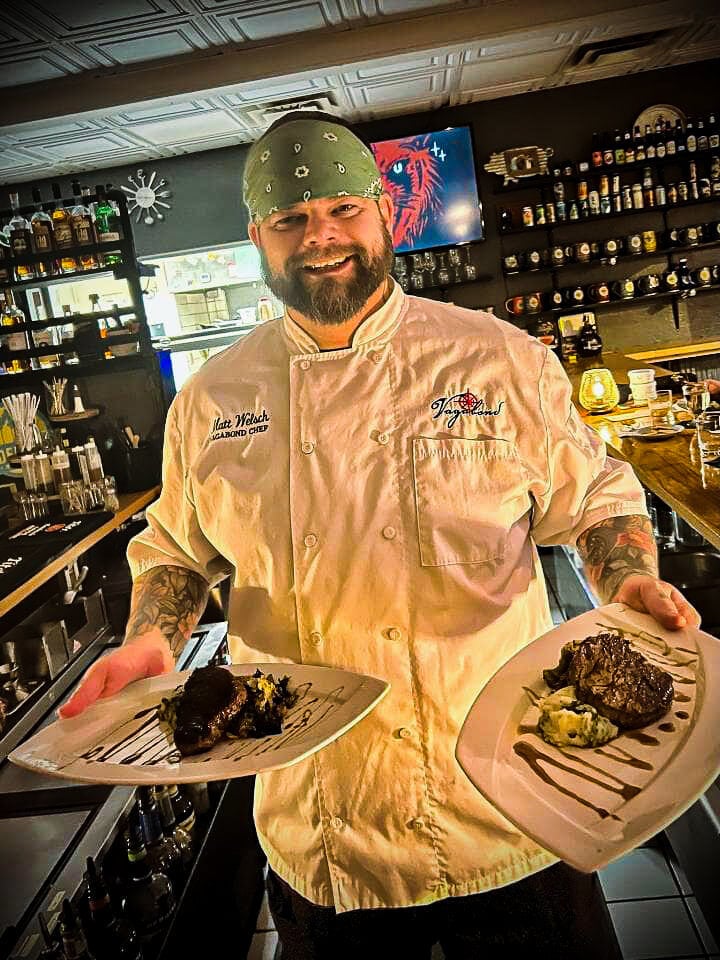
For Matt Welsch, owner of the Vagabond Kitchen in Wheeling and a contributor to West Virginia Explorer, their history reflects the many cultural influences that have shaped Appalachian food.
“I love how Appalachia brings people together from all over the world. So many cultures filtered through the holler, and each one left something on the table,” Welsch said.
Lebanese families established roots across West Virginia
Lebanese immigration was not confined to Wheeling. Families settled in Charleston, Huntington, Beckley, Parkersburg, Morgantown, and other West Virginia communities, where many established groceries, retail stores, and other businesses.
Much of this immigration occurred between 1890 and 1940, as West Virginia’s coal, steel, glass, and manufacturing industries expanded. Many newcomers arrived from territories then governed by the Ottoman Empire, including areas that later became modern Lebanon and Syria.
Some immigrants worked as traveling merchants before establishing permanent businesses. Their children and grandchildren subsequently entered professions, public service, and commercial enterprises throughout the state.
Among the best-known descendants was former U.S. Rep. Nick Rahall, whose grandparents immigrated from Lebanon to Beckley in the early 20th century. In Charleston, the Haddad family became associated with the growth of the Heck’s department store chain, while the Gabriel family established the retail business that became Gabe’s.
The history of these communities is documented in From Mount Lebanon to the Mountain State, a 2020 article by historian Nick Musgrave published by Expatalachians.
Wheeling’s Lebanese community developed a particularly enduring cultural institution through Our Lady of Lebanon Maronite Catholic Church.
In 1905, Bishop Patrick Donahue of Wheeling requested a Maronite priest from Lebanon to serve the city’s growing congregation. The Rev. Paul Abraham arrived the following year, and parishioners constructed a church on Eoff Street in 1922.
After a fire destroyed the building in 1932, the congregation began raising money to rebuild it. That effort led to a festival that would become one of Wheeling’s longstanding cultural traditions.
The Mahrajan Festival preserves a culinary heritage
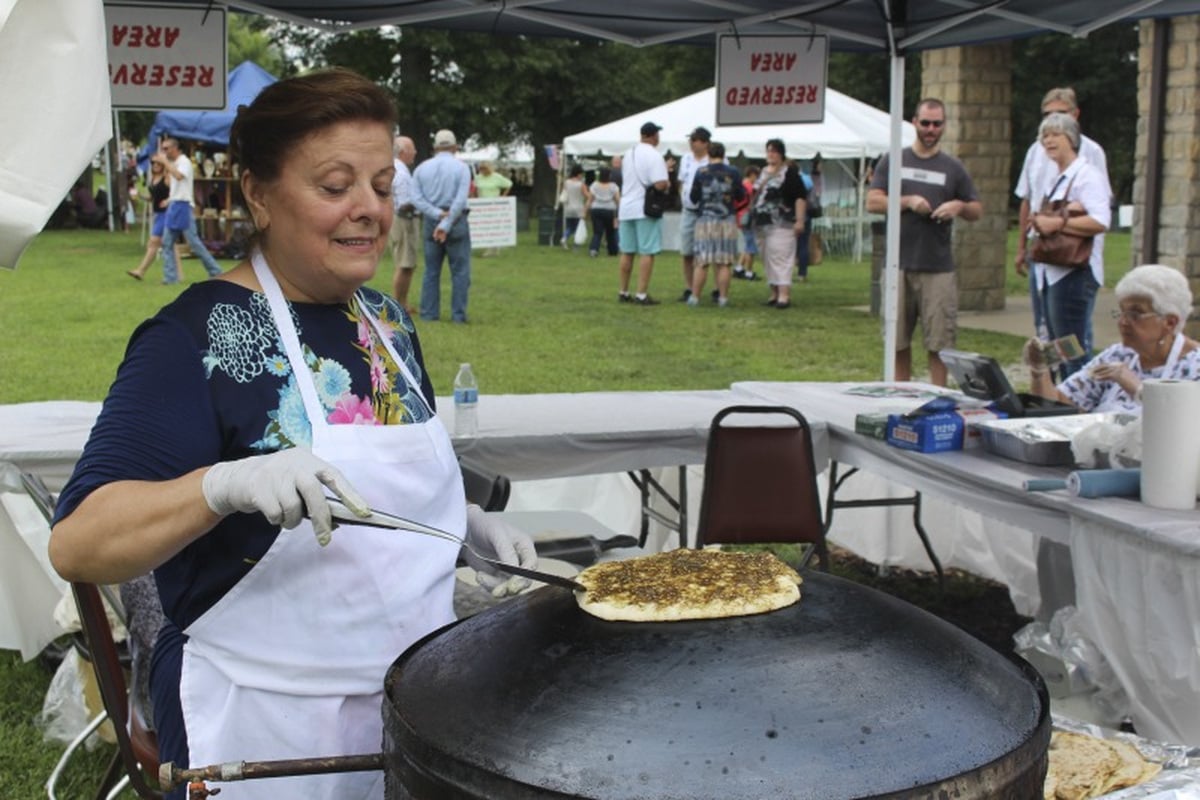
The first Mahrajan festival was held in 1933 to raise funds for Our Lady of Lebanon. Celebrated at Oglebay Park, the gathering grew into an annual occasion featuring Lebanese food, music, dancing, and family reunions.
The festival also attracted visitors without Lebanese ancestry, introducing generations of Ohio Valley residents to foods prepared by parish members.
Kibbee, a dish generally made with ground meat, bulgur wheat, onions, and spices, became one of the familiar offerings. Other foods included stuffed grape leaves, spinach pies, tabbouleh, and pita bread.
In a 2017 account published by Weelunk, parish members described how the festival helped families maintain connections to their ancestors and to Wheeling. For descendants who had moved away, the gathering provided an occasion to return to the city.
The West Virginia Folklife Program has also documented the festival’s culinary traditions. Its photographic archive includes an image of kibbee, tabbouleh, and spinach pie served at Oglebay in 2018.
Food preparation remained an important part of parish life beyond the festival. Church members prepared dishes for dinners, fundraisers, and other gatherings, passing recipes and cooking techniques to younger generations.
In a 2021 West Virginia Public Broadcasting report, parish member Dalton Haas described learning to prepare Lebanese foods from women at the church. Among his teachers was Linda Fadoul Duffy, whose family operated the Lebanon Bakery in South Wheeling.
The bakery, founded by Rose Fadoul in 1959, served Lebanese specialties to customers for nearly six decades before closing in August 2017.
Its importance extended beyond the Lebanese community. Customers from throughout the Wheeling area became familiar with dishes that had originated in the eastern Mediterranean.
Family recipes connect generations
The Lebanon Bakery’s place in Wheeling’s culinary history is documented in A Little of This, A Little of That: A Wheeling Community Cookbook, published in 2024 by Grow Ohio Valley.
The collection, assembled by Emma Goldenthal with Corbin T. Lanker, includes recipes and recollections from residents representing several of the city’s food traditions.
Among the contributors is Jenna Thomas-Cline, who recalled visiting the Lebanon Bakery with her grandparents and brother. The family regularly ordered kibbeh and a Greek twist cookie called koulouria.
Returning home from college, Thomas-Cline remembered wanting to visit the bakery again.
Her account also describes the importance of preparing kibbeh with family members and maintaining connections with relatives through familiar foods and ingredients.
The Wheeling Community Cookbook includes Lebanese recipes alongside Polish, Italian, Puerto Rican, and other dishes, reflecting the range of culinary traditions that developed in the Ohio Valley.
Such recollections demonstrate how food can preserve family relationships and cultural knowledge, even as descendants move away from the communities where their ancestors settled.
Welsch sees a connection between Lebanese and Appalachian home cooking in their shared emphasis on seasonal ingredients, resourcefulness, and knowledge passed between generations.
“A Lebanese grandmother and an Appalachian grandmother would understand each other in a kitchen. Both cook from the mountains. Both put up the harvest, cook their greens, and stretch meat with grain. Neither one wastes a thing.”
Although the cuisines developed in different environments, both include traditions of preserving harvests, preparing meals for extended families, and using available ingredients.
Hashweh brings Lebanese flavors to Thanksgiving
One dish that connects Lebanese cooking with American Thanksgiving traditions is hashweh, a seasoned mixture of rice, meat, and spices that can be served as a side dish or used as stuffing.
The Arabic word hashweh means stuffing. Recipes vary, but many combine rice with ground beef or lamb, onions, cinnamon, allspice, and other seasonings. People often add toasted pine nuts or almonds.
In Lebanon and elsewhere in the Middle East, people serve similar preparations with poultry and other meats during family celebrations.
For Thanksgiving, some Lebanese-American and other Arab-American families prepare hashweh instead of conventional bread stuffing. Others serve it beside the turkey, allowing the rice and meat to accompany the traditional American holiday meal.
Food writer Reem Kassis examined the custom in a 2021 New York Times article republished by Arab America. Her reporting described families in Washington, New York, and other communities who have incorporated hashweh into their Thanksgiving celebrations.
The dish also connects the holiday to food traditions that preceded the arrival of Lebanese immigrants in the United States.
Stuffed grape leaves, another familiar part of Lebanese cuisine, may accompany the meal. Depending on the recipe, the leaves are filled with rice, herbs, and sometimes meat. Kibbee can be baked, fried, or served in other preparations.
These foods are not exclusive to Thanksgiving, and Lebanese-American holiday menus vary considerably among households. The broader tradition demonstrates how immigrant families have incorporated their own cooking into an American celebration.
In Wheeling, the history of such dishes is especially meaningful because Lebanese food has been part of the community’s culinary life for more than a century.
A broader picture of Appalachian Thanksgiving
The Lebanese presence in Wheeling is one part of the city’s larger immigrant history. Its manufacturing economy attracted families from across Europe and other regions, establishing communities whose churches, businesses, and food traditions helped shape the Ohio Valley.
Some of those traditions remain especially visible during festivals. Others survive through recipes prepared at home, where parents and grandparents often pass knowledge to younger generations.
The continuation of Lebanese cooking has not been without challenges. West Virginia Public Broadcasting documented concerns among Our Lady of Lebanon parishioners about an aging congregation and the difficulty of finding younger people to carry on traditional food preparation.
Yet the survival of recipes, the documentation of family memories, and the longstanding appeal of Lebanese dishes beyond the community itself show their enduring place in Wheeling’s history.
For readers in Pittsburgh, Washington, New York, and other cities with established Lebanese-American populations, dishes such as kibbee and hashweh may be familiar. Less familiar may be their history in the towns and industrial centers of Appalachia.
Welsch says he believes heritage deserves a place in how people understand West Virginia’s holiday traditions.
“People outside the region have one picture of an Appalachian Thanksgiving. In some homes here, the turkey comes with rice, spiced meat, and pine nuts, and grape leaves on the side. That’s a West Virginia Thanksgiving too.”
Wheeling’s Lebanese food traditions, preserved through family kitchens, neighborhood businesses, and Our Lady of Lebanon’s community gatherings, remain part of the Ohio River Valley’s culinary history.
This is the second installment in a West Virginia Explorer series examining the immigrant food traditions that have helped shape holiday meals in northern West Virginia.