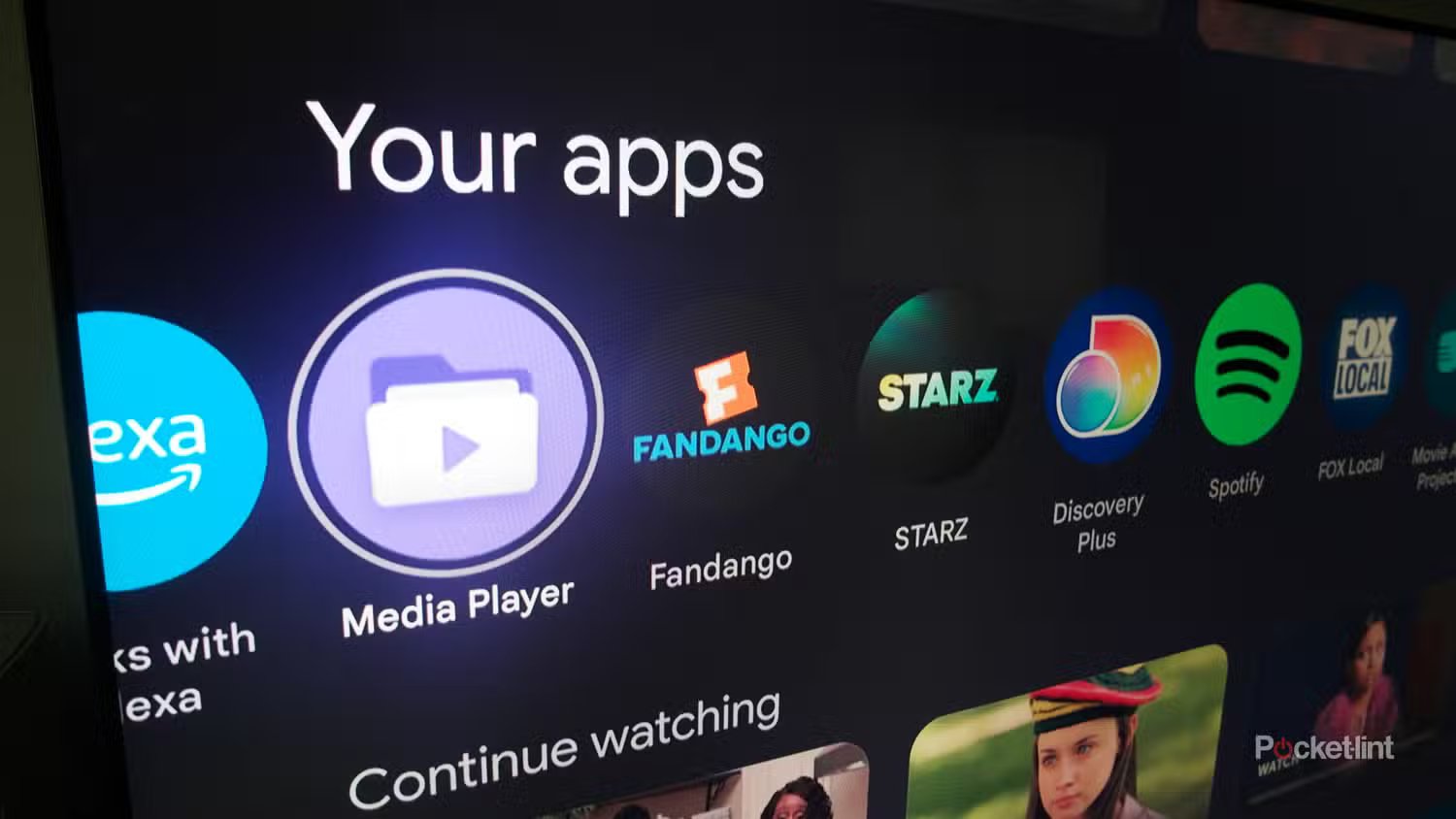
Whatever built-in media player came with your brand’s Google TV may “work for you,” but I’m guessing it’s because you don’t know there are much better options waiting to be discovered. In case you’re confused, I’m not talking about your streaming apps like Disney+ or SlingTV. I’m talking about an app on your Google TV that is often labeled just Media Player. And just like your smartphone and your laptop, you’ll be able to get away with using the stock media player for very basic playback of some music and video formats, once you get them loaded onto your TV’s limited storage space, but that’s it!
Let’s talk about VLC media player and how a quick download from the Play Store on your Google TV expands your options for playing home movies, almost any music files you have, and even content from your home network.
Listen, I don’t make the rules

The first reason you’ll want to download and install VLC media player is that your built-in media player likely only recognizes a flash drive or external hard drive plugged into the USB port. If you’re really lucky, you can configure it to connect to network-shared storage, like a folder with music and videos on your computer. You can see those three options in the picture above. That is the stock media player on the TCL TV I’m currently working with.
The second reason is that, depending on the manufacturer, your stock media player may or may not play your music and videos. You may be playing one thing fine, then the next piece of content throws an “unsupported format” error. This is especially true if you have file types like FLAC or MKV, or if you want to play more advanced formats like Dolby TrueHD.
The bottom line is: support is better to have and not need than to need and not have. VLC handles that rather nicely.
Nearly universal codec and format support

The image above is a screenshot from VLC’s website, showing all of the formats it supports. I was going to list them here, but you can see why I chose to go this route. Now you can click the image to expand it and peruse the format support at your leisure.
What good is all of that format support if the ability to access files is as restrictive as the stock media player’s two or three options? With VLC, you can access content from an external flash drive or SSD, as well as from your NAS, DLNA media server, and even FTP addresses. Once you do, the Android TV integration enables hardware-accelerated decoding, playback of multiple audio tracks, voice search via the remote, and custom subtitles.
Best of all, since we are talking about playing content on a Google TV, VLC will also handle audio passthrough of Dolby and DTS formats.
Getting started
While I haven’t ripped any DVDs or Blu-rays yet, I started indoor rock climbing and bouldering about a month ago, and I’ve been watching some of those videos back on this 75-inch TCL QM7L. Obviously, that makes for a great way to watch the nuances of my form on a screen that large, but it’s even better for my deadlift form check videos. There’s just one problem that I run into from time to time, but we’ll get to that in a moment.
When you install VLC on your Google TV, the Android app automatically recognizes the device and adjusts the interface for your TV, which is generally watched in horizontal rather than vertical orientation like your phones and tablets. You’re greeted by a two-pane interface, with the left side consisting of seven options: Now Playing (contextual), Video, Audio, Playlists, History, Browsing, and Other. The right side of the interface shows the menu items associated with the headings on the left. For example, you’ll tap on Browsing and see the Internal memory, Local Network, Streams, and Add a new server to favorites icons. For what we’re talking about here, I’m using the Internal memory option.
Tapping on the Internal memory icon takes me to a screen that shows all of the data folders on my TV. Most of the items you transfer to your TV will be dropped into the Downloads folder by default. As you can see in the image above, my climbing and deadlift videos are there. If you have a few different videos you’re going back and watching regularly, you can also create a playlist of them to make it easy to refer back to them as needed.

If you’re going to be watching any videos which also have spatial audio tracks, scroll down to the Other option at the bottom of the left pane, then scroll down to Extra settings and tap on Audio. Once in the Audio menu, enable the first option you see, which is: Digital audio output (passthrough). Now your media will pass the job of decoding Atmos or DTS tracks to your capable soundbar or home theater system.

There’s only one major issue I’ve run into: vertical video not reorienting properly. When watching a video, you can click and hold the icon in the bottom-right corner of the screen to bring up TV screen aspect ratio options, but there is no option to reorient the video. That option exists on the desktop version of VLC, but the Tools menu with the Effects and Filters option doesn’t appear in the Google TV app. That’s a simple fix, though! Just rotate the video on your phone first, then send it to your TV using LocalSend or whatever wireless transfer app you fancy.

- Brand
-
TCL
- Display Size
-
75-inch
- Dimensions
-
65.60″ x 39.20″ x 14.50″ with stand
- Operating System
-
Google TV
- Display Type
-
SQD-Mini LED
- Display Resolution
-
4K UHD (3840 x 2160)