Emily in Paris premiered when audiences needed it most. The Netflix original, created by Sex and the City producer Darren Star, offered an escapist fantasy: a young girl trying to find love and success in Paris in October 2020. The show functioned as a reprieve from the pandemic, a dreamy alternative in which we could vicariously live through Emily (Lily Collins) as she gallivanted around the City of Light. It was and still is delectably digestible television.
The love for Emily in Paris was anything but unanimous. Critics wasted no time tearing the show apart, with some targeting its depictions of French culture or claiming the script lacked the bite of Star’s previous television shows. The criticism extended to Emily’s idiosyncratic wardrobe, with some writing that the clothing leaned hard on American stereotypes of French fashion or looked cartoonish, with clashing patterns and bright colors. Costume designer Marylin Fitoussi took these criticisms head-on and doubled down. Emily’s outfits weren’t meant to be couture or designer; they were meant to dress a girl finding her sense of self, expressing her desire to explore the unknown.
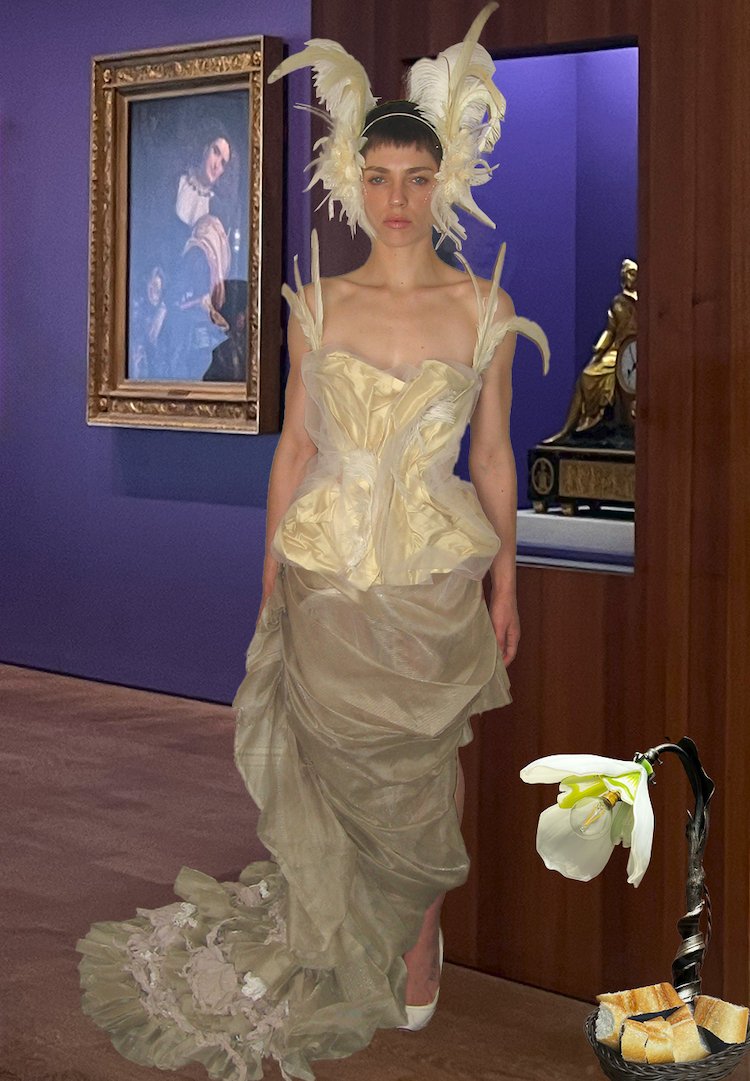
For six seasons, Fitoussi curated a wardrobe fit for Emily, a bright-eyed young woman unafraid to try something new, to break the rules. This mirrors Fitoussi’s personal philosophy on clothing: that fashion is meant to break rules, to push boundaries, to provide a space of unrelenting experimentation. Ahead of the sixth season, SCAD FASH Museum of Fashion + Film compiles six seasons’ worth of outfits in “Emily in Paris: Fashion Without Rules,” on view through March 14, 2027. The exhibition lives up to its name; for the designer, clothing is a mode of expression that lets anyone feel free, wherever they are. It offers a character study, tracing Emily’s evolution from a doe-eyed expat to a well-versed Parisian resident. (And worry not, there are also looks from Emily’s chic boss Sylvie—played with devastating elegance by Philippine Leroy-Beaulieu.)
Ahead of season 6, Bazaar sat down with Fitoussi at SCAD Fashion in Atlanta to discuss working with Lily Collins, her swan song for Emily in Paris, and how everyone has the potential for creativity.

Lily Collins as Emily in Emily in Paris
It must be pretty surreal to see all six seasons grouped together at this exhibition. How does it feel to see it all unfold here?
Marylin Fitoussi: I don’t recall a contemporary TV show being in the spotlight in this way. Generally, when you think of an exhibition, you think of period pieces or couture pieces. The show is really part of pop culture now!
When we walked through the first room earlier, you spoke about “evolution,” not only of the show but of the looks. I’d love to hear a little bit about how you see evolution taking place from season 1 to 6.
MF: I was surprised when fashion magazines [criticized the show] at the beginning. I’m not a fashion designer, [but] I love fashion and I love clothes. This show was not about fashion at the beginning. [Emily] is a bubbly character with a very strong personality from Chicago; she couldn’t have come dressed in Comme des Garçons or in Yamamoto. I needed to have this cultural shock. She’s a fish-out-of-water character, and we needed something to catch the audience’s eyes. When you want to show people that you love the culture but you can’t express it because you don’t know the codes, you don’t speak the language, the only way you find it is through clothes. It was never about “fashion.” Sometimes, it’s about creativity, individuality, making something not trendy at all. The audience got that, and fashion magazines didn’t get it, so they killed me.

Lily Collins as Emily in Emily in Paris
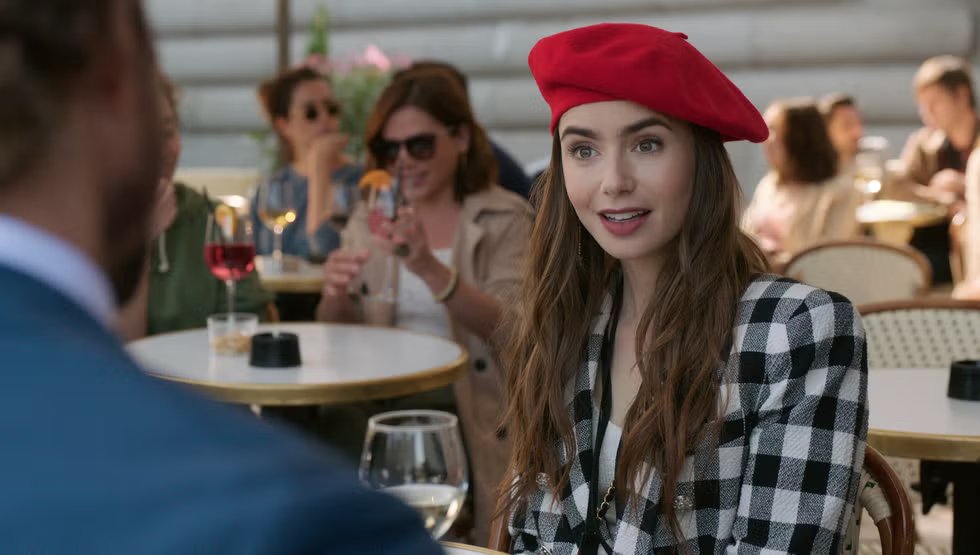
This show taps into a large audience and sustains this conversation for six seasons. You mentioned how the first outfit in the exhibition, the black-and-white two-piece with the beret, became iconic, even if you hate that word. What do you think about this connection with the audience?
MF: Many times, I’ve asked myself, “Why does this little gingham suit have so much influence?” It’s quite simple. It was the most duplicated, copied, reposted, fan-arted, and used as a Halloween costume. It touched people because it was for them. The French can have their own version of it, their own concept, but for the entire world, it was this one little girly, timeless outfit with the red beret, the red lips, the red soul.
When you and Lily talk about these outfits, are you expecting these responses?
MF: She read the bad press after the release of season 1, and we had a talk. I said they hated it in France; they find it hideous. [I asked her] “Do you want me to change [it]?” She was smiling and said, “No, we can’t, and we won’t please everybody. We need to keep this strong DNA. We need to continue to have this unexpected silhouette because it’s what catches the audience’s eye.” It’s a guilty pleasure. We can say, I love it.
It opens a way for the audience to see fashion in a different way, where you can mix in an awkward way and free people from this law where you shouldn’t [do that]. Coco Chanel used to say, “Before leaving a room, look at yourself in the mirror and take something out.” I always say, “Put something more on.”

Emily in Paris costumes featured in “Emily in Paris: Fashion Without Rules”

Let’s talk about season 6. What was the swan song that you wanted from this final season?
MF: I wanted to present a more elevated version, more mature, more evolved, but still true to what she was and what she is, with an eclectic combination and a little bit awkward. She knows the French rules, but as I do, she finds French fashion so boring. In general, I find that fashion is less and less interesting. Why are fashion and celebrity stylists sourcing more and more from archives? What it’s showing is that now everything is the same. Everything is boring, and I understand why. They need to sell the show! We don’t have to sell anything. We have to sell dreams, illusions, craziness, boldness. People watch the show in groups. Some people say, “I love it,” and some say, “I hate it,” and they have a dialogue and fight and have a good [time]. We love that.

Emily in Paris costumes featured in “Emily in Paris: Fashion Without Rules”

Considering the show in the context of SCAD and the fashion program, why do you think an exhibition like this is important for the students?
MF: A young designer wants to be famous right away. Fame doesn’t happen, and it doesn’t matter. You need to be happy with what you’re doing. With costume design versus fashion design, you can be much freer. You don’t have anything to sell, and you don’t have to design the “It bag.” If your show is successful, it’s a win-win for everybody. To see that, you need to be true to your vision. You need to be true to your gut feeling, to your vision, to your DNA. Talent is not enough; you need to be at the right place at the right time. Being discovered by Darren Star … he changed my life. At some point, you find the right project for you.
You need to work a lot to take care of every detail. You need to be strong and push the boundaries. You need to try to show a different way to see costumes and clothes, to see that everything is possible…. Style begins when fear ends. You don’t want to please everybody, and I’m always attracted to people who dress in a different way, and I’m never judgmental. To create something is to expose yourself. It’s very vulnerable. It’s brave.

Camille (Camille Razat) in Emily in Paris
This interview has been condensed and edited for clarity.