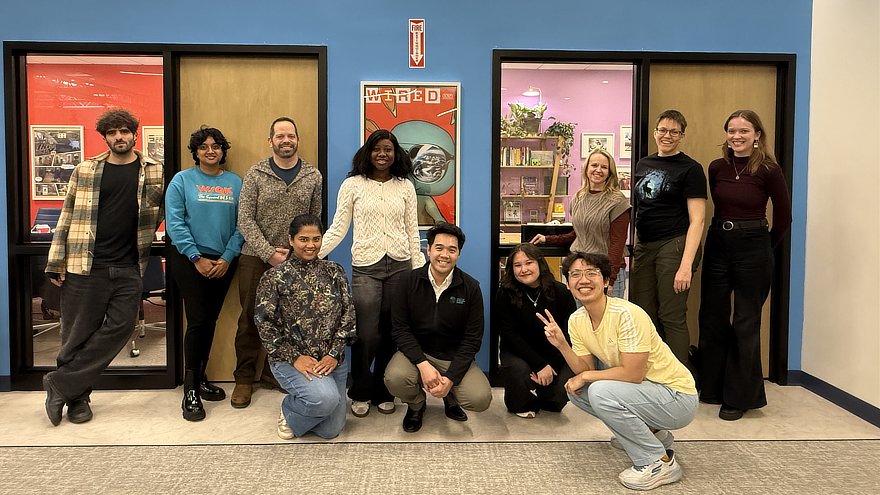
University of New Haven public health students visited Yale University’s XRPeds Lab
to explore how serious games and virtual reality can make health education more interactive
and effective.
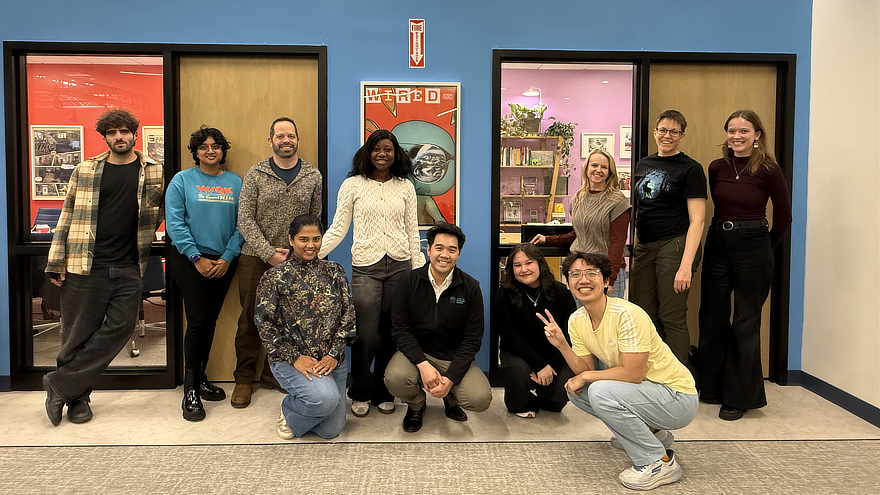
Three School of Health Sciences students joined Alvin Tran, ScD, MPH (center)
to Yale’s XRPeds Lab.
Alvin Tran, ScD, MPH
Before joining the University of New Haven as a full-time professor in what was then
the newly established School of Health Sciences, I had the opportunity to work alongside an innovative team of researchers at Yale
University School of Medicine. Together, we explored how video games could be developed
to encourage healthier behaviors and address important public health challenges.
These games, known as serious games, are designed for purposes beyond entertainment. By incorporating behavioral science,
storytelling, and interactive technology, serious games can make health education
more engaging, accessible, and memorable.
Over the years, I have maintained professional relationships with several of the talented
researchers involved in this work. Recently, I was invited to bring three of my students
to Yale’s XRPeds Lab, an interdisciplinary research group developing and evaluating emerging technologies,
including virtual reality and interactive games, to improve the health and well-being
of children, adolescents, and their families.
Rather than describe the experience myself, I invited these three students who attended
to share their own reflections on what they learned, what surprised them, and how
the visit influenced their perspectives on public health and their future careers.
Aizza Ibrar ’28 MPH
My visit to the XRPeds Lab was an exciting and eye-opening experience that changed
the way I think about gaming, technology, and public health.
One of the most memorable aspects of the visit was sitting around a table talking
with professionals from different backgrounds, including a pediatric oncologist, physicians,
virtual reality experts, researchers, and public health professionals. Seeing individuals
from different disciplines come together to address real-world problems was inspiring.
It reminded me that meaningful innovation happens when people bring different perspectives
and expertise to the same challenge.
Before this visit, I primarily viewed gaming as a form of entertainment. However,
learning about the lab’s work helped me recognize its potential to influence human
behavior and improve health outcomes.
I was particularly fascinated by CUTIE, a game designed to emphasize the importance of hand hygiene. Learning about the
research at Yale examining tensions between nurses and parents of newborns in neonatal
intensive care settings helped me understand how a real healthcare challenge could
inspire an innovative educational solution.
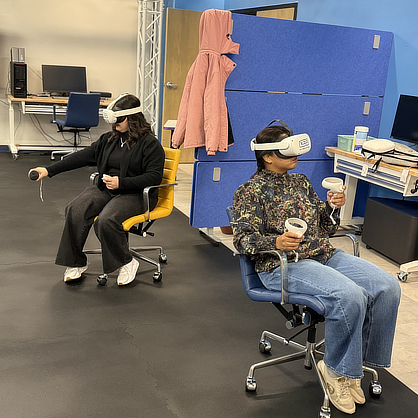
Mastura Kaihani ‘29 (left) and Aizza Ibrar ‘27 MPH (right).
What stood out to me was how the game encouraged players to feel responsible for CUTIE’s
well-being. Rather than simply telling someone to wash their hands, the game creates
an interactive experience in which the consequences of their decisions become meaningful.
I believe technologies such as virtual reality have enormous potential to advance
public health education. Serious games allow people to participate, make decisions,
and experience simulated consequences rather than simply receive information. I can
imagine these technologies helping children learn healthy behaviors, improve their
focus, and manage certain behavioral challenges.
As I learned more about the possibilities of virtual reality, I began imagining a
project of my own.
I would love to explore developing an interactive VR experience that could help children
and their parents feel less anxious about dental appointments. Such a program could
help patients understand dental procedures, learn about their oral health, and feel
more comfortable throughout their visits. I believe this type of innovation could
make dental care less intimidating and create more positive healthcare experiences.
I left the XRPeds Lab feeling inspired by what becomes possible when technology, research,
and compassion come together. The experience encouraged me to look beyond traditional
approaches to health education and consider how creative solutions can address real
human needs.
Sometimes, a single experience can change how we see an entire field. This visit certainly
broadened my perspective on what is possible.
Donrine Adeyinka Theo Harding ’28 MPH
Walking into the XRPeds Lab, I was immediately amazed by the posters, gaming equipment,
and creativity behind the projects. The research team was welcoming and took the time
to explain their work and how their ideas developed into interactive educational experiences.
One of the most memorable parts of my visit was learning how researchers collaborate
to create games addressing different public health challenges. These included CUTIE, which focuses on handwashing; Year of the Cicadas, which explores grief and loss over time; and Invite Only VR, which addresses vaping prevention.
I found it fascinating that gaming could be both entertaining and educational while
encouraging people to think differently about their health and behaviors.
“I believe serious games have tremendous potential to contribute to public health,
particularly among children who benefit from visual and interactive learning.”– Mastura Kaihani ‘29
During the visit, I had the opportunity to play CUTIE, a game in which I was responsible
for protecting an alien character visiting Earth from germs and environmental contamination.
Through the game, I learned how proper hand hygiene could help keep the character
safe.
What surprised me most was how the experience stayed with me after I left the lab.
Later that day, I visited a café and immediately thought about CUTIE and the importance
of washing my hands before touching my food. Although handwashing is something we
learn about from an early age, the game reinforced that message in a memorable way.
This small moment helped me recognize the potential of serious games in public health
education. Rather than simply providing information, these games create experiences
that people can remember and connect to their everyday lives.
I also began thinking about how these technologies could be adapted for different
populations. Interactive games could help children and adolescents understand disease
prevention, while other approaches could be designed to address the needs and interests
of adults.
The visit changed how I think about designing public health interventions. It encouraged
me to think outside the box and recognize that health education does not always need
to follow traditional approaches.
Another important lesson was the value of interdisciplinary collaboration. Seeing
researchers with different skills and backgrounds work together demonstrated how teamwork
can lead to creative solutions to complex health challenges.
As I continue preparing for my future career, I hope to apply these lessons by exploring
engaging and innovative approaches to health education. This experience reminded me
that effective public health communication is not only about what we teach, but also
about how we help people learn.
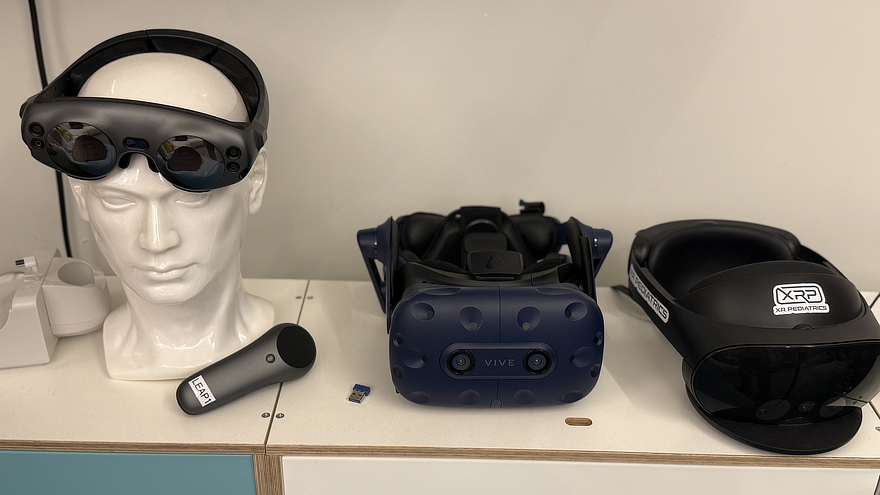
VR equipment used in Yale University’s XRPeds Lab.
Mastura Kaihani ‘29
Before visiting the XRPeds Lab, I generally viewed video games as a source of entertainment,
particularly for children. I had not fully considered how games could be intentionally
designed to educate people and encourage healthier behaviors.
My visit completely changed that perspective.
The most memorable part of the experience was playing CUTIE. What made this experience
different from traditional health education was the sense of responsibility I felt
toward the character.
Instead of simply being told that germs can be harmful or that handwashing is important,
I was actively participating in a situation where my actions mattered. Even though
the character was virtual, the experience made the health lesson more personal and
memorable.
I believe serious games have tremendous potential to contribute to public health,
particularly among children who benefit from visual and interactive learning. These
games can transform important health messages into experiences that are enjoyable,
engaging, and easier to remember.
The visit also influenced how I think about my future career.
I have been exploring academic interests in genetics and biotechnology, and seeing
these interactive health technologies firsthand helped me appreciate how scientific
knowledge and technology can come together to improve people’s lives.
I became interested in the possibility of volunteering or becoming involved with research
teams developing these educational tools. I would love to learn more about how virtual-learning
experiences are designed and how they can be used to educate communities.
I also hope that innovative approaches such as serious games can eventually reach
more communities around the world, not just in the United States. Public health challenges
exist everywhere, and interactive technologies may offer new opportunities to communicate
important health information across different cultures and populations.
I left the XRPeds Lab with a greater appreciation for the role of creativity and innovation
in public health. The experience reminded me that improving health does not always
require teaching people in conventional ways. Sometimes, helping people learn through
play can be an important step toward healthier communities.