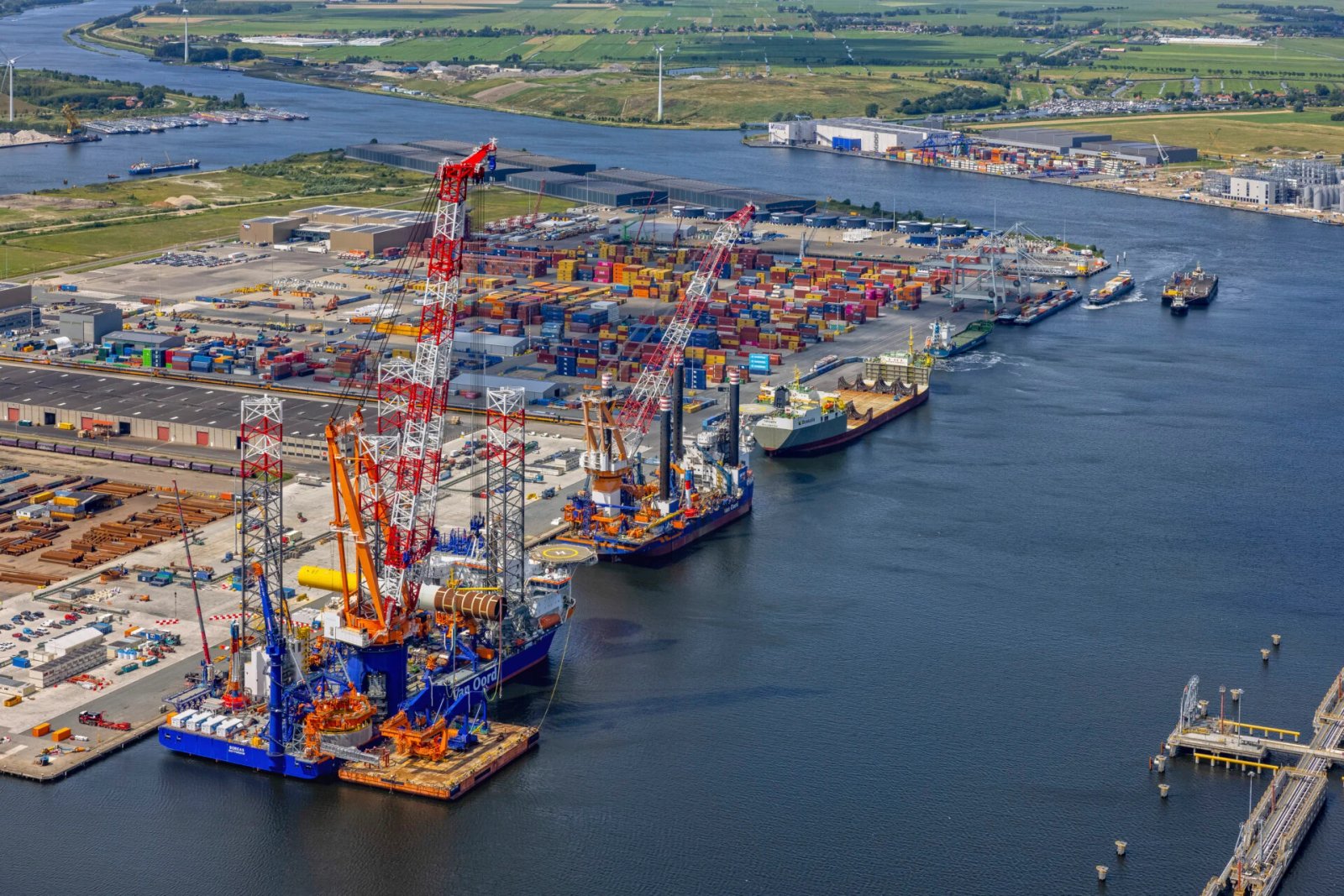
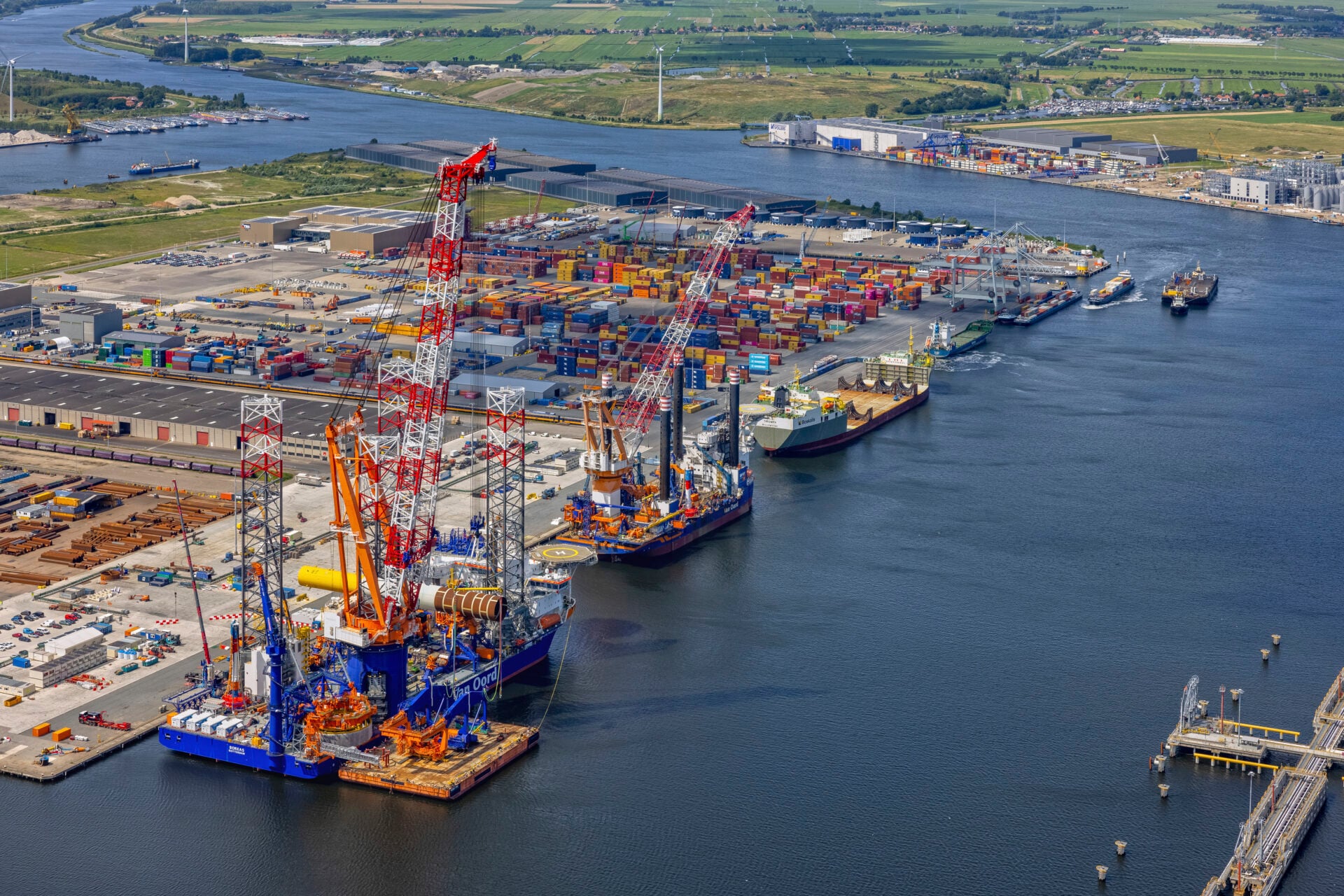
Credits: Port of Amsterdam
Offshore wind cannot be built without ports that have high-load quays, deeper berths and enough space to handle components. Europe’s ports will need around €2.4bn of additional investment to increase offshore wind installation capacity after 2030. But port infrastructure projects take 6 to 10 years from permitting to commissioning. Governments need to provide them with a predictable volume of offshore wind projects. This is the strongest investment signal they can give to ports, and the visibility ports need, to justify their investments.
A recent study shows that offshore wind deployment is starting to outpace the port infrastructure needed to deliver it. Demand for port infrastructure is projected to exceed supply at the beginning of the next decade, just when offshore wind deployment needs to accelerate.
Turbines are becoming larger and heavier. Ports need high-load quays, deeper berths and enough space to handle components. Europe’s ports will need around €2.4bn of additional investment to increase annual offshore wind installation capacity to the levels required after 2030.
But upgrading a port takes time. Port infrastructure projects typically take 6 to 10 years from permitting to commissioning, so investments need to happen well before offshore wind projects arrive. At the same time, offshore wind auctions are being delayed in many Member States, project timelines are moving and projects are struggling to reach final investment decisions.
Ports cannot invest billions on political ambition alone. They need projects, and they need to know when those projects are coming. This was the central message of the latest WindEurope Offshore Wind Ports Platform meeting. On 27-28 October, 31 participants, including representatives from eight European ports, visited the ports of Den Helder and Amsterdam in the Netherlands.
Ports need clear volumes
Ports need to invest today for wind farms that will be built years from now. A predictable offshore wind pipeline ensures the bankability of those investments, and it is the same visibility the wider wind supply chain needs. Governments therefore need to set out firm auction schedules with sufficient volumes for the coming years.
The EU Ports Strategy recognises the evolving strategic role of Europe’s ports and calls for better coordination of port investments. Member States now need to implement it. This coordination is essential because offshore wind supply chains operate across borders, and ports in one country regularly serve wind farms in another. Governments need to look beyond national port planning and understand what capacity is required at least at sea basin level. For example, North Sea Energy Ministers have already committed to jointly assess port capacity expansion needs by Q2 2027.
“Ports and the whole offshore wind supply chain need certainty across the North Seas Energy Cooperation region. Positive outlook numbers are not enough when final investment decisions keep shifting in time.” says Erik Bertholet, WindEurope’s Offshore Wind Ports Platform (OWPP) Chair.
The European Parliament and the policy changes needed
The European Parliament’s Transport and Tourism Committee (TRAN) is now looking at a new Own Initiative report on the implementation of the EU Ports Strategy. Offshore wind must be firmly embedded in this discussion. The Parliament needs to push for port infrastructure financing to be much more closely linked to Europe’s offshore wind deployment pipeline. This financing only works when there is a credible underlying market, and that will come with a predictable volume of offshore wind projects.
Policymakers also need to change the way they think about ports, moving away from cargo tonnage and container handling alone. Ports are key energy and industrial infrastructure, where offshore wind components are manufactured, stored and assembled. They are also set to become renewable energy hubs, managing renewable electricity, hydrogen, alternative fuels and energy storage, while helping decarbonise local industrial clusters. Europe needs to recognise this strategic role and provide ports with financing that reflects their importance to Europe’s energy and industrial priorities.