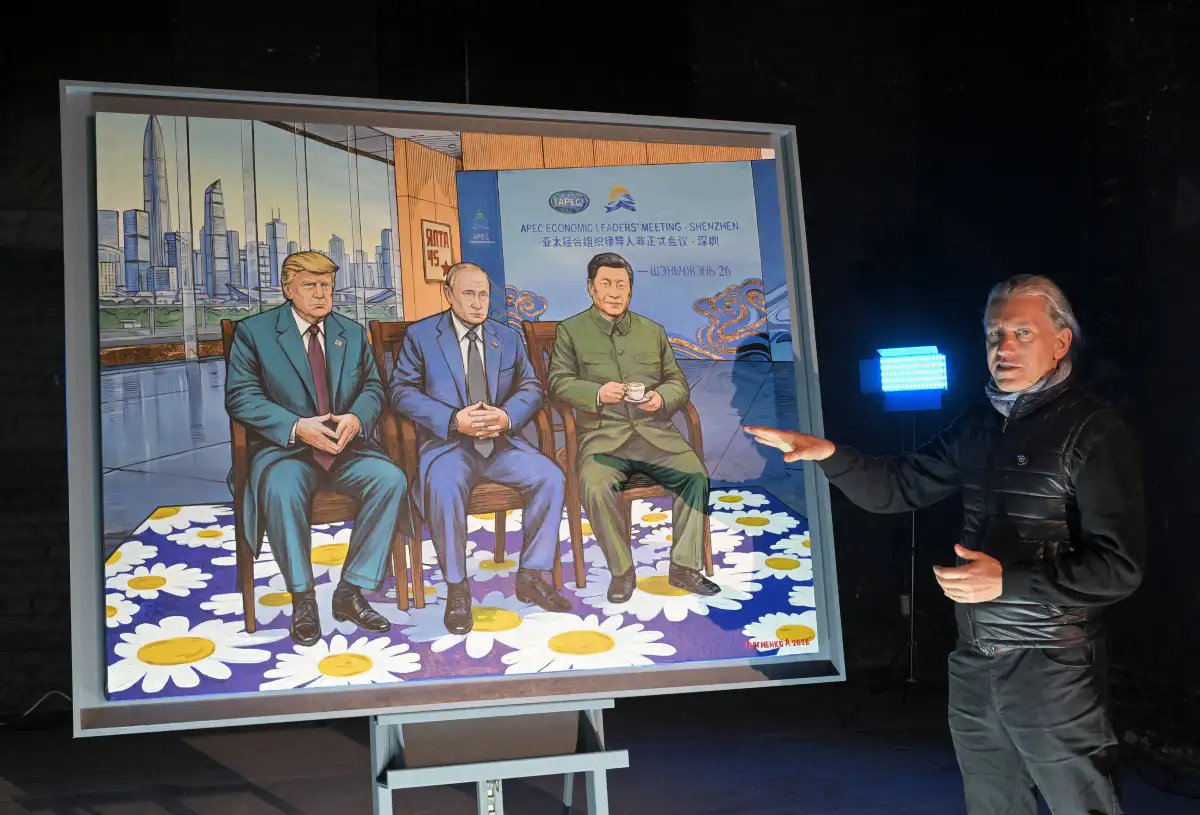
The presidents of Russia, China and the US will meet Thursday in Shenzhen, China, on the sidelines of the Asia-Pacific Economic Cooperation (APEC) summit, for their first trilateral meeting. Once, such a gathering might have been seen as a summit of equals, bringing together the leaders of the world’s strongest powers. But Russia’s dramatic decline and growing dependence on China have made Vladimir Putin the weakest of the three.
These realities, particularly Russia’s increasing economic dependence on Beijing since the West imposed sanctions, have not stopped the Russian establishment from viewing the country as a power on par with the other two. China has become Moscow’s largest economic partner and the main buyer of its oil, while also supplying essential components for its arms industry. Increasingly, Russia resembles a client state of the Chinese giant.
For Russian nationalists, the very fact that the meeting is taking place puts Russia alongside China and the US as a superpower. Some are already comparing it to the 1945 Yalta Conference, where the leaders of the US, Britain and the Soviet Union shaped spheres of influence in postwar Europe. They hope it will lead to an agreement on Ukraine on terms favorable to Moscow.
The Kremlin’s “philosopher,” the antisemitic ideologue Alexander Dugin, declared on Radio Sputnik last week that the meeting “shows who is important in the world: We are, China and the West.” He added: “It’s deeply symbolic. It’s a confirmation of a multi-polar world that the West denies.”
Russia has indeed been pushing for the meeting for months. Kremlin aide Yuri Ushakov said as early as September that the idea was under discussion, and Moscow hopes to use the gathering to secure an agreement ending the war in Ukraine on its terms. According to Reuters, however, Beijing has resisted putting the issue on the agenda, while the White House has said Trump is not expected to raise it.
But what Moscow sees as an achievement is causing deep concern among those who will have no seat at the table. From Kyiv to Tokyo, and in Taiwan, there are fears that the great powers could strike a deal over their heads. “We really don’t want this to turn into ‘Yalta 2, 3, 4,’ with a redistribution of influence,” Ukrainian President Volodymyr Zelensky said last month.
A report in The New York Times illustrates just how far Russia’s view of itself is removed from reality. According to the newspaper, a document circulated by Russian representatives at talks in Abu Dhabi last week on ending the war repeats the demands Moscow presented to the West in December 2021, two months before invading Ukraine, in some cases word for word. Russia is demanding that NATO pull its troops and bases back to their 1997 positions, before the alliance expanded eastward, and refrain from “any military activity” in Ukraine, Eastern Europe, the South Caucasus and Central Asia.
That would prevent allies from deploying troops in the 16 countries that have since joined NATO: Poland, the Czech Republic and Hungary; the three Baltic states; Romania, Bulgaria, Slovakia and Slovenia; Albania, Croatia, Montenegro and North Macedonia; and Finland and Sweden, which joined following the invasion of Ukraine.
Russia’s demands concerning Ukraine itself also remain rigid. According to the document, Moscow wants an end to supplies of “all types of Western weapons, military equipment and products” to Ukraine, and would accept its accession to the European Union only if it stayed out of the bloc’s common security policy. Meanwhile, the Abu Dhabi talks stalled over territory. Reuters reported that Kyiv rejected Putin’s demand that it surrender the entire Donbas region in exchange for peace, while American mediators tried to shift the discussion toward the security guarantees Ukraine would receive after the war.
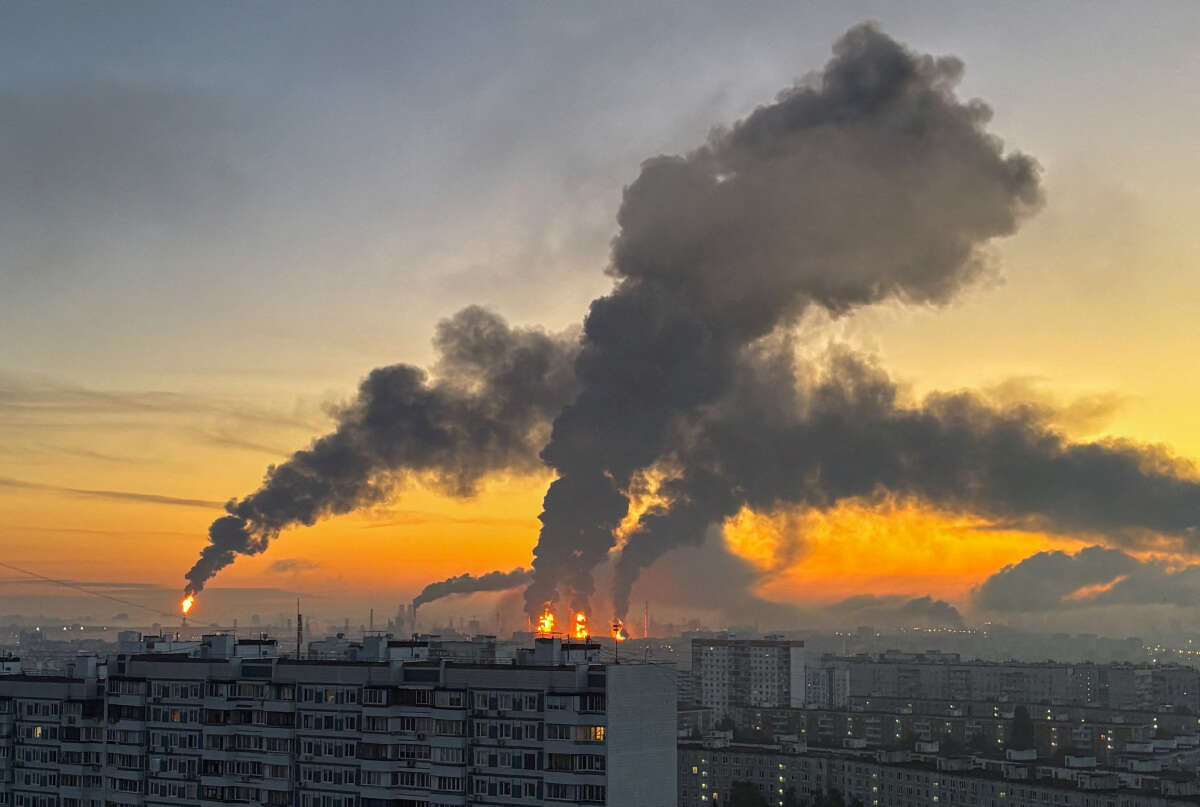
Russia is also making demands of Western European countries. It wants Britain and France to rule out using their nuclear weapons to defend other European nations. Proposals for extending such protection have gained momentum this year, particularly regarding Germany and Poland, amid fears that the US will retreat from its commitments to the region.
The White House, by contrast, is presenting an entirely different agenda for the Shenzhen meeting: the war with Iran and limits on the major powers’ nuclear weapons. For months, Trump has sought Beijing’s and Moscow’s help in ending the war, which has become a political burden for him. So far, neither has shown much enthusiasm for helping Washington out of its predicament.
On the nuclear front, New START, the last treaty limiting the US and Russian arsenals, expired in February, leaving the two powers operating without any limits for the first time since 1972. Trump did not take up Putin’s offer to extend it, instead demanding that a new agreement also include China. That demand reflects a new balance of power in which Russia no longer stands as a great-power pole equal to the US.
Beijing has consistently refused to discuss the issue, arguing that its arsenal is far smaller than those of the US and Russia. Western assessments, however, suggest that China is expanding its stockpile rapidly and is expected to have 1,000 warheads by 2030. In February, the US also accused China of conducting and concealing a secret nuclear test in 2020. If it took place, it would have been China’s first since 1996. Even the administration is not counting on a breakthrough at the meeting. “We do not expect to get to any kind of agreement,” a senior administration official said.
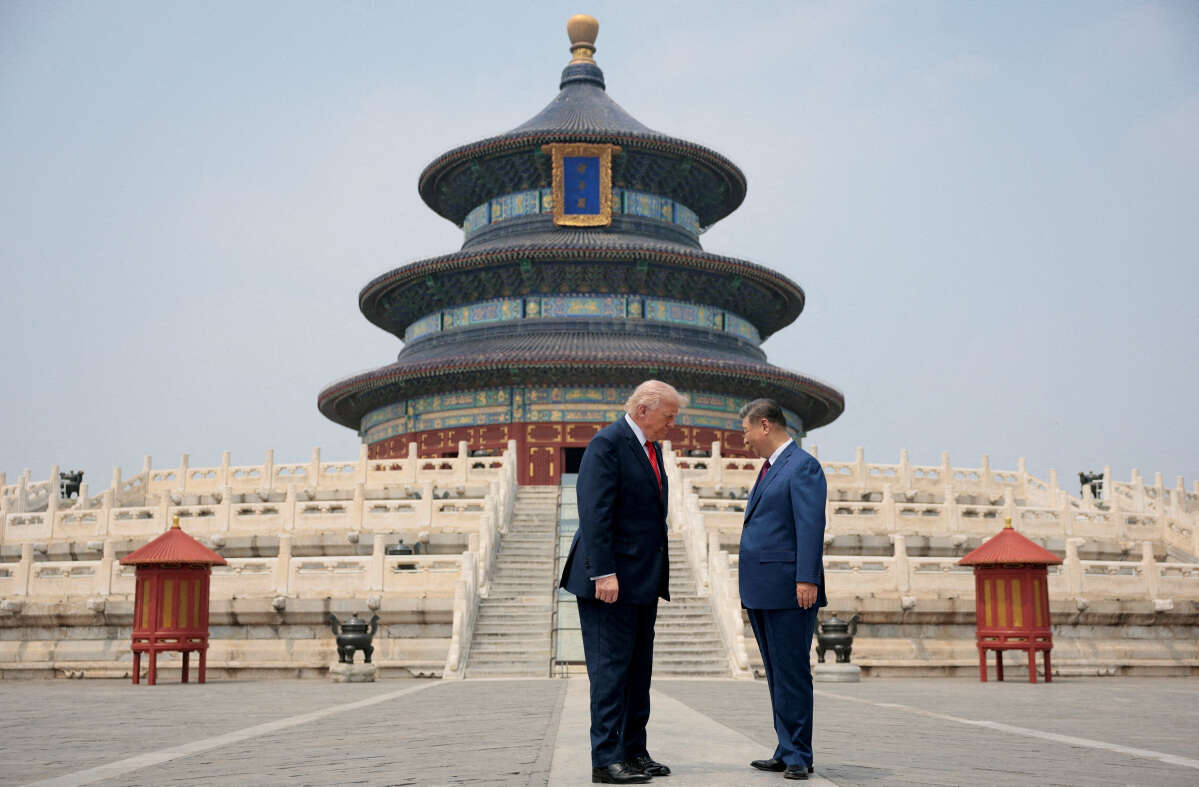
Ultimately, the three leaders are arriving in China with different visions of the same summit. Trump, bruised by his midterm election defeat, is looking for a historic photo opportunity, another in a series of dramatic encounters with Putin and North Korean leader Kim Jong Un, none of which produced a breakthrough. Putin will gain recognition of Russia as an equal among the great powers. For the host, Chinese President Xi Jinping, the meeting could prove a burden.
China, which was not invited to the 1945 Yalta Conference, can portray the gathering as another step toward redressing its “century of humiliation” and as recognition of its power. Yet Reuters reports that Beijing is wary of an unpredictable encounter in which Trump’s improvisational style could clash with the carefully scripted formality Xi insists on.

