BY COLLEEN O’DEA
It was pitch dark at 4:40 a.m. Election Day as I drove the 10 miles to the site where I would spend my first ever shift as a poll worker.
As a reporter who has covered more elections than I would like to admit — and more recently, following the ascension of Donald Trump to office, the process of voting and tallying results — I had long wanted to experience an election from the other side of the sign-in table. This year, I got my chance.
The polls open at 6 a.m., but workers have to report at 5:15 the morning of traditional voting to get everything set up. Yet the job really starts much earlier, at least for a newbie.
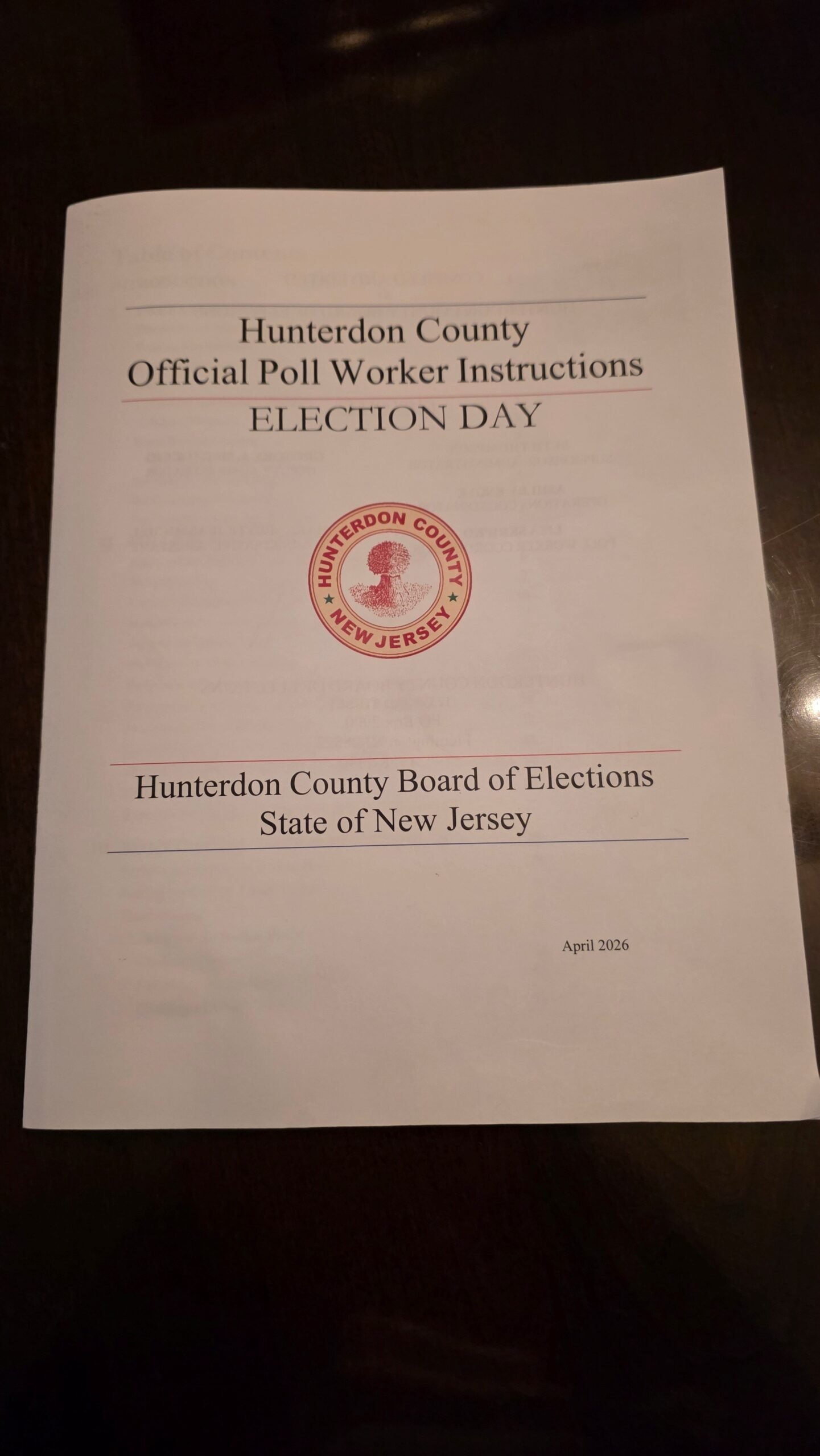
First, there was a two-hour in-person training last month, where we learned the basics: setting up and using electronic poll books to check in voters and observing the working of a voting machine. We also received our own 78-page “Official Poll Worker Instructions” booklet and were encouraged to read through it, which I did over the course of a couple of weeks.
Then there was the 90-minute online training (it felt longer) to reinforce all we had and read about, with a final exam.
Despite all the preparation, I was still nervous. I had no idea what to expect and definitely did not want to make any mistakes.
Every citizen registered to vote has the right to cast a ballot and should be able to do so. On the other hand, many in one of the political parties allege rampant fraud.
This year, the Trump administration contended, without providing proof, that some 35,000 noncitizens in New Jersey were improperly registered to vote. Less than a week later, Gov. Mikie Sherrill announced that it appeared 6,600 noncitizens had been registered to vote improperly through the state Motor Vehicle Commission’s motor voter system. An investigation is ongoing and has expanded to others potentially ineligible to vote, such as those who are incarcerated. It’s unclear exactly how many noncitizens had been added to the voter rolls, have since been removed from the rolls and how many had voted in any election – though that appears to have been fewer than 500.
There are also calls for voter ID, nationally and in New Jersey, where your signature is proof of your identity. A Rutgers Eagleton poll released last month found that more than 80% of New Jersey adults support requiring the showing of identification at the polls at least somewhat, with 63% “strongly” in favor.
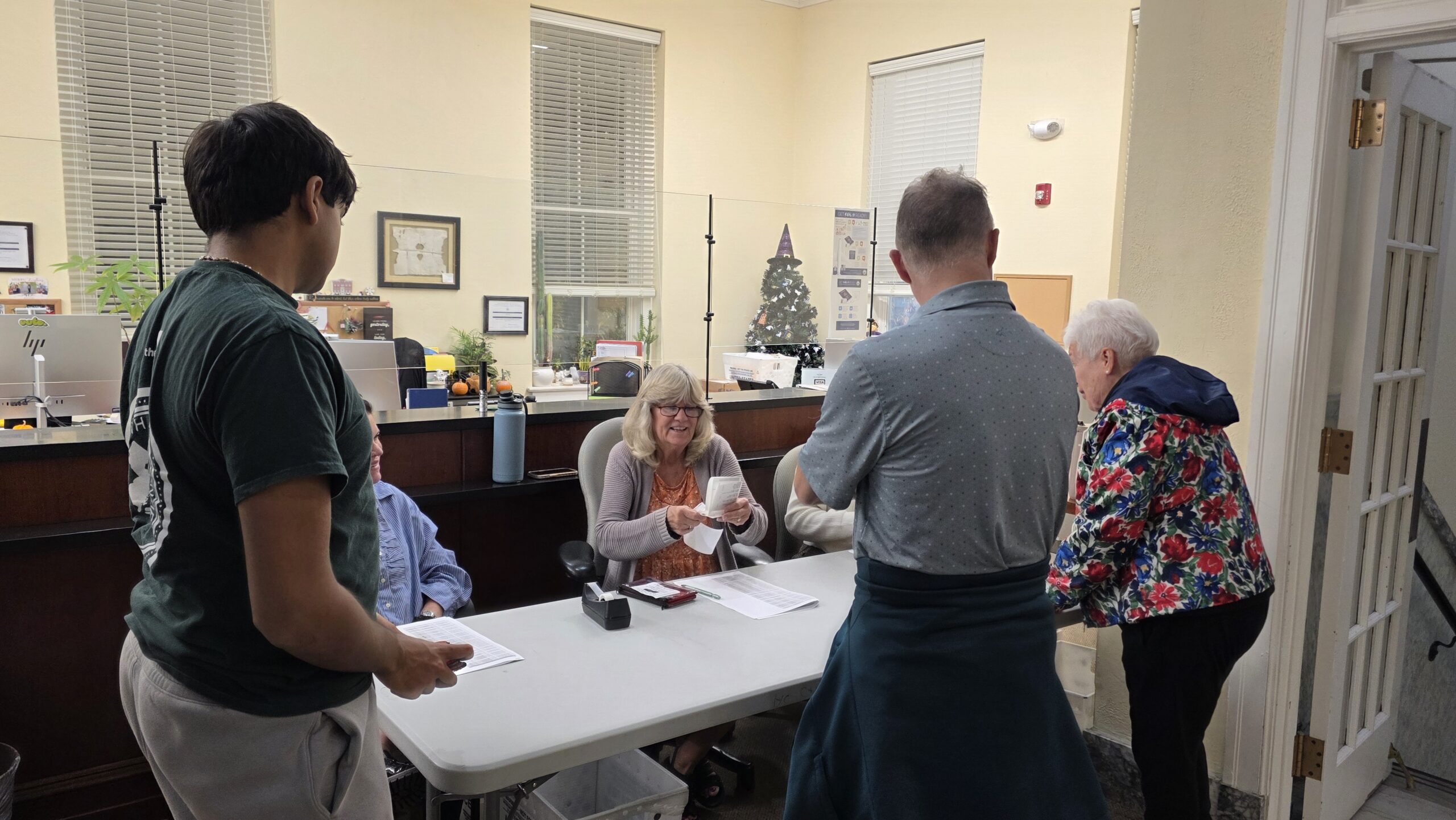
During my shift, which involved working the sign-in table and e-poll book, many people voluntarily offered their driver’s license or sample ballot – either can be scanned to bring up the voter’s profile. Otherwise, we asked each voter’s name and address and then had them sign the electronic book and voting authority slip. The e-poll book includes the person’s signature on file for comparison. Usually, all were at least similar, or at least two of the three matched. Other people who had once signed their name now use a squiggle, and we would have to ask them to try again and form actual letters. Most people were understanding. One woman remarked, “I can’t believe you’re holding me up for my signature.” Just like store clerks, we nodded and went on with our work.
The biggest problem we faced was people signing the e-poll book and then clicking the box to verify their signature. We had to explain that we needed to verify signatures and they would have to sign again. We also had to record what is known as a “spoiled ballot” and issue a new one. Even though we began asking every voter not to click that verify signature box, some did it anyway.
We did run across at least a few of the many special cases of voting issues covered in training that are not as easy to solve. For instance, several disabled people requested assistance, prompting the need for additional paperwork and signatures meant to ensure that an assistor is not making the decision for the voter, just helping the person cast the ballot.
Most everything was set up by the time I arrived and I’m sorry I didn’t get to observe the process, particularly of removing and saving the various equipment seals that guarantee a secure start to the day’s voting.
There is a master poll worker at each location to help with other cases that may require phone calls to the county board of elections office and the issuance of provisional ballots. These included a few for people who the e-poll book said had already been sent mail-in ballots – they cannot automatically vote to prevent someone from voting twice – and one for a recently naturalized citizen. Poll workers allow people to cast these special ballots, but it is ultimately up to the board of elections to determine if those ballots are counted.
Before opening the polls, our master poll worker warned us of potential disruptions in our day. There could be challengers – people who applied for and were credentialed by the county board of elections in order to be allowed to observe an election and question whether a person is allowed to vote based on age, citizenship or residency. The U.S. Justice Department had also announced it would be sending monitors to locations throughout the country. Neither of those happened at our site.
What did happen was the appearance of a small group of people in the parking lot connected with a write-in campaign for town council. The master poll worker handled this and the police got involved.
State law prohibits electioneering, or advocating for a candidate, within 100 feet of a polling location. At our site, a line was spray painted at the 100-foot mark and the individuals stayed beyond that line. Still, a few voters were incensed that anyone was allowed to be so close to the polls. Others said the people were just trying to educate voters on how to write in a candidate – one voter asked for such help when checking in. One voter brought into the site one of the cards that the group was handing out – it was ultimately confiscated by the master poll worker. Ultimately, this was all about local politics, alliances and grudges. The write-in candidate got a lot of votes, but did not win.
Nothing I saw that day approached the kind of rancor reported in the national news. A couple of voters even thanked us for doing this civic duty and working such a long day.
And it is a long day, lasting at least 15 hours including a one-hour break, from setting up to closing the polls and packing up after 8 p.m
For this, a New Jersey poll worker receives $300 for the full day. That works out to about $20 an hour, a bit above the minimum wage. But it is one long day and there’s no recompense for any time spent in training.
I didn’t work the full day, but signed out at 5 p.m., as I wound up with a reporting assignment that evening. I’m sure the people at my polling location were tired – some were already tired by 3 p.m. I’m sorry I didn’t get to observe and help with the poll closure and all of the nuances of ensuring that all the machines are secured and that all the results and paper ballots get back to county officials.
Next time.