Hong Kong International Airport is booming again after the pandemic. To accommodate growing passenger numbers, the airport has opened an expanded Terminal 2. Since spring, the terminal has been handling check-in and security screening for regional flights, welcoming travelers into a spacious environment designed to reduce stress through immersive digital signage experiences.
LCD video walls are becoming a thing of the past
If recent airport terminal openings are any indication, the era of LCD video walls in major airport terminals is drawing to a close. The generously designed check-in halls of modern airports provide the perfect canvas for large-scale digital signage installations that are difficult to realize with conventional LCD displays. Particularly in Asia, the direction is clear: LED dominates the check-in experience.
Over the past few weeks, invidis visited several airports across the region and found a consistent trend. New terminals are increasingly relying on LED technology as the backbone of their digital experience strategy.
The contrast with Frankfurt Airport’s Terminal 3 is striking. Although Frankfurt T3 opened years later than originally planned due to the pandemic, its digital signage concept reflects an earlier generation of thinking. LCD displays still dominate the passenger journey, making the installation appear somewhat dated compared to the latest projects in Asia.
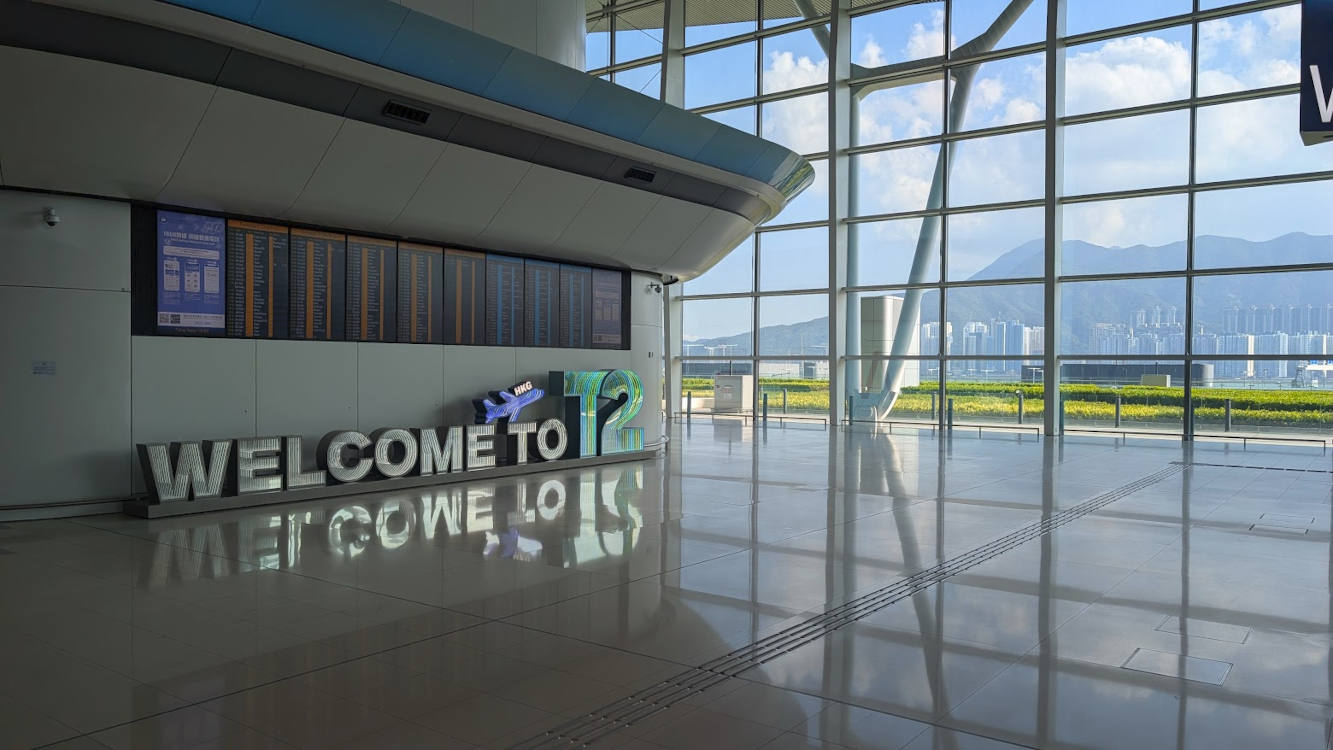
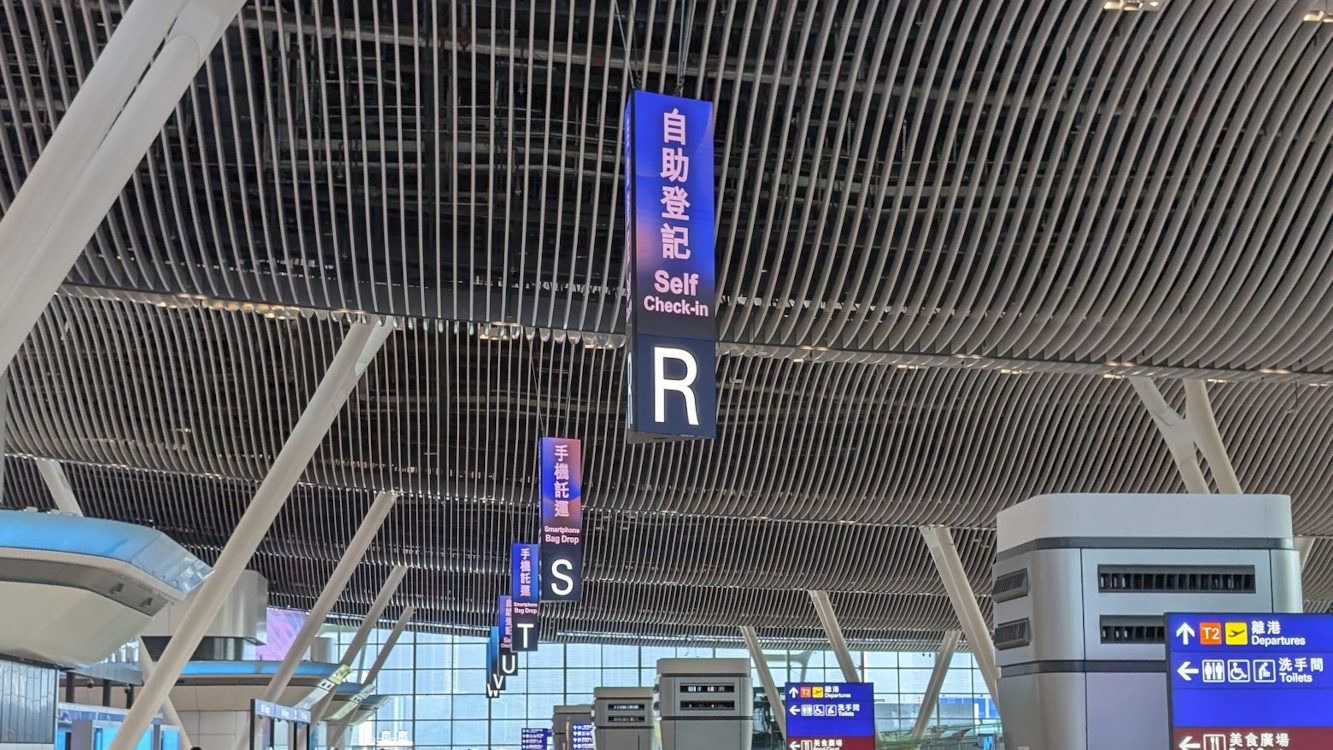
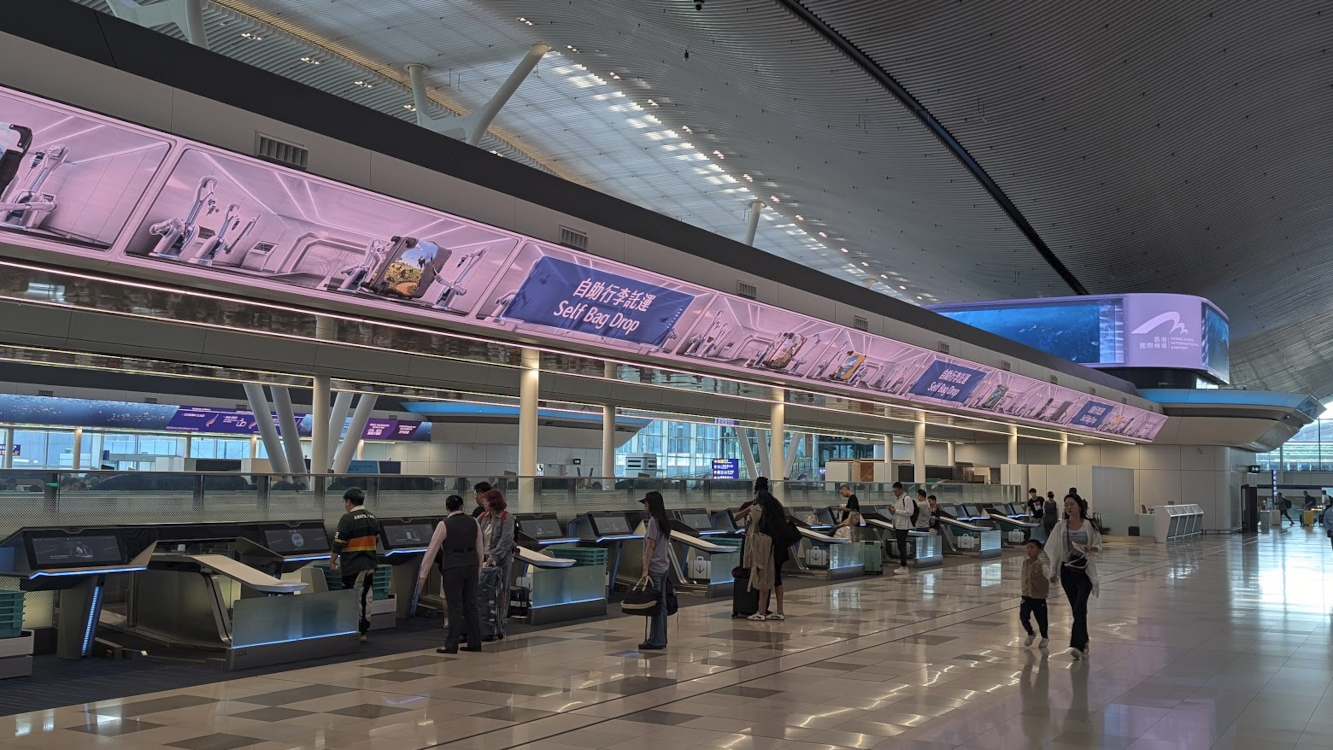
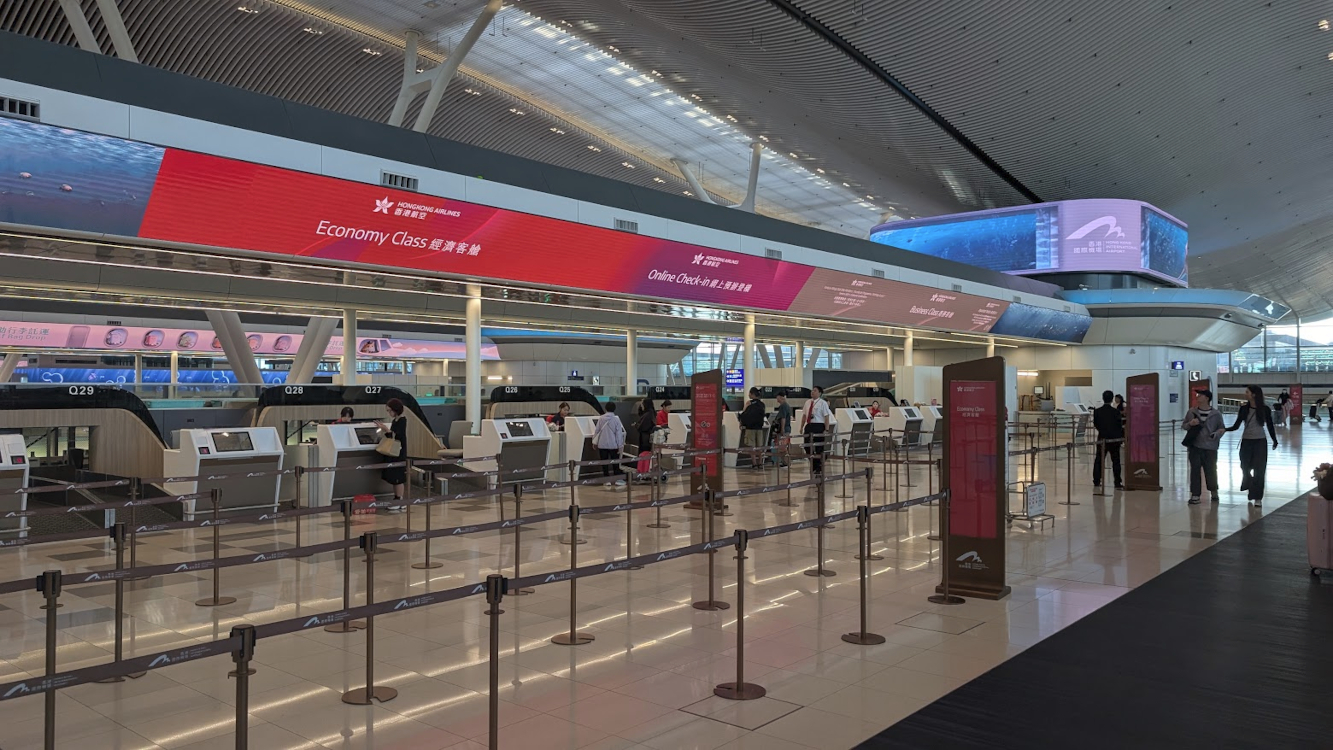
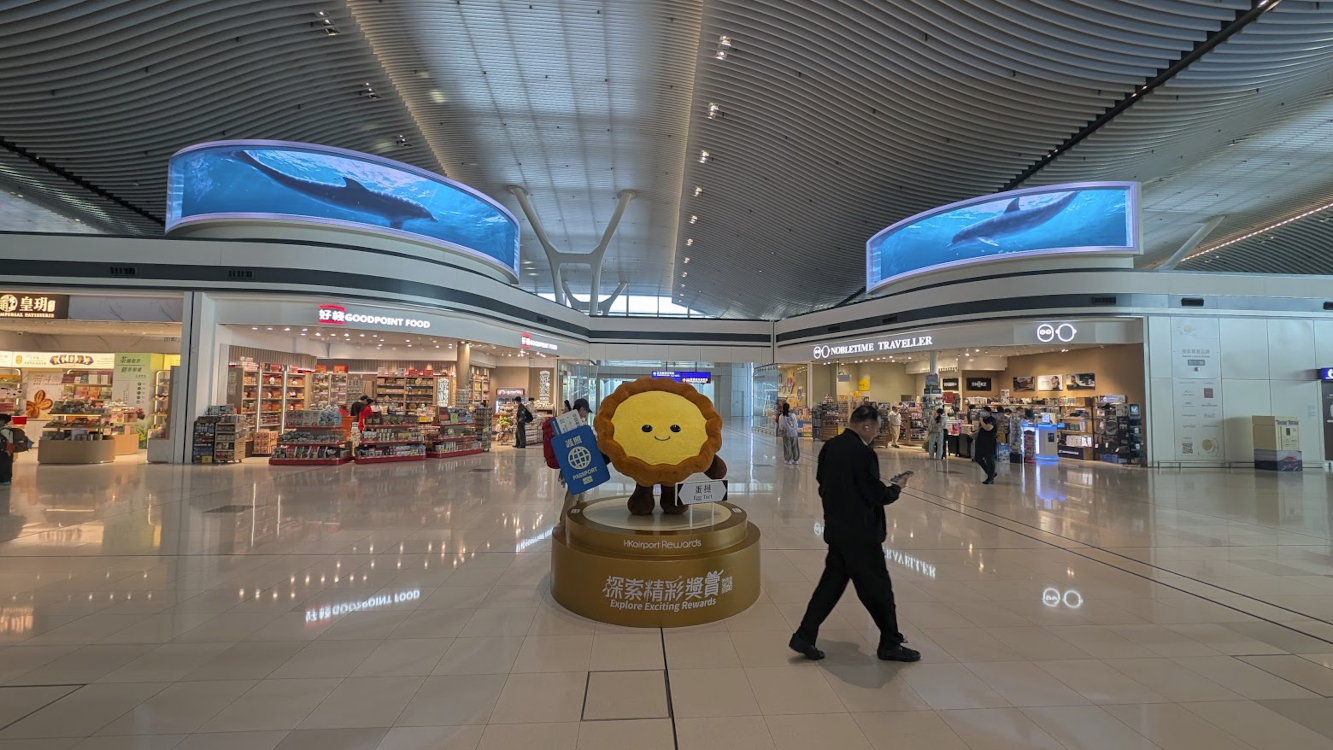
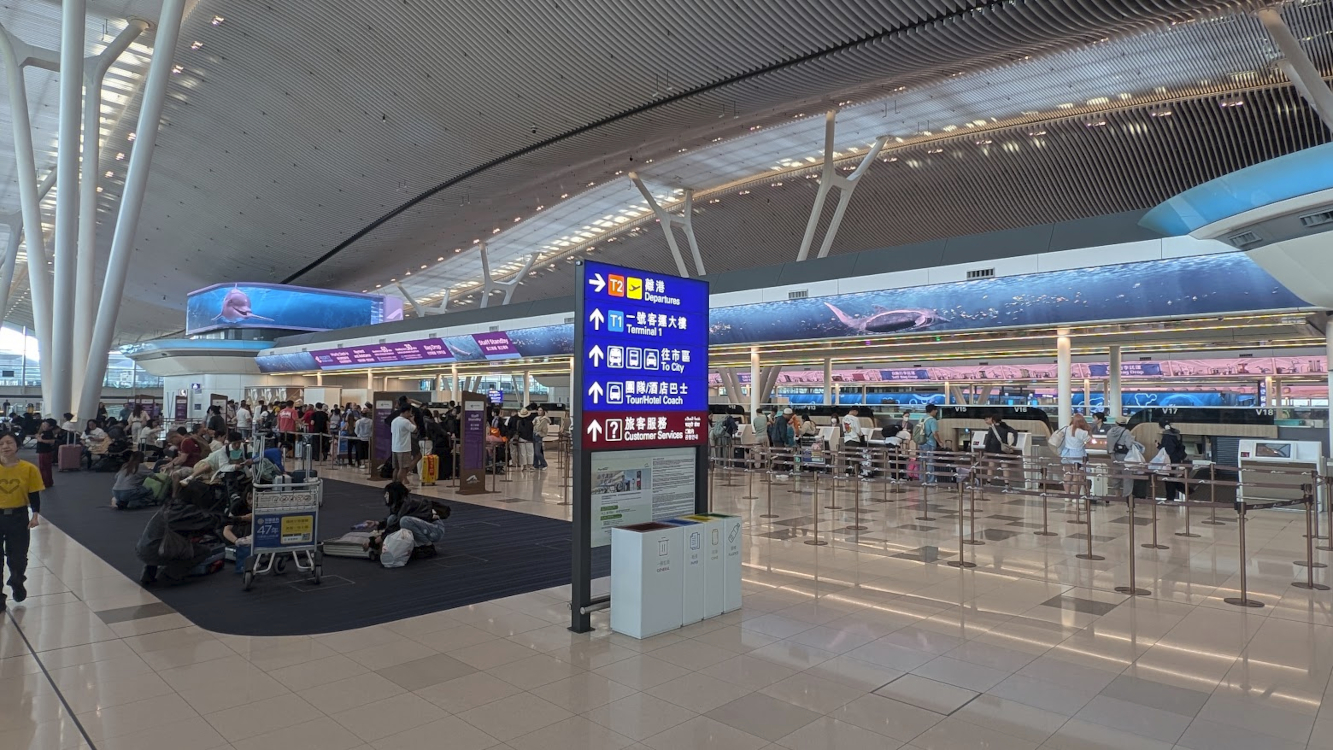
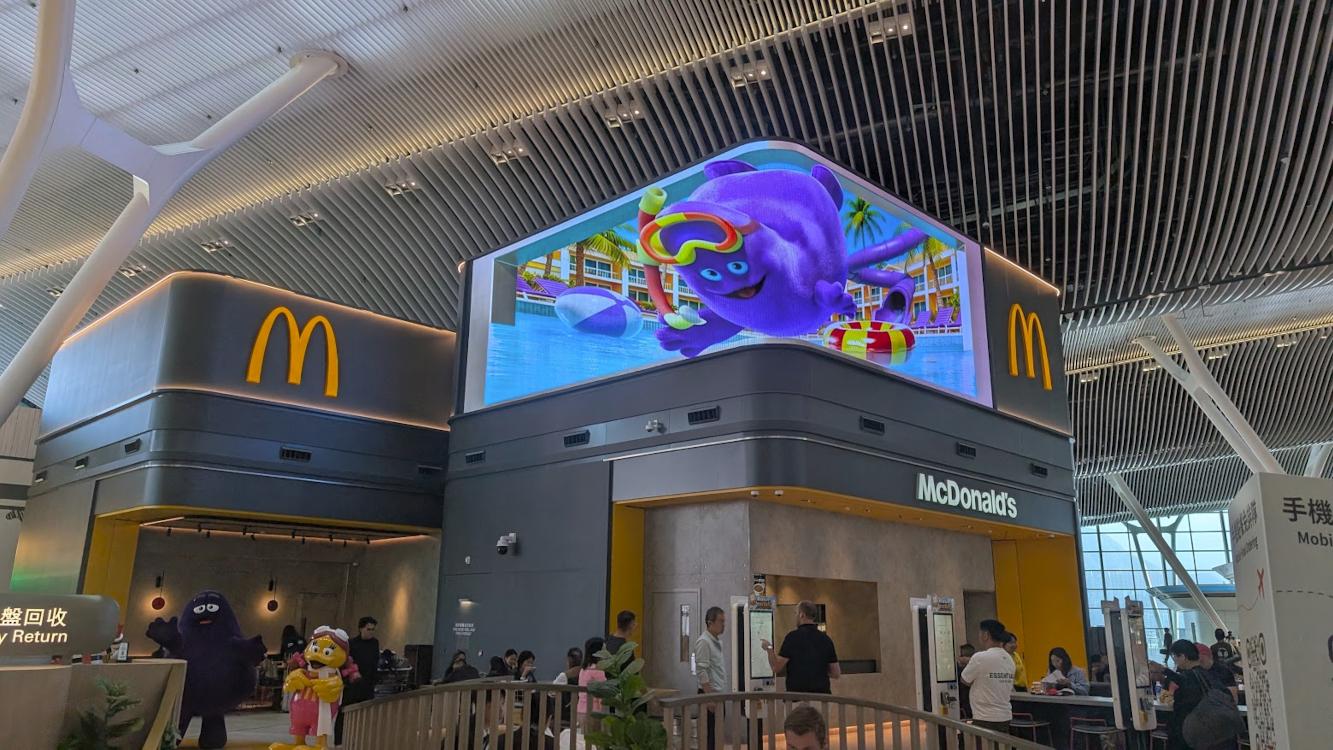
Hong Kong T2: Welcome to the Aquarium
Just a few kilometers from Hong Kong International Airport lies Disneyland Hong Kong, one of Asia’s major experience destinations with more than seven million visitors annually. Terminal 2 appears to have embraced a similarly playful approach.
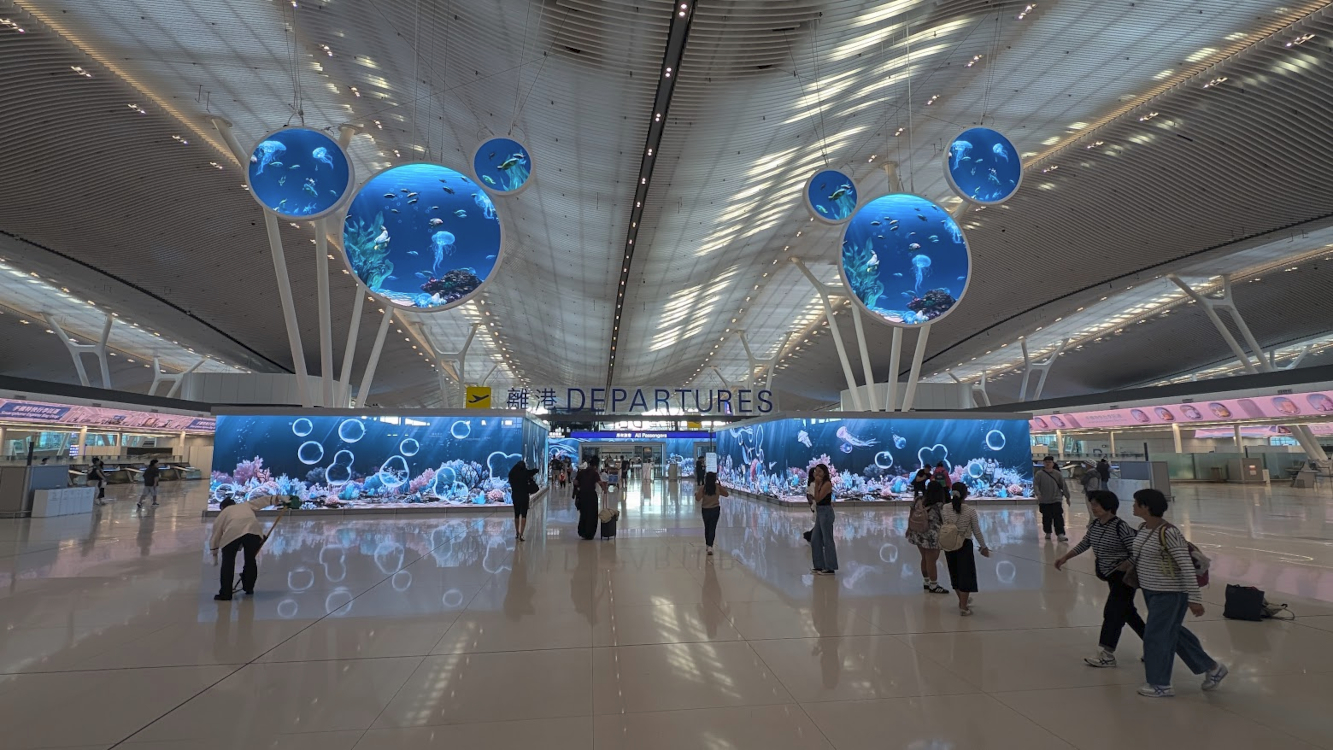
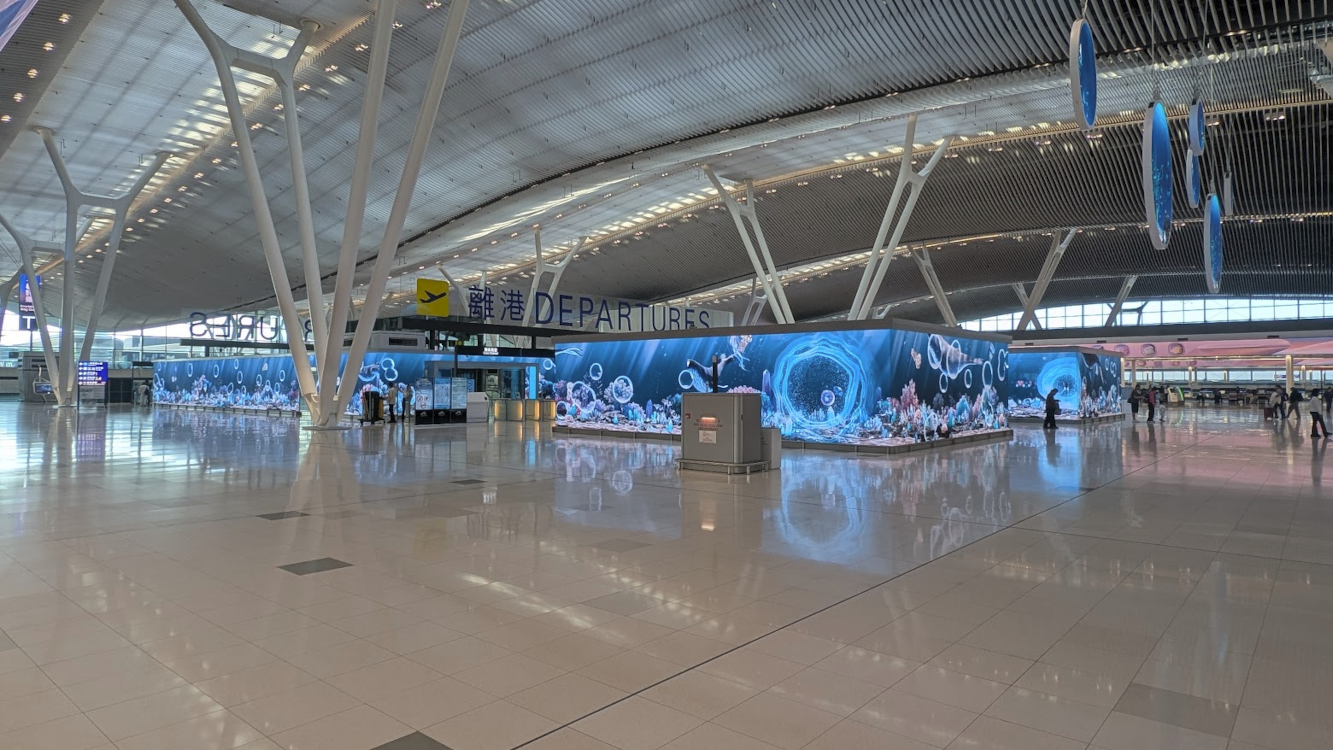
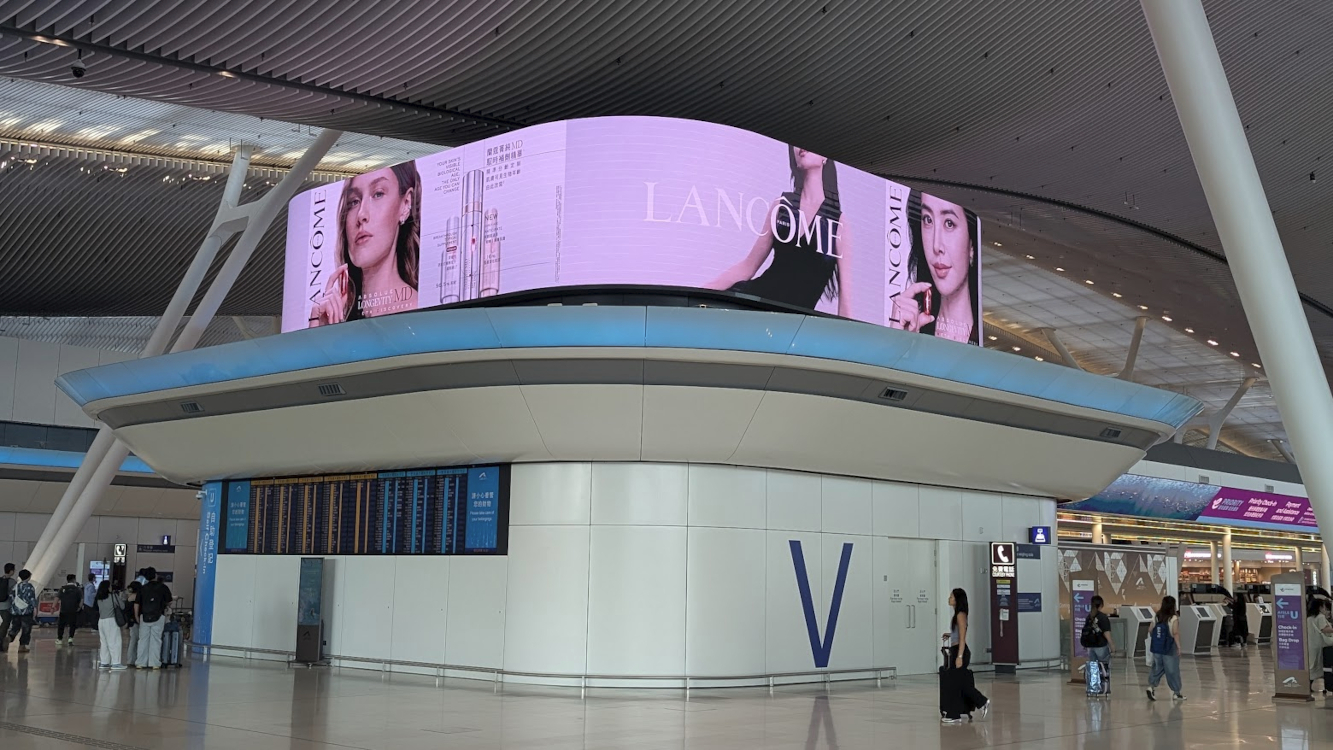
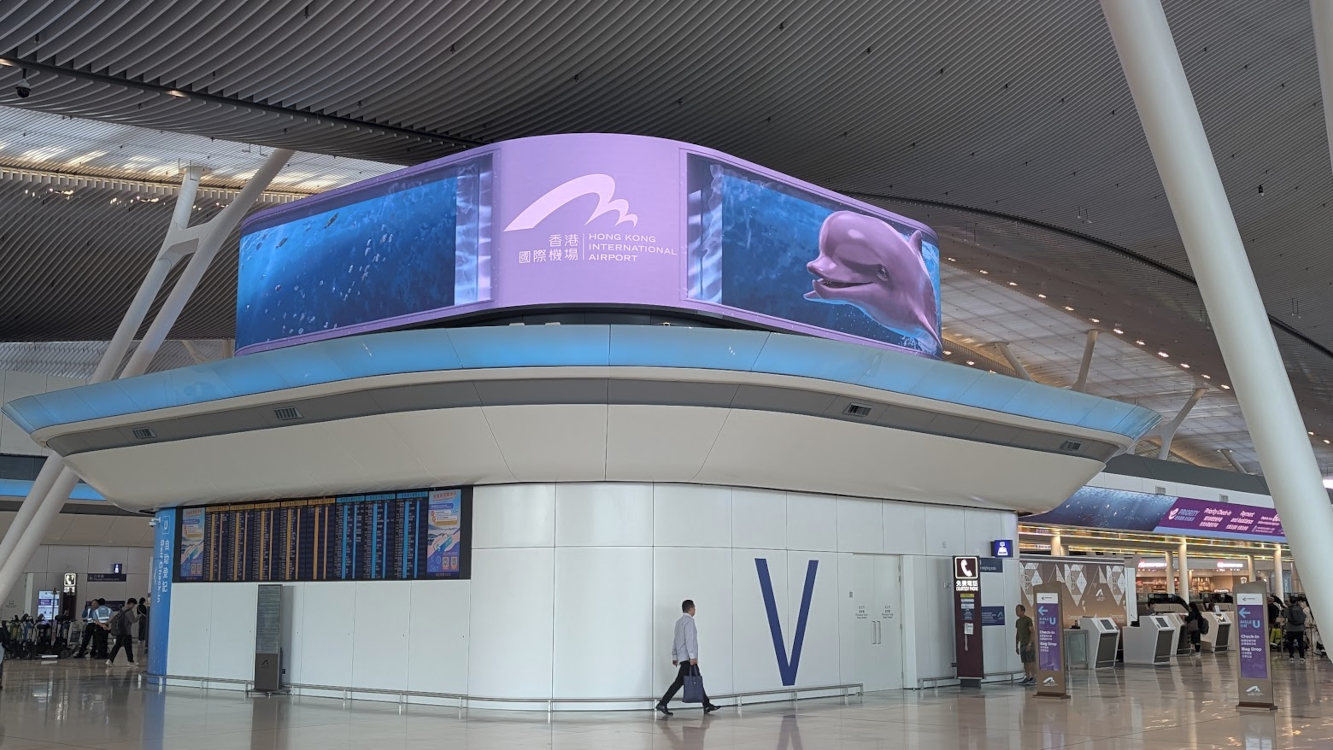
The design theme revolves around marine life, aquariums and, naturally, Disney’s most famous character. Instead of conventional display screens, approximately one-meter-high LED ribbons wrap around the check-in islands, allowing airlines to create large-scale branding environments around their counters.
With much of the terminal’s future capacity not yet fully utilized, the airport has filled the space with animated 3D content. Dolphins, robots and cartoon characters appear through virtual aircraft windows, creating an entertaining arrival experience for passengers entering the terminal.
A spectacular journey through security
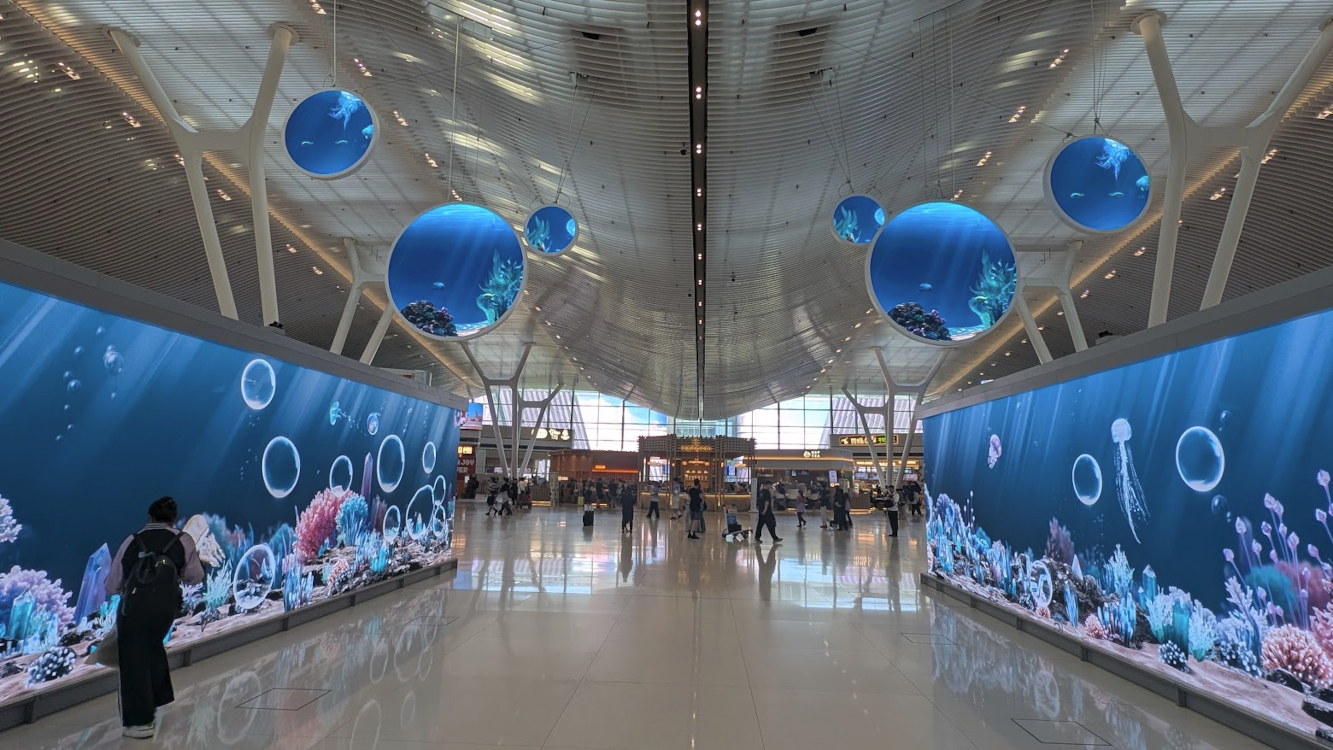
The most striking installation awaits passengers on their way to the security checkpoint. Large technical structures have been completely wrapped in LED surfaces, transforming the area into what feels like a giant digital aquarium. While the pixel pitch may not be among the industry’s finest, the sheer scale of LED deployment is extraordinary for an airport environment.
It is the perfect backdrop for selfies. Children love it, and the installations seem almost purpose-built for future advertising opportunities. Yet commercial content remains surprisingly limited.
Only a handful of curved LED displays currently carry advertising. Most of the screens are dedicated to immersive content featuring swimming dolphins and marine-themed animations, complete with eye-catching 3D effects.
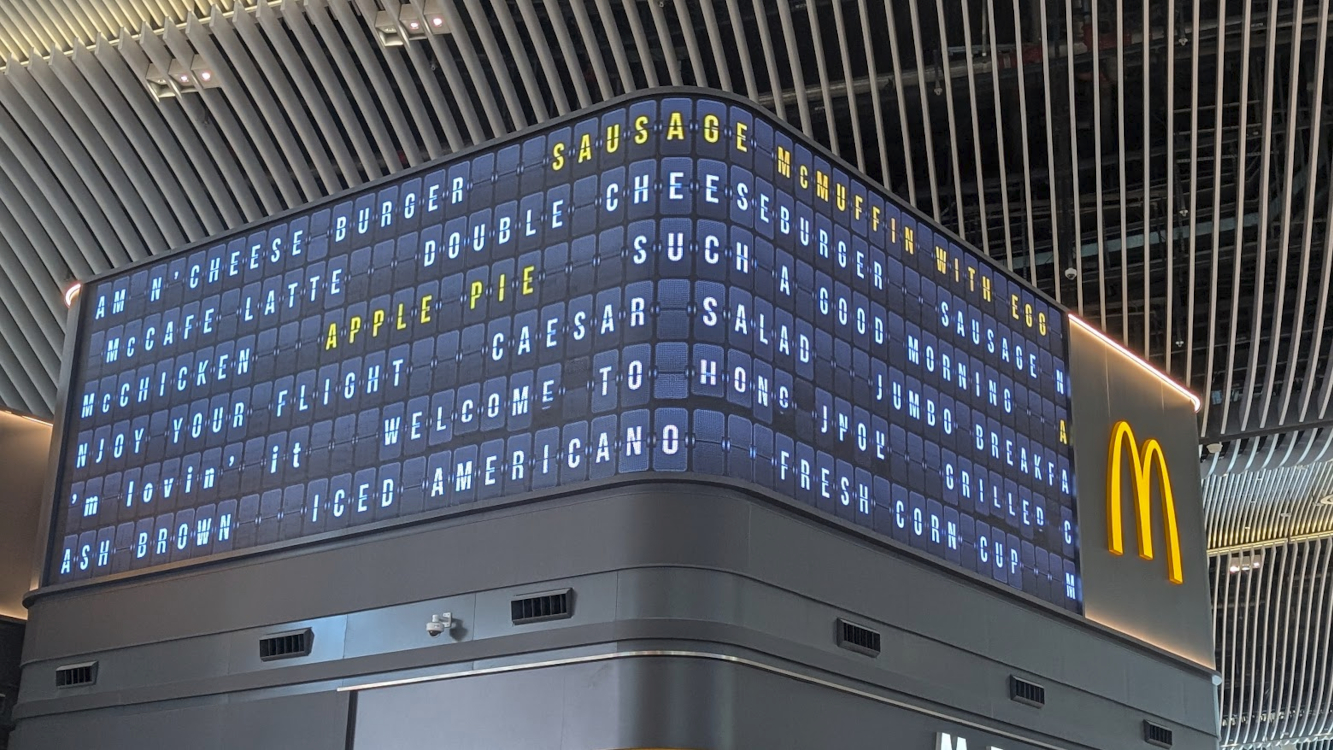
Even some food and beverage outlets have integrated LED displays into their designs, including corner installations showcasing three-dimensional content with varying degrees of success. Overall, Terminal 2 delivers an exceptional passenger experience that would currently be difficult to imagine outside Asia.
When Mickey Mouse started swinging
Not everything has gone according to plan. In September, part of the suspension system supporting the Marine-Life Mickey Mouse-shaped LED installation above the terminal security access malfunctioned. Videos showing the large overhead displays swaying noticeably quickly spread across social media.
The airport operator responded immediately by conducting comprehensive inspections and adding additional safety measures. The overhead circular LED screens were thoroughly inspected by the airport’s maintenance team as well as an independent structural engineer before being returned to service. Additional support cables had been installed as a precautionary measure.
Following the incident, the displays were switched from their dynamic motion mode to a stationary operating mode. A video of the incident can be viewed on YouTube: Terminal 2 display movement.
For now, however, the incident does little to overshadow what is one of the most ambitious uses of LED technology in an airport environment. Terminal 2 demonstrates how digital signage is evolving from a communications medium into a core component of the passenger experience itself.