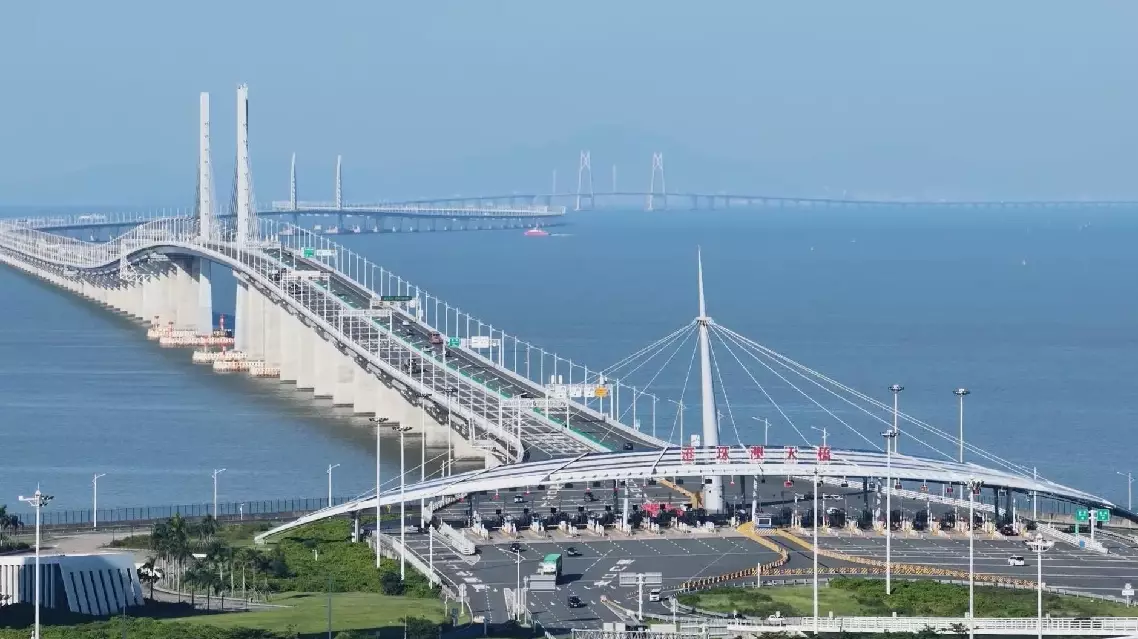
The number of vehicles from the Hong Kong and Macao special administrative regions entering the mainland via the Hong Kong-Zhuhai-Macao Bridge reached 80,400 during the first five days of the National Day holiday, up 11.1 percent year on year, according to statistics from Gongbei Customs in Zhuhai City of south China’s Guangdong Province.
The holiday runs from Oct 1 to 7.
Of the total, 60,100 were Hong Kong vehicles traveling under the “Northbound Travel for Hong Kong Vehicles” scheme, up 24 percent year on year and a record high for the same period of previous National Day holidays.
The Hong Kong-Zhuhai-Macao Bridge opened to traffic in October 2018 and has since then greatly facilitated travel in the Guangdong-Hong Kong-Macao Greater Bay Area.
To further enhance connectivity and promote integrated development in the area, northbound travel schemes for Hong Kong and Macao private cars took effect separately in 2023. The schemes allow eligible private cars from Hong Kong and Macao, respectively, to travel to Guangdong via the Hong Kong-Zhuhai-Macao Bridge without having to obtain a regular quota.
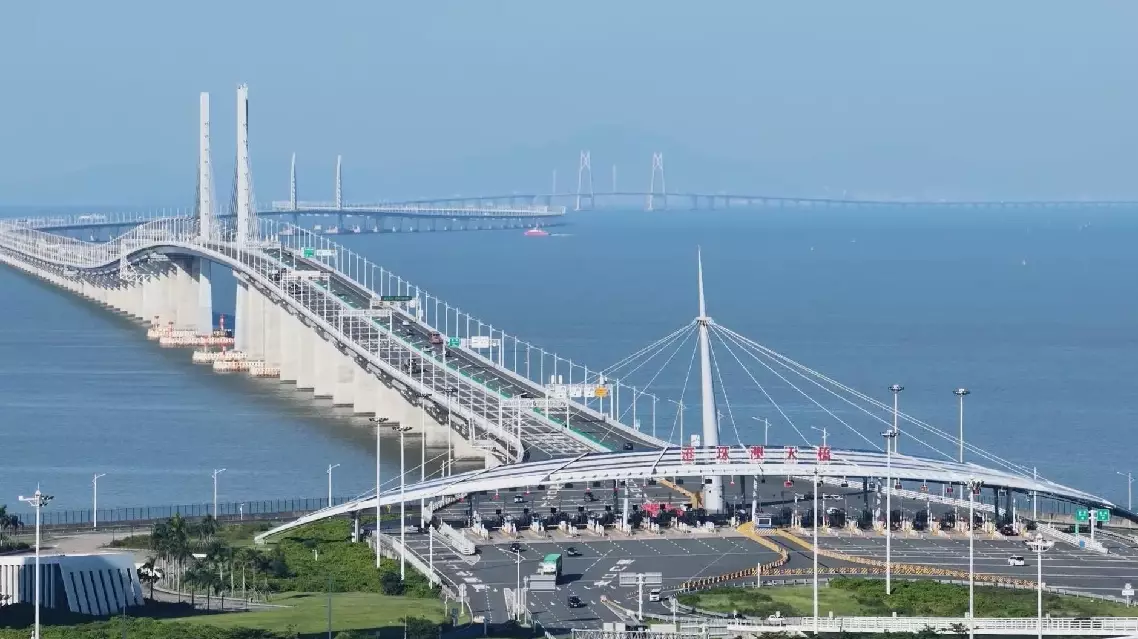
Over 80,000 HK, Macao vehicles enters mainland via Hong Kong-Zhuhai-Macao Bridge during National Day holiday
As of Tuesday, China’s sea-rail intermodal freight volume through the New International Land-Sea Trade Corridor, a key logistics network connecting China’s western regions to global markets, topped 1 million twenty-foot equivalent units (TEUs) in 2026, according to China Railway Nanning Group.
As an important project under the Belt and Road Initiative, the New International Land-Sea Trade Corridor has continued to play a key role in boosting the socio-economic development of China’s western regions and facilitated the regions’ high-level opening-up.
The China National Railway Group plans to add two scheduled train routes, providing strong support for the growth of foreign trade in the southwest region.
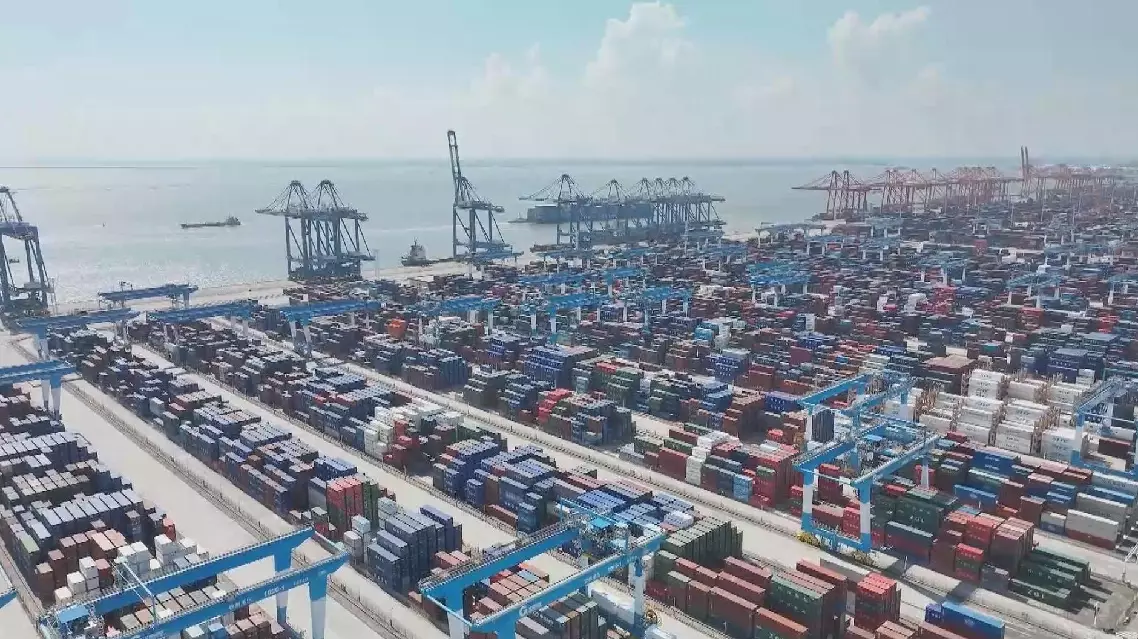
China’s sea-rail intermodal freight through landmark trade corridor tops 1 mln TEUs