
President Xi Jinping and the Chinese Communist Party understand the professional shortcomings of the People’s Liberation Army, but they don’t have the right solution for them.
They’re openly critical of corruption, poor leadership, stove-piped training and slow doctrine development but see these faults as the result of insufficient political education and loyalty to the party. As the purges of senior military officers continue, the preferred cure for these problems appears to be more political education.
That’s hardly likely to help the PLA – which is an advantage for Australia and its allies and partners. Their deterrence of China is strengthened not just with important equipment acquisition but also by being better than it in professional military leadership, joint and coalition operations and well-developed fighting concepts.
My explainer published by ASPI today delves into the PLA’s professional and cultural problems. For the PLA, these less tangible elements of military power are deeply influenced by its history and role as the CCP’s military arm. Its officers and soldiers owe their loyalty not to the nation but to the party. The difference may seem semantic, but the pre-eminence of political training and indoctrination in the PLA should not be underestimated.
The PLA has long suffered from corruption in the ranks, junior to senior. State media has consistently reported efforts to hunt ‘big tigers’, clear out ‘grain rats’ and dig out ‘woodworms’ from the military. For Xi and the party, corruption is a symptom of ideological deviance and must be rooted out. Since coming to power in 2012, Xi has run a series of anti-corruption campaigns in the military. But if the number and frequency of senior officer purges are anything to go by, corruption remains a significant problem 14 years later.
Xi and the party have been surprisingly open and clear about the problems of leadership and command in the force. Two of the more notable sets of criticism are the ‘Two Insufficiencies’ and the ‘Five Incapables’. The ‘Two Insufficiencies’ state that the military’s ability to fight modern wars and the ability of officers to command at all levels are insufficient. The ‘Five Incapables’ criticise officers for being incapable of judging situations, understanding higher authorities’ intentions, making operational decisions, deploying forces and handling unexpected situations. These slogans have appeared in the PLA Daily, the force’s official newspaper, more than 150 times since 2015.
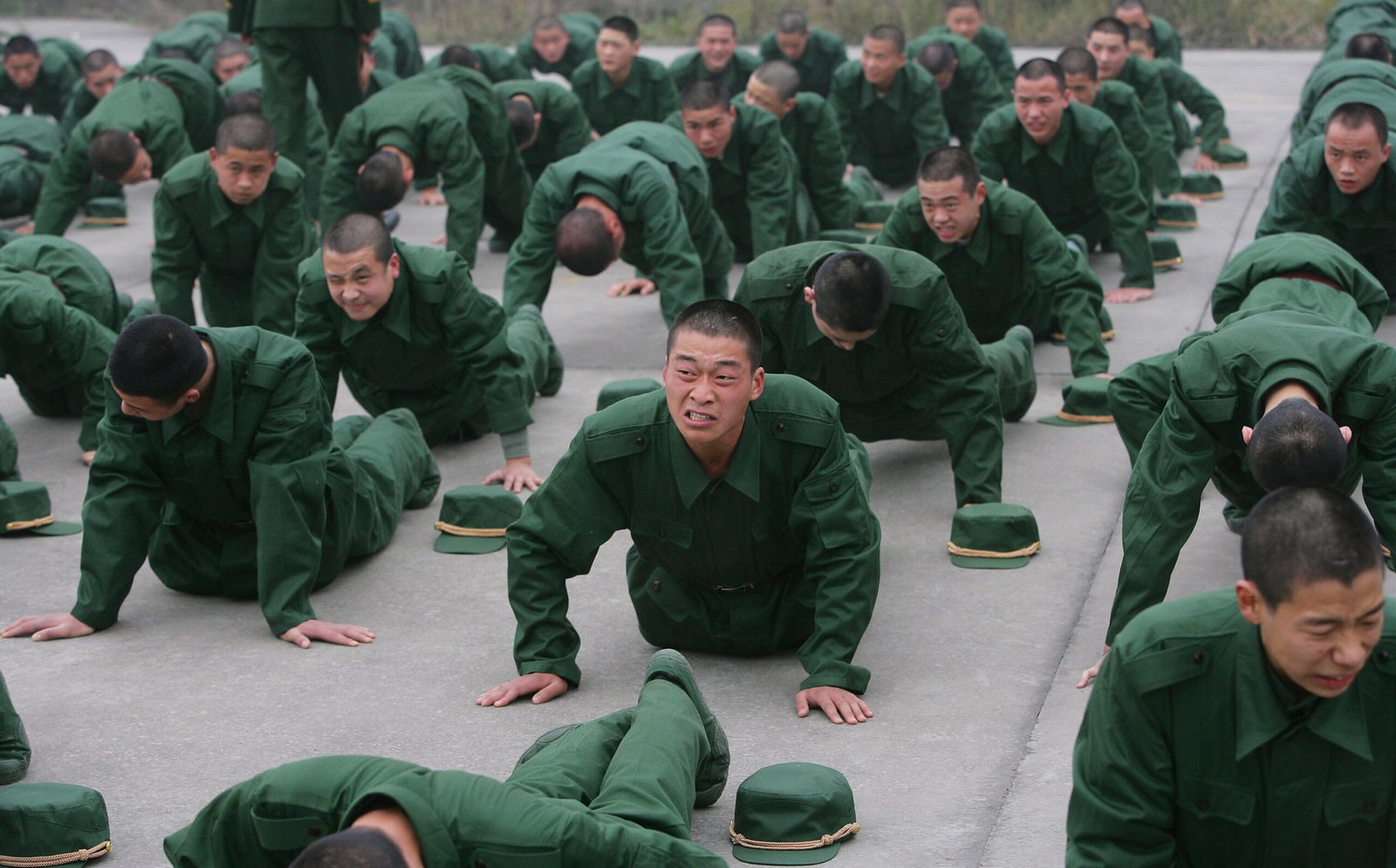
Joint training refers to integrating some combination of maritime, air, land, space and cyber capability to achieve an effect greater than the sum of the individual capabilities. The term is used consistently in PLA reporting, but closer inspection often reveals the term refers to single-service activities, revealing that there’s still some stove-piping within PLA services. PLA Daily reporting this year also suggests the military’s doctrine and fighting-concept development system is ill-equipped to promote rapid force design and improved readiness.
Military education has been another subject of criticism for Xi. He has accused military academic institutions of formalism, bureaucracy, hedonism and waste. The implication is that military academic institutions are somewhat separated from the rest of the force and have developed their curriculum in isolation.
While acutely aware of the PLA’s intangible shortcomings, Xi Jinping and the rest of the party leadership appear to be doubling down on political education and indoctrination as the primary solution. This is a weakness on two fronts. Firstly, it risks creating a force unable to devote sufficient time and attention to developing the requisite leadership, ethics, morale, training systems and doctrine to best employ its rapidly improving material capabilities. Secondly, it risks Xi and the party making decisions based on military advice that’s more likely to be ideologically correct than objective, potentially leading to overconfidence or miscalculation.