Japanese companies stung by fallout from the prolonged Japan-China diplomatic rift are finding ways around declining supplies of rare earths and metals and diminished spending by Chinese tourists.
It’s been a year since Prime Minister Sanae Takaichi’s remarks about Japan responding to a Taiwan contingency angered Beijing.
The Chinese government responded by tightening export restrictions on rare earths and rare metals to Japan and advising its citizens to avoid travel to the country.
The initial impact was harsh, but Tokyo and companies are turning to alternative materials to cope with supply constraints and looking to other countries and regions for tourism money.
One affected rare metal is tungsten, which is used to make parts for automobiles, semiconductors and aircraft. China accounts for about 80 percent of global tungsten production.
Chinese exports of tungsten-related products to Japan plummeted by more than 80 percent year on year in the first six months of 2026, according to data from China’s General Administration of Customs.
At the Japan International Machine Tool Fair, held at Tokyo Big Sight in late October, products that cut down on tungsten use attracted attention.
“The vast majority of visitors to our booth are interested in products that use less tungsten,” said a representative of Osaka-based Dijet Industrial Co., which displayed tools made primarily from titanium. “Many say they want to try them out.”
Sumitomo Electric Industries Ltd. and Kyocera Corp. have expanded their lineups of tools that combine titanium and ceramics.
While those materials have drawbacks compared with tungsten, such as being more prone to chipping, the companies made improvements to address the weaknesses.
Himeji Denshi Co., a magnet maker based in Himeji, Hyogo Prefecture, has been unable to produce highly heat-resistant magnets because it can no longer import materials containing samarium, a rare earth element.
“We have asked customers to switch to neodymium magnets,” President Shigeaki Amishima said. “There is no performance issue for applications such as home appliances.”
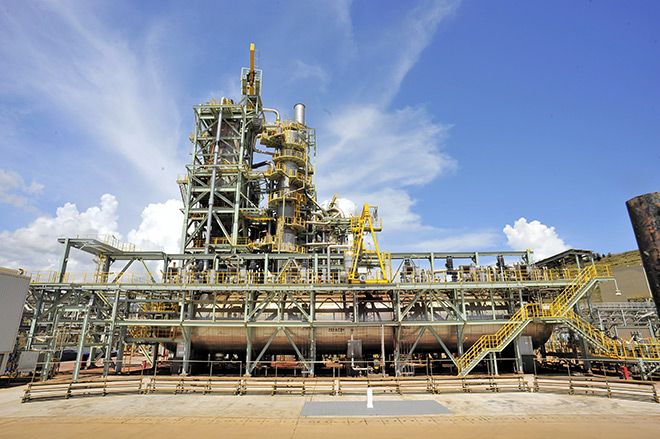
Sumitomo Metal Mining Co. plans to raise production capacity for scandium, another rare earth element, by about 20 percent by the end of March.
The company recovers scandium from byproducts remaining after nickel and cobalt ores are refined in the Philippines. The rare earth element is then turned into products at a refinery in Harima, Hyogo Prefecture, and elsewhere.
Sumitomo Metal intends to upgrade some equipment and increase staffing at the refinery to enhance output.
JX Advanced Metals Corp. in October began a joint study with a U.S. chemical maker on entering rare earth refining in Australia and the United States.
The company will determine by the end of 2027 whether the venture is commercially viable.
TARGETING ‘VIP’ SHOPPERS
Japan Inc. is also looking overseas past China to make up for the sharp decline in Chinese tourists and their spending.
Japan received 30.73 million foreign visitors during the first nine months of 2026, down 2.9 percent from a year earlier, according to the Japan National Tourism Organization.
While arrivals from China plunged 55.5 percent, growth from other markets helped reduce the overall decline.
South Koreans increased 21.6 percent, and Taiwanese rose 19.1 percent, for example.
“We will steadily build a base of repeat visitors through targeted outreach to South Korea and Taiwan,” a Japan Tourism Agency official said.
Department stores have long counted Chinese shoppers among the most valued customers.
At Hankyu Hanshin Department Stores Inc., the number of Chinese customers fell by about 30 percent year on year between April and September.
Even so, the decline was offset by an increase in high-spending customers enrolled in the company’s VIP membership program.
With membership exceeding 60,000, the company has maintained close contact with these customers to encourage repeat purchases.
Duty-free sales rose 21 percent year on year in the April-September period.
“We will roll out VIP outreach to other countries as well,” President Toshihiko Yamaguchi said.
(This article was compiled from reports by Tomoyuki Izawa, Satoshi Seii, Akihito Ogawa and Sakiko Kondo.)
* * *
The original article in Japanese is available here. Please note that a paid subscription is often required to read the full Japanese version.