Restaurants near the conference hall will also be closed
Before the poor people’s houses
“It’s the same as my father 50 years ago” Criticism
Philippine authorities “inevitable measures”

Controversy is brewing over the Philippine government’s massive urban renovation ahead of the ASEAN (Association of Southeast Asian Nations) summit, trying to hide the poor.
According to Hong Kong’s South China Morning Post (SCMP) on the 10th (local time), Philippine authorities have been conducting large-scale environmental maintenance and security enhancements in the capital Manila since the beginning of this month.
First of all, street vendors under Light Rail Line 1 were demolished in Pasaishi, south of Manila, where the summit’s main venue is located. The neighboring city of Paranyake has also restricted the operation of vendors around Baklaran Cathedral, a representative Catholic pilgrimage site.
In addition, general restaurants were also included in some of the business suspensions. Some restaurants in Pasaishi have been asked to close for about three weeks since the end of last month. This is because customers’ vehicles are parked on the route of the summit participants, which can interfere with traffic and security.
The target of maintenance has been extended beyond street vendors to living spaces for the homeless. Authorities evicted homeless people living near the Philippine Cultural Center complex, which is adjacent to the main route of movement of participants at the ASEAN Summit, and even cleared temporary residences where they stayed.
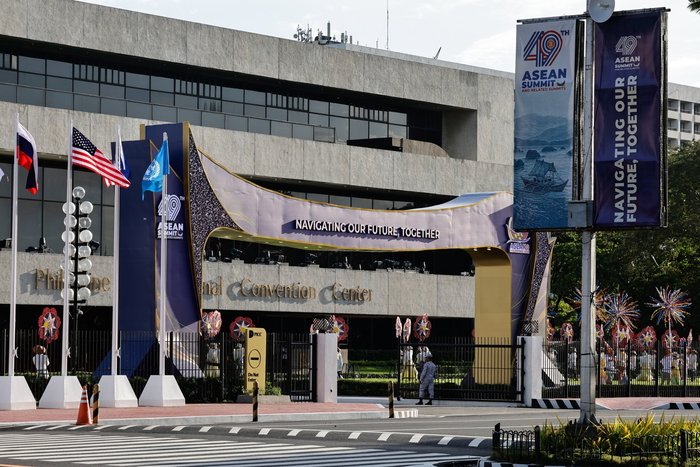
Even a large screen decorated with works by famous artists was installed on the road near the Philippine International Convention Center, the main venue of the ASEAN Summit, so that the roadside slums and underdeveloped urban landscapes could not be seen from the outside.

The opposition from ordinary people who have lost their livelihood is growing due to such measures. In an interview with SCMP, a street vendor near Baklaran Cathedral criticized the move as a “showoff measure” to show foreign leaders only the appearance of a well-organized city. Some point out that not only street vendors but also restaurants and shops around the venue have been disrupted for a long time, and the burden of preparing for the summit is being passed on to local residents and workers.
Criticism continued in the political world. Antonio Tinio, deputy leader of the Philippine House of Representatives, said in a statement on the 9th that even in the 1970s, when President Marcos’ father was in power, beautification of the city took place, including covering the slums ahead of international events. He criticized, “50 years later, my son is doing the same thing.”
“Poverty is not something that should be hidden behind the curtain because it is unobtrusive,” said Deputy Tinio, urging the expansion of the supply of public housing, compensation for affected street vendors, and guarantees the return to business.
On the other hand, the Philippine government countered that it was an inevitable measure for the summit. Claire Castro, a press officer at the presidential palace, stressed on the 10th that securing the safety of foreign leaders is a priority. Authorities said they would allow vendors to return to business after the summit and provide cash and food to affected merchants.
The ASEAN summit will be held in Manila from the 16th to the 18th. U.S. President Donald Trump is also expected to attend.