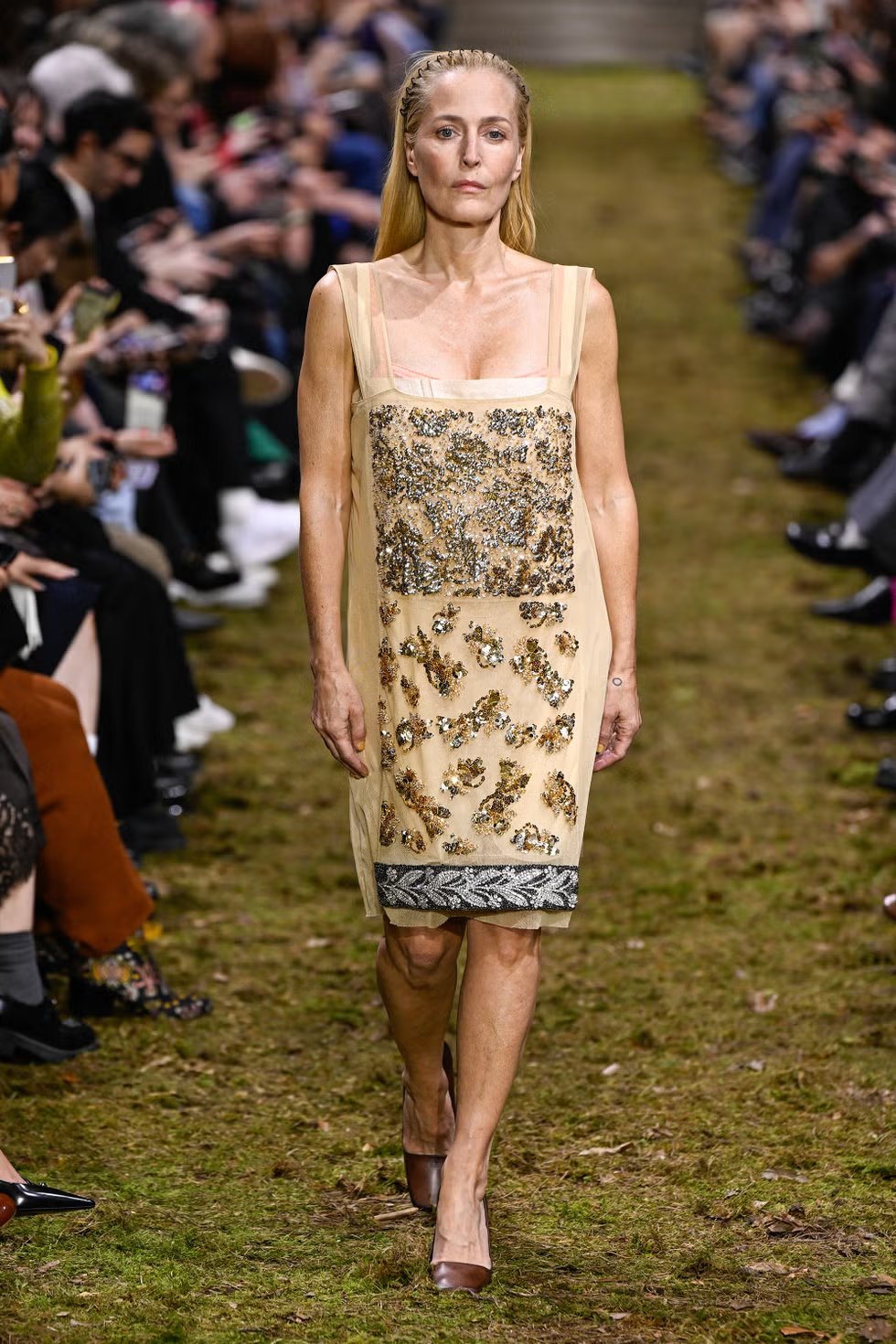
Olivia Colman’s internet-breaking grey hair at Miu Miu. Lisa Bonet, resplendent with waist-length silver dreadlocks, front row at Celine. Yasmin Warsame’s subtly lined skin in a Saint Laurent campaign. And Matthieu Blazy’s boldly multi-generational Paris shows. 2026 just might go down in history as the year fashion finally confronted its hang-ups with age, as women over 40 increasingly become the cool girls of now.
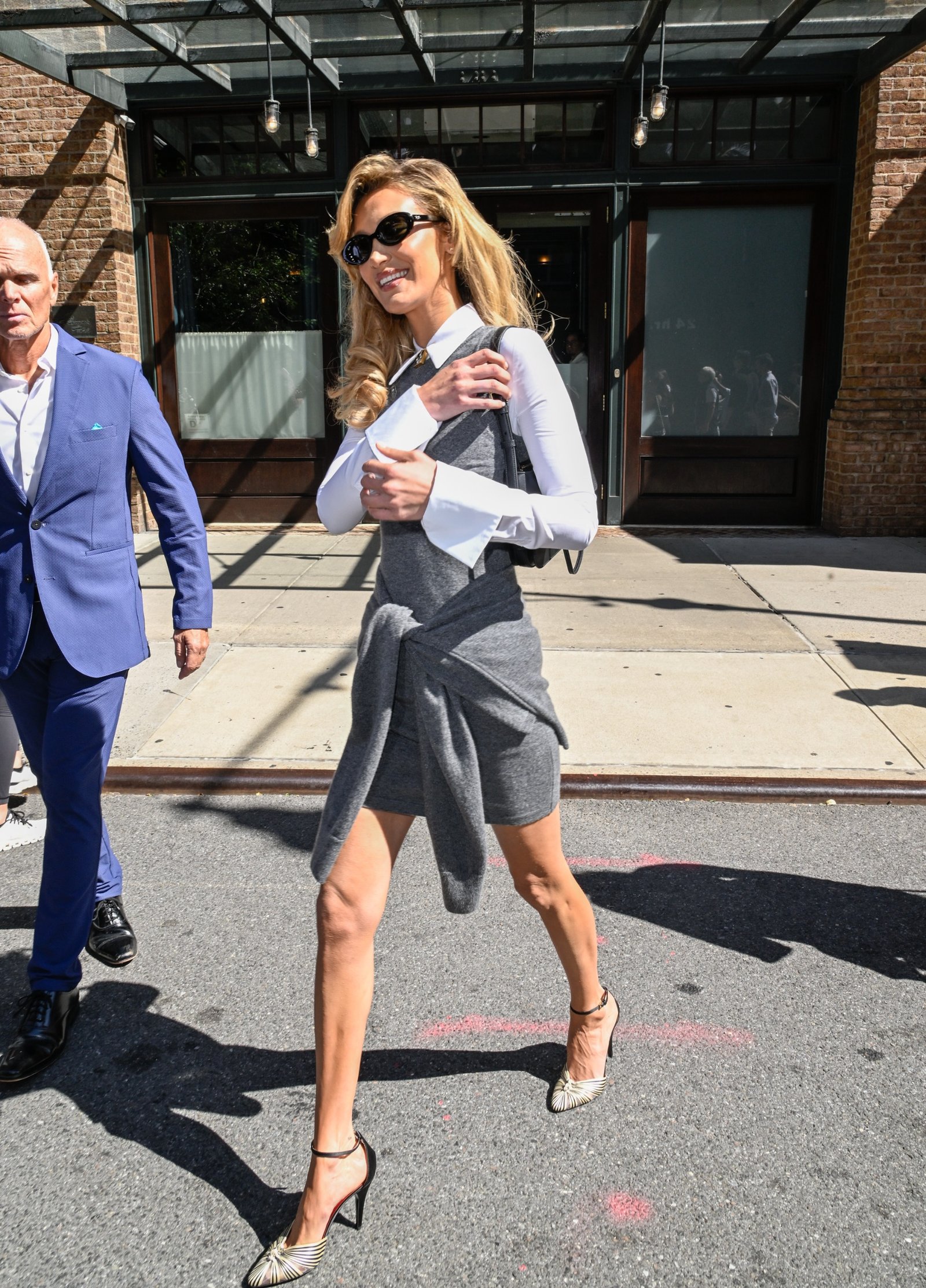
When I was starting out, the industry had a painful tendency to celebrate entire demographics of women in rotation, reducing their looks to trends in the process. There was the Brazilian model craze in the early 2000s led by Gisele Bündchen, Adriana Lima and Lais Ribeiro. Then the Slavic Doll era, defined by Natalia Vodianova, Natasha Poly and Karolína Kurková. The 2010s, meanwhile, belonged to the Insta-It girls, models with large social-media followings and big personalities (think Gigi and Bella Hadid, Kendall Jenner…) Throughout all these decades, each wave of women looked distinctly different from the other. But what they all had in common was that they were incredibly thin, usually white and young.

Miu Miu AW26

Then came 2020, ushering in a more inclusive, self-aware chapter as the fashion industry responded to the Black Lives Matter movement. Runways embraced women of different races, body types and physical ability (although still mostly young). Since then, fashion has backtracked on much of that progress. So, in a climate where diversity is in general decline and women’s faces and bodies are becoming more heavily filtered and homogenised, the proliferation of laughter lines, crow’s feet and silver hair on runways, in ad campaigns and on front rows, feels damn-near radical.
I’ve been around long enough to witness plenty of these waves of ‘looks’. But this moment feels different: less like a passing trend and more like a shift in who is seen and celebrated.
After decades and decades and decades in which women feared ageing out of fashion, how thrilling it is to see them celebrated for showing up as they are. Olivia Colman is a particularly potent example. Refreshingly non-sample-sized, un-Amazonian and unattached to social media, she wasn’t playing the part of a fashion girl but rather rewriting the rules of how one looks.
Of course, fashion has flirted with age inclusivity before. Who can forget Joan Didion’s iconic 2015 Celine campaign? Phoebe Philo, its creative director at the time, was – and remains famous for – challenging fashion’s cult of youth. That same year, Joni Mitchell appeared in Saint Laurent ads, while the late Iris Apfel fronted a campaign for Kate Spade. But I can’t recall ever seeing 15 models over the age of 40 walk a Chanel show, as they did in February. Nor can I remember a woman in her fifties making Models.com’s list of top runway walkers. This season Evelyn Effrim did, appearing in 15 shows in total.
There’s a compelling business case for the shift too. Why not represent the very women who are most likely to have the means to afford fashion’s increasingly eye-watering prices?

Chanel AW26

Gucci SS27
But this is about more than purchasing power. It reflects a broader cultural moment in which women are pushing back on the notion that relevance has an expiration date. The signs are everywhere. The hottest song of the SS27 show season? Adéla’s ode to Nicole Kidman. And as I write, Colman’s film, Wicker – about a fisherwoman, tired of being called a spinster, who commissions herself a husband made out of wicker – is the breakout hit of the BFI London Film Festival. Meanwhile, former ELLE fashion editor, Stacey Duguid, touched a national nerve when she wrote about being 52, unemployable and on her way to the job centre. Her post sparked a national movement against ageism.
At ELLE we’ve always said age is a state of mind – because it’s true but also as a powerful response to society’s restrictive views on women. Now, the real test will be whether fashion chooses to sustain the visibility once the novelty wears off.
Kenya Hunt is the Editor-in-Chief of ELLE UK. Her career spans working for some of the world’s most influential women’s titles on both sides of the Atlantic from her post-graduate days as an Assistant Editor at the seminal magazine, Jane, to her time as Deputy Editor of Grazia UK and ELLE UK. As the founder of R.O.O.M. Mentoring, she advocates for greater diversity within the fashion industry by providing a supportive network for some of the many talented aspiring designers, journalists and image makers of colour London has to offer. In 2021, she was recognised by The British Fashion Council for her work and given a Global Leader Of Change Award at its annual Fashion Awards. An American based in London, she lives south of the river with her husband and two sons. Her critically-acclaimed book, Girl: Essays on Black Womanhood (HarperCollins/HQ), is out now.