The NES rescued home gaming in the mid-1980s, but its golden era was also plagued by truly disastrous blunders. Eager publishers routinely rushed unfinished games onto store shelves to capitalize on the booming craze, unleashing cryptic mechanics, broken collision detection, and brutal difficulty spikes upon unsuspecting households.
These malfunctioning titles tested the patience of an entire generation of young gamers who had no modern internet guides or downloadable patches to rescue them from broken code. Whether forcing adventurers to navigate invisible walls, endure deafening audio glitches, or decipher nonsensical level layouts, these games turned weekend rentals into memorable nightmares.
Dr. Jekyll and Mr. Hyde is a Miserable Victorian Walk Turned Paranoid Nightmare

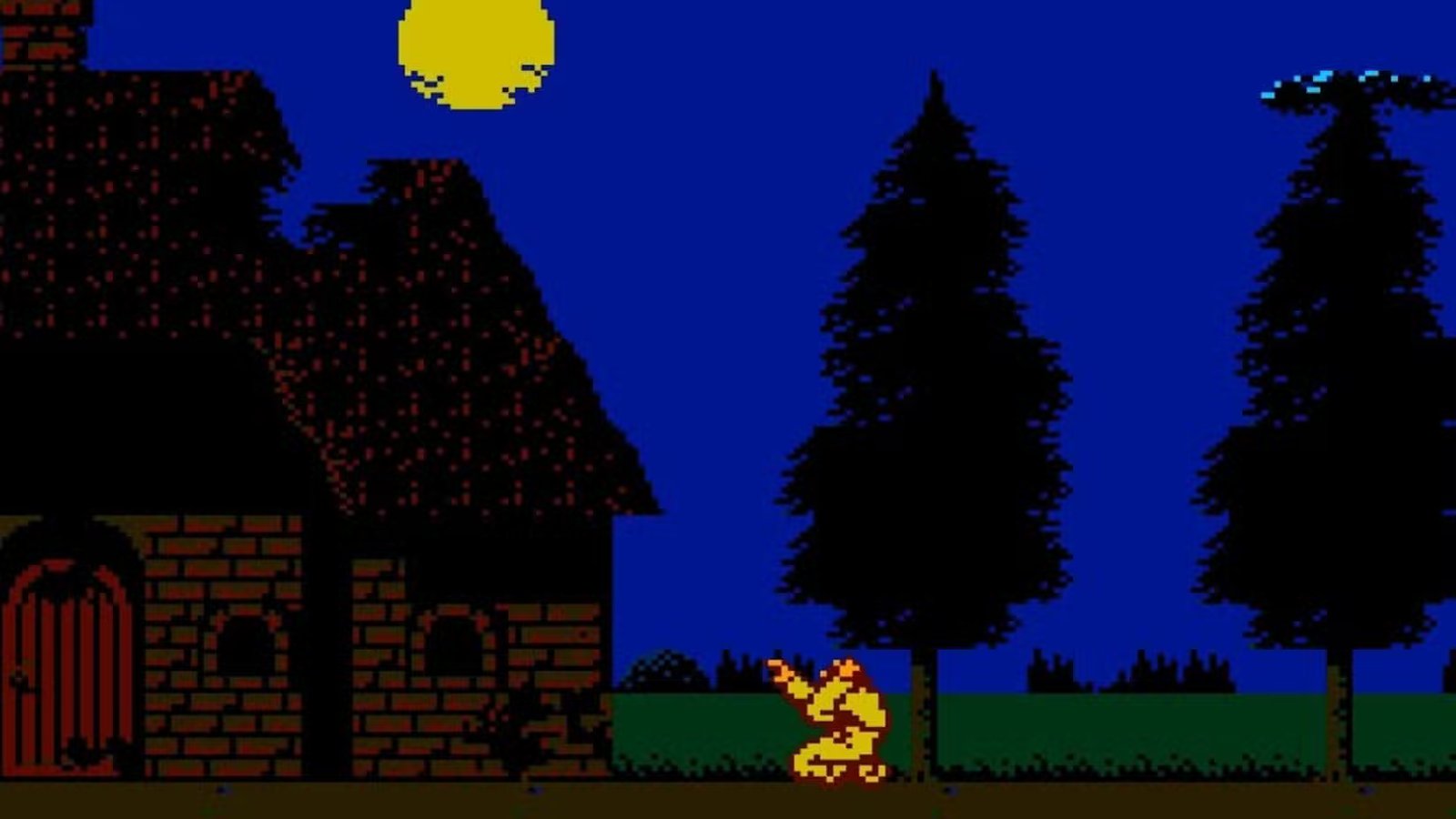
Dr. Henry Jekyll wants to stroll through 19th-century London to reach the church for his wedding, but the entire town treats him with hostility. Random citizens, stray dogs, and passing birds drop bombs and projectiles on sight, forcing the mild-mannered doctor to endure endless hazards with slow walking animations.
Sustaining enough physical damage or stress triggers an involuntary transformation into Mr. Hyde, violently hurling gamers into a bizarre apocalyptic mirror world with floating monsters and lightning bolts. Playing as the monstrous Hyde transforms the sluggish walk into an auto-scrolling combat stage where gamers must swat flying beasts to relieve stress and revert to the doctor.
Dr. Jekyll and Mr. Hyde falls apart as Hyde runs in reverse toward the beginning, and if his position ever aligns with where Jekyll previously collapsed, lightning vaporizes the player with a game over. Cryptic fail states, unresponsive jump mechanics, and random hazard spawns turn this classic literary adaptation into an incomprehensible exercise in frustration.
Ghostbusters Featured Repetitive Grinding and the Infamous Stairs of Doom

Starting up a ghost-hunting franchise sounds like an exciting premise, but Ghostbusters quickly reduces supernatural heroics to mundane resource management. Players spend the majority of their time staring at an overhead city map, steering an unwieldy car along highways while mindlessly vacuuming up stray spirits for pocket change.
The financial economy is brutally stingy, forcing gamers to grind for hours to purchase overpriced ghost traps, beam equipment, and larger vehicles just to keep the city from succumbing to chaos. Reaching the climactic encounter at the central building only unlocks a fresh wave of torture as the team is forced to scale 23 flights of stairs.
Navigating these identical stairwells requires players to hammer the controller button hundreds of times while dodging incoming ghosts that deplete ghost energy in seconds. Conquering this gauntlet ultimately rewards exhausted gamers with nothing more than a grammatically butchered congratulatory screen that remains one of the most embarrassing laughingstocks in classic gaming history.
The Uncanny X-Men Destroyed Gamers With Horrible AI and Broken Top-Down Brawling

Marvel’s mutant heroes should deliver a rewarding spectacle, but this top-down disaster reduces legendary icons to indistinguishable pixel blobs. Players choose a pair of mutants from a roster featuring Wolverine, Cyclops, and Storm to navigate subterranean facilities, deactivate nuclear reactors, and battle hordes of robotic sentinels.
The stages quickly devolve into wandering through endless corridors that look completely identical, giving gamers zero indication of where key items are hidden or where the extraction zone actually awaits. What makes The Uncanny X-Men unplayable in single-player mode is the incompetent artificial intelligence assigned to control the second team member.
The computer-controlled mutant partner constantly wanders directly into hazards, gets caught behind doorways, and mindlessly drains shared health pools during fights. When combined with unresponsive attack animations and a bizarre final mission code printed only on the physical cartridge label, this licensed outing ranks among the console’s most maddening experiences.
Back to the Future Was Just a Frantic Paperboy Clone Stripped of Cinematic Charm

Time travel takes a backseat to street survival in a bizarre adaptation that misunderstands the charm of its beloved cinematic source material. Players guide Marty McFly as he sprints down suburban neighborhood sidewalks, dodging hostile bees, rogue hula hoopers, and rolling bowling balls.
A ruthless timer constantly causes Marty’s family photograph to fade away at the bottom of the screen, triggering an immediate game over if gamers fail to continuously collect floating alarm clocks scattered across the pavement. Back to the Future provides virtually no variety, breaking up the sidewalk marathons with mini-games like hurling milkshakes at bullies in a local diner.
The character’s movement feels greasy and loose, turning every sharp turn or jump on Marty’s skateboard power-up into an unavoidable collision with instant-death obstacles. Conquering the final DeLorean lightning strike sequence demands frame-perfect reflexes that feel arbitrary and unforgiving, leaving gamers with a deeply hollow experience that squanders its iconic license.
Deadly Towers Combined Sluggish Sword Swings and Unmarked Labyrinthine Trapdoors

Prince Myer sets out on a quest to scale the haunted Bellcross tower, burn seven magical bells, and vanquish the demonic warlord Rubas. Deadly Towers sounds promising on paper, but gamers are immediately greeted by a maze of identical stone rooms with zero maps, direction, or clear objectives.
Enemies spawn continuously from every corner of the screen, firing projectiles while the prince moves at a glacial pace, turning the opening moments into a deeply confusing struggle for basic survival against overwhelming odds. Combat feels atrocious because Myer’s sword-throwing attack has pitiful range, dreadful collision detection, and an agonizing wind-up animation that leaves him vulnerable to incoming enemy fire.
Invisible dungeon entrances and trapdoors litter the stone floors without any warning, regularly dropping players backwards into lower cavern mazes filled with overpowered monsters. Making progress demands tedious grinding for shop currency and memorizing unmarked pathways, creating a gauntlet that feels designed to punish players.
Super Pitfall Offered an Experience That Was Anything But Super

Legendary jungle adventurer Pitfall Harry ventures into an enormous cavern system to rescue his lost niece Rhoda, his pet mountain lion Quickclaw, and the stolen Raj diamond. Abandoning the single-screen challenges of the classic Atari original, this platformer introduces a massive interconnected maze of ladders, elevator shafts, and underground rivers.
Gamers are expected to explore hundreds of identical-looking rocky caverns while managing a limited supply of gun ammunition and dodging erratic bat swarms that fly out of the dark. Super Pitfall becomes completely unplayable without an external strategy guide because critical quest items are invisible and hidden in unmarked empty air.
Harry must jump at precise coordinates throughout the labyrinth to make golden keys and vital rescue items materialize out of nowhere, with zero in-game clues. Combined with floaty jump controls that send players tumbling into bottomless pits or into the path of instant-kill falling rocks, this treasure hunt feels like an infuriating practical joke played on players.
Hydlide Became Notorious For Its Tedious Combat and Infuriating Audio Loop

The kingdom of Fairyland falls into chaos when the evil demon Varalys breaks free, stealing three magical jewels and splitting the princess into three separate fairies. Taking up the role of the brave knight Jim, players set out across an outdoor fantasy world to recover the lost gems and banish the dark lord.
While considered somewhat innovative during its original Japanese computer release, bringing Hydlide to western consoles years later completely exposed its deeply antiquated, clunky mechanics. Combat relies on a bump system where Jim must run directly into monsters, suffering massive damage unless players manually toggle into an awkward defensive stance before impact.
Slime enemies and aggressive trees overwhelm the hero immediately, forcing gamers to stand still for minutes at a time just to slowly regenerate missing health and magic points. To make matters worse, a screeching eight-bar musical loop plays in the background, driving players to the brink of madness during an already miserable fantasy grind.
Dragon’s Lair Destroyed Patience Due to its Poor Animations and Unresponsive Controls

Dirk the Daring must conquer a medieval castle to rescue Princess Daphne from the clutches of Singe the dragon in this ill-fated arcade port. While the original masterpiece dazzled crowds with hand-drawn cartoon animation, this home console adaptation foolishly tries to shoehorn that cinematic magic into a standard side-scrolling platformer.
Dragon’s Lair looks sluggish, saddling players with clumsy character sprites that move with all the grace and responsiveness of a heavy, rusted suit of armor covered in thick molasses. Every action Dirk attempts is delayed by an input lag that makes timing simple jumps over swinging pendulums and pits nearly impossible.
Touching virtually anything in the castle causes Dirk to dissolve into a comical pile of bones, from floating bats and crumbling floors to simple doors opening too quickly. Players are forced into a grueling cycle of trial and error where memorizing pixel alignments is the only way to survive the first screen, creating an infuriating endurance test that nobody asked for.
Silver Surfer Made an Iconic Superhero Feel Like a Beatable NPC

Galactus summons his cosmic herald to retrieve fragmented pieces of the Cosmic Device scattered across the far reaches of the dangerous universe. Taking control of the gleaming hero, gamers battle through alternating side-scrolling and top-down shooter levels filled with alien armadas, mutant warlords, and supernatural horrors.
Silver Surfer promises comic book action, especially with a high-energy chiptune soundtrack composed by Tim Follin blaring as players soar through deep space. The cosmic fantasy crumbles upon discovering that the all-powerful Silver Surfer dies from a single microscopic collision with anything on screen.
His silver surfboard boasts a large, unforgiving hit box, meaning that lightly brushing against a ceiling stalactite, a background pipe, or an errant projectile vaporizes the hero. Dying strips away all hard-earned weapon upgrades and sends players back to punishing checkpoints, creating a legendary difficulty wall where even the most disciplined shooter fans struggle to finish a single stage.
Action 52 Promised Dozens of Games and Failed to Deliver on Everything

Promising 52 original games on a single cartridge for $199 USD, this notorious product remains the ultimate cautionary tale of unlicensed retro disaster. The collection attempts to deliver an enormous buffet of platformers, space shooters, and puzzle titles, including the heavily promoted premiere showcase game Cheetahmen.
Instead of delivering a treasure trove of family entertainment, gamers who bought the game were greeted by an unmitigated disaster of garbled graphics, stolen music assets, and catastrophic programming bugs. Many of the included titles crash instantly upon launching from the main menu, leaving players staring at frozen screens and lines of corrupted code.
The few games that do manage to load suffer from non-existent collision detection, missing death animations, and broken jumping physics that let characters walk straight into the sky. Action 52 stands as the champion of broken retro software, presenting an unpolished disaster where basic functionality is an extreme rarity rather than a guaranteed gameplay feature for players.