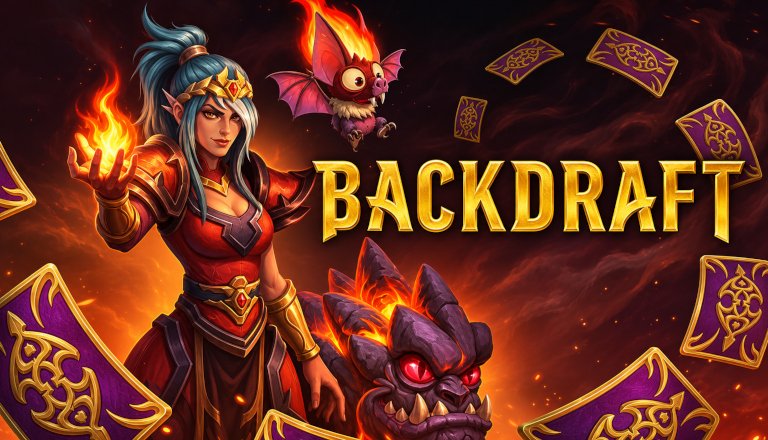
Many roguelike deckbuilders pit a lone hero against a succession of foes. Legacy Labs’ Backdraft tweaks those numbers. Here, you’ll play cards, cultivate your deck between brawls, and summon dutiful minions to fight alongside you. In execution, the duels recall Hearthstone, while the repeated runs and evolving decks channel Slay the Spire. And while it builds on the foundations of some of the subgenre’s stronger peers, Backdraft could use just a bit more substance in some places.
Three’s Company, Five’s a Hand
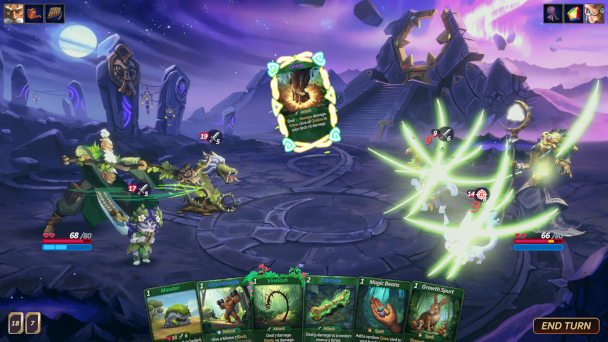
Pleasingly, the rules are straightforward: you receive three energy points and draw five cards each turn, with room for up to three minions. You’ll spend your energy playing cards, balancing attacks and protection with managing the creatures who obediently fight alongside you. Minions attack the opposing hero at the end of your turn, ensuring a steady flow of damage. Defeating enemies can also generate extra energy, helping you extend a turn.
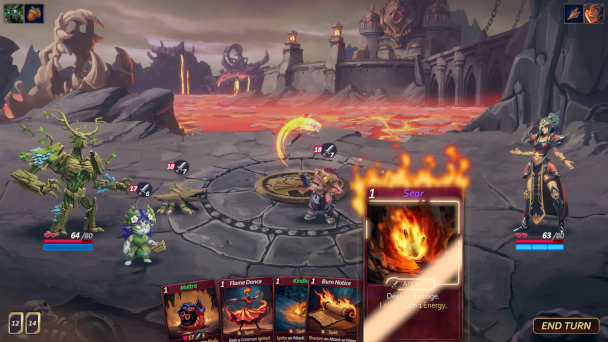
But your opponent has minions too, which complicates things. Hitting your rival hero might bring you closer to victory, but removing an enemy minion can prevent a headache on the next turn. Protecting your own creatures cost resources that could be used for another attack. With only a few spaces available, building an effective little team requires a better strategy than simply summoning everything you draw. But best of all, the pace is nimble, with card order being your amin decision.
Elemental, My Dear Minions
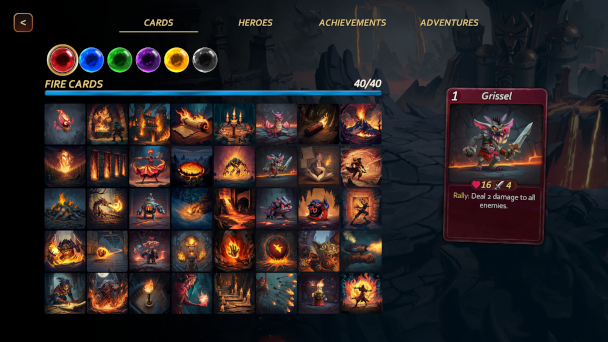
Experimentation is rooted in hero and companion synergies. The hero supplies a unique power, while a companion opens a second elemental card pool. There are six elements that range from fire, ice, earth, light, shadow, and mystic. These combinations provide different ways to connect cards, minions, and enchantments. Elric, for instance, turns defense into offense: after he gains Block, his next Attack deals three additional damage. Encase gives a ally minion Block before ordering it to attack, while the minion Sera’s Rally grants your hero a Barrier. These effects give your card sequencing some direction, too. The enjoyment comes from finding effects that help each other, then drafting enough support to keep you competitive. It’s a solid foundation for a deckbuilder: your opening selection gives you a direction, while all those subsequent purchases shape your strategy.
Those acquisitions are made in shops between fights. Here, you’ll open packs, recruit minions, upgrade cards, and acquire artifacts. As such, your spending decisions really shape each run. Buying something new competes with improving cards that you already rely on, while victories bestow Blessings that improve subsequent shops. A promising new addition is tempting, but getting more from a dependable card can be just as valuable.
And while shopping helps inject variety into each run, deck refinement needs more emphasis. Sacrifice offers card removal, but across most runs I felt that additional opportunities to relinquish unwanted cards would have made Backdraft’s combinations more managable. Deckbuilders are best when they give you control over the cards that seem to be getting in the way. Finding a clever interaction is enjoyable. But drawing the cards needed to use it should happen often enough to reward that discovery.
Cute Today, Gone Tomorrow
Visually, Backdraft exhibits quite a bit of charm. Colorful, animated creatures give the fights personality, especially when you have a full roster of minions delivering flying kicks or tossing projectiles. But don’t grow too accustomed to their cuteness. Minions often struggle to survive the opponent’s turn, making your charming little army feel a bit expendable. Their vulnerability means you’ll have to think about protection and replacement, although it can undercut the pleasure of developing a particular creature.
A standard run spans six rival heroes, with three lives to get through them. Shorter sessions have their appeal, but that initial stretch can leave little time to enjoy a fully developed deck. Thankfully, the latest (November 6th) update adds an Endless continuation, letting you carry your build further, as you take on increasingly powerful opponents. Heat Levels, the game’s moniker for difficulty, modifiers also offer tougher Adventure runs. But the dominant issue is variety: the game’s cast of twelve heroes could use more distinct identities. Yes, their passive powers influence your choices, but the shared elemental pools limit how different successive characters can feel. More idiosyncratic hero mechanics would help keep Backdraft burning across repeat runs.
Progression has its own issues, albeit fewer following the latest update. Hero Draft offers three randomly selected heroes, and winning with your chosen character unlocks that hero permanently. This patch also makes winning with an already owned hero unlock a random remaining character, while all five secondary elements are selectable for owned heroes without requiring a victory with each pairing. This arrangement still encourages sampling the roster, and unlocking a preferred character can take time. Nevertheless, experimentation now faces fewer restrictions.
Bring Your Own Rival
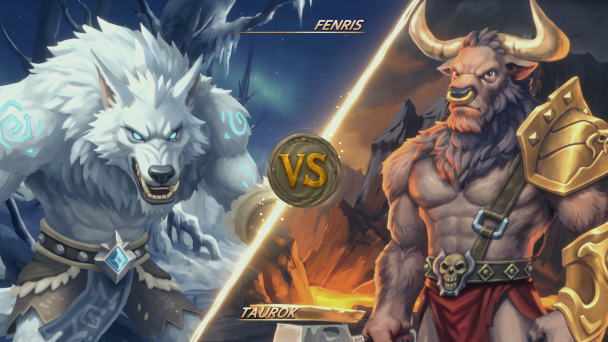
Versus supplies another outlet for battling, letting you take on friends online or face off against bots. Its premade hero decks shift the focus toward playing your hand effectively, but they also lack the enjoyment of cultivating your own deck. Automatic matchmaking was absent at launch, so relying on lobbies makes finding opposition less convenient than it should be. Hopefully, that side of the experience becomes easier to jump into with some additional patching. Also, a bit more selection highlighting when shopping would help.
Backdraft is a competent deckbuilder thats elevated by minion-backed battles and regular shopping sprees. More varied encounters and some larger differences between characters would give it greater staying power, although the new Endless continuation provides a welcome destination for your builds. As it stands, this roguelike deckbuilder delivers the essentials. The free demo offers a good indication of the combat and the framework surrounding it, and I’d advise checking it out before committing.
Backdraft was played on PC with review code provided by the publisher.
GAMEPLAY – 75%
CONTROLS – 70%
CONTENT – 80%
AESTHETICS – 80%
PERFORMANCE – 70%
VALUE – 70%
74%
GOOD
Backdraft’s lively minion battles and between-fight shopping make assembling a winning deck easy to enjoy. Similar-feeling heroes and limited opportunities to trim your cards keep it from really catching fire, although the latest update lets your builds burn, until they’re extinguished.