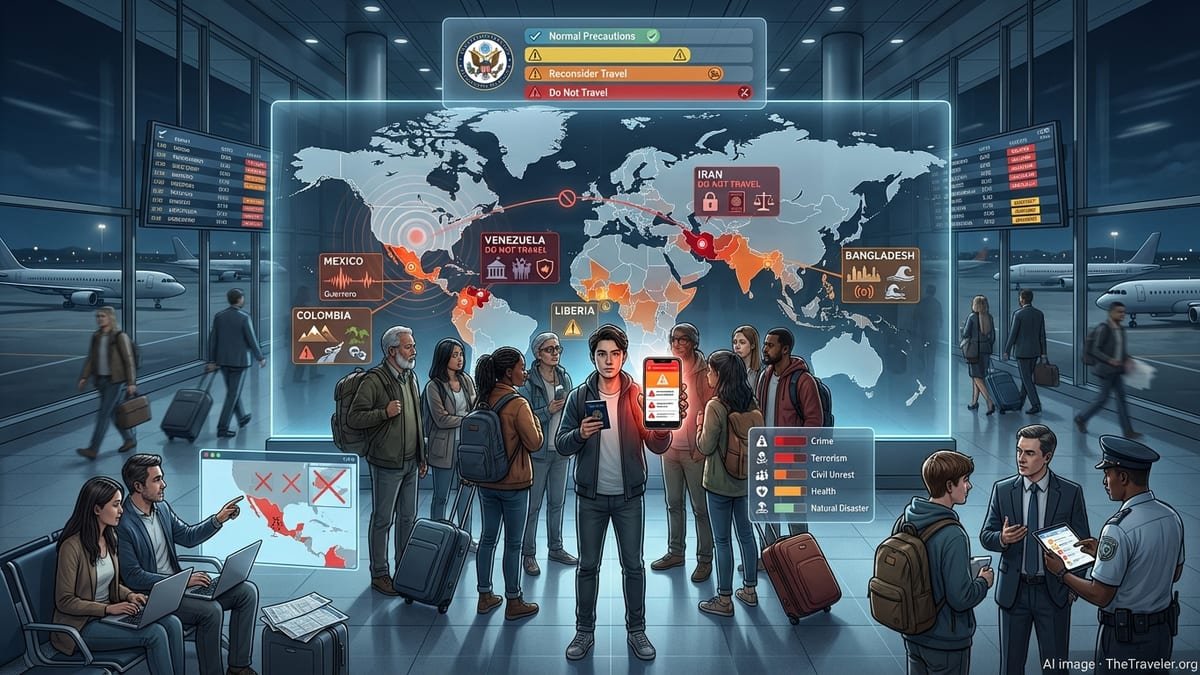
Four of South Africa’s biggest long-haul tourism markets, the United States, United Kingdom, Australia and Canada, have all reiterated elevated travel advisories for the country in recent months, highlighting concerns over violent crime, sporadic unrest and targeted attacks on tourists even as visitor numbers continue to recover.
Get the latest news straight to your inbox!
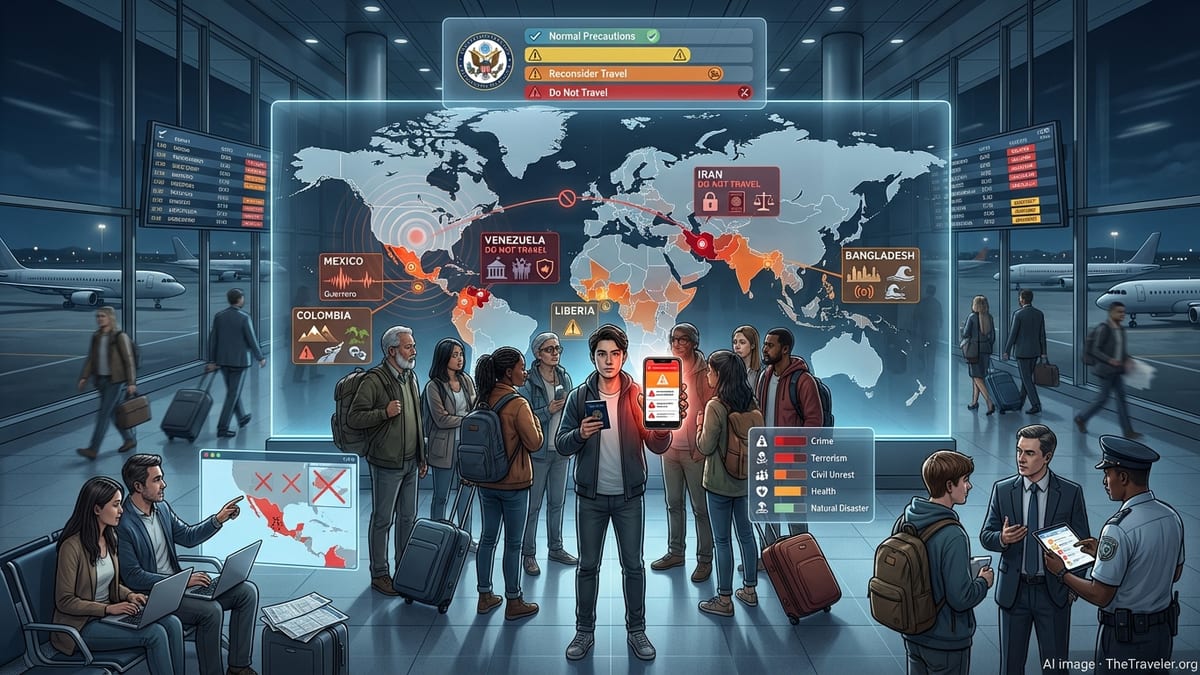
Advisory levels raised but borders remain open
Publicly available government notices show that all four countries currently place South Africa in the mid-range of their risk scales, urging extra caution rather than advising travellers to stay away altogether. None of the recent updates amounts to a “do not travel” instruction or a call for citizens to leave, but the language has hardened around crime, civil unrest and kidnapping.
The United States Department of State classifies South Africa at Level 2, “exercise increased caution,” in an advisory updated on 27 May 2025. The notice highlights crime, civil unrest, terrorism and kidnapping as key risk indicators and notes that violent crime is more common in downtown areas of large cities, particularly after dark.
The United Kingdom’s Foreign, Commonwealth and Development Office (FCDO) frames its South Africa advice around a “high crime rate,” listing armed robbery, carjacking and burglary among the main threats. The safety and security section warns that protests and strikes can quickly turn confrontational and urges visitors to avoid demonstrations and follow local developments in major cities such as Johannesburg, Pretoria, Durban and Cape Town.
Canada and Australia use comparable mid-tier categories. Canada’s official travel pages advise travellers to South Africa to “exercise a high degree of caution” due to significant levels of serious crime, while Australia’s Smartraveller service applies the same wording and singles out violent crime, opportunistic robberies and the risk of being routed by GPS navigation through unsafe neighbourhoods.
Crime, kidnapping and protest risks under scrutiny
Across the four advisories, violent crime remains the central concern. Guidance from Washington, London, Ottawa and Canberra stresses that armed robbery, car and truck hijackings, and home or guesthouse invasions have been reported in both urban and some rural areas. Night-time movement, particularly in central business districts and townships, is repeatedly flagged as higher risk.
Several governments have sharpened their wording on kidnapping. Background material linked to the United States advisory indicates that abductions, sometimes linked to ransom demands or criminal disputes, have increased enough to be listed explicitly among the main risk factors. Crime briefings cited in the advisories refer to a broader pattern of rising contact crimes in parts of the country, including murders and aggravated robberies in some metropolitan municipalities.
Unrest and protests are another recurring theme. The UK FCDO notes that demonstrations, often related to local service delivery or labour disputes, can emerge with little warning and may lead to road closures or clashes with security forces. Travellers are advised to leave protest areas as soon as it is safe to do so and to allow extra time for airport and intercity transfers when disruptions are reported.
Australian and Canadian notices echo these assessments, pointing to periodic disruption from strikes, community protests and crime on certain routes. Australia’s Smartraveller highlights incidents on approach roads to flagship tourism areas such as Kruger National Park and Pilanesberg National Park, as well as on secondary roads to Cape Town International Airport, advising travellers to remain on main highways where possible.
Tourism hotspots and specific risk locations
While the advisories do not discourage visits to South Africa’s major attractions outright, they draw attention to specific locations and travel patterns that have seen incidents involving foreign visitors. Australian guidance, for example, mentions attacks and robberies reported near some entrances to Kruger National Park and on the Lebombo or Komatipoort border approach, urging travellers to use reputable tour operators and remain alert on access roads.
Safety cautions also extend to coastal and urban tourism hubs. UK and Canadian travel pages advise visitors to take particular care in and around central Cape Town, Durban and Johannesburg, especially after dark, and to avoid walking alone in isolated areas, including some hiking trails close to urban centres. The UK advice suggests hiking in groups of four or more and using established operators for excursions.
Transport links receive explicit attention. Australia’s advisory notes that travellers have been attacked on alternative routes to Cape Town International Airport when GPS navigation diverted vehicles through higher-risk suburbs. Visitors are urged to stay on the N2 or other main arteries where possible and to avoid detours via lesser-known exits such as Borcherds Quarry Road, which passes near the township of Nyanga.
Despite these warnings, tourism to South Africa from these markets has continued to recover since the lifting of pandemic travel restrictions. Official South African data for 2025 show six-figure annual arrival numbers from the United States and the United Kingdom, with Australia and Canada also sending tens of thousands of visitors, underlining the continued appeal of safari, wine and city-break itineraries among long-haul travellers.
How the warnings affect travellers and the industry
For prospective visitors, the practical impact of the updated advisories lies in planning and insurance rather than outright cancellations. Travel notices from all four governments emphasize that decisions on whether to travel rest with individuals, but they advise thorough research, careful itinerary design and robust travel insurance that covers crime-related losses and medical evacuation before booking flights.
In the insurance market, advisory levels can influence policy terms. Some providers apply higher premiums or exclusions to destinations with elevated or top-tier warning levels. South Africa’s position at a mid-level category for all four governments generally allows standard leisure policies to remain available, although travellers are still urged to review fine print, particularly concerning theft, violent crime and civil unrest.
On the ground, the tourism industry has responded by highlighting private security measures and structured itineraries. Public statements from South African tourism authorities emphasize that millions of visitors arrive and depart each year without incident, and they encourage travellers to use accredited accommodation, trusted airport transfer companies and established tour operators, especially when moving after dark or between cities.
Local analysts note that reputational damage from travel advisories can still be significant, particularly when competing African destinations offer similar wildlife or coastal experiences with lower perceived risk profiles. Industry bodies continue to lobby for improved policing in tourism corridors and clearer communication about which areas are considered safe for self-drive travel.
Balancing risk awareness with on-the-ground precautions
The four countries’ travel pages converge on a similar message for South Africa: visits remain possible and popular, but independent travellers need a level of vigilance that goes beyond what may be familiar in many Western cities. Recommended precautions include avoiding displays of wealth, limiting cash withdrawals, using ATMs in controlled environments, pre-booking airport transfers, and staying in secure accommodation in well-frequented neighbourhoods.
Guidance from the US, UK, Australia and Canada all stresses that visitors should monitor local and international media for updates during their stay, register their trips where such services exist, and keep in regular contact with family or friends at home. Travellers are also encouraged to familiarise themselves with local emergency numbers before arrival and to keep copies of key documents separate from originals.
For those considering upcoming safaris, wine-region stays or coastal holidays, the advisories effectively frame South Africa as a destination that requires preparation rather than avoidance. Prospective visitors weighing the warnings against the country’s landscapes, wildlife and cultural attractions are being asked to factor in additional security planning, while tourism operators work to reassure core markets that informed, cautious travel can still be rewarding.