From ancestral rhythms and highlife classics to global club beats, designers at Lagos Fashion Week SS27 used curated soundtracks to weave heritage, identity, and modern storytelling into the fabric of African fashion.
At a fashion show, eyes naturally gravitate toward the garments; the sway of the fabrics, tailored silhouettes, and the standout collections. Yet, equal magic lies in what we hear: the soundtrack that breathes life and mood into every step on the runway.
At Lagos Fashion Week SS27, the soundtracks were difficult to ignore. Some shows reached into African musical archives, bringing older sounds into conversations with contemporary fashion. Others moved across borders, drawing from the Sahara, Southern African jazz and underground club culture. There were also moments when the music was unexpected, moving from cinematic compositions to familiar Afrobeats records.
Fashion and music have always influenced each other. Both are ways people express identity, respond to their environments and make sense of the world around them. In Africa, where music is deeply connected to everyday life, celebrations, politics and cultural memory, the relationship is quite significant.
This season, the music accompanying the collections offered another way to read the clothes. Together the tracks revealed the range of sounds, histories and influences shaping contemporary African fashion.
Looking Back Without Staying There
One of the more interesting things about the soundtracks this season was how frequently designers returned to older African music.
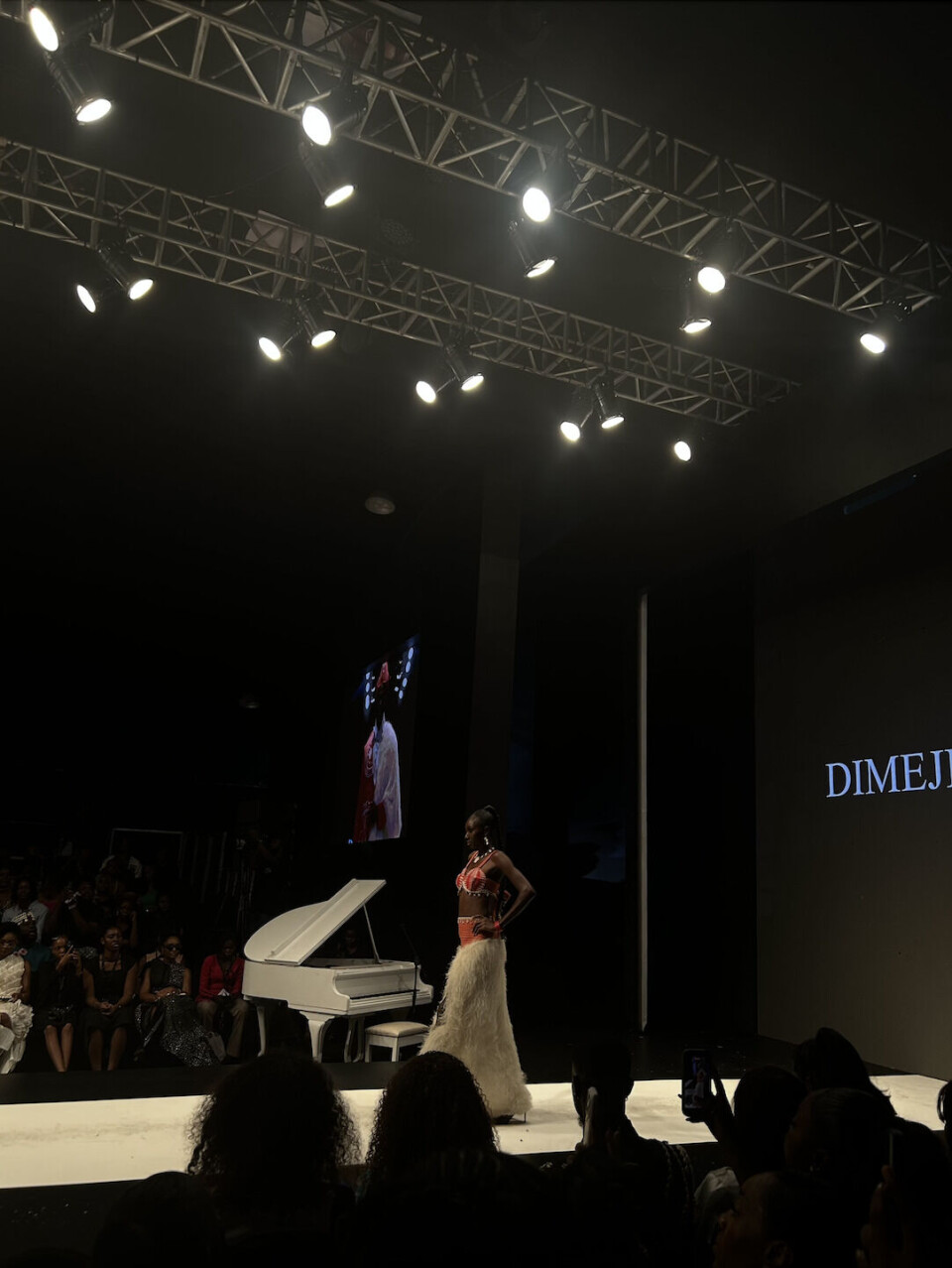
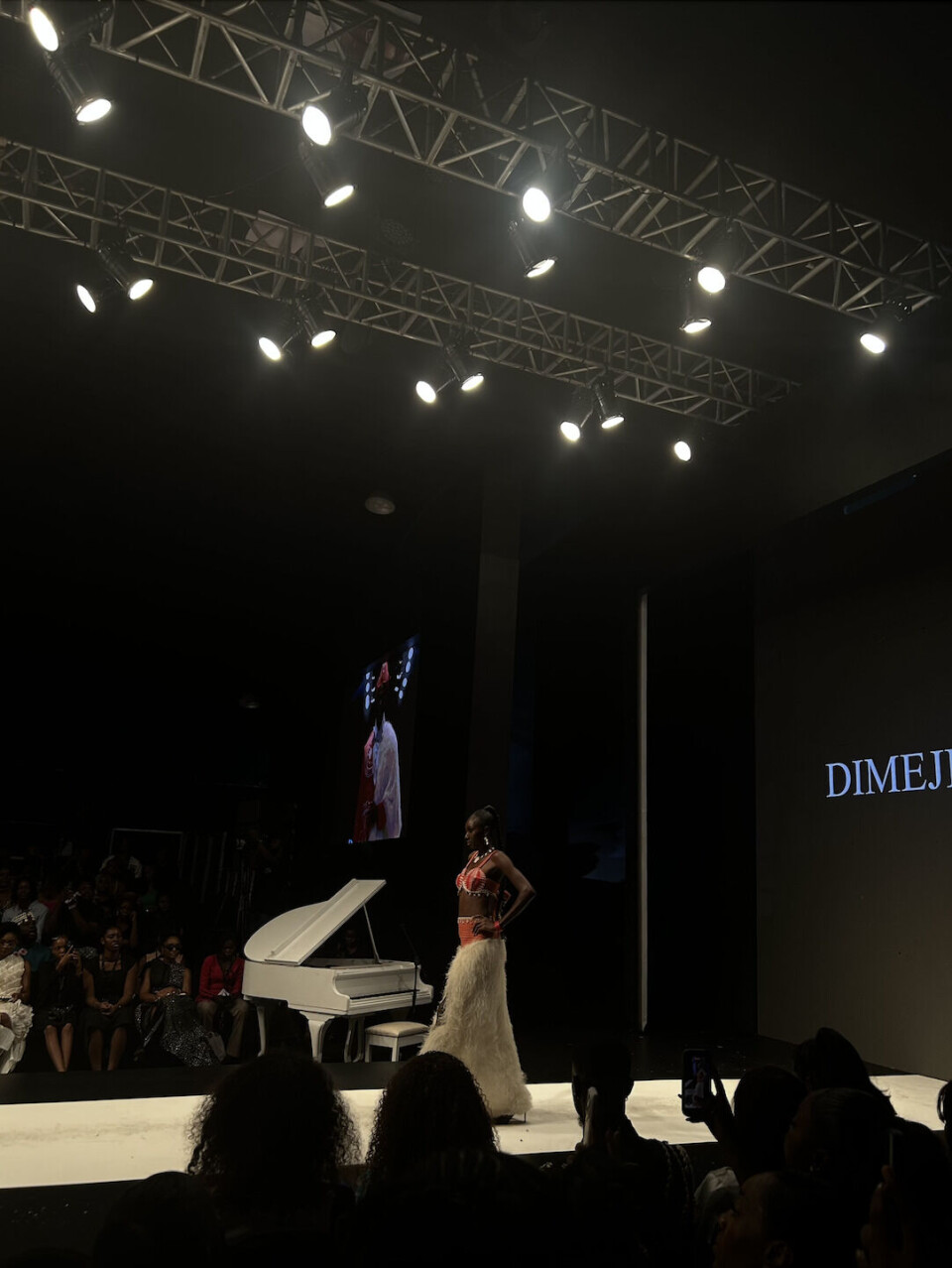
Dimeji Ilori‘s presentation was one of the clearest examples. Models walked in sculpted aso-oke, geles and cowrie-adorned socks to Man Paulo‘s “Yoruba War Tongues.” The percussion complemented the collection’s references to Yoruba culture. It was interesting to hear a Yoruba-inspired soundtrack alongside clothes that are inspired by the culture. These clothes were modern but the music kept their cultural context close.
Dust of the Earth’s collection was also inspired by tradition. The collection featured patchwork denim but there were also pieces that you could tell were inspired by the Igbo tradition. The clothes moved on the runway to Ambiento‘s “Rituals.” The combination brought together different visual and sonic references.
During Pepper Row’s showcase, the soundtrack moved between Fela Kuti‘s brass-heavy “Shakara (Oloje)” and Simi‘s “Woman.” The transition brought two different musical moments into the same presentation. Fela’s Afrobeat, with its unmistakable political and musical legacy, gave way to Simi’s contemporary take on womanhood. It was an interesting pairing, particularly within a fashion space where conversations about African identity and femininity continue to evolve.
FSS offered another generational connection, playing “Star signs” by Odunsi (The Engine) then transitioning to King Sunny Adé‘s “Alashe L’aiye.” Alté and juju might belong to different musical generations, but hearing them within the same presentation made their coexistence feel natural. Contemporary youth culture doesn’t necessarily require abandoning older influences. Sometimes, it grows out of them.
A Runway That Transcends Borders
Although Lagos Fashion Week takes place in Nigeria, the music this season travelled well beyond the country’s borders. Several presentations drew from other parts of the continent, creating connections between different musical traditions and fashion perspectives.
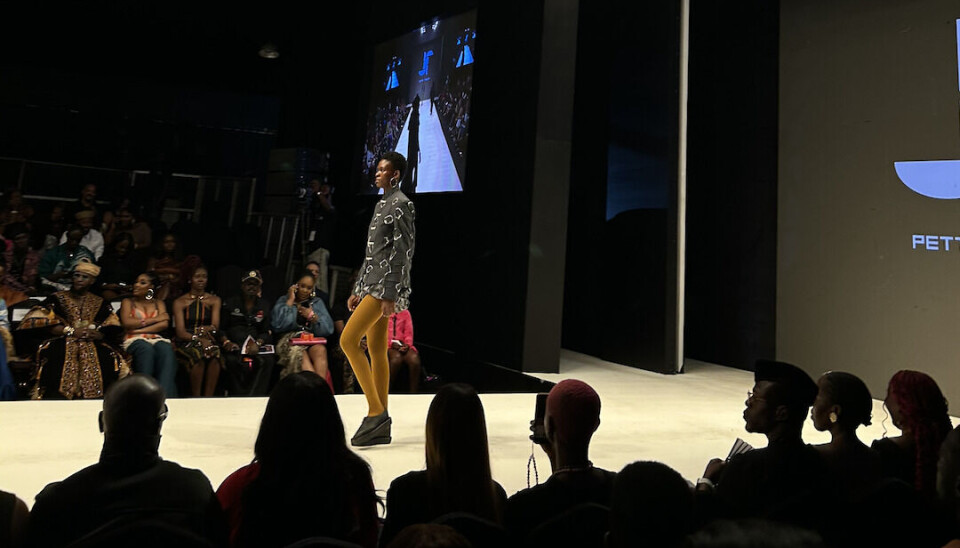
Pettre Taylor‘s presentation was built around an urban nomadic spirit. The collection featured earth-toned tailoring and traditional facial markings. Its soundtrack drew from Saharan Tuareg rock, including Tinariwen‘s “Sastanàqqàm” and Imarhan’s “Tahabort.”
The electric guitars and rhythms of desert rock presented a different feeling from the Afrobeats and highlife sounds more commonly associated with Nigerian fashion presentations. The presentation also introduced the audience to musical traditions from the Sahel, reminding us that African fashion cannot be understood through a single cultural or geographical reference point.
Angélique Kidjo‘s music also appeared across different presentations. Bakusoraya paired its patchwork aso-oke with Kidjo’s interpretation of “Malaika,” while Dukun used “Lonlon Ravel’s Bolero” to accompany a colourful, colour-blocked lineup. Kidjo’s presence was particularly fitting within a week that brought together designers and influences from across the continent. Her career has long crossed musical and geographical boundaries, making her work an interesting point of connection for presentations that drew from different African identities.
Irapada Circular Design Initiative pushed this continental exchange further. Featuring upcycled couture, the presentation moved from South African Amapiano producer Oscar Mbo‘s “Vuka” to Malian duo Amadou & Mariam‘s “Dougou Badia.” Hearing both within one presentation made the continent feel less like a collection of separate creative scenes and more like an ongoing conversation.
From the Archive to the Dance Floor
Some designers leaned into electronic music, club culture and sounds that felt more at home in a nightclub than on a conventional runway.
Hertunba‘s presentation played with the relationship between structure and movement. Snatched corset pieces appeared alongside flowing bottoms and fringe, creating a collection that moved between sharp construction and fluidity. The soundtrack added another dimension. The presentation opened with the compositions of Cristobal Tapia de Veer, known for his work on The White Lotus, before transitioning to Tiwa Savage and Wande Coal‘s “Energy.” It was a reminder that runway music doesn’t always have to be predictable.
Ajanée also embraced a more playful musical direction. Its dopamine dressing-inspired presentation featured twirl-worthy pieces made from upcycled materials, which moved on to the runway to Shygirl’s “Cleo.” The pairing brought an alternative club sensibility to the runway, matching the collection’s emphasis on movement, colour and self-expression.
At Studio Imo, models strutted in knitted crochet pieces, walking to the pounding electronic best of Russian Style by Volac before transitioning to “Adieu” by Tchami. This shows us how designers can draw from global underground scenes without limiting their collections to familiar regional sounds.
Bloke took a more severe approach. Its military-inspired presentation brought together heavy tactical buckles and delicate fishnet, creating a contrast between protective, masculine references and delicate sensuality. The pieces moved on the runway to G.I by William Masson reinforcing the atmosphere that the clothes created.
These musical choices were interesting because they expanded the possibilities of what an African fashion presentation could sound like. They weren’t all trying to make the same cultural statement, nor did they need to. Some looked towards ancestral references, others towards international underground scenes, while some simply embraced the energy of a dance floor.
