Click here to subscribe FREE to Ray Hanania’s Columns
This article was originally published by Arab Center Washington DC. ©️ 2026 Arab Center Washington DC. Republished with permission.
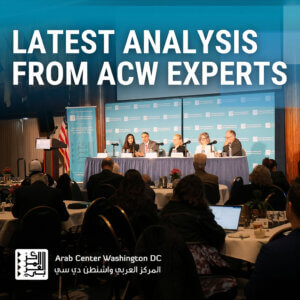
The Arab Center Washington D.C. featured an analysis by Andrea Ghiselli on “What the Iran War Reveals about China’s Middle East Strategy,” published on Sept. 22, 2026.
Ghiselli writes in his analysis:
“Tehran shares this concern: prior to both the May 2026 Xi-Trump summit and the anticipated September summit, Iranian Foreign Minister Abbas Araghchi visited China for consultations. While Washington sees Beijing as a “near-peer” competitor, Tehran considers it an indispensable lifeline—and both parties are keen to understand China’s position on the Iran war and the Middle East more broadly.
“China’s approach to the Middle East is important beyond Xi’s visit to Washington. If a new regional order is emerging from the ashes of the conflict, as some analysts suggest, China’s economic prowess and foreign policy ambition mean that it could play a major role in that new order—if it wishes to. While we cannot know how Xi and his circle of advisers are reading the current situation, China’s past behavior can provide us with important hints. In recent years, Beijing’s Middle East approach has developed in line with two key goals. The first is to find ways to use regional crises and developments to preserve its position or gain leverage vis-à-vis the United States. The second is to reduce China’s domestic exposure to shocks, threats, and crises emanating from the Middle East, rather than solving those problems at their root.”
Click this link to read the entire analysis.
ACW is affiliated with the Arab Center for Research and Policy Studies (ACRPS), headquartered in Doha, Qatar. As one of the premier independent research institutes in the Arab region, ACRPS focuses on the social sciences, regional history, and geostrategic affairs. Its research, publications, projects, and events examine the important issues and challenges facing the contemporary Arab world. For more information, click here.

Click here to subscribe FREE to Ray Hanania’s Columns

His award winning columns can be found at www.HANANIA.COM Subscribe FREE today
Hanania also writes about Middle East issues for the Arab News, and The Arab Daily News criticizing government policies in the Israeli-Palestinian conflict.
Hanania was named “Best Ethnic American Columnist” by the New America Media in November 2007, and is the 2009 recipient of the SPJ National Sigma Delta Chi Award for column writing.
Email Ray Hanania at [email protected].
Follow RayHanania at Twitter
NVP: 11