When Mayor Daniel Lurie announced that San Francisco would host Vogue World 2027 – an annual traveling spectacle with runway shows and live entertainment – critics were unsparing. Fashion in San Francisco?
The city’s style identity is often reduced to the same predictable clichés. We’re a casual town that’s been loosening dress codes for nearly two centuries. We live in a uniform of jeans, Birkenstocks and puffer vests.
But could this be the moment San Francisco finally conquers its bad style reputation? Or does Vogue World represent an uncool partnership between the city, corporate media and tech giants at a time when a luxury fashion show would only highlight the region’s widening economic disparities?
Held this year in Milan, Vogue World is financed by Condé Nast, expensive invitation-only ticket sales and sponsors. While financial totals were not available for this year’s event, the 2025 edition in Los Angeles reportedly made $30 million and donated $4.5 million to the Entertainment Community Fund to support film workers and costumers affected by wildfires.
The selection was seen as a victory for Lurie, who has embraced big events, hopping in a Formula One car for the Red Bull Showrun on the Marina Green, playing tennis with Roger Federer to celebrate new public courts or donning a flannel shirt for a Dead & Co. concert.
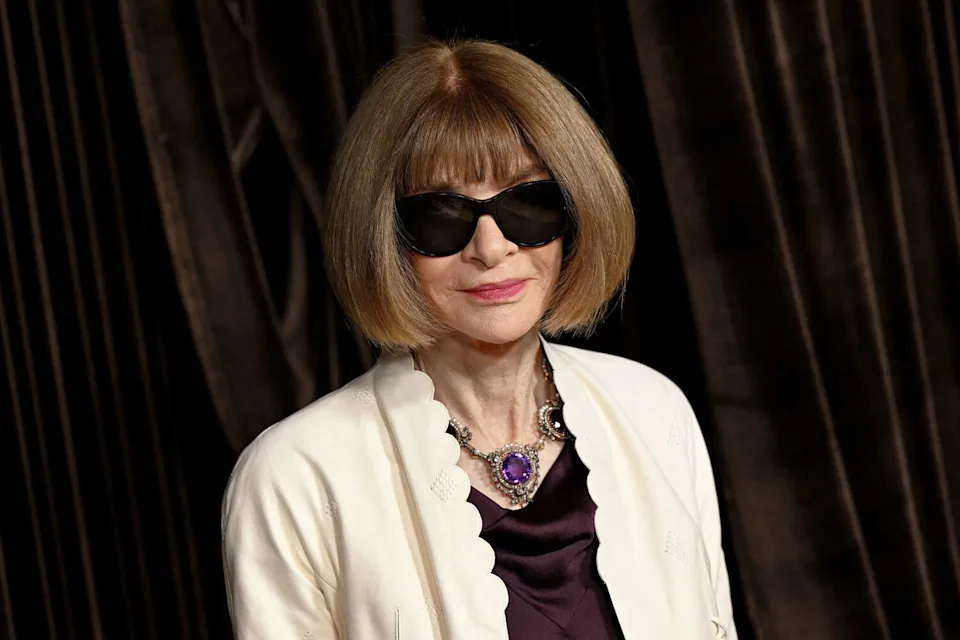
“When we heard that a certain icon, Anna Wintour, was looking for her next Vogue World, we made our pitch,” Lurie said in a recent speech, referring to the longtime Vogue editor.

Anna Wintour attends the 2026 Albies, hosted by The Clooney Foundation for Justice at the Natural History Museum on Oct. 9, 2026 in London. (Jeff Spicer/Getty Images for The Clooney Foundation for Justice)
Despite being an heir to a major fashion brand, the mayor has a restrained personal style. In office, he made a conservative charcoal or navy suit his signature, even for evening functions where black tie is more standard – though the cost of his shoes has occasionally invited speculation on social media.
Before that, on the campaign trail, he stuck to a white button down shirt and Levi’s 511 jeans, an informal uniform that seemed designed to downplay his wealth.
But, as Melissa Leventon, dress historian and senior adjunct professor at the California College of the Arts put it, Lurie is perhaps the one politician who doesn’t derive the same common-man appeal from denim as did George W. Bush or Ronald Reagan.
Lurie’s ties to Levi Strauss through his late stepfather Peter E. Haas, the company’s former chairman, are well known. Last spring, he joked about the rivalry between Levi’s and Gap at a party at the San Francisco Museum of Modern Art for the newly rehung Fisher Family Collection, on long-term loan from the Gap founding family. Given his own family’s prolific philanthropy to the museum, he noted that SFMOMA is an institution partly built through the fruits of San Francisco fashion.
Vogue World arrives as both brands enjoy notable comebacks. Levi’s reported a 4% increase in net revenue from the same period last year, while Gap brand net sales rose 9% in the second quarter. Zac Posen – Gap’s executive vice president and creative director, who is credited with helping the brand’s resurgence – was also an advocate for San Francisco as a host for Vogue World, attending meetings related to the event according to the mayor’s schedule. Former Apple designer Jony Ive, co-founder of the San Francisco design collective LoveFrom, also helped lobby for the event.

Tipping Point benefit co-chair Heather Ive (left) with Tipping Point founder and current Mayor Daniel Lurie and her husband, Apple designer Jony Ive at Pier 48 in May 2014. (Catherine Bigelow/For the S.F. Chronicle)
The city’s fashion retail landscape has also seen positive developments after a slew of department store closures. Independent Bay Area retailer Sherri McMullen opened a boutique on Maiden Lane last month, while this month brought Japanese fast fashion chain Uniqlo back to the city. Still to come are Kith’s first Northern California location, on Sutter Street, and the return of Nordstrom Rack. Those retailers join a long legacy in the city. Specialty retailers from the 20th century icons I. Magnin and Joseph Magnin and the 60-year-old Wilkes Bashford stores flourished in their eras, paving the way for today’s independent high-end boutiques in the region. Many of these stores, like Sam Malouf Authentic Luxury, Modern Appealing Clothing and Marin’s Hero Shop, outfit customers for the city’s arts and philanthropy season.
San Francisco also has a long history of fashion education. In the 2010s, six schools taught fashion design in the city, but with changes including the closure of California College of the Arts in 2027, there will soon be just City College of San Francisco, San Francisco State University and the Academy of Art University.
But San Francisco’s influence on mainstream fashion reaches beyond the classroom, spanning other corporations and independent fashion brands. The aesthetics of counterculture, from hippies and queer liberation to the Black Panther Party and hacker style, have found their way into major fashion collections and trickled down through the media.
In announcing Vogue World, Wintour called San Francisco “a place of diverse communities living side by side, a place that loves the arts, loves creativity, and isn’t afraid of change.”
“There’s a history of rebelliousness here, as well as incredible innovation,” Wintour said. “I love that San Francisco has always stood up for its values, and the things it believes in.”
Emily Holt, owner of Hero Shop and a former fashion news editor at Vogue, said that while she has found San Francisco to have a tight-knit fashion community, “Our reputation to me is tied to nature, food and innovation.”
“Vogue has always been excellent at placing fashion in the larger context, connecting it to art, science and technology,” said Holt. From that perspective, she continued, “It makes sense they would host in San Francisco.”
San Francisco’s reputation as an anti-fashion city goes back to the 1870s, when East Coast writers often criticized the diversity of dress, said Laura Camerlengo, the curator in charge of costume and textile arts for the Fine Arts Museums of San Francisco.

Hero Shop owner Emily Holt shows her boutique under construction in San Francisco, California in 2016. (Liz Hafalia/S.F. Chronicle)
The stereotype took shape in the 1960s and ’70s, when social activism and technology became powerful forces in the region. The Bay Area also helped lead a shift toward comfort, with Birkenstock based in Novato and The North Face founded in San Francisco in 1966.
Camerlengo said San Franciscans still dress up for high-profile events. But, she said, it’s also a city whose microclimates and topography “often lends itself more to private engagement with fashion, meaning the clothing we wear at home, to private events and with friends.”
Autumn Adamme, owner of the nearly 40-year-old San Francisco legacy business Dark Garden Unique Corsetry, said San Francisco’s fashion identity can be hard for outsiders to identify “because there isn’t an overall style with so many subcultures.”
“Think about nerd fashion, the vintage style community, Burning Man style and all the new transplants who bring new styles,” said Adamme. “We’re more about personal style than following trends.”

Designer Autumn Adamme, left, stands with model Therese Hanna, wearing one of Adamme’s designs, during Couture for the Cure, an annual breast cancer fashion show benefit, at the San Francisco Design Center in 2007. (Mike Kane/SFC)
How that ethos will fit into the Vogue World model has yet to be seen. While the core of each city’s presentation has been the fashion show, performing arts from ballet dancers to pop stars have been major parts of the runway spectaculars.
There’s also still some confusion about what, exactly, Vogue World will entail. Critics including fashion writer Amy Odell questioned whether the decision to host Vogue World in San Francisco was an attempt by Vogue’s parent company Condé Nast to appeal to the AI and technology moguls of the region at a time when traditional media is hurting. On her website, she derided the event as little more than “live video for Vogue to clip for social media and also sell ads against.” Noting that this year’s sponsors included “eBay (which I hear is one of Vogue’s biggest advertisers these days), Alo Yoga, and – everyone’s favorite (sarcastic) – Meta Glasses!”
This year’s show in Milan also included dancing robots by Chinese company Unitree Robotics, a possible preview of the San Francisco show. LoveFrom also created 6,000 hand-folded paper dragonflies for the grand finale which flew down onto the audience.
But for many locals, there is concern over how the city’s talent beyond major companies and the tech industry will be represented. The event also comes at a moment when many longtime San Franciscans in the creative world fear being pushed out of housing and jobs by the AI boom.
Lemon Twist founder Danette Scheib was one of several Bay Area designers who said they hope local fashion brands and retailers would have a presence in Vogue World. She believes that part of what has sustained her business for 26 years isn’t just that clients appreciate her design aesthetic, but also that they shop their values.
“Our customers have always known that us producing clothing in San Francisco can be expensive, and so they’re not looking for trendy things that will last a season,” said Scheib.

Chris Ospital and Ben Ospital, owners of Modern Appealing Clothing, with Laura Camerlengo, curator of the de Young Museum exhibition “Fashioning San Francisco: A Century of Style,” in 2024. (Scott Strazzante/The Chronicle)
Jason Perez Galloway, owner of the North Beach vintage clothing store Via Margutta, also hopes the sense of play many San Franciscans have with dress will translate to Vogue World.
“Even before I moved here I understood this was a city where most people took their costume trunks very seriously,” said Perez Galloway. In certain neighborhoods, said Perez Galloway, fashion is an art form. “I hope Vogue gets out on the streets to see it.”
Even with Vogue World still to come, San Francisco’s fashion calendar will be packed for the foreseeable future. Upcoming exhibitions include a presentation of North Bay eco-brand When Simon Met Ralph at the Marin Civic Center; a celebration of experimental San Francisco costume designer Debra “Beaver” Bauer at the main branch of the public library; a retrospective for the famed Tunisian-French designer Azzedine Alaïa curated by Camerlengo; and the Manetti Shrem Museum at UC Davis will show fashion gifts from philanthropist Maria Manetti Shrem, including looks by Roberto Capucci and Dolce & Gabbana.

McMullen Boutique’s owner Sherri McMullen poses for a portrait at the grand opening of McMullen Boutique in San Francisco. (Benjamin Fanjoy/For the S.F. Chronicle)
The spring will see the opening of “Dior to McQueen: Fashioning Form,” the first fashion-focused show at the SFMOMA in 40 years.
But will this help the city conquer its unfortunate style PR?
For Ann Marguerite Tartsinis, curator of the SFMOMA show, San Francisco’s relationship with clothing always goes back to the personal, which may make the question of perception irrelevant to many.
“We have a history of innovation and experimentation, and the dominant narrative is often around technological innovation,” said Tartsinis. “But it’s all kinds of innovation. It’s counterculture revolutions, and it’s artwear and it’s a much broader story of exchange because of our placement on the Pacific Rim. It’s about fashion that starts with self fashioning and finding what’s right for the individual.”
Subscribe
There’s more to San Francisco with the Chronicle. Subscribe today for just 25¢.
This article originally published at Can San Francisco finally conquer its bad fashion reputation?.