Reports of the week:
-
Newzoo & GEEIQ: The Roblox Audience in 2026
-
Circana: The U.S. Video Game Market in September 2026
-
InvestGame: Turkish Mobile Studios Have Raised ~$400 Million Since Early 2025
-
Amir Satvat: Gaming Industry salaries have fallen by 13% since 2022
-
How To Market A Game: First Results of the October 2026 Steam Next Fest
-
VAIA: How Game Studios Use AI in 2026
Newzoo relies on data for PC, PlayStation, and Xbox across 37 markets (excluding China and India), a global survey of players aged 10-65, and a survey of 2,000 US players aged 5-35. GEEIQ provided the data on games and brand activations inside Roblox.

Managing a distributed dev team shouldn’t mean managing a compliance headache. Mellow’s Contractor Management gives you ready-made contracts, IP compliance, and automated payouts for contractors in 150+ countries — for $35/month per contractor.
-
Growth has slowed sharply, though. In Q1’26, the platform had 132 million DAU, down from 152 million in Q3’25 (I covered this in the GameAnalytics recap). Roblox attributes the decline to mandatory age verification (more than half of DAU had completed it by the end of June) and to players moving to less-monetized experiences. The company revised its 2026 guidance and expects Q3’26 bookings to fall 14-18%.
-
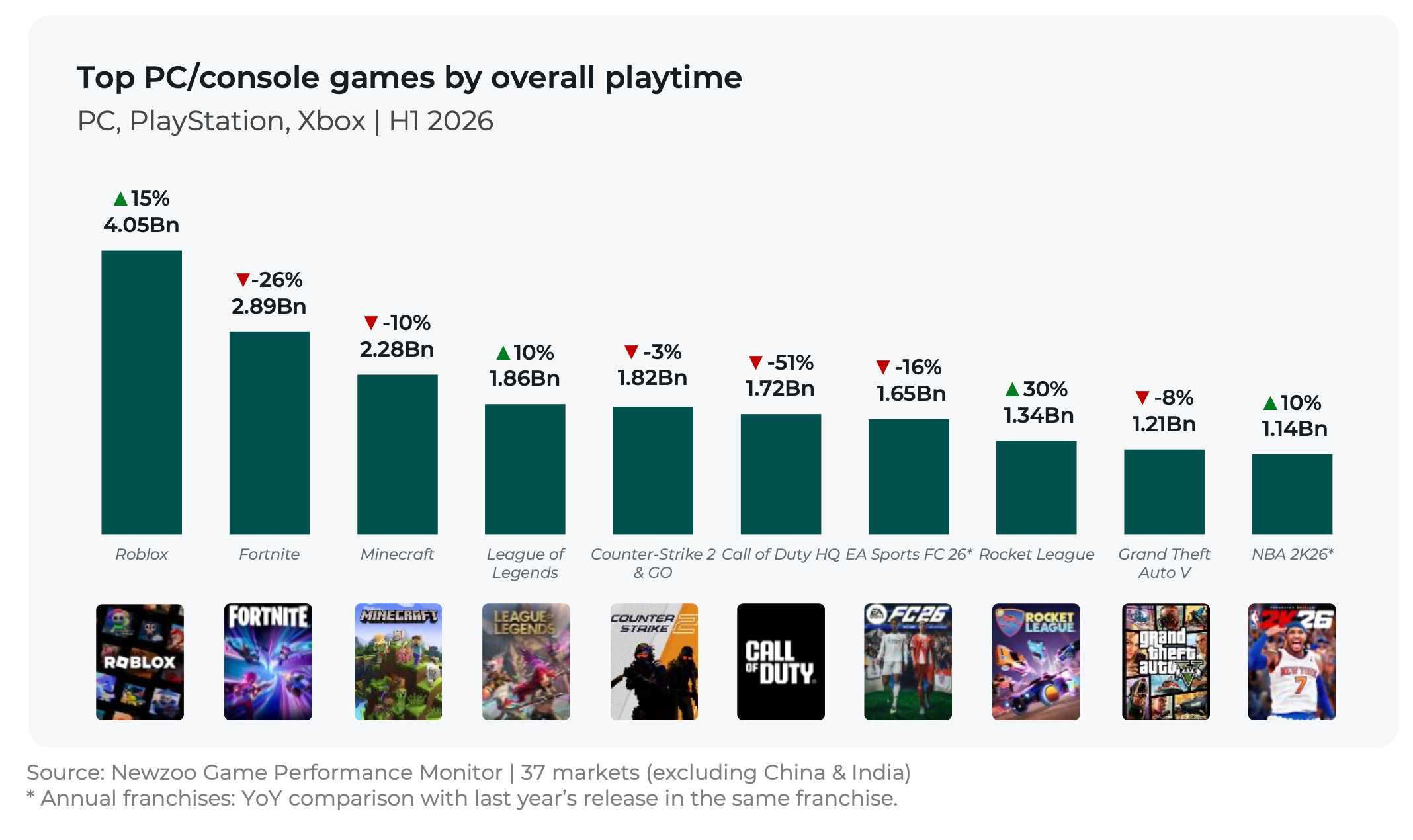
Roblox was the most-played game on PC and console by hours in H1’26. Players spent 4.05 billion hours in it (+15% YoY). Fortnite (2.89 billion hours, -26% YoY) and Minecraft (2.28 billion hours, -10% YoY) follow. And that is despite most of Roblox’s audience playing on mobile.
-
In 2025, Roblox accounted for 7.9% of all time spent playing on PC, PlayStation, and Xbox (according to Newzoo).
-
In the top 10, Call of Duty HQ declined the most (-51% YoY).
-
Fortnite has 39% more MAU than Roblox on PC and console (37.5 million vs. 27 million). Roblox players, however, spend an average of 138.5 minutes a day in the game. Fortnite players spend 98.4 minutes, and Minecraft players 127.8 minutes.
-
According to GEEIQ, ~14 million people play Roblox concurrently on average, across ~6.7 million games. About 7 million of those players are in the top 50 games. That means ~52% of players are concentrated in 0.0007% of games.
-
In 2025, Steal a Brainrot and Grow a Garden drew more than 105 billion visits between them. Amid their rivalry, Roblox’s peak concurrent users reached 47.3 million in August 2025, beating Steam’s record (41.2 million).
-
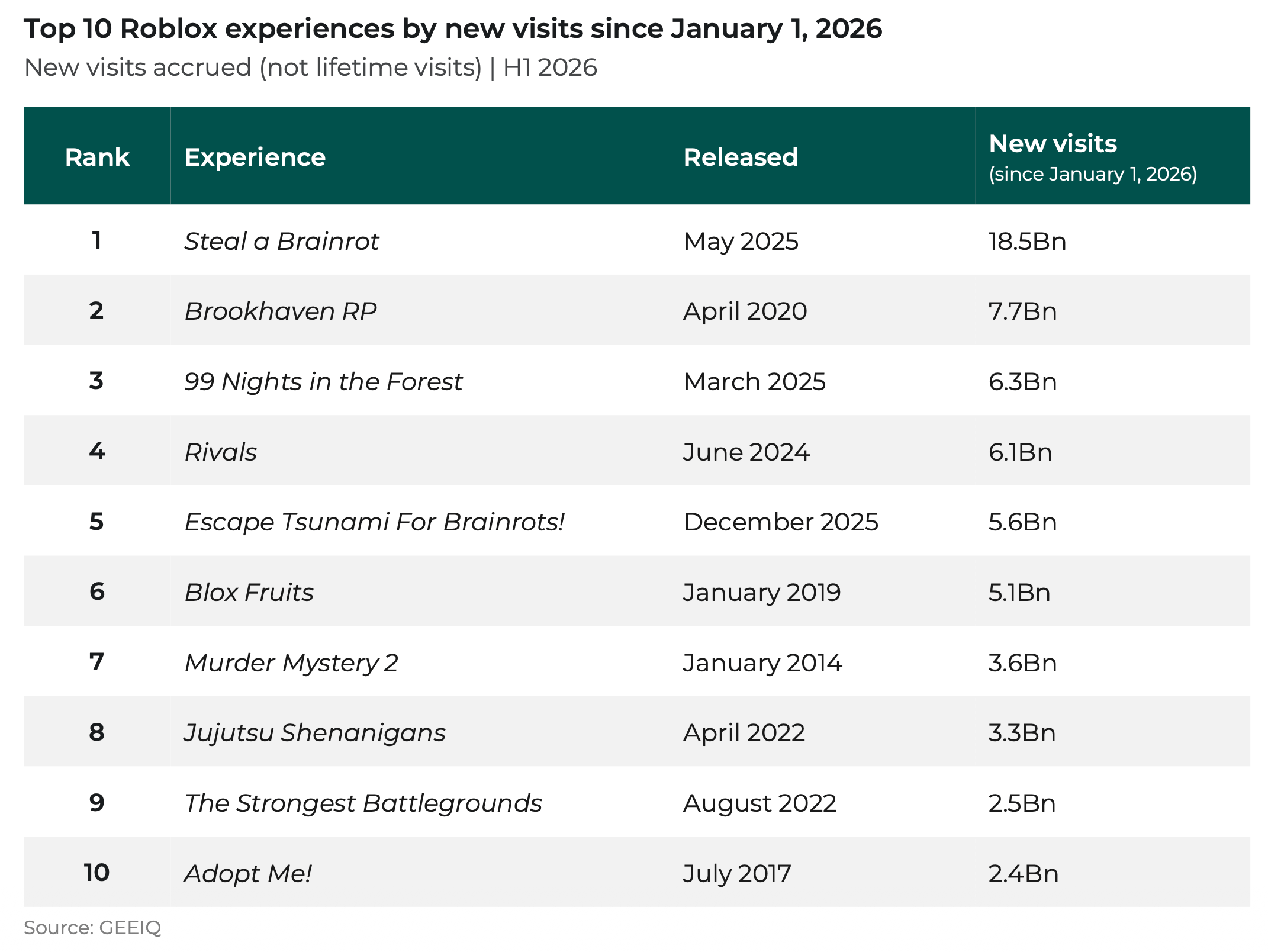
The H1’26 Roblox chart by new visits is mostly long-running projects. Steal a Brainrot leads with 18.5 billion visits, followed by Brookhaven RP (7.7 billion) and 99 Nights in the Forest (6.3 billion). Only three games in the top 10 launched in 2025, and Murder Mystery 2 has been on the platform since 2014.
❗️The situation already changed in Q3’26. According to Aream & Co., Steal an Egg had the most visits (6 billion), while Steal a Brainrot dropped to fifth place (3 billion).
-
Roblox developers copy trends very quickly. Citing Kotaku and RoWatcher, Newzoo writes that MECCHA CHAMELEON launched on Steam in June 2026 and peaked at more than 340,000 concurrent players. Within about three weeks, 26 clones appeared on Roblox. By early July, their combined peak CCU exceeded the original’s.
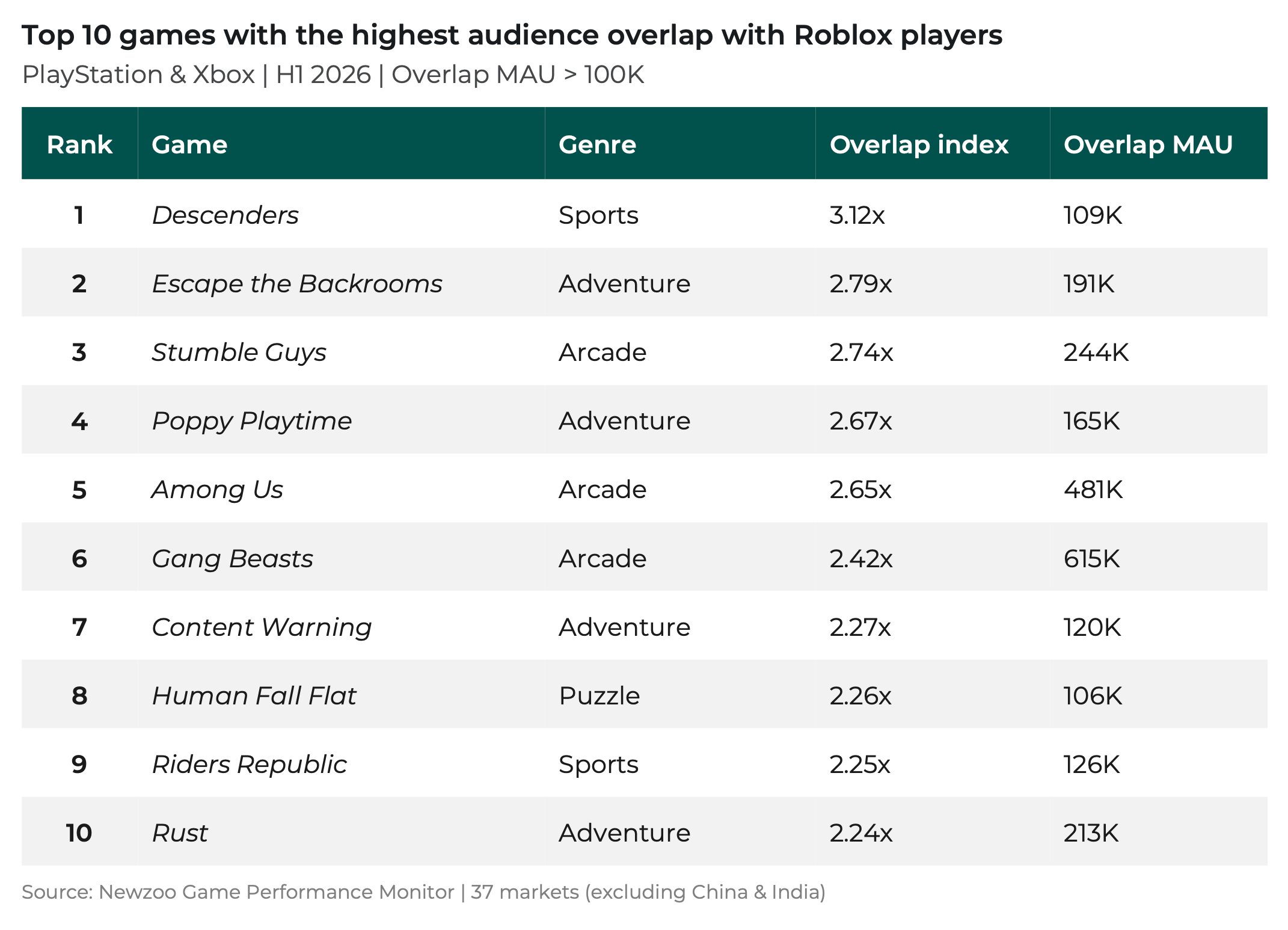
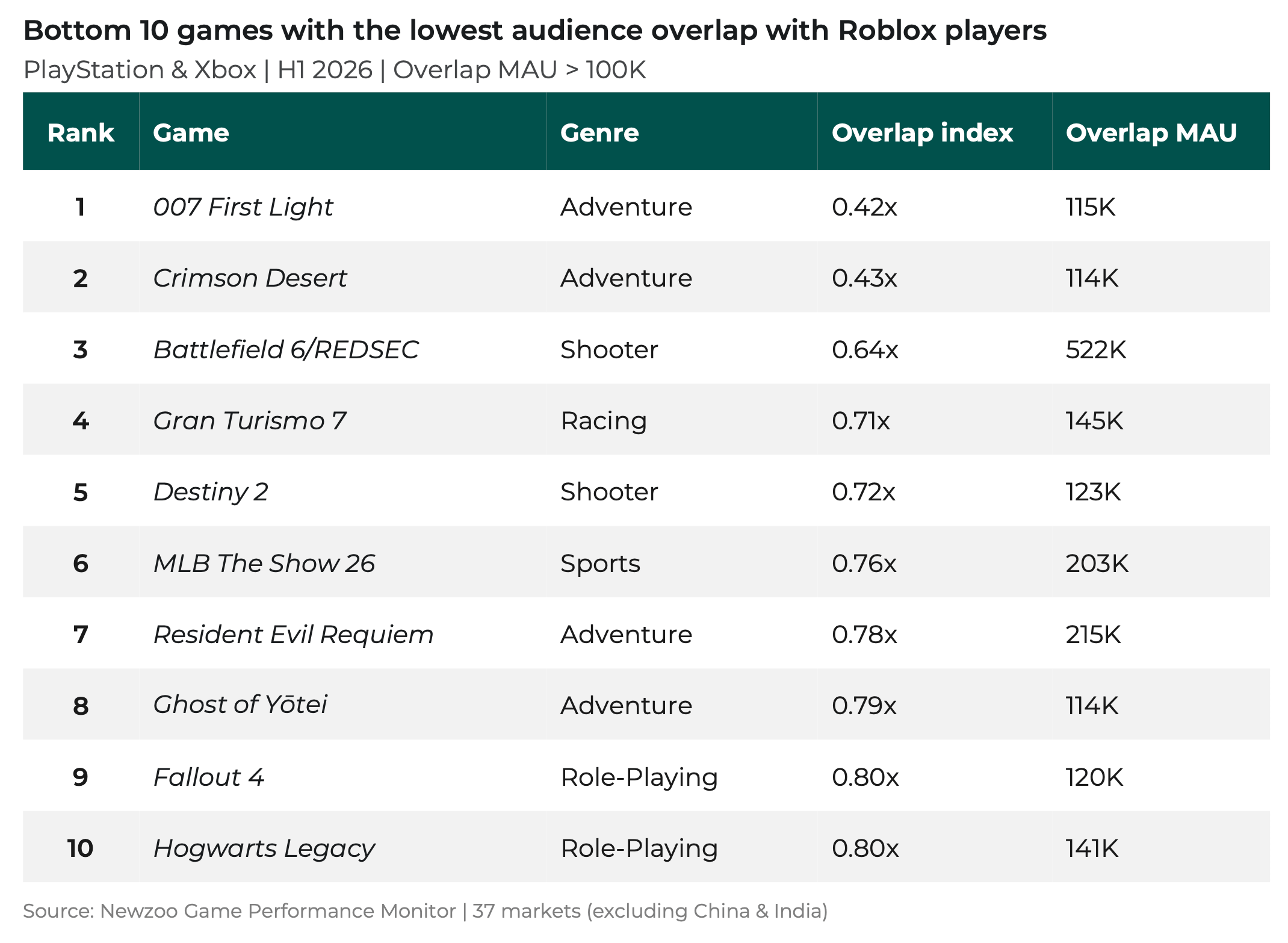
The overlap index shows how much more often Roblox players appear in a game’s audience compared with the console average. The data covers PlayStation and Xbox only; the sample includes games where Roblox players account for more than 100,000 MAU.
-
Roblox players are most overrepresented in Descenders (3.12x), Escape the Backrooms (2.79x), and Stumble Guys (2.74x). The list is mostly arcade, co-op, and survival horror games.
-
Roblox players are least present in 007 First Light (0.42x), Crimson Desert (0.43x), and Battlefield 6/REDSEC (0.64x). Almost the entire list is made up of big premium AAA titles.
-
Newzoo believes, though, that Roblox players aren’t against shooters. The stylized PvP shooter Rivals is #4 in the Roblox chart by visits. Realistic shooters are almost absent from the platform because the Roblox engine is poorly suited to that kind of graphics and mechanics. Analysts call it more a supply problem than a demand one.
-
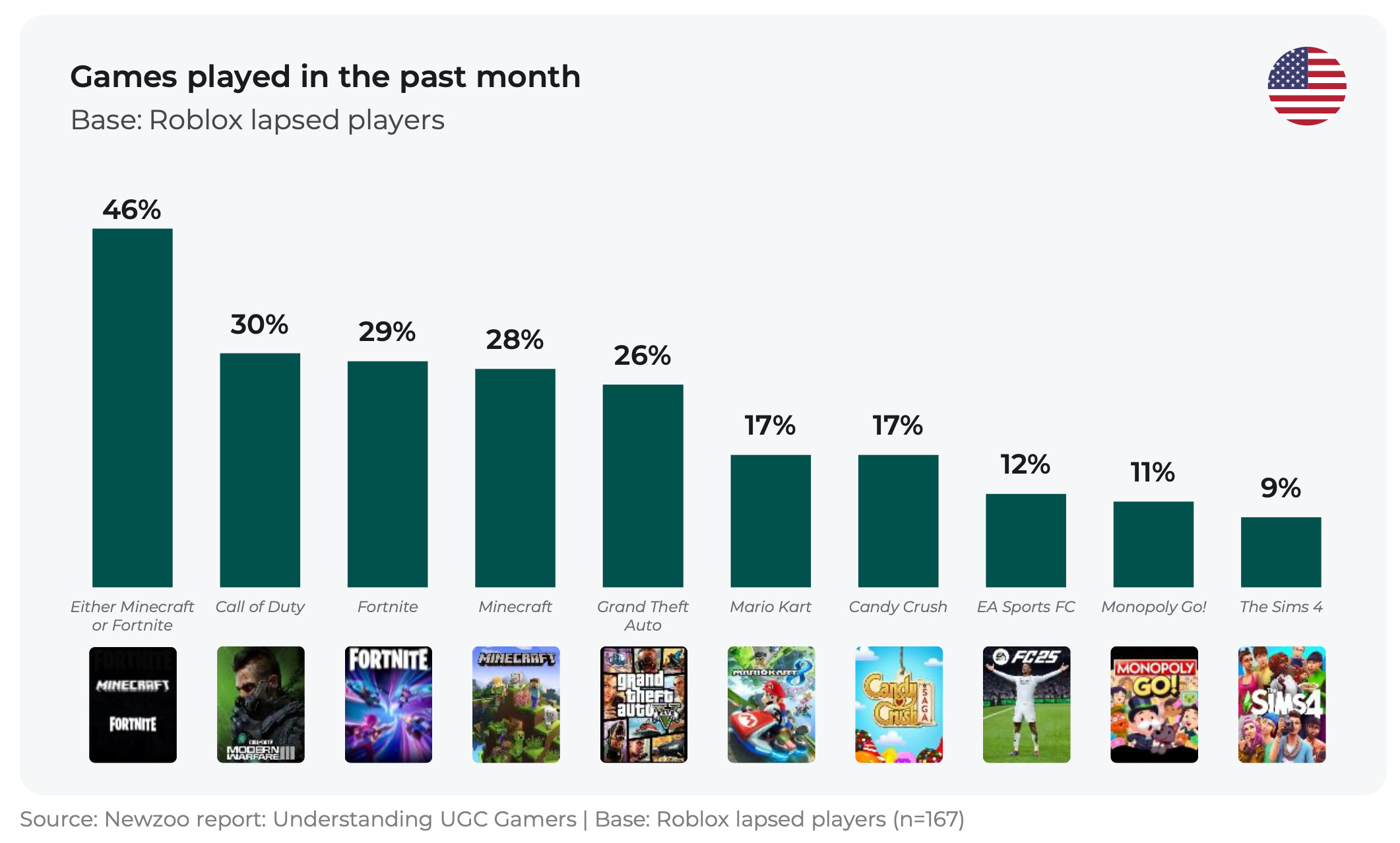
Newzoo surveyed 167 Americans aged 5-35 who stopped playing Roblox. 46% of them now play Fortnite or Minecraft (29% and 28% individually), and 26% play GTA.
-
30% of lapsed players, however, moved to Call of Duty. That is exactly the kind of realistic shooter that active Roblox players play less than average. Newzoo links this to Roblox players missing action the most, and to Warzone being free, like Roblox itself.
❗️I don’t think a sample of 167 people is enough to draw conclusions.
Data from Newzoo’s global survey: ~73,500 players aged 10-65. Roblox players are those who played it in the past six months.
❗️Newzoo doesn’t survey children under 10, so Roblox’s actual audience is younger than this data shows.
-
Roblox is trying to retain players aged 16 and older. In April 2026, the company announced Roblox Reality to enable more realistic projects on the platform.
-
Since January 2026, the platform has also run age verification worldwide, sorting users into six age groups. Since May 2026, players have had to verify their age to access Social Hangouts and the free choice of games (full functionality unlocks at 16). This is what Roblox links to the DAU decline mentioned above.
-
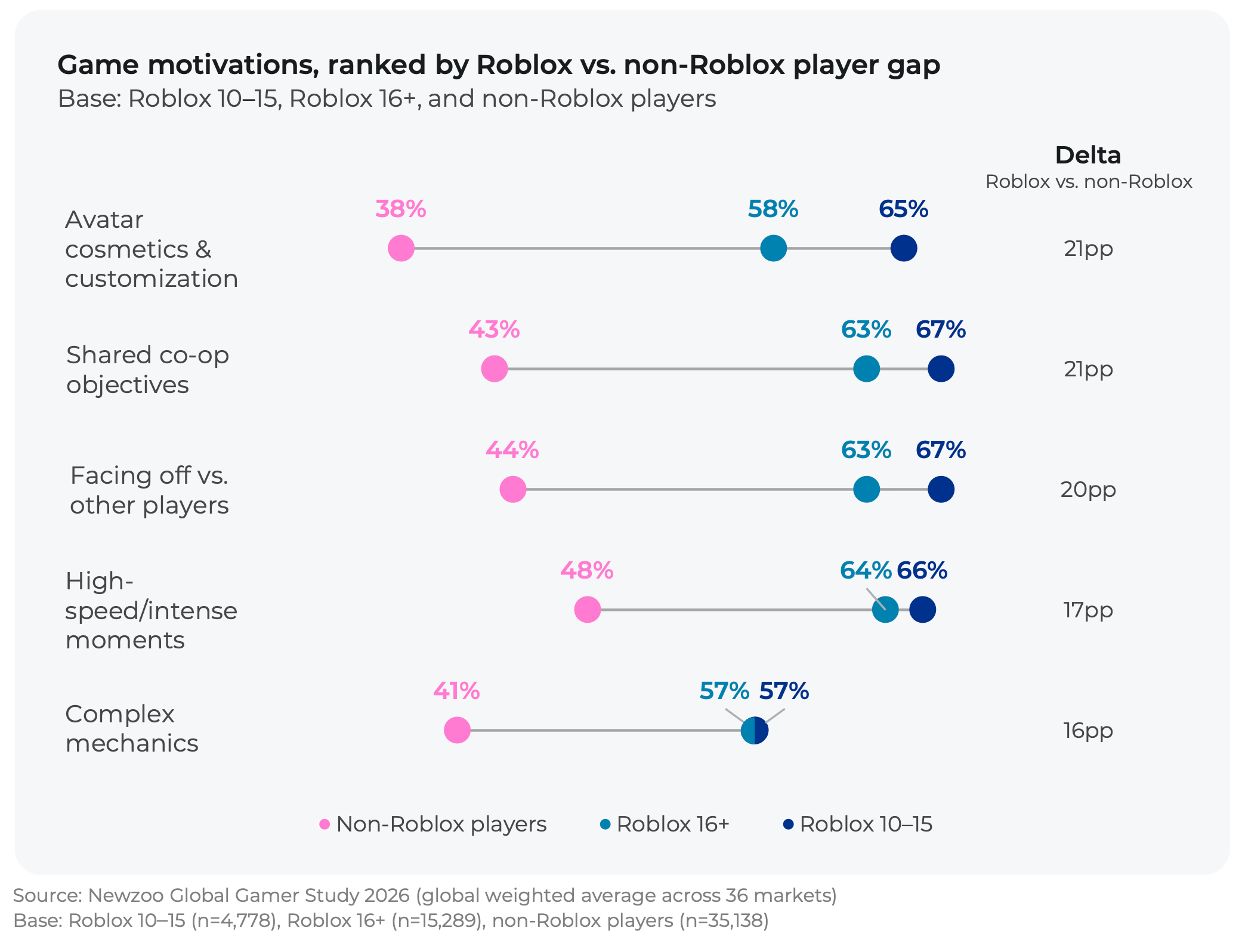
Roblox players play for cosmetics and avatar customization more often than other gamers: 65% in the 10-15 group, 58% among players 16+, and only 38% among those who don’t play Roblox.
-
Shared co-op objectives, competing against other players, and high-intensity moments also show a wide gap. The gap is larger among the younger group, but also large among players 16+.
-
Complex mechanics matter to 57% of Roblox players in both age groups and to 41% of other gamers. Newzoo believes this may be exactly what players can’t always find in a game.
-
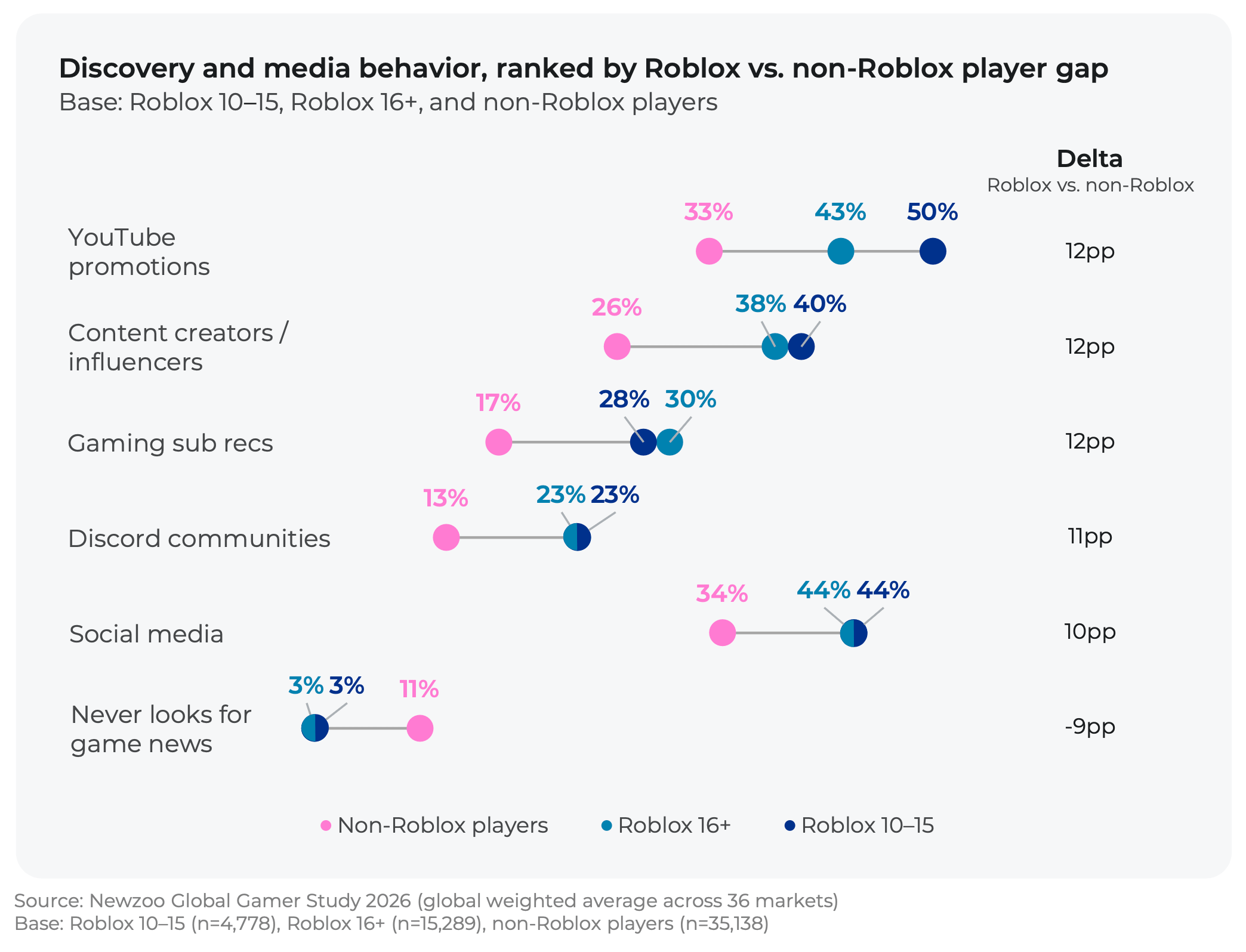
Roblox players discover new games through YouTube (50% in the 10-15 group, 43% among 16+, 33% for others), influencers, and Discord more often than the average gamer who doesn’t play Roblox.
-
Only 3% of Roblox players say they don’t follow gaming news at all. Among gamers who don’t play Roblox, that number is 11%.
-
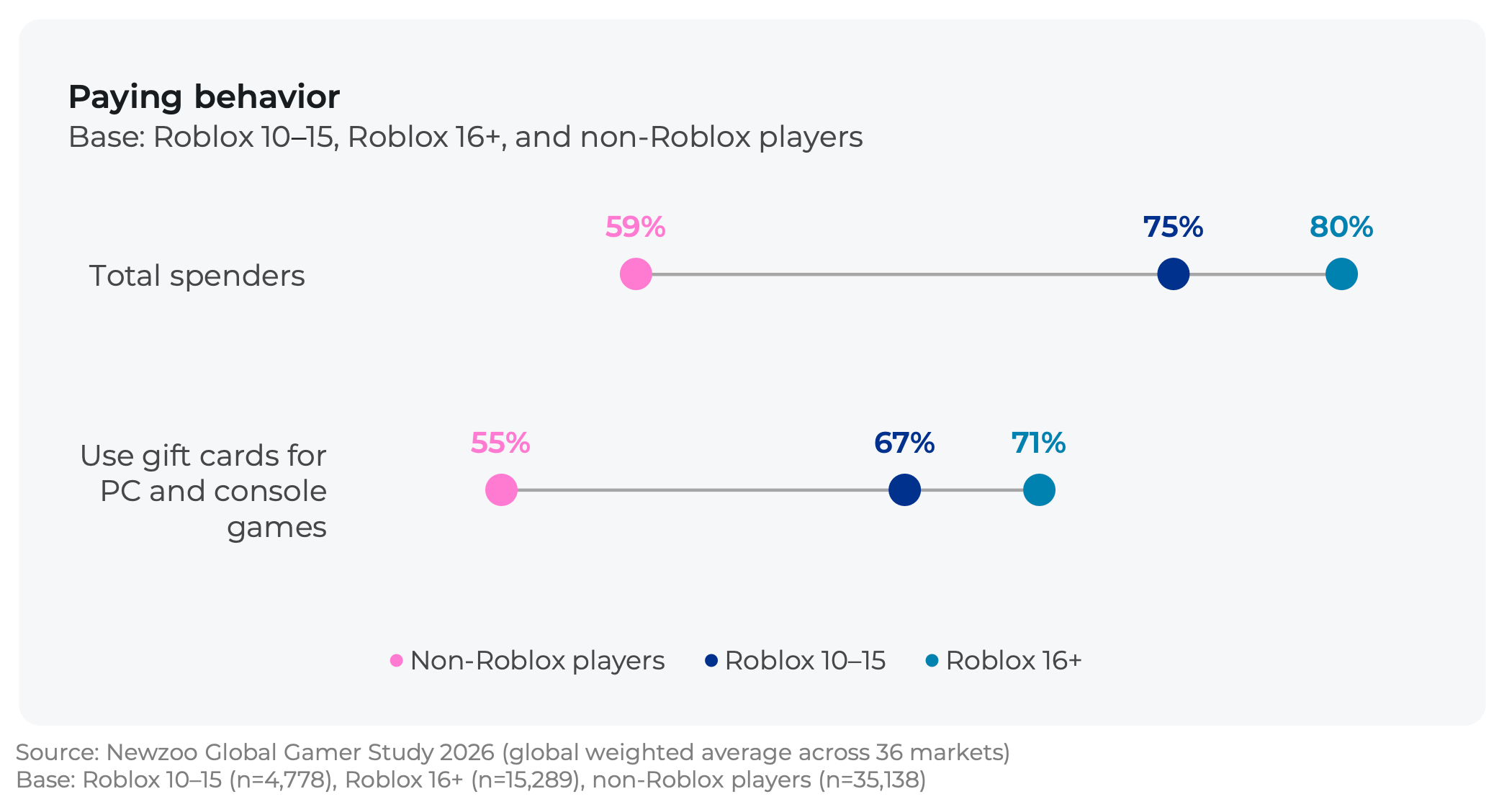
75% of Roblox players aged 10-15 and 80% of players 16+ spend money in games. Among those who don’t play Roblox, 59% are spenders. This covers all games they played in the past six months, not just Roblox.
-
Roblox players also pay with gift cards more often in PC and console games: 67% in the 10-15 group and 71% among 16+, vs. 55% for others.
-
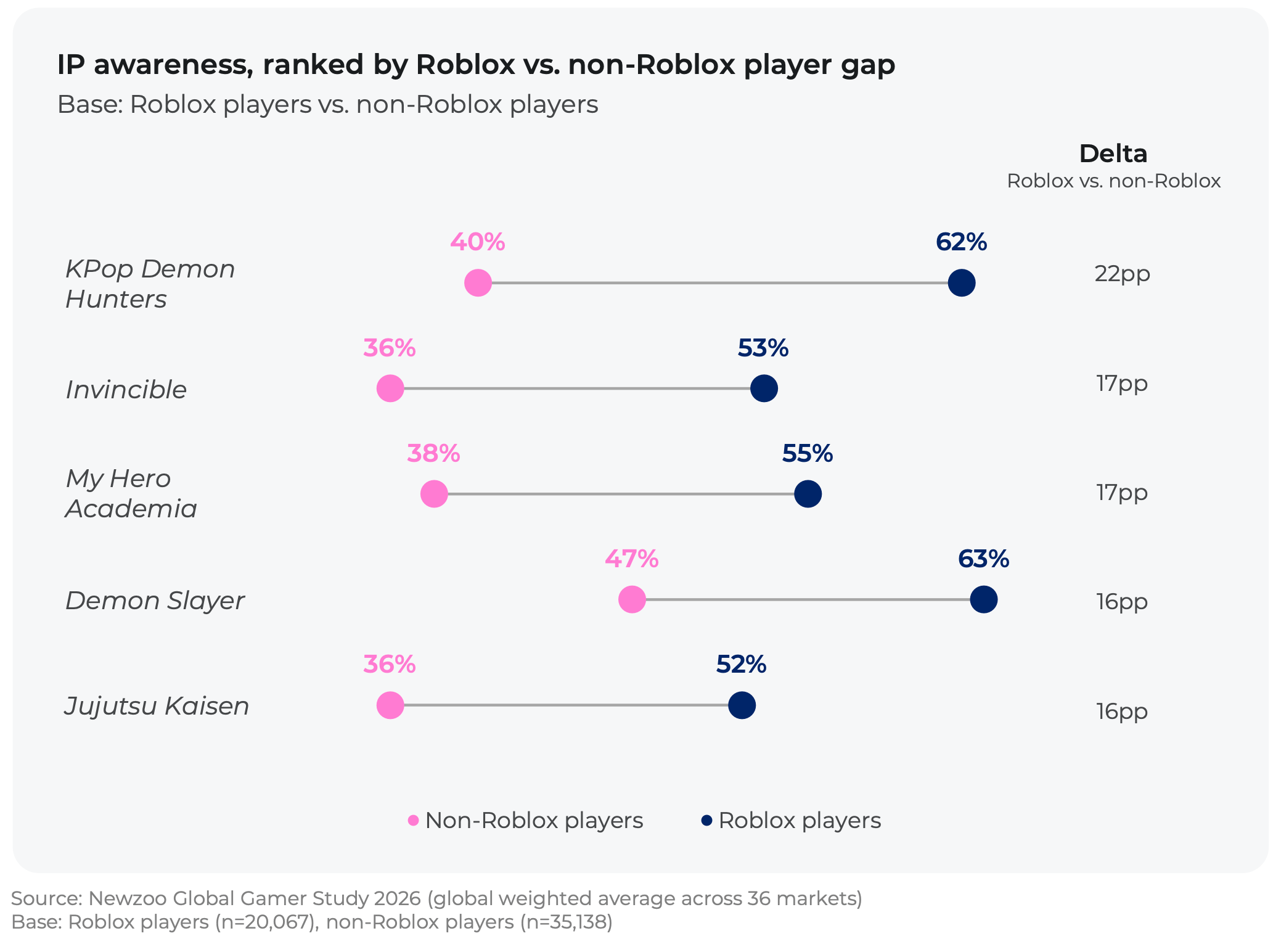
The Roblox audience is more familiar with popular anime and animation. 62% know KPop Demon Hunters (vs. 40% of gamers who don’t play Roblox), 55% know My Hero Academia (38% among non-players), and 53% know Invincible (vs. 36%).
-
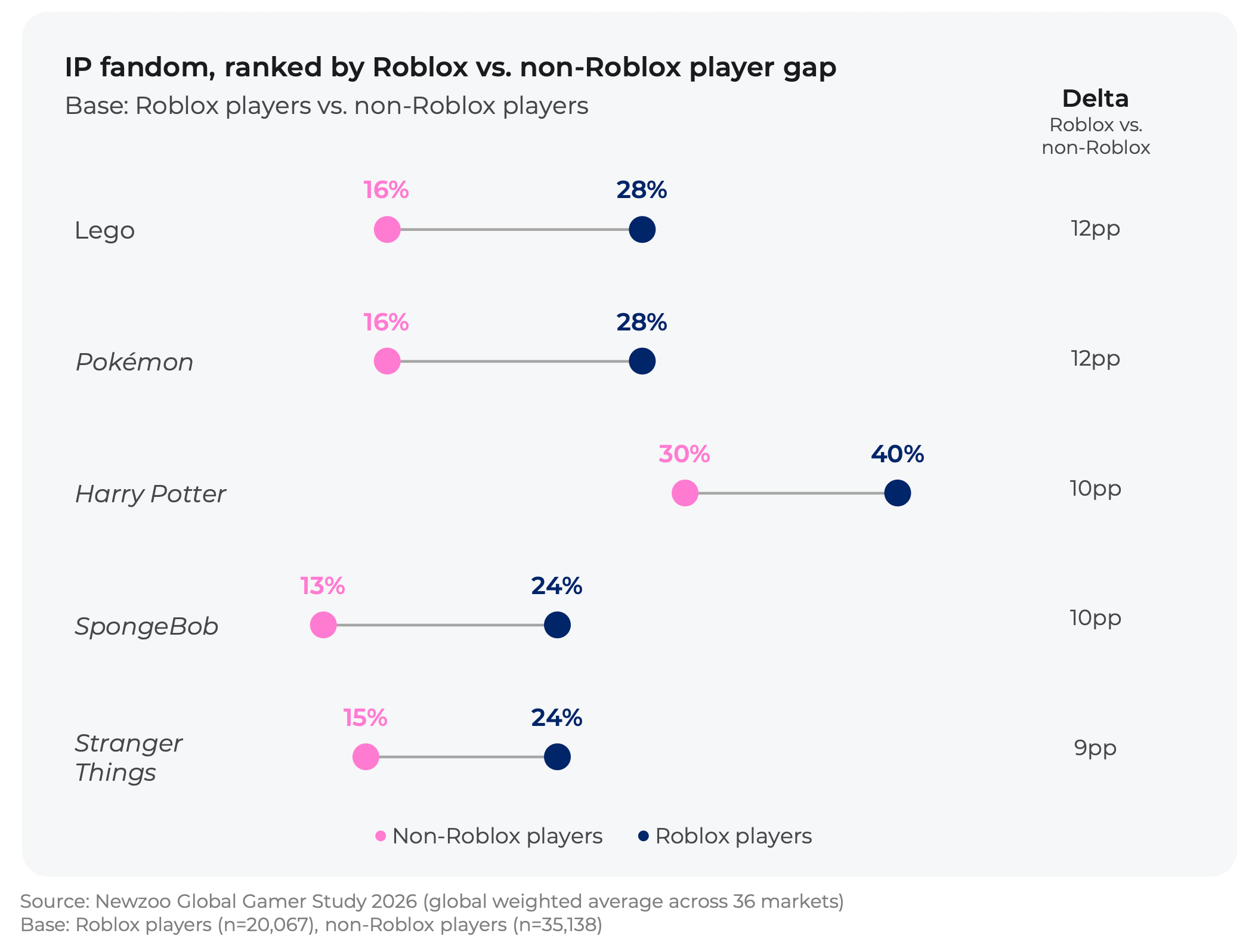
28% of Roblox players call themselves LEGO fans (vs. 16% of gamers who don’t play Roblox). Pokémon is a favorite for 28% of surveyed Roblox players (vs. 16% of gamers who don’t play Roblox), and Harry Potter for 40% (vs. 30%).
❗️I’ve heard the opinion that younger audiences don’t like “millennial” IPs like Harry Potter. The survey shows the opposite.
-
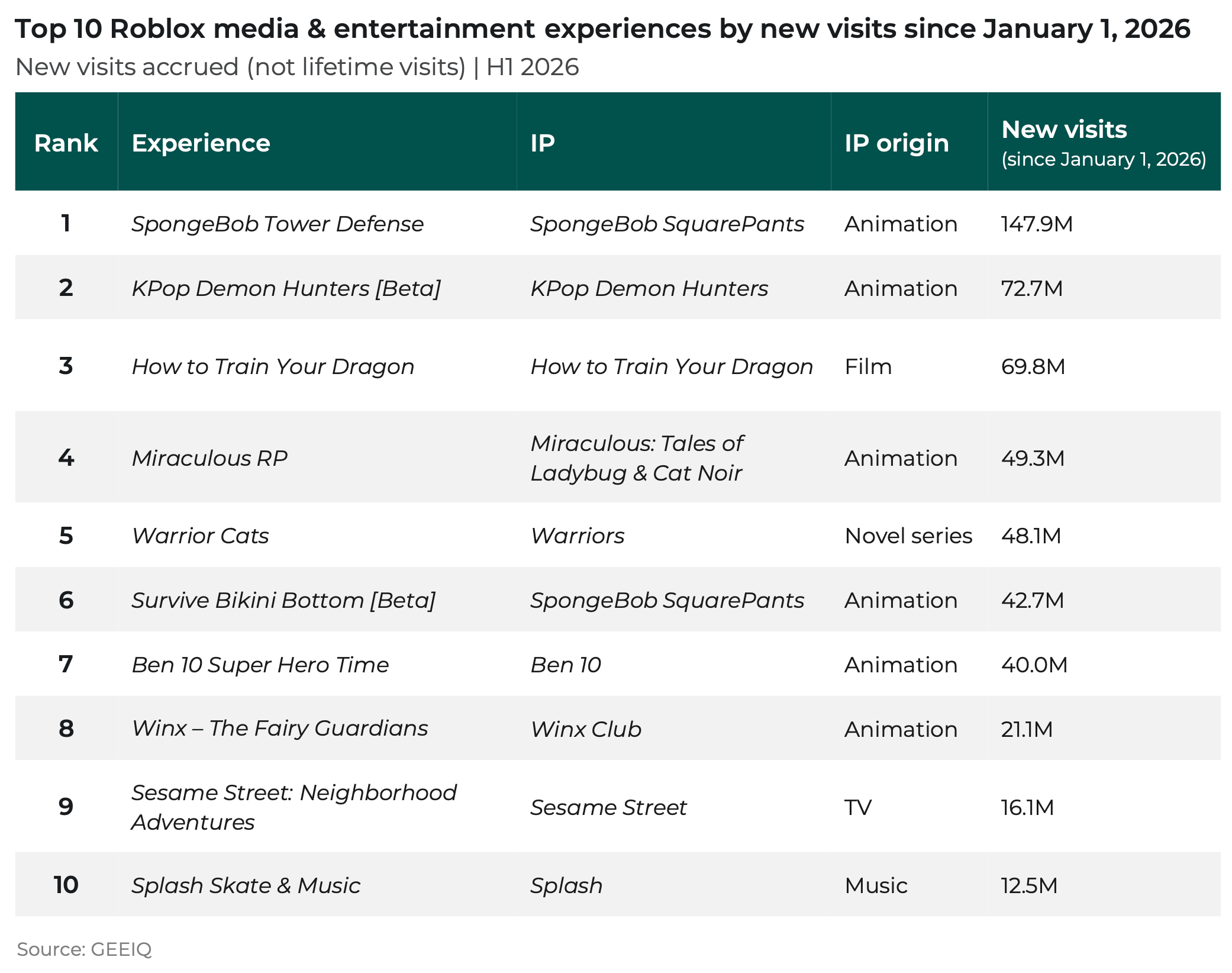
According to GEEIQ, among official IP-based games on Roblox, SpongeBob Tower Defense (147.9 million), KPop Demon Hunters (72.7 million), and How to Train Your Dragon (69.8 million) drew the most new visits in H1’26. Almost the entire top 10 is anime and kids’ franchises. For comparison, Steal a Brainrot had 18.5 billion visits over the same period.
-
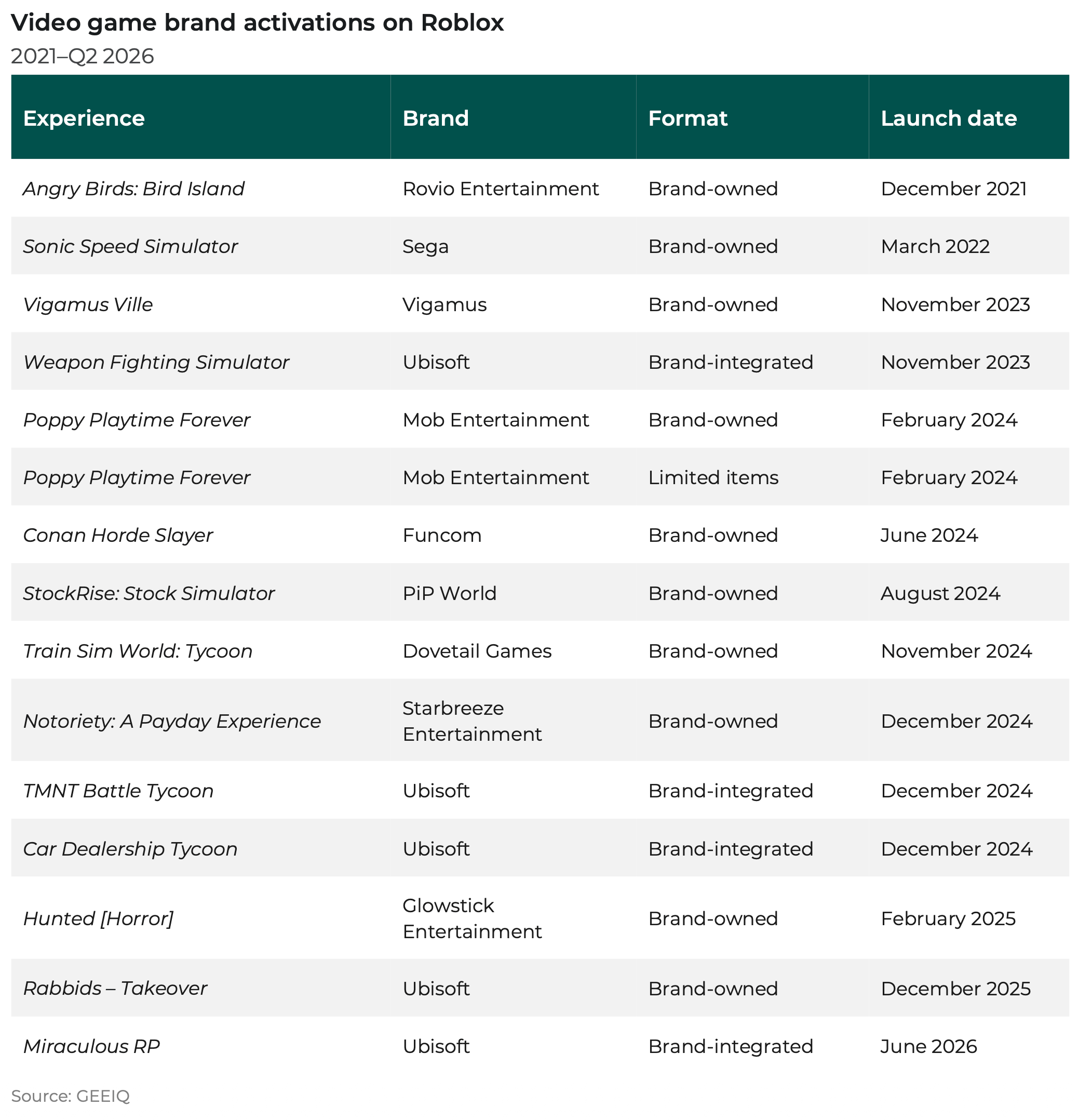
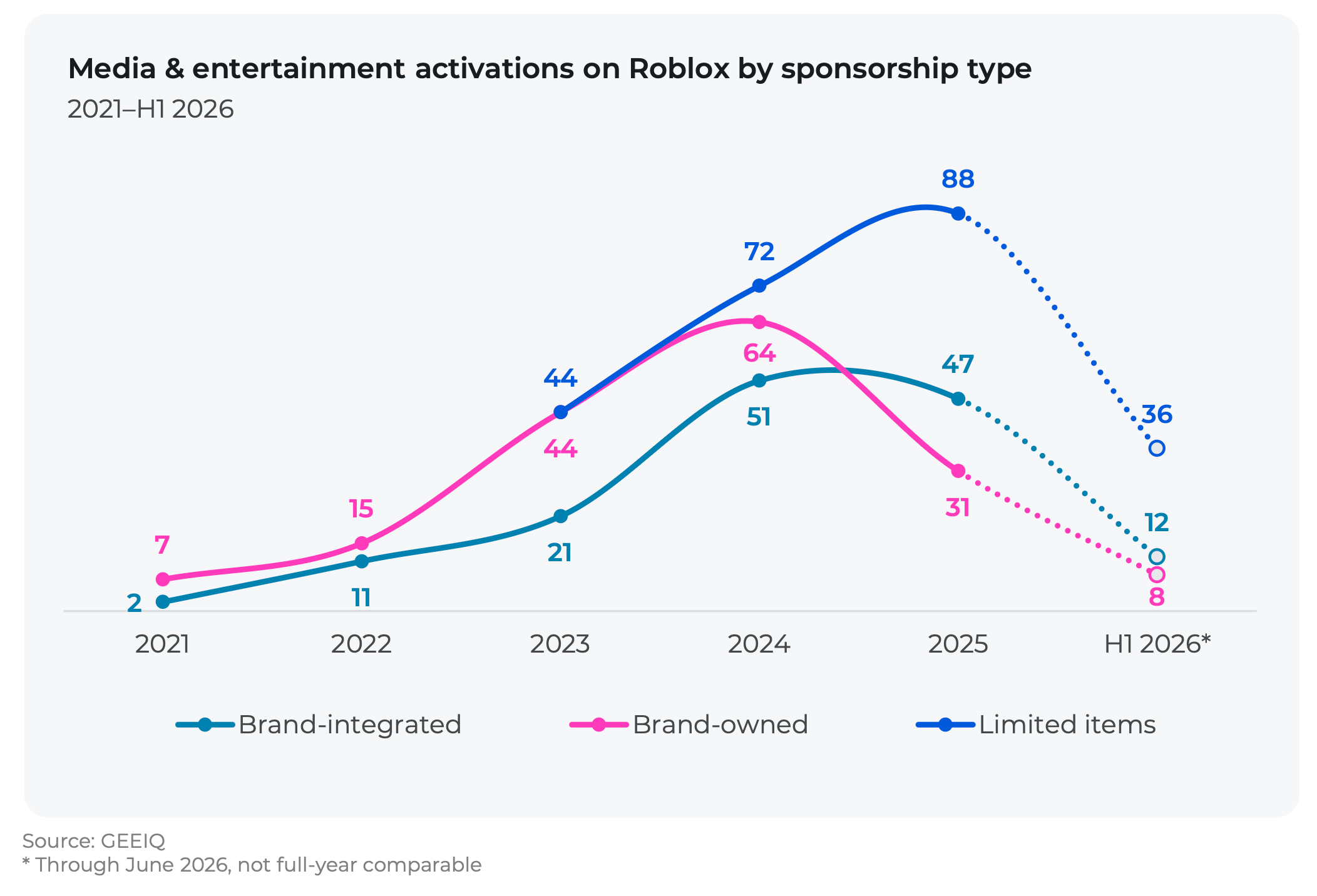
Since 2021, GEEIQ has counted 553 brand activations by media and entertainment companies on Roblox. Only 15 of them came from game companies (10 brands).
-
Ubisoft accounts for five of the 15 activations, and four of them are integrations into already popular Roblox games. The Brawlhalla integration into Weapon Fighting Simulator, for example, generated more than 1 billion brand engagements and 128 million minutes of gameplay. Ubisoft’s own game, Rabbids – Takeover, gets much less traffic.
Managing a distributed dev team shouldn’t mean managing a compliance headache. Mellow’s Contractor Management gives you ready-made contracts, IP compliance, and automated payouts for contractors in 150+ countries — for $35/month per contractor.
-
Sega took a different route. Sonic Speed Simulator launched in March 2022 and drew 70 million plays and 275,000 CCU in its first week, and 500 million visits in its first four months. In 2024, it became the first branded game on Roblox to pass 1 billion visits. Sega has been running it as a live service for four years.
-
Sonic Speed Simulator’s audience is noticeably older and more male than the Roblox average: 78% of players are male, and 49% are aged 25-29.
-
The remaining eight game companies each built one game, barely supported it, and never came close to Sega’s or Ubisoft’s scale.
-
Of all 553 activations, 69% are integrations into existing games rather than brands developing their own projects. The share of brands’ own games fell from 78% in 2021 to 15-20% now. The most popular format today is limited cosmetic items inside other games. Before mid-2023, this format didn’t exist.
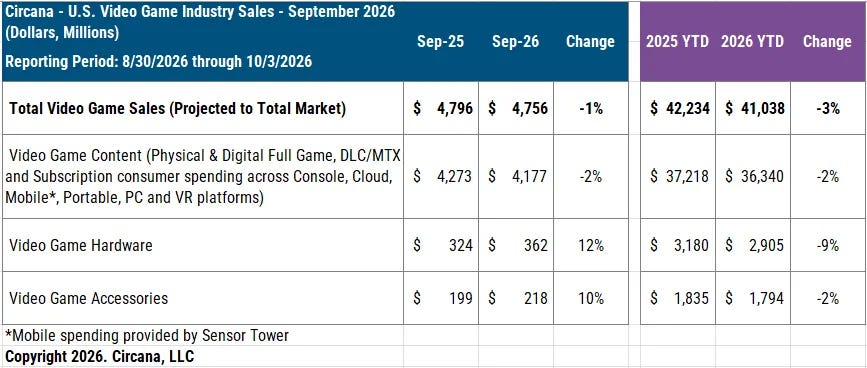
Circana data on the U.S. market. Mobile figures provided by Sensor Tower.
-
In September 2026, Americans spent $4.756 billion on games (-1% YoY), down from $4.796 billion a year earlier.
-
Americans spent $4.177 billion on content (-2% YoY).

From concept art to launch-day marketing, most game studios rely on contractors in multiple countries. Mellow makes it simple to hire, pay, and stay compliant with talent in 150+ countries — no legal entity required.
-
Mobile game spending fell 14% YoY in September 2026 to $1.8 billion, according to Sensor Tower. Given the segment’s size, PC and console game spending grew when you exclude mobile.
❗️I’ll note again that part of mobile revenue is missed because of D2C’s growing popularity. The real picture for mobile content is likely better than these numbers show.
-
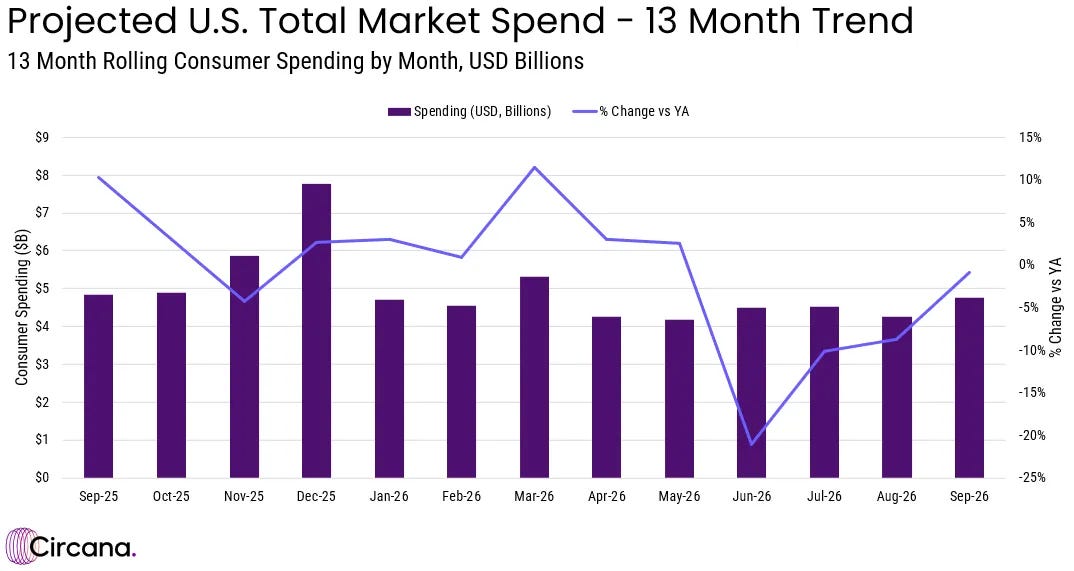
The U.S. market has declined for four months in a row, but the September drop was minimal. Over the first nine months of 2026, Americans spent $41.038 billion on games (-3% YoY). After August, the gap remained at 3%.
-
Over nine months, Americans spent $36.34 billion on game content (-2% YoY).
-
New physical game unit sales grew 17% YoY in September to 2.7 million. Over the nine months, 19.4 million physical copies have been sold (+2% YoY).
-
Nintendo physical games sales rose 40% YoY, while PlayStation physical games sales rose 4%. Xbox physical games sales, however, fell 32%.
-
In September, just over 100,000 physical Xbox games sold in the U.S. In September 2025, it was just over 160,000. In the first nine months of 2026, Xbox physical sales have not yet reached 900,000. Xbox’s share of physical unit sales was 4% in September and just under 5% year-to-date.
-
The situation with physical Xbox games may change in October, as Microsoft launches its Xbox Disc-to-Digital program.
-
In September, Americans spent $362 million on gaming hardware (+12% YoY). Over nine months, hardware purchases totaled $2.905 billion (-9% YoY). The gap narrowed slightly from 11% in August.
-
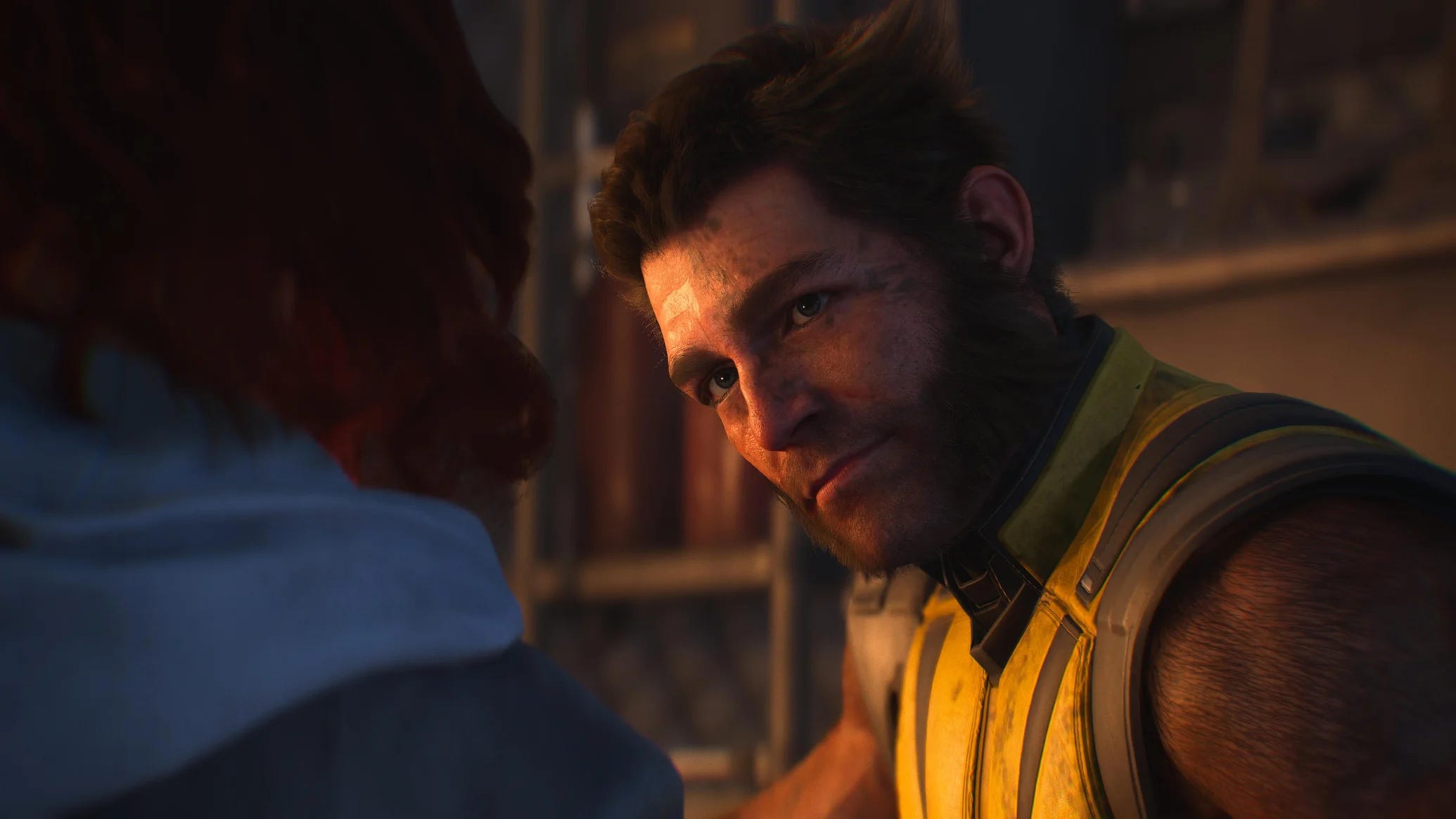
PlayStation 5 dollar sales grew 43% YoY, and unit sales rose 22%. PlayStation 5 led the month in both units and revenue. Circana links PlayStation’s growth to the release of Marvel’s Wolverine.
-
Sony’s dollar share of the hardware market in September 2026 was its highest since May 2025.
-
By units, console sales fell 3% YoY in September. Nintendo Switch 2 unit sales declined 14%, and Xbox Series 27%. In dollar terms, Switch 2 sales fell 12%, and Xbox Series sales fell 2%.
-
Xbox hit a new low in console unit sales: the worst September on record. The previous record low was set a year earlier.
-
The average price of a PlayStation 5 in the U.S. in September was $646 (+17% YoY, up from $551). An Xbox Series sold for $663 (+33% YoY, up from $497), and a Switch 2 sold for $498 (+2% YoY, up from $486).
-
Nintendo raised Switch 2 prices, but the console’s average price barely changed. Piscatella explains that in September 2025, Nintendo sold the Switch 2 bundled with Mario Kart World, while now it sells separately. In other words, buyers get less for the same money.
-
Accessories spending grew 10% YoY in September to $218 million. Gamepad spending grew 9%. Over nine months, Americans spent $1.794 billion on accessories (-2% YoY).
-
The best-selling accessory in both units and dollars was the limited-edition Wolverine DualSense for PS5 (Battle Yellow).
❗️Circana uses a methodology that combines projected estimates with actual sales. Mobile games and DLC are not included in the charts.
-
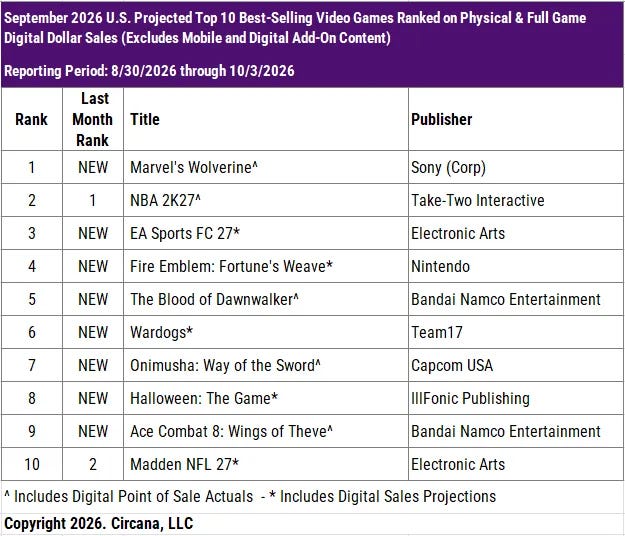
Marvel’s Wolverine was the best-selling game of September in the U.S. Right after launch, it became the 11th best-selling game of 2026.
-
Marvel’s Wolverine had the best launch month in dollar sales for a Sony-published game since Helldivers II (February 2024).
❗️GameDiscoverCo estimates that Marvel’s Wolverine sold 1.89 million copies on PlayStation in September.
-
NBA 2K27 was second in September, and EA Sports FC 27 third. Eight new releases made the top 10 in September.
-
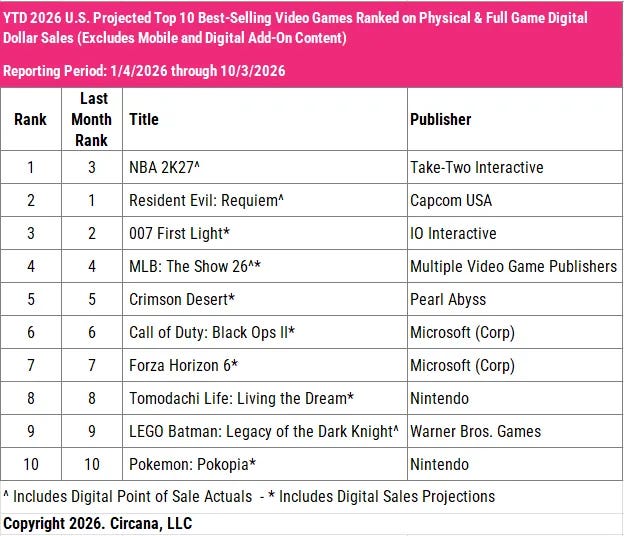
Madden NFL 27 dropped from second to 10th place. Piscatella explains that Circana’s rankings split Madden NFL 27 sales across three titles: the game itself, the EA Sports Kickoff Bundle, and the EA Sports MVP Bundle. Circana doesn’t combine them, so the game isn’t in the 2026 year-to-date top 10.
-
In the first nine months of 2026, NBA 2K27, Resident Evil: Requiem, and 007 First Light led the charts. NBA 2K27 overtook Resident Evil: Requiem to take the top spot. The rest of the chart was stable.
-
On mobile (Sensor Tower data), MONOPOLY GO! remained the top U.S. game by revenue. Roblox climbed from 10th to second, and Royal Match dropped to third.
-
Sensor Tower notes that Roblox’s revenue grew thanks to The Hunt: Roblox 20, an event for the platform’s anniversary. Otherwise, the top 10 saw no major changes.
InvestGame uses its own data on private rounds (seed to growth). The data excludes M&A, UA financing, debt issuance, and public listings.
-
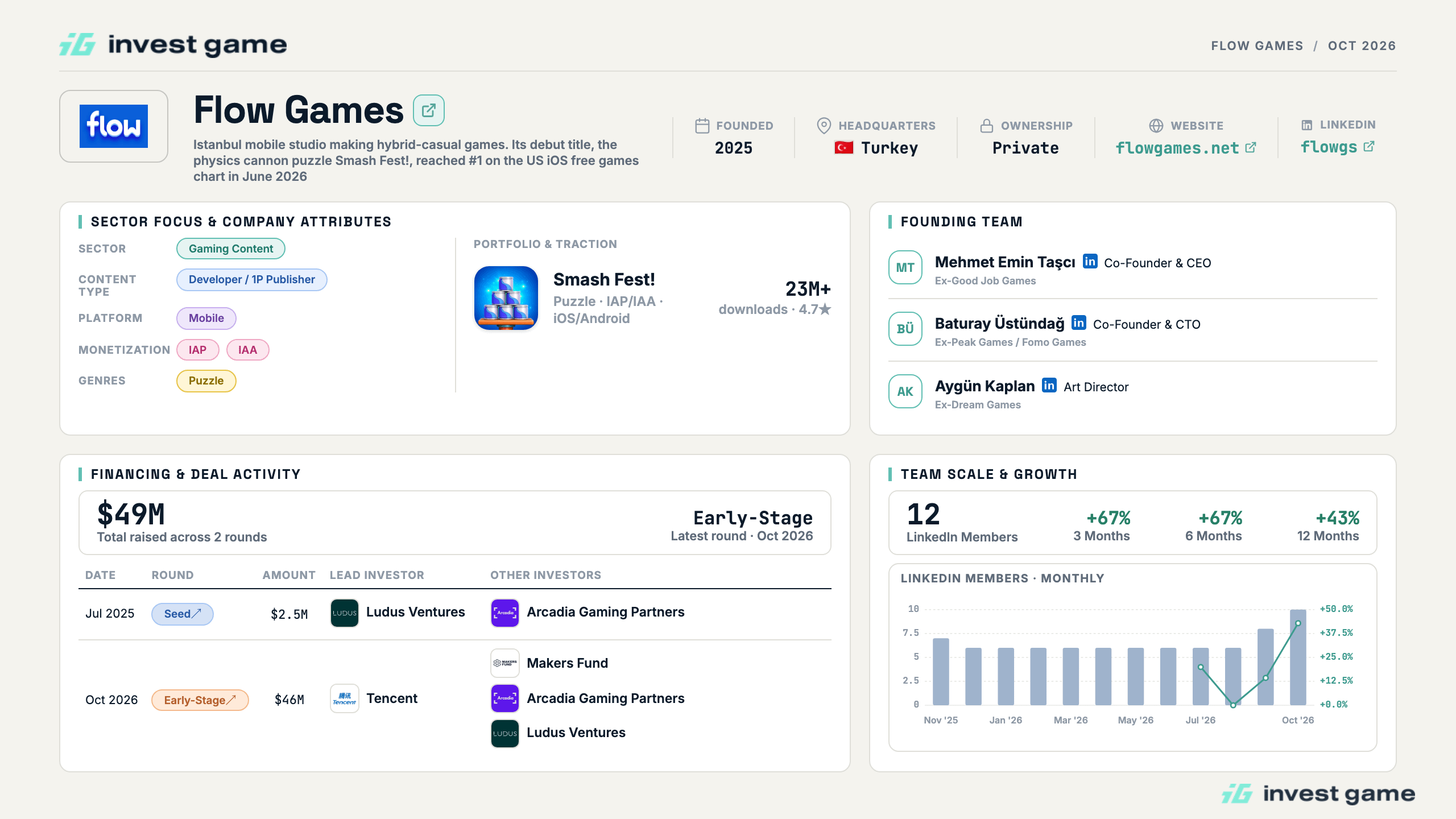
Turkish mobile studio Flow Games raised $46 million. Tencent led the round and invested about 3/4 of the amount. Makers Fund, Arcadia Gaming Partners, and Ludus Ventures also participated.
-
This is the studio’s second round. In July 2025, Flow Games raised $2.5 million in a seed round from Ludus Ventures; to date, the company has raised ~$49 million. The money will go into Smash Fest!, the team, and new mobile games.
-
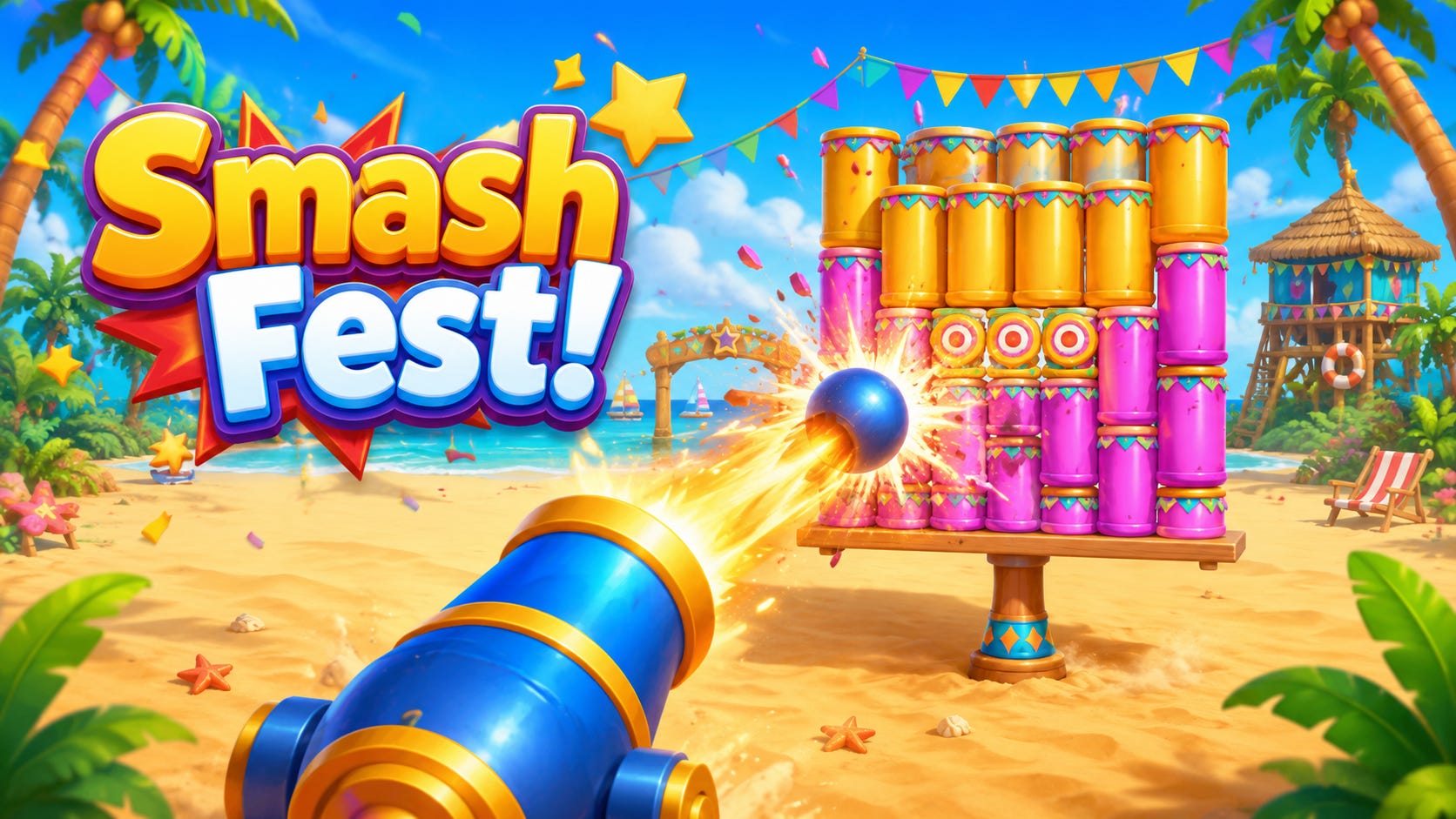
Flow Games has only one game so far: Smash Fest!. It is a physics puzzle in which players destroy structures with a cannon. In late June, a few weeks after its global launch, the game reached #1 among free games on the US App Store. It now has more than 23 million downloads.
A word from our sponsor

Game studios run on contractors — artists, composers, QA testers, translators — often spread across a dozen countries. That’s a lot of contracts, tax rules, and IP clauses to track. Mellow handles all of it: compliant contracts, automated payments, and IP protection built in, for contractors in 150+ countries.
-
According to AppMagic estimates, players have spent about $8.9 million on Smash Fest!. Most of the game’s money, though, comes from ads.
-
The gameplay was copied quickly. Since June, nearly 50 games with “smash” in their names have launched, according to AppMagic.
-
The studio’s founders come from Türkiye’s leading puzzle developers. CEO Mehmet Emin Taşcı worked at Good Job Games, CTO Baturay Üstündağ at Peak and Fomo Games, and art director Aygün Kaplan at Bigger Games and Dream Games.
-
Flow Games’ round is the third-largest among Turkish mobile studios since January 2025. Only Grand Games ($70 million) and Good Job Games ($60 million in a Series A) raised more.
-
This is already Tencent’s second investment in an Istanbul studio in three weeks. In late September, the company led a $25 million Series A in Circle Games, which also makes puzzle games.
-
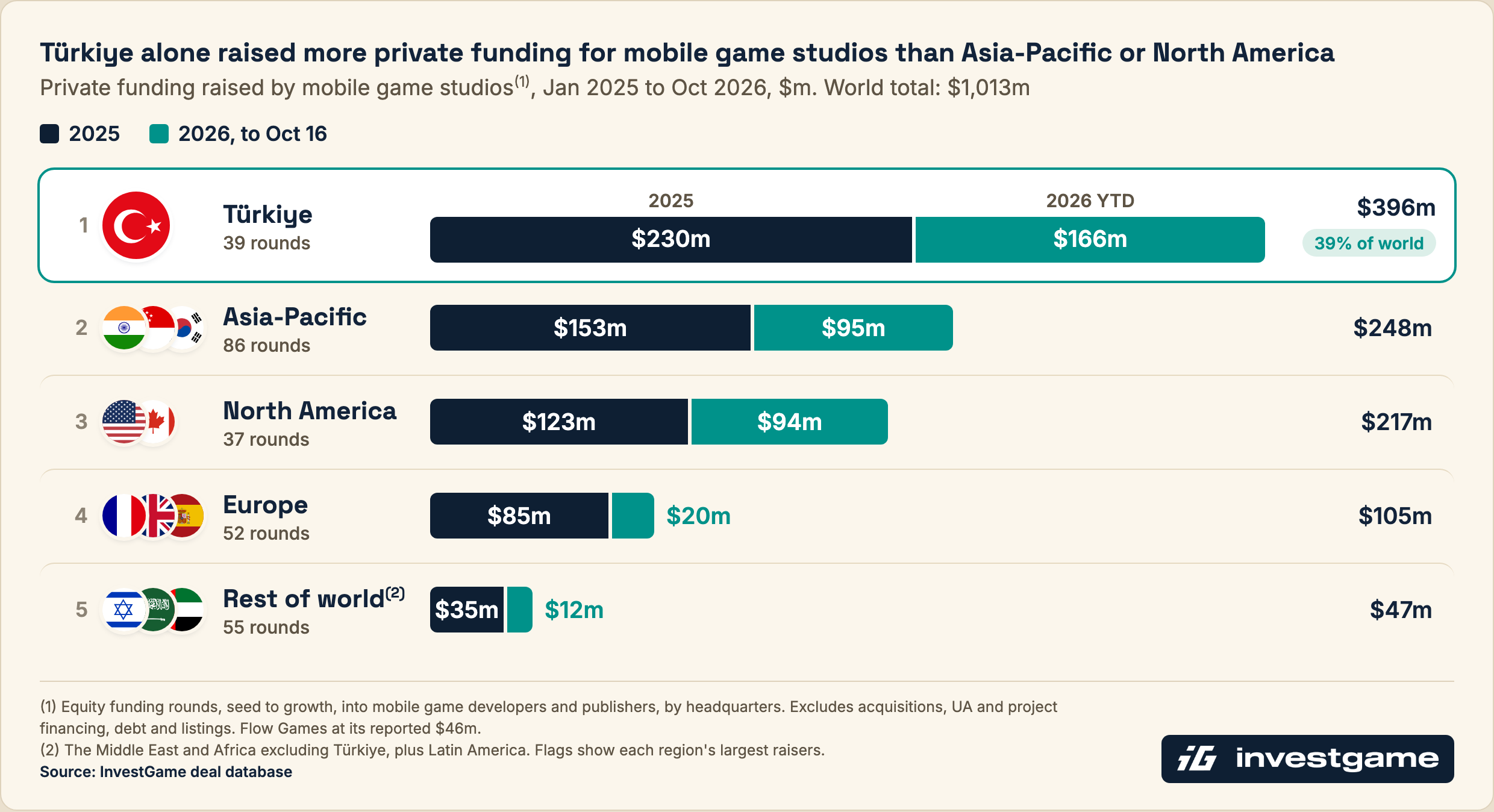
From January 2025 to mid-October 2026, Turkish mobile studios raised $396 million. That is 39% of all private investment in mobile game studios worldwide ($1.013 billion).
-
Turkish studios raised more than Asia-Pacific ($248 million) and North America ($217 million) combined. Türkiye had fewer rounds, though: 39 versus 86 in Asia-Pacific.
-
In 2025, Turkish studios raised $230 million, and in 2026 (through October 16), $166 million. According to InvestGame, Türkiye has led in private investment volume in mobile studios since 2025. Before that, the US took first place every year starting in 2020.
-
European mobile studios, by contrast, have raised only $20 million so far in 2026. In 2025, they raised $85 million.
❗️For context, according to AppMagic estimates, Turkish developers earned $2.76 billion in IAP revenue in 2025, 5% of the global mobile games market (recap of the AppMagic & Gamigion report).
-
InvestGame attributes investor interest in the Turkish market to its rich exit history. In 2020, Zynga bought Peak Games for $1.8 billion, which started the story of Turkish gaming unicorns. Dream Games, founded by Peak alumni, reached a $1 billion valuation in 2021. In 2025, Dream Games’ venture investors exited in a ~$2.5 billion deal, with CVC Capital Partners taking about 30%.
-
In February 2026, Scopely bought a majority stake in Loom Games at a ~$1 billion valuation. In May, Grand Games raised $70 million in a Series B. According to lead investor Balderton, the studio is close to unicorn status.
Amir Satvat founded ASGC, a free project that helps people in the gaming industry find work. As part of the project, Amir tracks layoffs and hiring across the industry. He first published his salary estimate on his personal LinkedIn. It is based on data from the ASGC community, which includes tens of thousands of people.
-
According to Amir’s estimate, from November 2022 to October 2026, nominal salaries in the gaming industry for specialists with comparable experience fell by about 13%.
-
Adjusted for US inflation, the purchasing power of those salaries fell 23% over the same period.
-
According to Amir, the main reason is that companies hire people with roughly three more years of experience into comparable roles than before. And they pay them practically the same. So nominal salaries stay flat, but pay per year of experience is falling.
A word from our sponsor

Need a freelance 3D artist, composer, or QA tester fast? Mellow’s AI Scout finds qualified talent in under 48 hours — free to try, no commitment. Describe the role, get a shortlist, hire when you’re ready.
-
Amir looked into this because he’s asked most often whether people lose money when they find a new job after a layoff. According to him, many do. Whether AI plays a role is too early to say.
-
In North America, more than 75% of open roles are in expensive locations. Amir believes that, given housing costs, the 23% decline is likely understated.
❗️Amir notes that the studies below show nominal salary declines, without adjusting for experience. They cover different samples and periods, so they only confirm the trend’s direction.
-
According to GDC’s 2025 US survey, 25% of developers rehired after a layoff now earn at least 10% less.
-
In Skillsearch’s 2026 Games & Immersive survey, 46% of those who found a new job earn less than before.
-
According to InGame Job and Values Value, from 2024 to 2025, median salaries for senior specialists in the EU, the UK, and Switzerland fell 15% for artists and designers and 8% for programmers.
-
GameSoundCon reports that for game audio specialists in the US and Canada with up to two years of experience, the median salary fell 6% from 2023 to 2025.
-
In Poland, according to the Polish Gamedev Salary Report 2025, compensation at outsourcing and subcontracting companies fell 7% compared to 2024. That report, however, also counts the taxes the employer pays.
-
Amir believes it matters not only whether a person finds a new job after a layoff. It also matters how much they are really worth per year of experience.
❗️That said, I don’t really agree with this approach. At work, you are paid for doing your job, not for having held a certain position for many years.
Chris Zukowski (How To Market A Game) collected data on all games in the October 2026 Steam Next Fest from the Steam festival page. The post was written on October 21, a couple of days after the festival started, so the figures are preliminary. The author estimates wishlists by a game’s Steam followers and demo popularity by peak CCU. Data on past festivals (from June 2023 to June 2026) comes from GameDiscoverCo.
-
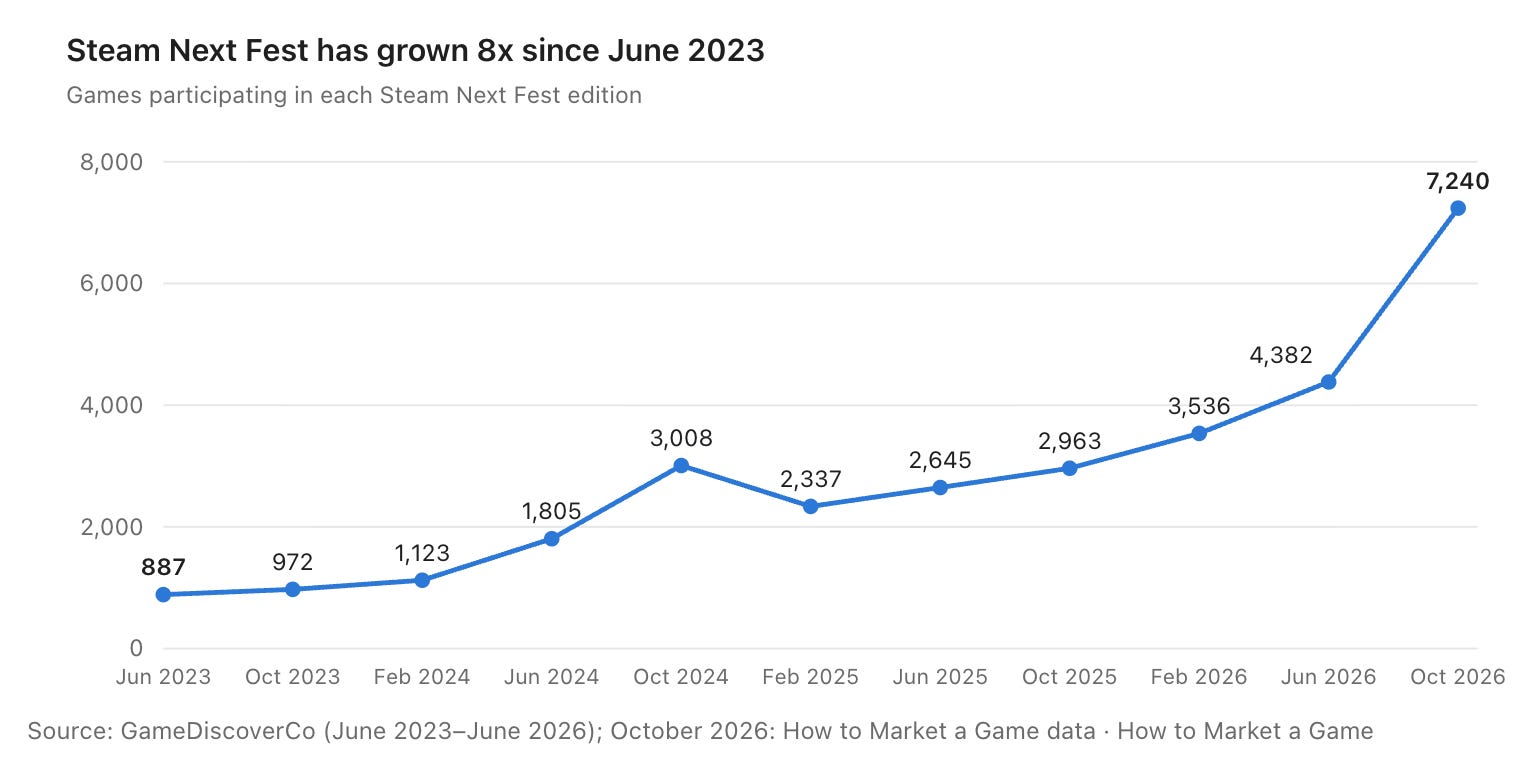
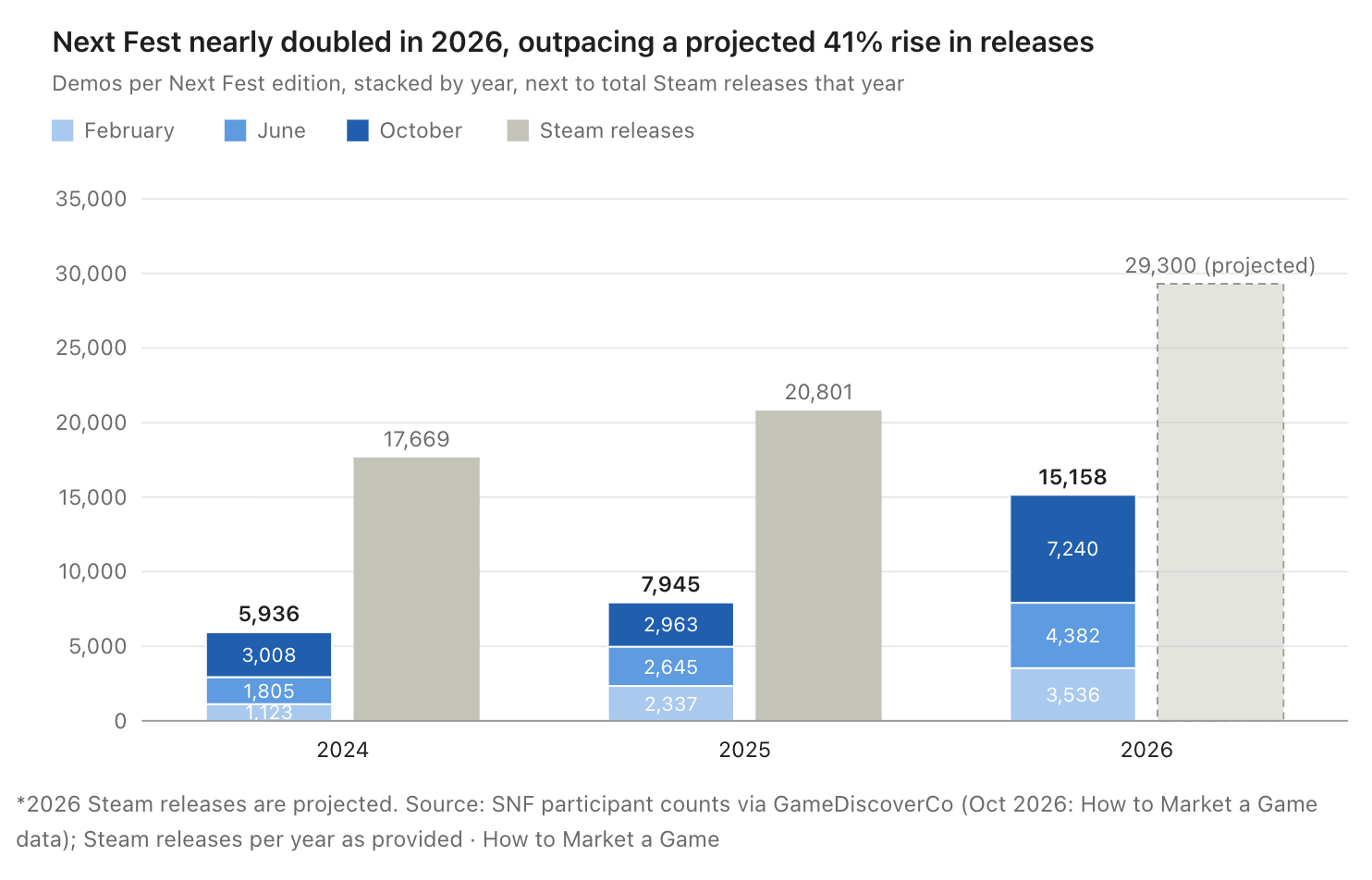
The October 2026 Steam Next Fest has 7,240 games. That is 65.2% more than the June festival (4,382 games). Since June 2023, participants have grown 8x; then, there were 887.
Managing a distributed dev team shouldn’t mean managing a compliance headache. Mellow’s Contractor Management gives you ready-made contracts, IP compliance, and automated payouts for contractors in 150+ countries — for $35/month per contractor.
-
The author believes the growth isn’t just about AI-made games. Developers have finally realized that Steam Next Fest is a free opportunity to collect wishlists. Meanwhile, most Steam games never take part in the festival.
❗️Zukowski named the growing popularity of festival participation as one reason for wishlist inflation: developers take part in Steam Next Fest more often and collect more wishlists, which convert into sales worse.
-
In 2024, the three festivals had 5,936 demos; in 2025, 7,945; and in 2026, already 15,158. So the number of participants nearly doubled in a year. Meanwhile, Steam releases are expected to grow 41%: from 20,801 games in 2025 to 29,300 games in 2026 (according to the author’s projection).
-
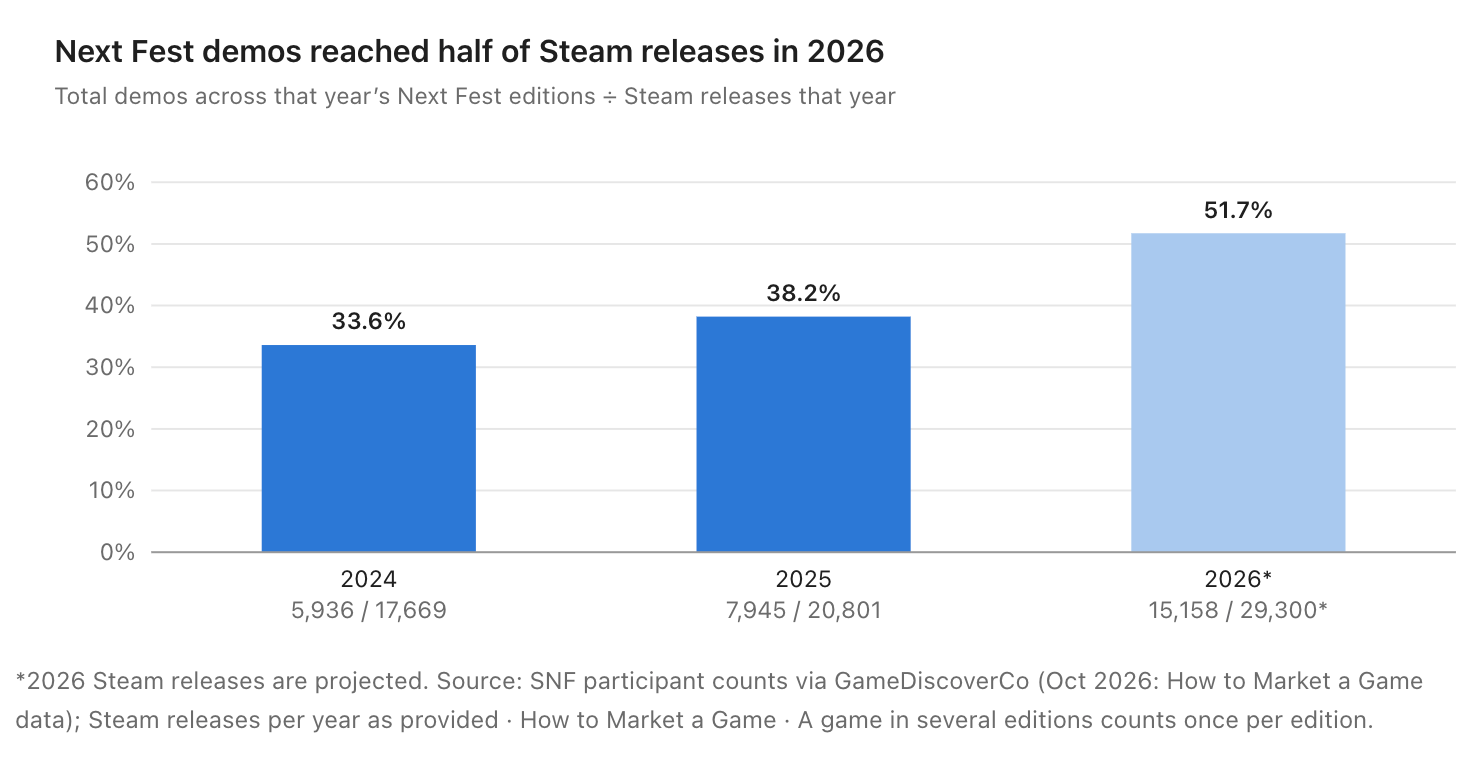
In 2026, Steam Next Fest demos reached 51.7% of the year’s total releases. In 2024, the figure was 33.6%.
-
The author has two hypotheses. First, developers of AI-made games use their first festival to test whether the game clicks with players, and then release it in 2027. If the hypothesis is right, there will be even more releases in 2027.
-
Second, the 2026 release projection is too low. Usually, 76% of the year’s releases are out on Steam by October. But thanks to AI, releases may spike. In that case, around 40,000 projects will be released on Steam in 2026.
-
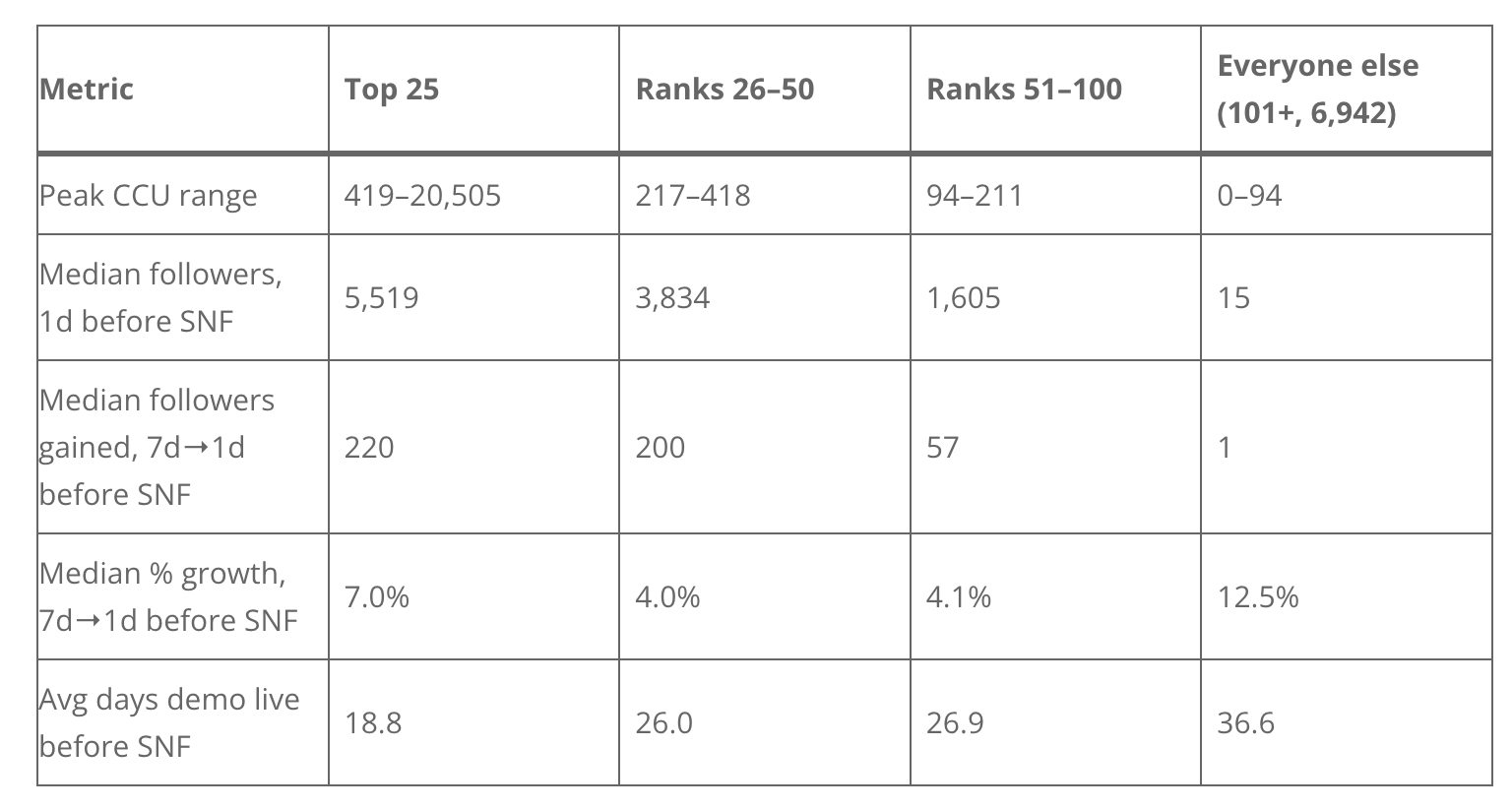
The festival’s top 25 games by peak CCU (from 419 to 20,505 players) had a median of 5,519 followers a day before the start. Games ranked 26-50 had a median of 3,834, and those ranked 51-100 had 1,605. The remaining 6,942 games had just 15.
-
In the last week before the festival, the top 25 games gained a median of 220 followers (+7%), games ranked 26-50 gained 200 (+4%), and those ranked 51-100 gained 57 (+4.1%). The remaining projects grew 12.5%, but in absolute numbers, that is just 1 follower.
-
On average, the top 25 games had their demo available 18.8 days before the festival started, games ranked 26-100 had it 26 days before, and the rest 36.6 days before.

-
Zukowski tried to answer the eternal question: is it better to build wishlists before the festival, or announce the game shortly before the start to get a burst of interest? The Spearman correlation of peak CCU with total followers a day before the festival is 0.55, and with new followers in the last week, 0.52. With growth in percent, the correlation is even slightly negative (-0.13).
❗️A Spearman correlation of 1.0 would mean that the ranking of games by followers fully matches the ranking by CCU.

-
Among the festival’s top 25 games, only 2 (8%) disclosed AI use. Among games ranked 26-50, 3 did (12%); among those ranked 51-100, 13 (26%). Among the rest, 35% (2,427 games).
-
Zukowski counts only what developers stated on their game’s Steam page. The author admits that big projects fear negative audience reactions, so some may be hiding their AI use.
-
The two top 25 games that disclosed AI use are BORE (developed with an AI assistant under human direction, with no content generated while the game is running) and Path of the Yaoguai (some images were generated by AI and then modified).
-
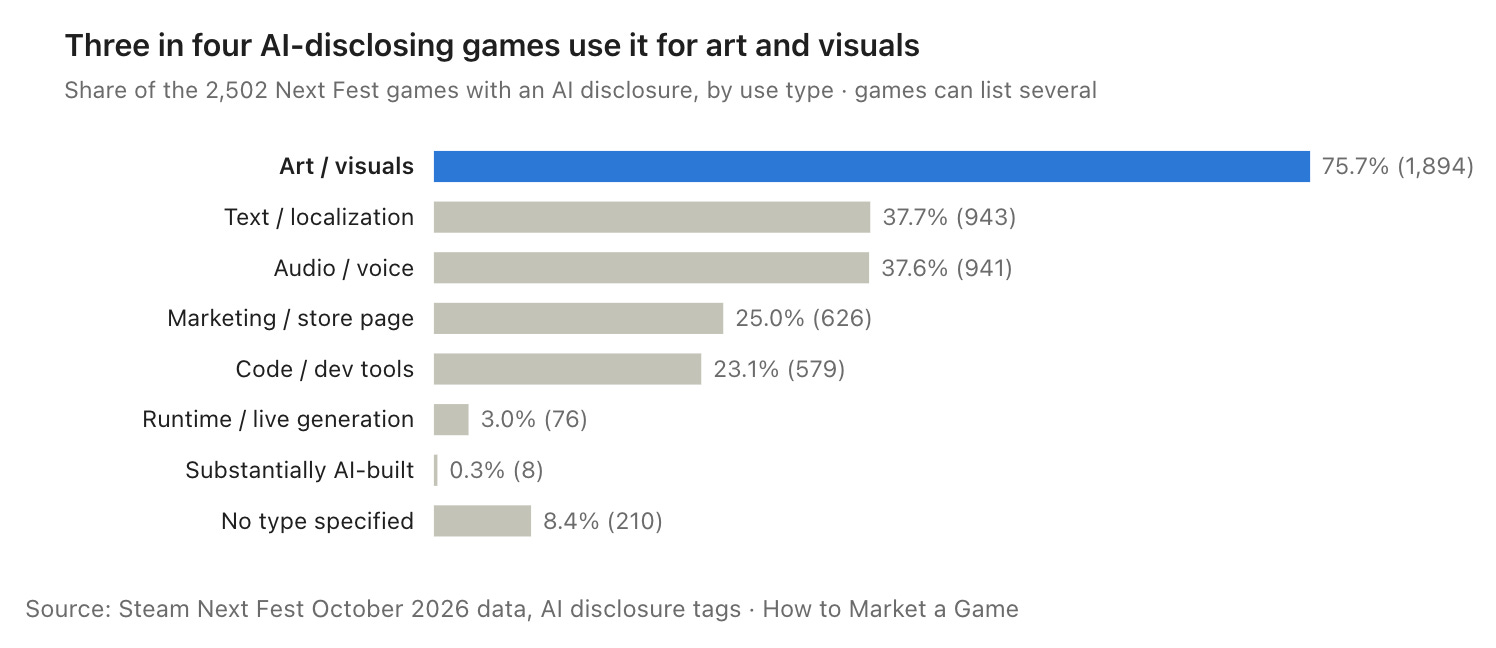
In total, 2,502 festival games (34.6%) disclosed AI use. For comparison, BCG reported that 21% of games on Steam were AI-assisted in Q3’25. AI is most often used for art and visuals (75.7% of games that reported AI use). Text and localization are second (37.7%), and audio and voice are third (37.6%).
-
23.1% of these games (579 games) use AI to write code. However, Valve doesn’t require disclosure of AI tools used in development, so the real share is likely higher.
-
Zukowski cites a GameDiscoverCo survey in which code generation was most often cited as an acceptable use of AI (~239 mentions). Prototyping and placeholder assets were mentioned 119 times, and automating repetitive tasks 101 times.
-
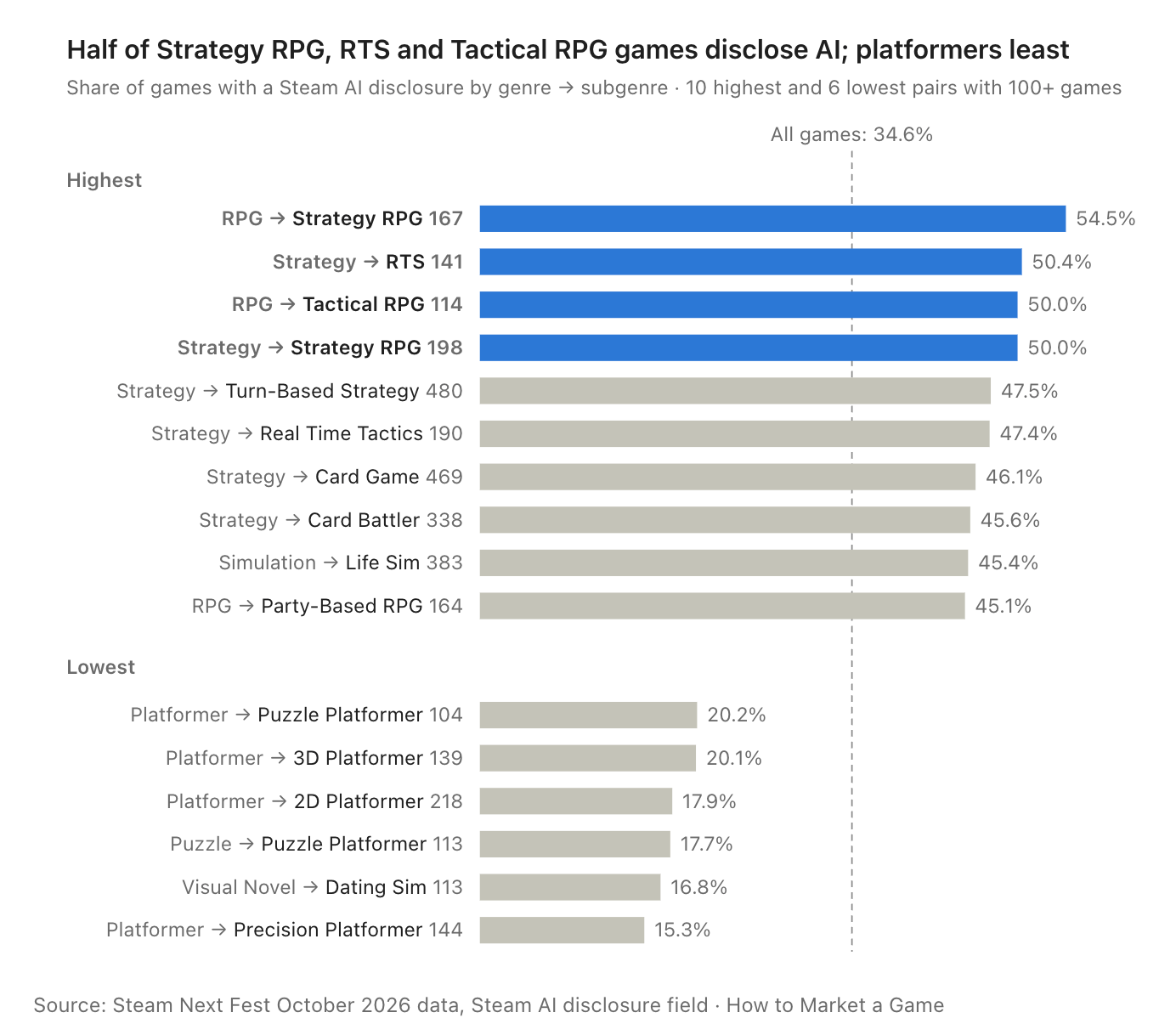
AI use is most often disclosed in RPG and Strategy games. The leaders: Strategy RPG (54.5%), RTS (50.4%), and Tactical RPG (50%). The lowest shares are in Precision Platformer (15.3%), Dating Sim (16.8%), and Puzzle Platformer (17.7%).
-
Developers specified their own genres and subgenres when registering for the festival.
-
Zukowski links this genre split to Chinese developers. In his view, they are more comfortable with AI and more often make RPG and Strategy games. The three most popular (by CCU) Strategy RPGs with an AI disclosure were all made by Chinese studios: Path of the Yaoguai, General Jeon, and 灵劫变. The author also notes that Steam has many Three Kingdoms strategy games made with AI.
-
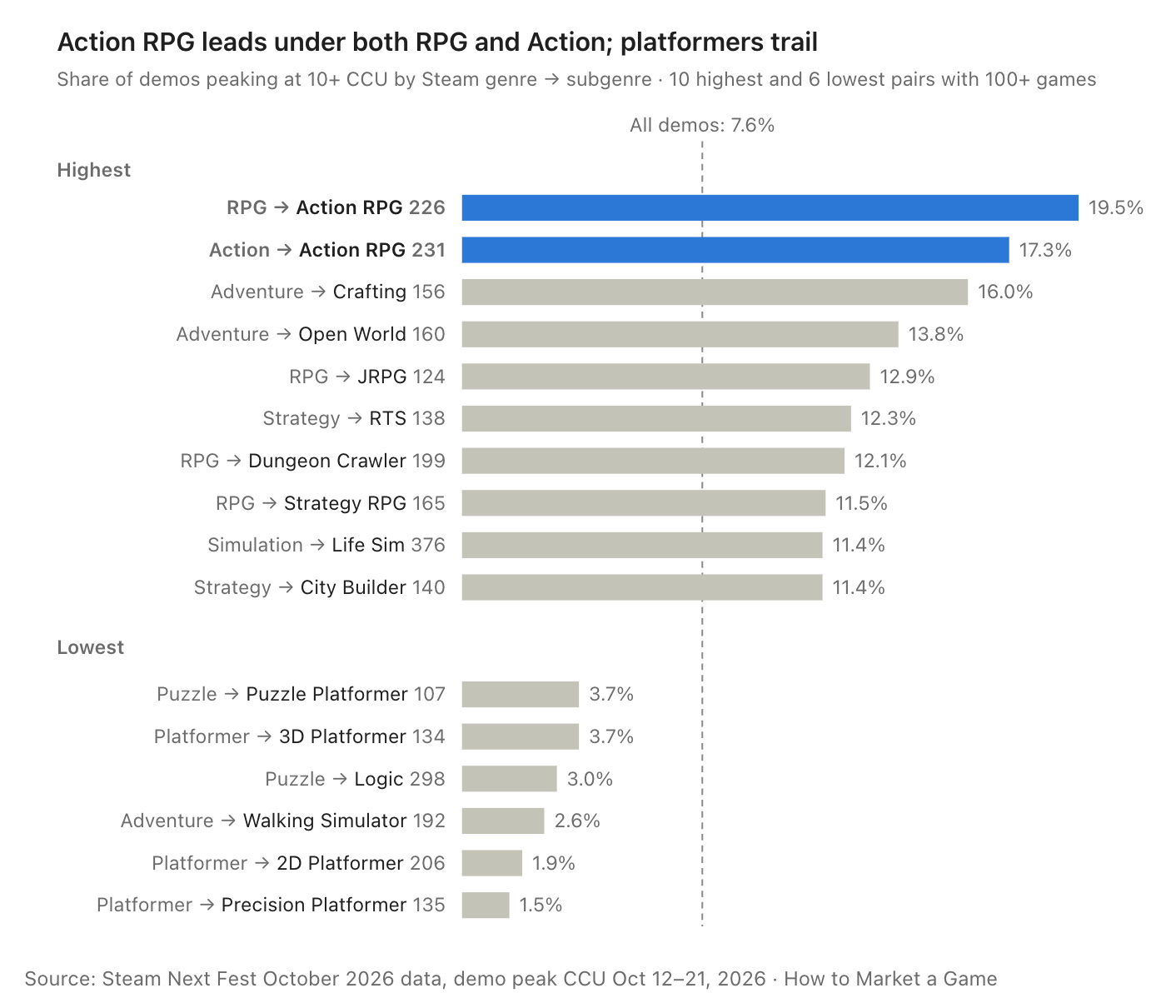
7.6% of the festival’s demos reached a peak CCU above 10 players. Action RPG does best here (19.5% under RPG, and 17.3% under Action), followed by Crafting (16%). The worst are Precision Platformer (1.5%), 2D Platformer (1.9%), and Walking Simulator (2.6%).
-
According to Zukowski, Steam players like crafting, building, strategy, and simulation games the most. Platformers, though, are the least interesting.
-
So AI games are being made precisely in the most popular genres. Strategy RPG, RTS, and Life Sim made the top 10 in both AI disclosure share and demo share with 10+ CCU. Platformers rank at the bottom of both rankings.

VAIA (Vivrato’s research unit) held 101 confidential interviews with leaders of PC and console studios, mostly from North America and Europe, in Q2-Q3 2026. The study covers six types of AI: generative AI, classical machine learning, rules-based automation, RAG, models fine-tuned on studio data, and agentic systems.
From concept art to launch-day marketing, most game studios rely on contractors in multiple countries. Mellow makes it simple to hire, pay, and stay compliant with talent in 150+ countries — no legal entity required.
-
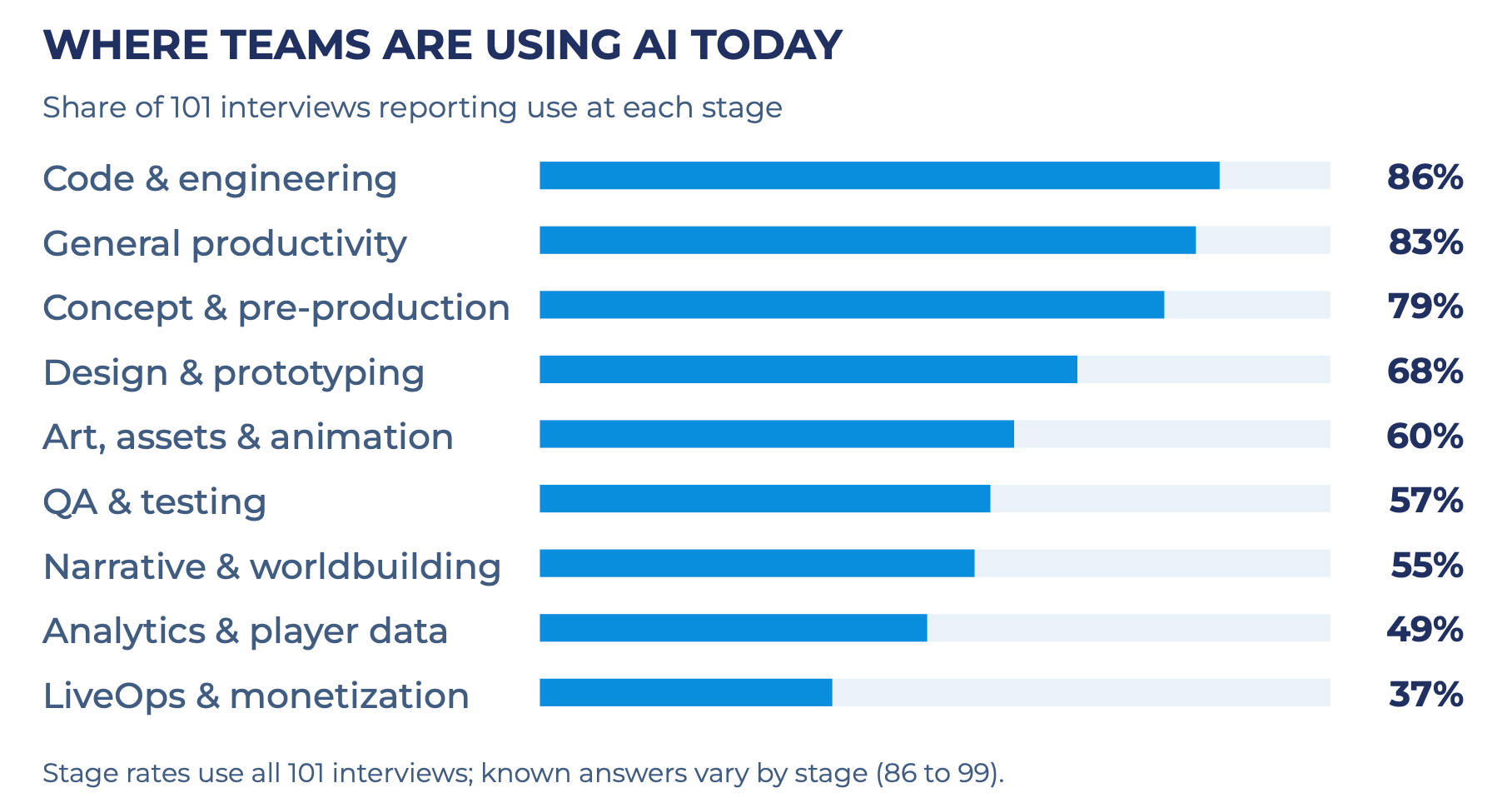
Developers most often use AI for coding and engineering (86%), general productivity tasks (83%), and concept and pre-production (79%). It is used least in LiveOps and monetization (37%).
-
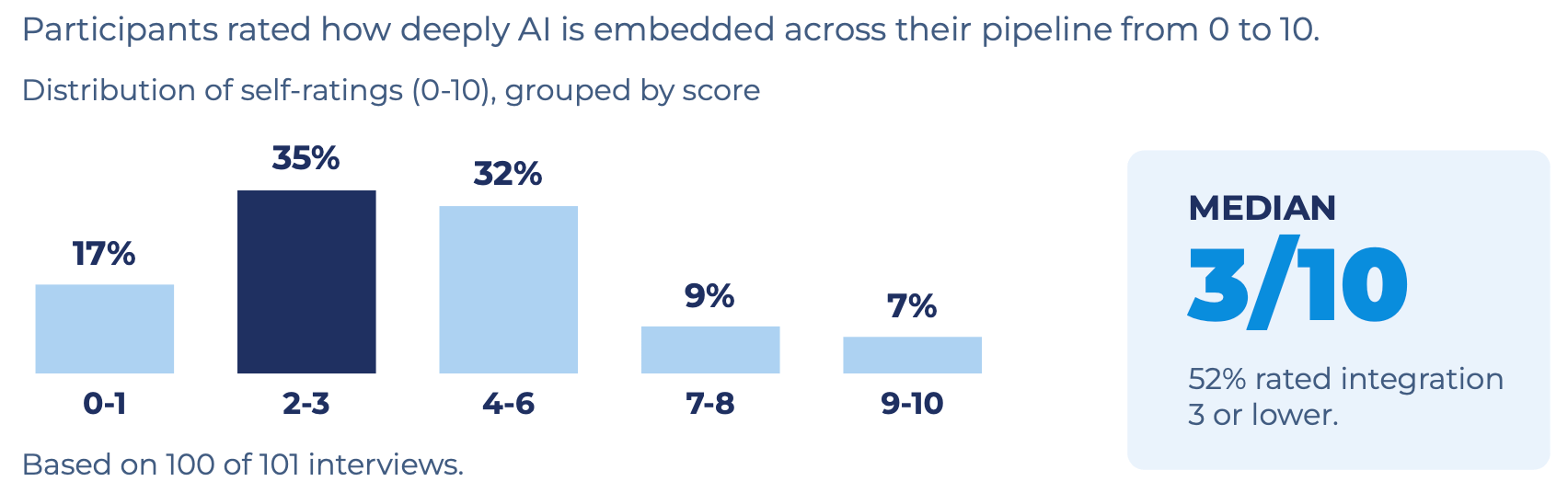
At the same time, studio leaders rate the depth of AI integration into their pipelines as low. The median score is 3 out of 10. 52% gave a score of 3 or lower, and only 7% gave 9-10.
-
In European studios (including the UK), AI is more deeply embedded in development than in North American ones. The average score in Europe is 4.2 out of 10; in North America, it is 3.5 out of 10.